
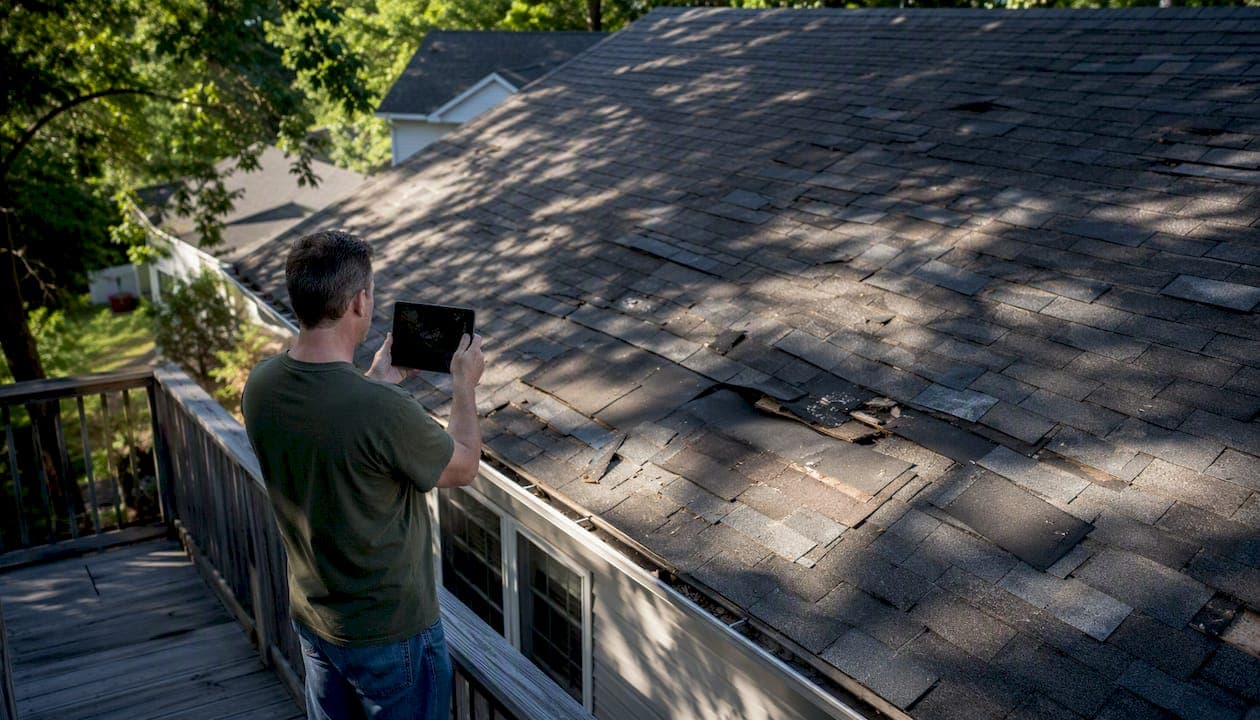
Avoiding the most common roof claim filing mistakes is the fastest way to protect your payout and keep your claim moving. Most homeowners don't lose money because the damage wasn't real. They lose it because of timing errors, weak documentation, or a single careless phrase spoken to an adjuster. Here is a quick-scan list of the ten most damaging mistakes and the one action that fixes each:
- Missing the filing deadline — Call your insurer promptly after discovering damage.
- Poor or incomplete documentation — Photograph every slope, the attic, gutters, and soft metals before touching anything.
- Cleaning up or making permanent repairs first — Tarp and contain only; preserve all evidence for the adjuster.
- Going into the adjuster visit unprepared — Prepare a documentation packet and walk the roof with a contractor present.
- Accepting the first settlement offer — Compare every line item against a contractor's Xactimate estimate before signing.
- Misunderstanding ACV vs. RCV — Know whether your policy pays replacement cost or actual cash value before the adjuster arrives.
- Hiring an unvetted or door-to-door contractor — Verify license, insurance, and local references before signing anything.
- Ignoring policy exclusions and roof age language — Read your declarations page for wind/hail sub-deductibles and wear-and-tear clauses.
- Skipping the supplement process after a low estimate — File a written supplement with photo evidence and a line-item comparison.
- Giving up after a denial — Request the written denial reason, gather contractor evidence, and escalate through appraisal or your state insurance commissioner.
Key Takeaways
Homeowners who document damage immediately, bring a licensed contractor to the adjuster visit, and file supplements for missed line items consistently recover more from their roof insurance claims than those who don't.
| Point | Details |
|---|---|
| File and inspect promptly | Notify your carrier within 48 hours and use NOAA records to prove the storm date. |
| Document before repairs | Photograph every slope, the attic, gutters, and soft metals before touching anything. |
| Bring a contractor to the adjuster visit | A pre-inspection report and Xactimate estimate anchor the adjuster's scope and reduce omissions. |
| Understand ACV vs. RCV | Know whether your policy pays replacement cost or depreciated value before the adjuster arrives. |
| Use the supplement process | Compare line items, document variances, and file a written supplement for every missed item. |
| The Original Roof Repair Company | Provides free inspections, storm documentation, Xactimate estimates, and adjuster attendance for Georgia homeowners. |
Table of Contents
- 1. Waiting too long to inspect and file your claim
- 2. Failing to document damage thoroughly before anything is touched
- 3. Going into the adjuster visit without a plan or a contractor
- 4. Accepting the first settlement offer without comparing line items
- 5. Hiring the wrong contractor or signing before vetting
- 6. Ignoring policy exclusions, roof age, and wear-and-tear language
- 7. Making permanent repairs before the adjuster inspects
- 8. Giving up after a denial or low settlement
- 9. Underestimating what a local contractor brings to the adjuster visit
- What the most damaging mistakes have in common
- The Original Roof Repair Company handles inspections and claim advocacy for Georgia homeowners
- Sources
- FAQ
1. Waiting too long to inspect and file your claim
Filing deadlines are one of the most overlooked roof claim errors. Most homeowner policies require "prompt notice" after a covered loss, and while the exact language varies by carrier, waiting weeks or months creates two serious problems: the carrier can argue the damage worsened due to neglect, and physical evidence degrades fast.
The practical rule is simple. Inspect as soon as possible after a storm, even a quick visual from the ground. Notify your carrier promptly. Schedule the adjuster visit within a reasonable timeframe. NOAA and National Weather Service records are the most reliable way to tie your damage to a specific storm date and intensity, and carriers and courts both accept them as authoritative proof of a covered weather event.
After major storms, carriers receive a surge of claims simultaneously, and adjuster availability can stretch. Homeowners who file early get earlier appointments and face less pressure to accept a rushed scope. A detailed roof insurance claim steps list can help you track each phase without missing a window.
2. Failing to document damage thoroughly before anything is touched
Weak documentation is the most common reason a legitimate claim gets reduced or denied. Adjusters make cause-and-origin determinations based on what they can see. If you've already cleaned debris, replaced shingles, or patched a leak, you've removed the evidence they need.
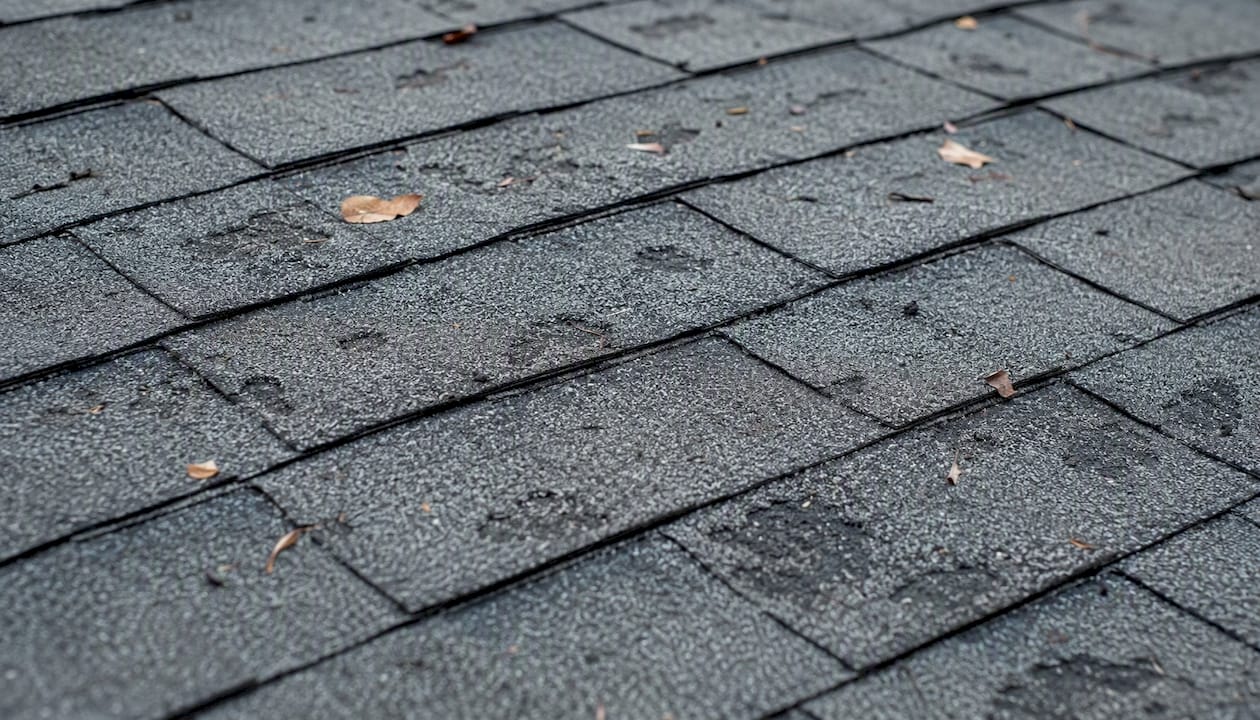
GAF's roofing insurance claims guidance recommends documenting everything before making any repairs and contacting the insurer promptly. That means photographs of every roof slope, close-ups of individual shingle tears, attic shots showing daylight or water staining, dented gutters and soft metals (AC fins, flashing, vents), and any neighboring property damage that confirms the storm's reach.
Documentation checklist:
- All four roof slopes, shot from ground level and from the roof edge
- Close-ups of impact craters, granule loss, and lifted or missing shingles
- Attic interior: water stains, daylight penetration, wet insulation
- Gutters and downspouts: dents, granule accumulation, separation
- Soft metals: AC condenser fins, pipe boots, ridge vents, flashing
- Interior ceilings and walls: water stains, bubbling paint, wet drywall
- Debris on the ground: shingle pieces, hail stones, broken flashing
Use a consistent file-naming convention so every photo is traceable. A simple format works well:
| Filename | What it shows |
|---|---|
| 2026-05-01_roof_north-slope_shingle-tear.jpg | North slope, specific shingle damage, dated |
| 2026-05-01_attic_rafter_water-stain.jpg | Attic rafter with active water staining |
| 2026-05-01_gutter_south_hail-dent.jpg | South gutter with hail impact dents |
| 2026-05-01_interior_bedroom-ceiling_leak.jpg | Interior ceiling leak in bedroom |
Pro Tip: Enable location tagging on your phone before shooting, and back every photo to a cloud service immediately. The embedded GPS coordinates and device timestamp together create tamper-resistant metadata that is difficult for a carrier to dispute. A step-by-step guide to preparing roof damage evidence photos walks through the full process.
3. Going into the adjuster visit without a plan or a contractor
The adjuster visit is the single most consequential moment in the entire roof insurance claim process. The Roofing Brief's 8-step claim guide identifies this meeting as the most frequent point where homeowners lose leverage. Adjusters working high-volume storm areas often spend limited time on each roof, and what they don't record during the visit typically doesn't appear in the initial scope.
What to say and what to avoid:
Present facts, not interpretations. Hand the adjuster a documentation packet at the start of the visit — printed photos, your file-named photo log, and any contractor pre-inspection report. Walk to the most obvious damage first. This anchors the adjuster's notes and builds acceptance for subtler items later.
Phrases that harm your claim:
- "The roof was already getting old anyway" — invites a wear-and-tear denial.
- "I'm not sure if this was from the storm or before" — creates ambiguity the carrier will use against you.
- "I already had someone patch it" — signals that evidence may have been altered.
- "Whatever you think is fair" — waives your right to negotiate scope.
RoofPolicy's adjuster-visit guidance notes that common adjuster mistakes include not walking every slope and leaving before checking the attic. You have the right to ask the adjuster to walk every elevation and inspect the attic before they leave. Get the adjuster's direct contact information, ask for a written cause-and-origin statement, and request a copy of their scope notes before they close the file.
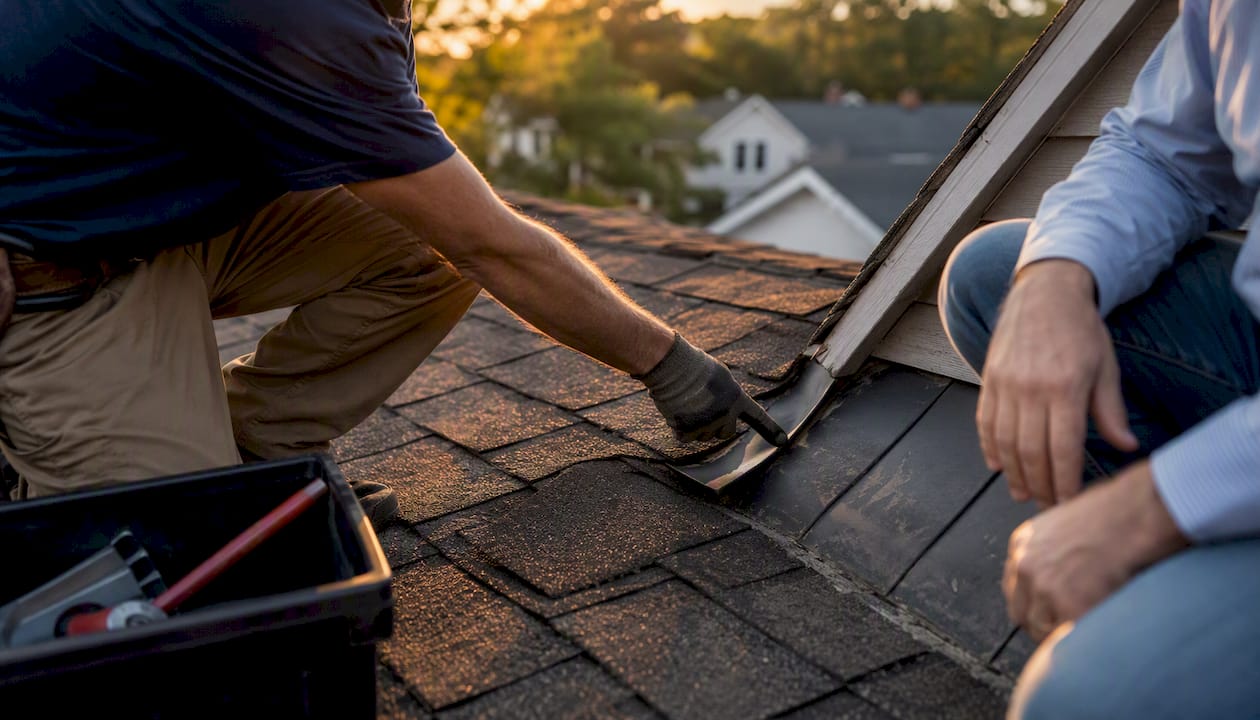
Econo-Roofing's homeowner playbook recommends having a licensed roofer walk the roof alongside the adjuster. A contractor who knows what to look for — soft-metal dents, lifted flashing, granule displacement patterns — can point out items the adjuster might otherwise miss.
4. Accepting the first settlement offer without comparing line items
Initial settlement offers are frequently incomplete. Common omissions include accessory items (pipe boots, ridge cap, drip edge), undercounted squares, missing tear-off layers, and incorrect pitch or complexity factors. These aren't always errors made in bad faith; high-volume adjusters working quickly simply miss items.
Quick glossary:
- ACV (Actual Cash Value): Replacement cost minus depreciation. What the carrier pays upfront on most policies.
- RCV (Replacement Cost Value): The full cost to replace the damaged material at today's prices, with no depreciation deducted.
- Depreciation: The value the carrier withholds based on the roof's age and condition.
- Recoverable depreciation: The held-back amount you can claim after repairs are completed, on an RCV policy.
| ACV Policy | RCV Policy | |
|---|---|---|
| Initial payment | Depreciated value only | Depreciated value upfront |
| After repairs complete | No additional payment | Recoverable depreciation released |
| Homeowner impact | Out-of-pocket gap for older roofs | Full replacement funded if repairs are completed |
| When it applies | Older roofs, some budget policies | Standard homeowner policies with RCV endorsement |
When the estimate arrives, compare every line item against a contractor's Xactimate estimate. Document variances in writing and file a supplement with photo evidence for each missing or undervalued item. A roof claim supplement explained for Georgia homeowners covers the line-item comparison process in detail.
If the gap is substantial and the carrier is unresponsive, two escalation paths are available: invoke the appraisal clause in your policy (both sides appoint an appraiser, and a neutral umpire resolves disputes) or hire a public adjuster who works on your behalf for a percentage of the settlement. The International Code Council's building code references are also useful here — code-required upgrades like drip edge, underlayment, and ventilation are legitimate line items that carriers sometimes omit from initial scopes.
5. Hiring the wrong contractor or signing before vetting
Storm-chasing contractors appear quickly after major weather events in Georgia and across the Atlanta metro area. Some are legitimate. Many are not. Signing with the wrong one can delay your claim, produce a substandard repair, or expose you to an assignment-of-benefits (AOB) arrangement that transfers your claim rights to the contractor.
Red flags to walk away from:
- Pressure to sign an AOB or "direction to pay" before any work is scoped
- Door-to-door solicitation immediately after a storm with no local references
- No verifiable Georgia contractor license or general liability insurance
- Requests for a large cash deposit before work begins
- No written Xactimate estimate or itemized scope
Contractor vetting checklist:
- Verify the Georgia contractor license number through the state licensing board
- Confirm general liability and workers' compensation insurance with a certificate
- Check BBB accreditation and complaint history
- Ask for at least three local references from jobs completed in the past 12 months
- Request a sample Xactimate estimate to confirm they use industry-standard pricing software
- Confirm the contractor has experience working in Cherokee County or the Atlanta metro area
Pro Tip: Ask the contractor to attend the adjuster visit and bring a written pre-inspection report. A contractor who walks the roof before the adjuster arrives can hand the adjuster an annotated photo map and a line-by-line scope — this anchors the adjuster's notes and reduces the chance of missing items. Learn more about why your storm claim needs a roofing expert present at the inspection.
6. Ignoring policy exclusions, roof age, and wear-and-tear language
Roof age is one of the most common grounds for claim denial or ACV downgrade. Many homeowner policies contain explicit language excluding damage attributable to wear-and-tear, lack of maintenance, or roofs that have exceeded a defined age threshold. Carriers sometimes apply these exclusions broadly, even when a storm clearly caused the triggering damage.
Before filing, pull your declarations page and check for:
- RCV vs. ACV designation for the roof specifically (some policies cover the structure at RCV but the roof at ACV after a certain age)
- Wind/hail sub-deductibles, which are separate from the standard deductible and often calculated as a percentage of the dwelling coverage
- Ordinance and Law coverage, which pays for code-required upgrades during a replacement
- Maintenance exclusion language, which carriers use to deny claims on roofs with pre-existing deterioration
Pro Tip: Gather maintenance receipts, prior inspection reports, and any photos from before the storm. If a carrier argues the damage is pre-existing wear, a documented maintenance history directly counters that argument. A partial roof replacement claims guide explains how carriers evaluate age and condition in partial-loss scenarios.
Counter-evidence matters. If your roof was inspected two years ago and passed, that inspection report is a strong rebuttal to a wear-and-tear denial. Carriers who misapply exclusions can be challenged through the supplement process, the appraisal clause, or a complaint to the Georgia Office of Insurance and Safety Fire Commissioner.
7. Making permanent repairs before the adjuster inspects
Permanent repairs made before the adjuster visit are one of the fastest ways to undermine a claim. Once damage is repaired, the adjuster has no physical evidence to evaluate, and the carrier can argue the scope was overstated or that the cause of loss is unverifiable.
What you should do immediately after a storm:
- Photograph all damage in detail before touching anything.
- Apply tarps over open areas to prevent additional water intrusion.
- Place plywood over broken skylights or openings.
- Set up interior containment (buckets, plastic sheeting) for active leaks.
- Save every receipt: tarp materials, contractor call-out fees, hardware store purchases.
- Photograph the temporary repair itself, before and after it is applied.
- Keep a written log of who did the work, when, and what materials were used.
The distinction is clear: temporary measures that stop ongoing damage are expected and covered. Permanent repairs that replace or conceal damaged material should wait until after the adjuster has completed the scope. GAF's claim guidance specifically recommends making temporary repairs when required to prevent further damage while preserving all evidence for the adjuster visit.
If you need emergency tarping or board-up immediately, The Original Roof Repair Company offers emergency roof repair services that document the pre-repair condition before any work begins.
8. Giving up after a denial or low settlement
A denial is not the end of the process. Carriers deny or underpay claims for a range of reasons, some legitimate and some not. The homeowner's first step after any denial is to request the written denial letter with the specific reason cited. That reason determines the response.
Escalation options, in order:
- Supplement filing: Submit a written supplement with a contractor's Xactimate comparison and photo evidence for each disputed line item.
- Re-inspection request: Ask the carrier to send a different adjuster or a field supervisor for a second look.
- Appraisal clause: Invoke the appraisal provision in your policy. Each party appoints an appraiser; a neutral umpire resolves the dispute.
- Public adjuster: Hire a licensed public adjuster who works on your behalf, typically for a percentage of the recovered amount.
- State insurance commissioner: File a complaint with the Georgia Office of Insurance and Safety Fire Commissioner if the carrier is acting in bad faith or violating state claims-handling regulations.
A roofing insurance advocate can help you determine which escalation path fits your situation and prepare the documentation package for each step.
9. Underestimating what a local contractor brings to the adjuster visit
The adjuster visit is where scope is set, and scope determines the settlement. High-volume adjusters working post-storm surges in Georgia often spend limited time on each property. A contractor who has completed a pre-inspection, prepared an annotated photo map, and generated a line-by-line Xactimate estimate gives the adjuster a structured reference to work from rather than starting from scratch.
The Roofing Brief identifies the adjuster meeting as step 5 of 8 in the claim process and the most frequent point of loss for homeowners. Econo-Roofing's playbook recommends walking every elevation, starting at the worst damage, and moving to the attic before finishing at interior damage — a sequence that builds the adjuster's acceptance of progressively subtler items.
What a credentialed local contractor should bring to the adjuster visit:
- Written pre-inspection report with damage summary
- Annotated photo map keyed to specific roof sections
- Xactimate line-by-line estimate for comparison
- Proof of Georgia contractor license and insurance
- BBB accreditation or verifiable local references
RoofPolicy notes that adjusters sometimes leave without checking every slope or the attic. A contractor present at the visit can flag these omissions in real time, before the scope is closed. For Georgia homeowners, working with a contractor who understands local code requirements and typical carrier behavior in the Atlanta metro area is a practical advantage that shows up directly in the settlement amount. Read more about why adjusters underpay roof claims in Georgia and the line-item patterns most commonly missed.
What the most damaging mistakes have in common
Most roof damage claim mistakes share a single root cause: homeowners treat the claim as a passive process rather than an active one. The carrier's adjuster is not working against you, but they are working quickly, and what they don't see or record during the visit doesn't get paid. Every mistake on this list, from missing deadlines to accepting the first offer, comes down to a homeowner who didn't know they needed to participate more actively.
The Georgia homeowners who recover the most from storm claims are the ones who document before anything is touched, bring a licensed contractor to the adjuster visit, and treat the supplement process as a normal part of the claim rather than a confrontation. That's not aggressive. It's just prepared.
The Original Roof Repair Company handles inspections and claim advocacy for Georgia homeowners
Storm damage in the Atlanta metro area moves fast, and so do the mistakes that shrink settlements. The Original Roof Repair Company offers free roof inspections for Cherokee County homeowners and the 11 surrounding counties, with storm documentation, Xactimate estimates, and adjuster attendance included as part of the claim advocacy process. No pressure, no assignment-of-benefits, and no recommendation for full replacement unless repair costs exceed $4,000.

Before calling, have your policy declarations page, any photos you've already taken, and a written list of interior and exterior damage ready. The first visit covers a full roof inspection, a written damage assessment, and a clear explanation of what your policy likely covers. BBB accredited and repair-first by design, The Original Roof Repair Company works directly with carriers and adjusters on your behalf.
Request a free roof inspection to get started, or call to schedule an adjuster-attendance appointment before your carrier's visit.
Sources
These authoritative sources are worth bookmarking before and during a roof insurance claim:
- GAF — Roofing insurance claims guidance
- Filing an Insurance Claim for Roof Damage: 2026 Guide | The Roofing Brief
- Insurance Adjuster Roof Visit: What to Expect | Roof Policy
- Weather
- Iccsafe
This article is general information, not a substitute for advice from a qualified financial advisor. Consult a qualified financial professional about your own circumstances before acting on anything here.
FAQ
What should you never say to a roof insurance adjuster?
Avoid any statement that introduces uncertainty about the cause or timing of damage, such as "the roof was already old" or "I'm not sure if this was from the storm." Stick to documented facts, present your photo evidence, and let the contractor's written report speak to cause and scope.
What are the most common reasons roof claims get denied?
The two most frequent grounds are insufficient documentation of the cause of loss and policy exclusions for wear-and-tear or pre-existing deterioration. Carriers also deny claims when the homeowner fails to provide prompt notice after the damage occurred.
What is the 25% rule for roofing?
Some jurisdictions and building codes require a full roof replacement when more than 25% of the roof surface is damaged or replaced within a set period, triggering full code compliance for the entire roof. Check your local code and your policy's Ordinance and Law coverage to understand whether this applies to your claim.
How do you appeal a denied roof claim?
Request the written denial letter with the specific reason cited, then file a written supplement with a licensed contractor's Xactimate estimate, timestamped photos, and NOAA storm records. If the carrier does not respond, invoke the appraisal clause in your policy or file a complaint with your state insurance commissioner.