
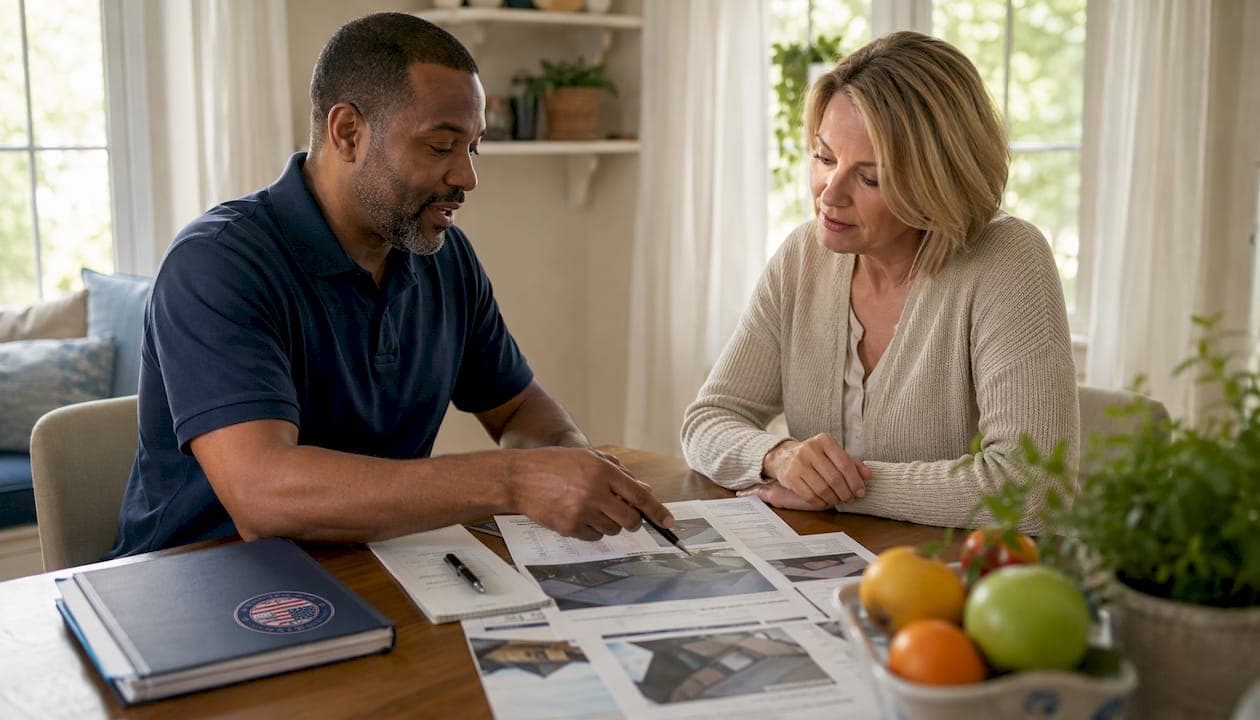
When your roof claim is complex, disputed, or returning a settlement that doesn't cover the actual damage, hire a roofing insurance advocate before you accept a single dollar. The fastest next step for Atlanta and Georgia homeowners: schedule a free inspection with a licensed local advocate who will document the damage, attend the adjuster visit, and negotiate on your behalf.
Here's what you get when you bring in a professional advocate early:
- A written, Xactimate-format estimate that matches what your carrier's software uses
- A licensed contractor or adjuster present at the inspection to catch missed line items
- Supplement filing for code upgrades, drip edge, underlayment, and other items adjusters routinely omit
- A single point of contact who handles carrier communication so you don't have to
The Original Roof Repair Company offers free storm-damage inspections and insurance claim advocacy for homeowners across Cherokee County, the Atlanta metro, and 11 surrounding counties.
Table of Contents
- What does a roofing insurance advocate actually do for you?
- How the claim process works when you hire an advocate
- When does hiring an advocate actually make sense?
- How do you vet and pick a roofing insurance advocate?
- What does a roofing insurance advocate cost in Georgia?
- What to say — and what not to say — when the adjuster visits
- How The Original Roof Repair Company supports Atlanta homeowners with claims
- Key Takeaways
- Why advocacy changes the outcome — a local roofer's perspective
- Schedule a free inspection with The Original Roof Repair Company
- Useful sources for Georgia homeowners
- FAQ
What does a roofing insurance advocate actually do for you?
A roofing insurance advocate, sometimes called a roofing insurance consultant or public adjuster, manages the technical and negotiating side of your claim. Most homeowners don't know what their policy actually covers, and adjusters work for the carrier, not for you; an advocate closes that gap.
Core services an advocate provides:
- Damage inspection and documentation: Photographs every affected surface, catalogs hail strikes, wind-lifted shingles, damaged flashing, and compromised boot seals with date-stamped images
- Xactimate-format estimate: Produces a line-item estimate in the same software carriers use, making scope disputes easier to resolve
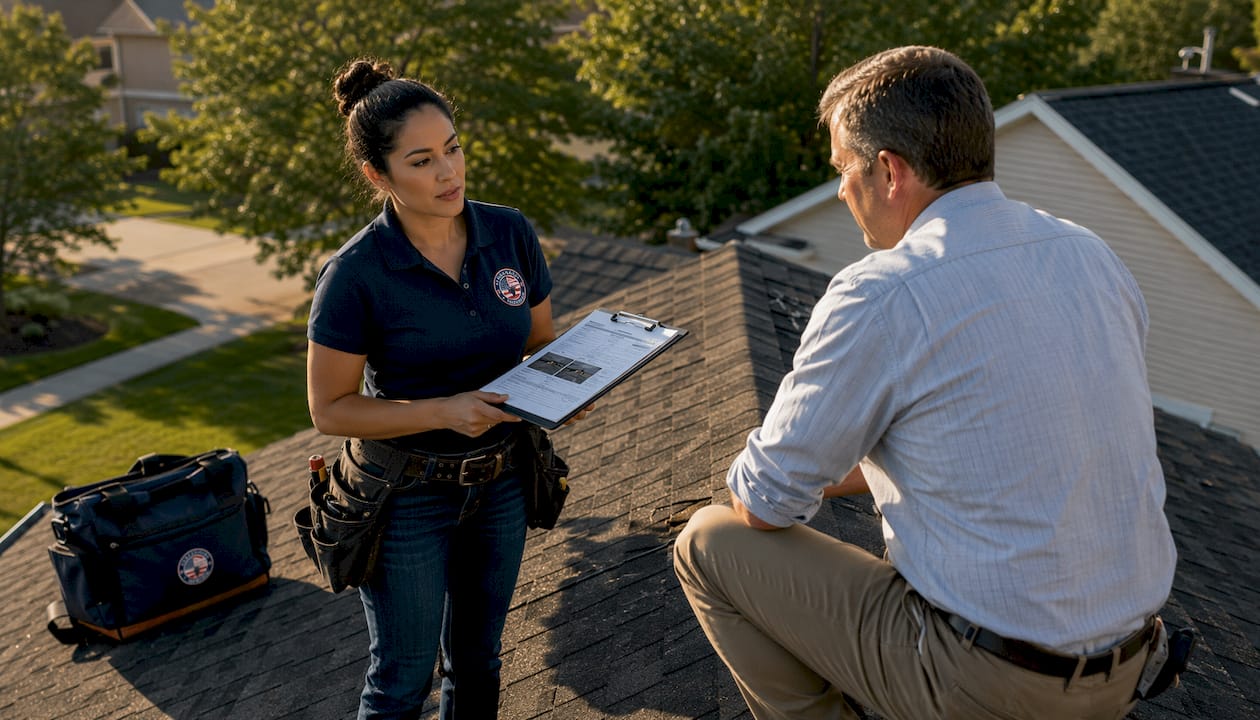
- Adjuster meeting attendance: Stands on the roof with the adjuster, points out every area of damage, and asks the technical questions the adjuster won't volunteer answers to
- Supplement filing: Identifies items the initial scope missed and submits documented supplements with supporting photos and code references
- Scope and code-upgrade negotiation: Argues for code-required upgrades (drip edge, ice-and-water shield, permit fees) that carriers often exclude from the first offer
The practical difference is measurable. Contractors who attend adjuster meetings with written estimates and Xactimate line items consistently produce more complete scopes than homeowners who meet adjusters alone.
How the claim process works when you hire an advocate
The process follows a predictable sequence. Knowing the order helps you prepare the right documents at each stage and avoid the delays that most commonly stall claims.
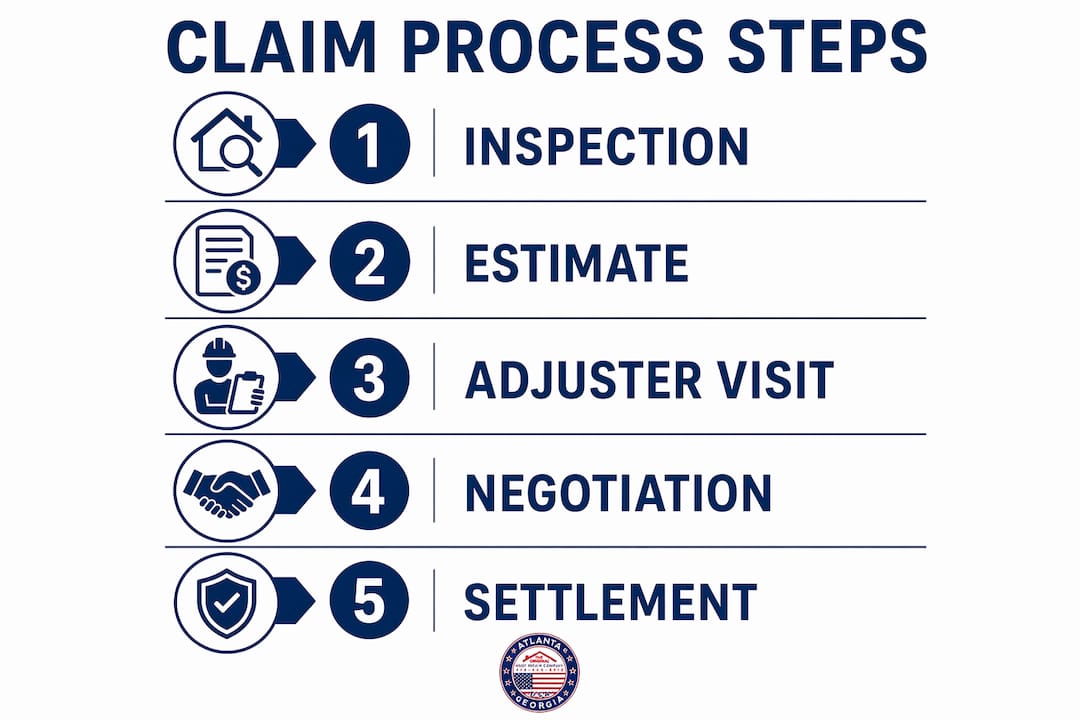
- Initial intake and policy review — Your advocate reviews your declarations page, coverage limits, deductible, and any exclusions before anything else is filed.
- Professional roof inspection — The advocate inspects the roof, documents all storm-related damage with photos and measurements, and produces a written report.
- Estimate preparation — A Xactimate-format estimate is prepared and shared with you before the adjuster arrives, giving you a documented baseline.
- Adjuster visit scheduling — Your advocate coordinates directly with the carrier to schedule the inspection and confirms they will be present.
- Joint roof tour — Advocate and adjuster inspect together. The tour starts at the most undeniable storm-damaged areas to anchor the assessment toward storm loss before moving to debatable zones.
- Scope negotiation — If the adjuster's scope is lower than the estimate, the advocate submits a formal rebuttal with supporting documentation.
- Supplement filing — Any missed items (permits, code upgrades, accessory materials) are filed as supplements with photo and code backup.
- Final settlement and repair scheduling — Once the carrier issues the final payment, repairs are scheduled. For full replacements, the roof replacement process begins immediately.
Typical timeline by phase:
| Phase | Typical Duration | Common Delay Cause |
|---|---|---|
| Inspection and estimate | 1–3 days | Scheduling availability |
| Adjuster visit | 5–14 days | Carrier backlog after storms |
| Scope negotiation | 3–10 days | Carrier review time |
| Supplement acceptance | 7–21 days | Documentation gaps |
| Final payment issued | 2–5 days after approval | Mortgage company endorsement |
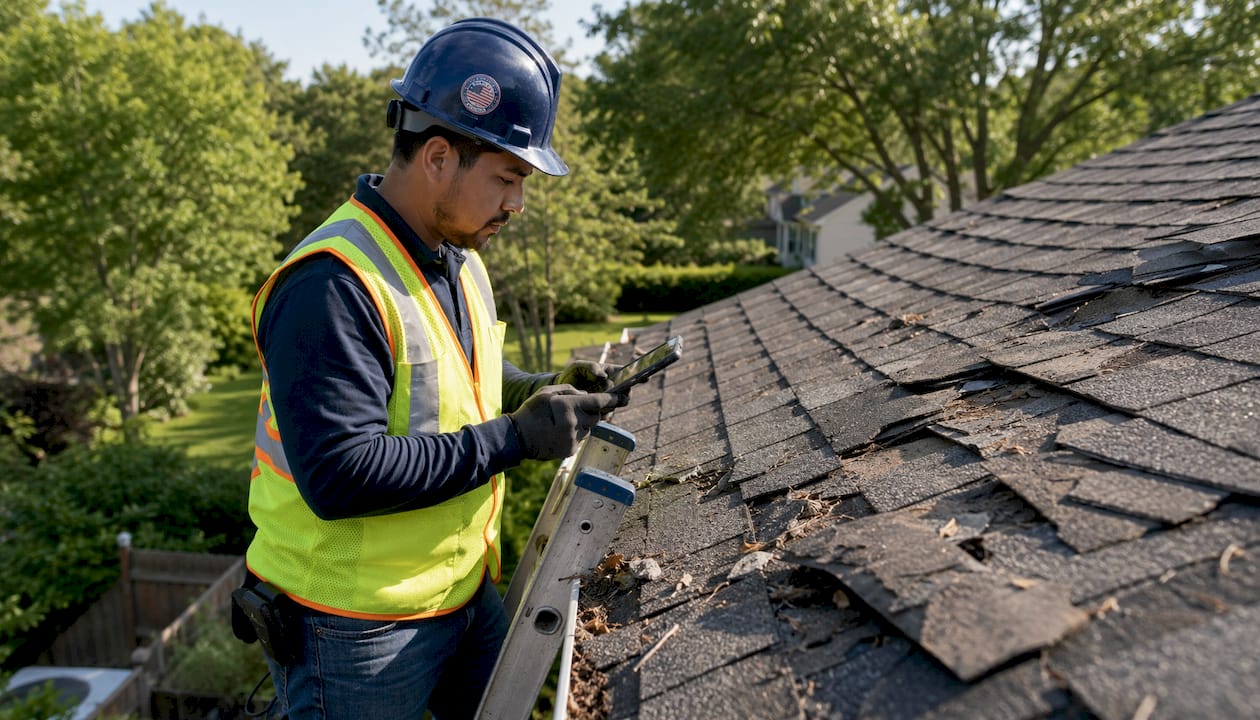
Documents to have ready at the first meeting: dated storm photos, your policy number and declarations page, prior repair receipts, and the storm damage documentation your contractor produces.
When does hiring an advocate actually make sense?
Not every claim needs a professional advocate. A straightforward, single-item repair with a clear cause and a fair initial offer may not justify the added step. These situations usually do:
- The insurer's first offer is noticeably below your contractor's estimate. A significant gap between the adjuster's scope and a professional estimate is a strong signal that items were missed or undervalued.
- The claim has been denied on "wear and tear" or "cosmetic damage" grounds when the damage is clearly storm-related. Many denied claims are overturned on appeal with proper documentation.
- Your roof has multiple systems — mixed materials, skylights, dormers, or a complex pitch — that adjusters frequently underscope.
- Code upgrades are required but excluded from the initial scope. Georgia building codes often require drip edge, underlayment upgrades, or permit fees that carriers omit.
- The insurer is requesting unusual documentation or delaying without a clear reason.
- Your claim involves high depreciation or a high deductible that leaves little margin for missed items.
Reviewing your wind damage claim checklist before the adjuster arrives helps you identify gaps in the initial scope before they become disputes.
Pro Tip: Involve an advocate before you file, not after the first offer arrives. Early involvement gives the advocate full visibility into the claim from the start and often produces a more complete initial scope, reducing the need for supplements later.
How do you vet and pick a roofing insurance advocate?
Georgia enforces a clear distinction between roofing contractors and licensed public adjusters. Contractors may document damage and attend adjuster meetings, but negotiating or filing claims on a homeowner's behalf requires a public adjuster license. Verify which role your advocate holds before signing anything.
Credentials and trust signals to confirm:
- Valid Georgia contractor license or public adjuster license (verify at the Georgia Office of the Commissioner of Insurance)
- General liability and workers' compensation insurance
- BBB accreditation or verifiable local reviews on Google
- A portfolio of before-and-after photos from comparable claims
- Experience with insurance restoration and Xactimate estimating
Questions to ask on the first call:
- Are you a licensed contractor, a licensed public adjuster, or both?
- What is your fee structure, and when does your fee apply?
- Will you attend the adjuster inspection in person?
- Can you show me examples of past supplement filings or settled claims?
- What are the cancellation terms if I change my mind within the first few days?
Red flags that should stop you from signing:
- Door-to-door solicitation immediately after a storm with pressure to sign on-site
- Large upfront fees with no written scope of work
- Refusal to provide proof of license or insurance
- Vague or verbal-only fee agreements
- Promises of a specific settlement amount before any inspection has occurred
What does a roofing insurance advocate cost in Georgia?
Fee structures vary, but three models cover most of the market. Understanding them before you sign protects you from surprises.
| Fee Model | How It Works | Typical Range |
|---|---|---|
| Contingency | Advocate earns a percentage of the final settlement | Up to 33.3% of settlement |
| Flat fee | Fixed amount agreed before work begins | Varies by claim size |
| Hybrid | Small upfront retainer credited against contingency at closing | Retainer + reduced % |
Georgia law caps public adjuster fees at up to 33.3% of the settlement (O.C.G.A. § 33-23-43.3). Reputable firms typically charge well below that ceiling. Georgia also provides a three-business-day cancellation right for adjuster contracts, giving homeowners a consumer protection window to reconsider.
Key points when reading a fee contract:
- Confirm whether the percentage applies to the gross settlement or only to the amount above the initial offer
- Check whether the fee covers supplements filed after the initial settlement
- Verify the cancellation clause and the exact three-day window language
- Get every term in writing before the adjuster visit
Early involvement often reduces the contingency rate. Advocates who are brought in before the first adjuster visit have more leverage and less remediation work, and some firms reflect that in their pricing.
Understanding why adjusters underpay Georgia roof claims helps you frame the fee as an investment rather than a cost.
What to say — and what not to say — when the adjuster visits
The adjuster visit is the most consequential hour of your claim. What gets said on the roof that day shapes the scope, and a few careless phrases can anchor the assessment toward denial or underpayment.
Do:
- State the specific storm date and tie every item of damage to that event
- Have your advocate or contractor present on the roof for the entire visit
- Show dated photos taken immediately after the storm
- Start the tour at the most undeniable damage, such as missing shingles or dented ridge caps, before moving to subtler areas
- Let your advocate handle technical questions about line items and code requirements
Don't:
- Say "I noticed that leak a few months ago" — this invites a wear-and-tear exclusion
- Volunteer that the roof is old or that you've had prior issues
- Sign any scope, release, or agreement the adjuster hands you on-site
- Argue emotionally or become combative; calm, evidence-based interactions with adjusters produce faster, more complete claims
Pro Tip: Never sign an adjuster-supplied scope or release document on the day of the inspection. Review it with your advocate first — once signed, that document can limit your ability to file supplements or dispute the settlement.
How The Original Roof Repair Company supports Atlanta homeowners with claims
The Original Roof Repair Company provides end-to-end insurance claim support for homeowners across Cherokee County, the Atlanta metro, and 11 surrounding counties within a 35-mile radius of Canton, Georgia.
Services included in the advocacy process:
- Free storm-damage inspection with a written, photo-documented report
- Xactimate-format estimate prepared before the adjuster visit so you have a documented baseline
- Adjuster meeting attendance — a licensed contractor on the roof with the adjuster, pointing out every area of damage
- Supplement filing for missed line items, code upgrades, and accessory materials
- Repair or replacement execution once the claim is settled, with warranty-backed workmanship
Trust signals homeowners can verify:
- BBB accredited
- Before-and-after photo portfolio available on request
- Family-owned and locally operated, founded by Eric Manly
- Repair-first philosophy: replacement is recommended only when a repair estimate exceeds $4,000 and replacement is the more cost-effective choice
- Free inspection with no-pressure service
Georgia homeowners who involve a licensed contractor with Xactimate estimating experience at the adjuster meeting consistently see more complete initial scopes — fewer missed items, fewer supplements needed, and faster final payment.
Key Takeaways
Hiring a roofing insurance advocate early, with the right credentials and a clear fee agreement, is the single most effective step Georgia homeowners can take to protect a storm-damage claim.
| Point | Details |
|---|---|
| Hire before the adjuster visits | Early advocate involvement produces more complete initial scopes and reduces the need for supplements. |
| Georgia fee cap is 33.3% | Public adjuster fees are capped by O.C.G.A. § 33-23-43.3; reputable firms typically charge well below that ceiling. |
| Three-day cancellation right | Georgia law gives homeowners three business days to cancel a public adjuster contract without penalty. |
| Never sign on-site | Do not sign any adjuster-supplied scope or release on the day of the inspection — review it with your advocate first. |
| The Original Roof Repair Company | Offers free inspections, Xactimate-format estimates, and adjuster meeting attendance for Atlanta metro and Cherokee County homeowners. |
Why advocacy changes the outcome — a local roofer's perspective
Georgia storms move fast and hit hard. Cherokee County and the Atlanta metro see hail, straight-line winds, and severe thunderstorms that can strip a roof of shingles, crack ridge caps, and compromise flashing in a single afternoon. What I see repeatedly is homeowners filing claims alone, accepting the first scope without knowing what was left off, and then discovering months later that the settlement didn't cover the actual repair cost.
The most common failure point isn't the storm or even the adjuster. It's the absence of a second set of eyes on the roof during that first inspection. When a contractor with Xactimate experience stands next to the adjuster and asks why drip edge wasn't included, or why the valley flashing isn't in the scope, the conversation changes. The adjuster's scope gets more accurate because the technical questions are being asked in real time, documented in the file.
The repair-first philosophy at The Original Roof Repair Company comes from the same place. Most roofs don't need full replacement after a storm. What they need is an honest assessment, complete documentation, and someone who will stand on that roof and make sure nothing gets missed. That's what advocacy looks like in practice.
Schedule a free inspection with The Original Roof Repair Company
Storm damage doesn't wait, and neither should your claim. The Original Roof Repair Company serves homeowners across the Atlanta metro, Canton, Cherokee County, and 11 surrounding counties within a 35-mile radius.
A free inspection includes a written damage report, dated photos, and a Xactimate-format estimate ready before your adjuster arrives. Warranty-backed repairs or replacement follow once the claim is settled. No pressure, no obligation — just an honest assessment from a BBB-accredited, family-owned roofing company that has built its reputation one repair at a time.
Start your claim the right way: visit the roof insurance claims page or contact The Original Roof Repair Company directly to schedule your free inspection today.
Useful sources for Georgia homeowners
| Source | What It Covers | Why It's Useful |
|---|---|---|
| Georgia OCI — Licensed Public Adjusters | Licensing requirements and verification for public adjusters in Georgia | Verify any advocate's license before signing a contract |
| Georgia Public Adjuster Fee Guidance | Fee cap (33.3%), cancellation rights, and common market rates | Understand what you should and shouldn't pay |
| Storm Damage Documentation Guide | Georgia-specific documentation practices for storm claims | Know exactly what to gather before the adjuster arrives |
| Roof Insurance Claims — The Original Roof Repair Company | Free inspection, advocacy services, and claim support for Atlanta metro homeowners | Direct next step for Cherokee County and surrounding area homeowners |
| How to File a Roof Insurance Claim in Georgia | Step-by-step filing process and Xactimate estimate guidance | Useful overview for homeowners filing for the first time |
FAQ
What should you not say to a roof insurance adjuster?
Avoid saying you noticed a leak months before the storm or that the roof was already old. These phrases invite wear-and-tear exclusions — instead, tie every item of damage to the specific storm date and let your advocate handle technical questions.
Why should you call a roofer before your insurance company?
A roofer produces a written, Xactimate-format estimate and a photo-documented report before the adjuster arrives, giving you a baseline to compare against the carrier's scope. Without that baseline, you have no way to identify what was missed or undervalued in the initial offer.
What is the 25% rule for roofing in Georgia?
Georgia building codes may require that if a significant portion of a roof's surface is repaired or replaced within a year, the entire roof must be brought up to current code standards. This often means code-upgrade costs — like drip edge or underlayment — must be included in the insurance scope.
What makes a roof uninsurable?
Carriers typically decline coverage or non-renew policies on roofs with severe pre-existing deterioration, improper prior repairs, or materials past their rated lifespan. Storm damage on an already-deteriorated roof can be partially excluded under wear-and-tear provisions, which is one reason complete storm damage documentation before filing matters so much.
How does The Original Roof Repair Company handle insurance claims?
The Original Roof Repair Company provides a free inspection, a Xactimate-format estimate, and attends the adjuster visit on the homeowner's behalf across the Atlanta metro and Cherokee County area. Once the claim is settled, the company executes the repairs or replacement with warranty-backed workmanship.