
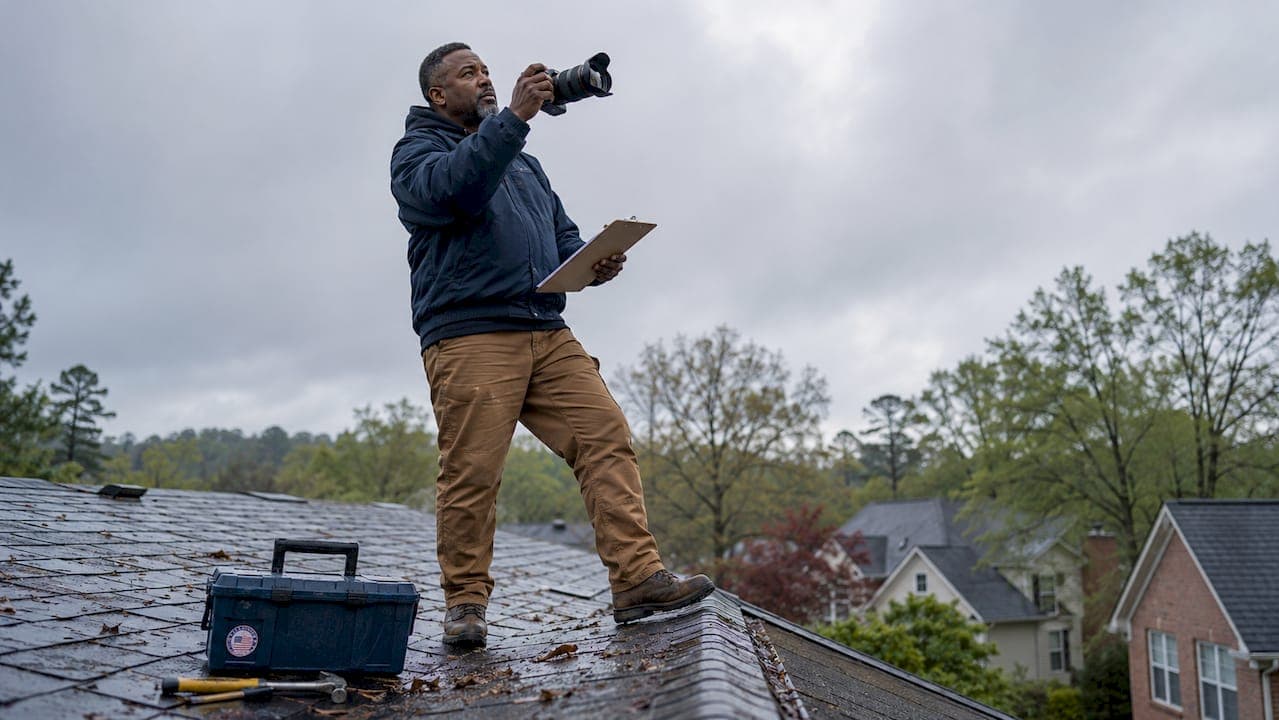
Contractor storm damage documentation is the systematic recording of physical evidence, written reports, and timestamped photos that support insurance claims and define the scope of repairs needed. Georgia homeowners who understand why contractors document storm damage gain a clear advantage when filing claims. Standard roof insurance claims resolve in 30–90 days, but disputed claims can stretch beyond six months. That gap almost always traces back to weak documentation. The difference between a paid claim and a denied one often comes down to what a contractor recorded on the day of the inspection.
Why contractors document storm damage: the core reason
Documentation is the primary tool contractors use to prove that storm damage is real, recent, and caused by a specific weather event. Insurance adjusters were not on your roof during the storm. They rely entirely on objective, verifiable evidence to make coverage decisions. Adjusters require timestamped, geotagged proof because subjective recollections carry no weight during a claim review.
The industry term for this process is "storm damage assessment documentation," and it covers far more than a few photos. A complete report includes written damage inventories, cause-of-loss statements, and a visual record that connects the storm event to each specific point of damage on your property. Without that connection, an adjuster can classify damage as wear and tear or pre-existing deterioration, and your claim fails.
Documentation is a core component of disaster recovery alongside life safety and structural stabilization. FEMA guidance and insurance industry best practices both treat it as a priority, not an afterthought. Contractors who treat documentation seriously protect both their payment and your claim payout.
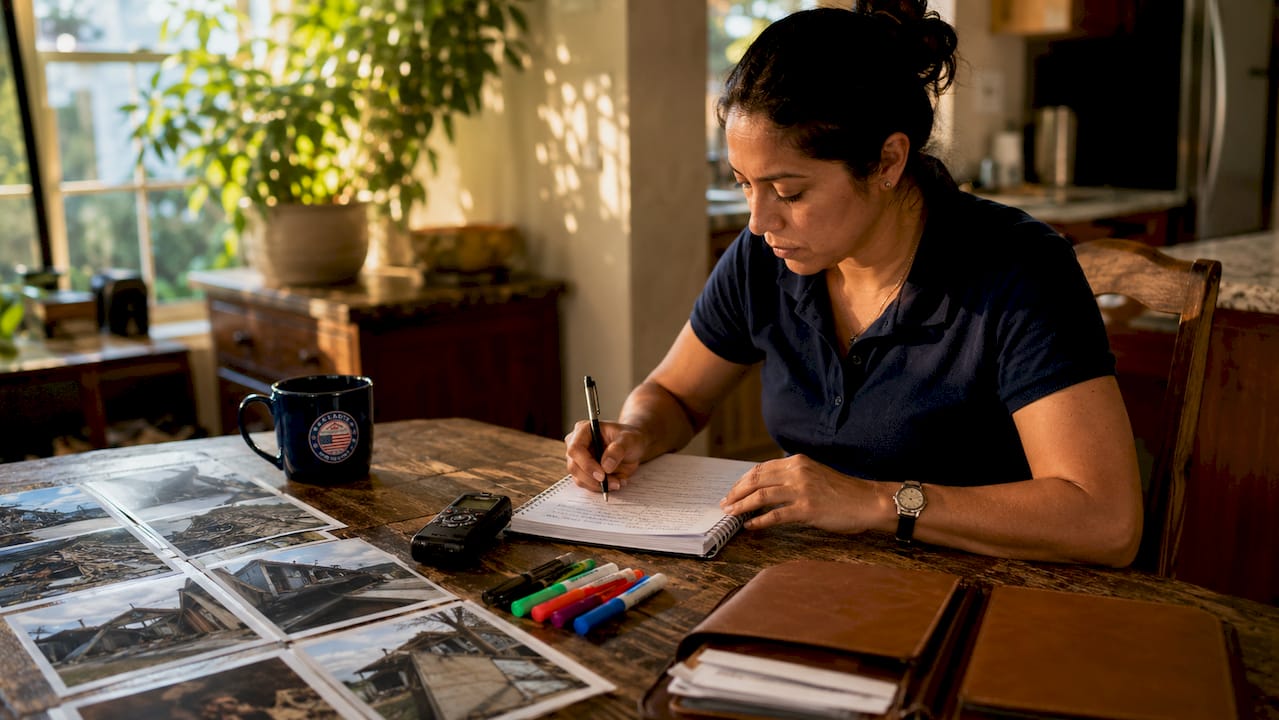
What do contractors actually record during a storm damage assessment?
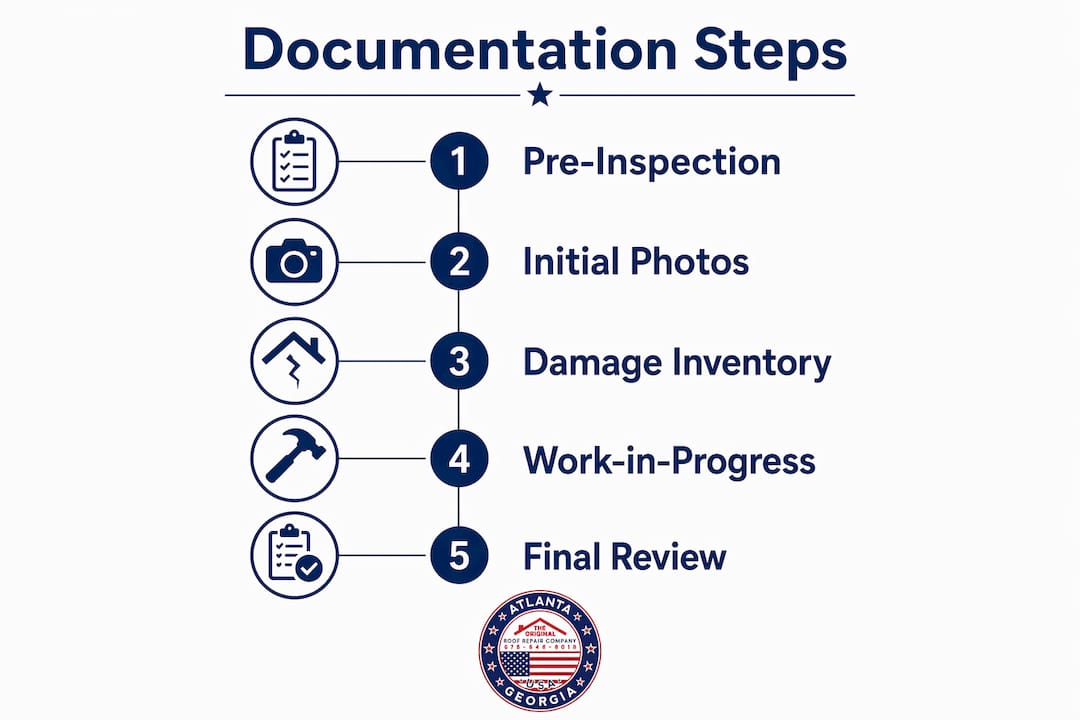
A thorough contractor inspection follows three distinct phases: pre-work, during-work, and post-work. Each phase serves a specific purpose in building a complete visual story for the insurer.
Pre-work documentation captures the condition of your roof and structure before any repairs begin. This phase includes:
- Wide-angle context photos showing the full roof plane and surrounding property
- Close-up shots of every impact point, missing shingle, or damaged flashing section
- Photos of interior water intrusion, staining, or structural compromise
- Video walkthroughs that establish the overall scope of damage
- Written notes identifying the cause of loss, such as hail impact, wind uplift, or falling debris
During-work documentation records hidden damage uncovered once repairs start. Rotted decking, failed underlayment, and compromised flashing often only become visible after surface materials are removed. Contractors photograph these conditions before covering them, because omitting cause-of-loss evidence is one of the most common reasons adjusters reject supplements.
Post-work documentation confirms that repairs were completed correctly and that all documented damage was addressed.
Pro Tip: Ask your contractor to photograph the manufacturer label on any replacement materials. This detail supports supplement claims and proves code-compliant materials were used.
Timestamps and geotags are not optional extras. They are the metadata that makes photos legally defensible. Best practices recommend 30–60 minutes of focused documentation immediately after a storm, before any cleanup disturbs the evidence.
How does detailed documentation affect insurance claim outcomes?
Thorough documentation directly determines whether your claim gets approved, how much you receive, and how fast the payment arrives. Weak documentation is the primary cause of claim delays, underpayments, and outright denials.
"Disciplined and consistent documentation is the single most effective way to prevent disputes, delays, and denials in storm damage restoration projects. It anchors the entire carrier-contractor relationship and protects the homeowner's recovery."
Lack of detailed evidence including photos, videos, and an itemized damage inventory is a primary cause of claim failures. That finding matters because many homeowners assume a contractor's verbal report is enough. It is not. Adjusters need a paper trail they can review independently, often weeks after the inspection.
Documentation also protects you during the supplement process. When a contractor discovers additional damage mid-repair, a well-documented file supports the request for additional payment. Without pre-existing photos of the hidden damage, the insurer has no reason to approve the supplement. Missing or thin documentation causes claim failures even when repairs are done correctly. The insurer needs to understand why each repair was necessary, not just that it happened.
A contractor who documents the cause of loss explicitly, such as a flashing failure caused by wind uplift rather than age, removes the adjuster's ability to reclassify the damage as a maintenance issue. That distinction can mean thousands of dollars in your settlement.
What challenges do Georgia homeowners face with storm damage claims?
Georgia's weather creates specific documentation challenges that homeowners in other states rarely encounter. The state sees frequent hail events, high-wind thunderstorms, and periodic tornado activity across Cherokee County and surrounding areas. Damage from these events often looks minor on the surface but causes significant hidden structural harm.
Common Georgia-specific challenges include:
- Short claim windows. Georgia policies typically require prompt notice after a storm. Waiting too long to contact a contractor means documentation happens after evidence has degraded or been disturbed.
- Mixed damage sources. A single storm can cause hail damage to shingles, wind damage to flashing, and water intrusion through a chimney. Each cause requires separate documentation to avoid blanket denials.
- Pre-existing damage disputes. Georgia adjusters frequently cite pre-existing wear when documentation does not clearly establish the storm as the cause. Homeowners who assume insurance covers all storm damage often face denied claims when their documentation does not counter this argument.
- Supplement disputes on older roofs. Insurers sometimes apply depreciation aggressively on roofs over 10 years old. Detailed contractor documentation of storm-specific damage, not general aging, is the only defense.
Understanding your Georgia roof insurance policy before a storm hits puts you in a far stronger position when you need to file. Knowing what your policy covers and what it excludes helps you ask the right questions when a contractor arrives.
How can homeowners work with contractors to strengthen their claim?
Your role in the documentation process is not passive. Homeowners who actively engage with their contractor produce stronger claims and fewer disputes.
- Request a written scope of damage before any work begins. A written report forces the contractor to commit to specific findings. It also gives you a document to share directly with your adjuster.
- Ask the contractor to identify the cause of loss in writing. "Wind damage to ridge cap" is more useful than "roof damage." Specific cause-of-loss language prevents adjusters from reclassifying damage.
- Retain every photo, report, and receipt. Organized documentation prevents overlooked damage and strengthens your claim file. Store digital copies in a cloud folder labeled with the storm date.
- Ask whether the contractor will attend the adjuster inspection. A contractor who walks the roof with your adjuster can answer technical questions in real time and prevent misclassification of damage.
- Submit contractor reports with your initial claim, not as an afterthought. Adjusters who receive complete documentation upfront process claims faster and with fewer follow-up requests.
Pro Tip: Before the contractor arrives, photograph your roof and all exterior surfaces yourself. Pre-storm baseline photos are powerful evidence that damage did not exist before the weather event.
Knowing what to expect from an insurance adjuster inspection in Georgia helps you prepare the right questions and avoid common mistakes that slow down your claim.
Key Takeaways
Contractor storm damage documentation is the single most reliable way to protect a Georgia homeowner's insurance claim from denial, underpayment, or delay.
| Point | Details |
|---|---|
| Documentation drives claim outcomes | Thorough photo, video, and written evidence is the primary factor in claim approval and payment speed. |
| Three-phase approach matters | Pre-work, during-work, and post-work documentation creates a complete visual story insurers can verify. |
| Cause of loss must be explicit | Contractors must link each damage point to a specific storm event to prevent adjusters from citing wear and tear. |
| Georgia claims have tight timelines | Standard claims resolve in 30–90 days; disputed claims can exceed six months without strong documentation. |
| Homeowners play an active role | Retaining all reports, attending adjuster inspections, and submitting organized files speeds up the process. |
What I've learned from watching claims fail over documentation
After four years of working roofs across Cherokee County and the surrounding area, the pattern I see most often is not bad storms or bad policies. It is good damage with bad paperwork.
Homeowners call me after their claim gets denied, and nine times out of ten the problem is the same. The contractor who came out first took a few photos on a phone, wrote a one-paragraph estimate, and never mentioned what caused the damage. The adjuster had nothing to work with. So they defaulted to the easiest answer: pre-existing condition.
The uncomfortable truth is that a roof can have $15,000 in legitimate storm damage and still produce a denied claim. The damage is real. The storm was real. But if no one documented the cause of loss, the hidden decking failure, or the flashing separation before repairs started, the insurer has no obligation to pay for it.
What I tell every homeowner before I get on their roof is this: the photos I take are not for me. They are for the adjuster who will never set foot on your property and will make a coverage decision based entirely on what I hand them. That changes how I document. Every shot has a purpose. Every note explains a "why," not just a "what."
If you are working with a contractor who cannot explain their documentation process before they start, that is a problem worth addressing before the work begins. Ask them directly: "How will you document the cause of loss?" If they hesitate, find someone who does not.
— Eric
Storm damage documentation and claims support from Theoriginalroofrepaircompany
Theoriginalroofrepaircompany serves homeowners across Cherokee County and 11 surrounding counties with a repair-first approach that includes full storm damage documentation and insurance claim advocacy.

When a storm hits your property, the clock starts immediately. Theoriginalroofrepaircompany documents hail, wind, and impact damage with timestamped photos, written cause-of-loss reports, and itemized damage inventories built to satisfy Georgia insurance adjusters. The team works directly with carriers and adjusters on your behalf, so you are not navigating the claim process alone. For emergency roof repair or a full insurance claim assessment, contact Theoriginalroofrepaircompany for a prompt, no-pressure evaluation.
FAQ
Why do contractors document storm damage before starting repairs?
Contractors document damage before repairs begin to establish a baseline record that proves the storm caused the damage. Without pre-repair photos, insurers can argue that damage occurred during the repair process itself.
What happens if a contractor's documentation is incomplete?
Incomplete documentation is a primary cause of claim delays, underpayments, and denials. Adjusters require objective, verifiable evidence to approve coverage, and gaps in the record give them grounds to reduce or reject the claim.
How long do Georgia homeowners have to file a storm damage claim?
Standard storm damage claims resolve in 30–90 days, but Georgia policies require prompt notice after a storm event. Waiting weeks to document damage risks evidence degradation and potential policy violations.
What is the most important thing a contractor should document?
The cause of loss is the most critical element. Contractors who omit cause-of-loss evidence leave adjusters free to classify damage as wear and tear, which voids coverage for storm-related repairs.
Should homeowners take their own photos after a storm?
Homeowners should photograph all exterior and interior surfaces immediately after a storm. Pre-storm and post-storm photos together create a before-and-after record that strengthens the contractor's professional documentation and supports the claim.