

A roof warranty covers material defects and workmanship failures for a set period, while a homeowners insurance claim covers sudden, accidental damage from events like storms, hail, or fire. These two protections are the foundation of understanding roof insurance coverage, and they are complementary, not interchangeable. Georgia homeowners who confuse the two often file claims with the wrong party, face denials, and end up paying out of pocket. Getting the roof warranty vs insurance claim explained correctly from the start saves time, money, and frustration.
What does a roof warranty typically cover and exclude?
A roof warranty is a written promise from either the manufacturer or the installing contractor that the roofing system will perform as specified for a defined period. The two main types are manufacturer warranties and workmanship warranties, and they cover very different things.
Manufacturer warranties cover defects in the roofing materials themselves. If shingles crack, blister, or lose granules prematurely due to a production flaw, the manufacturer is responsible. Workmanship warranties cover installation errors made by the contractor, such as improper flashing, poor nail placement, or inadequate sealing around penetrations.
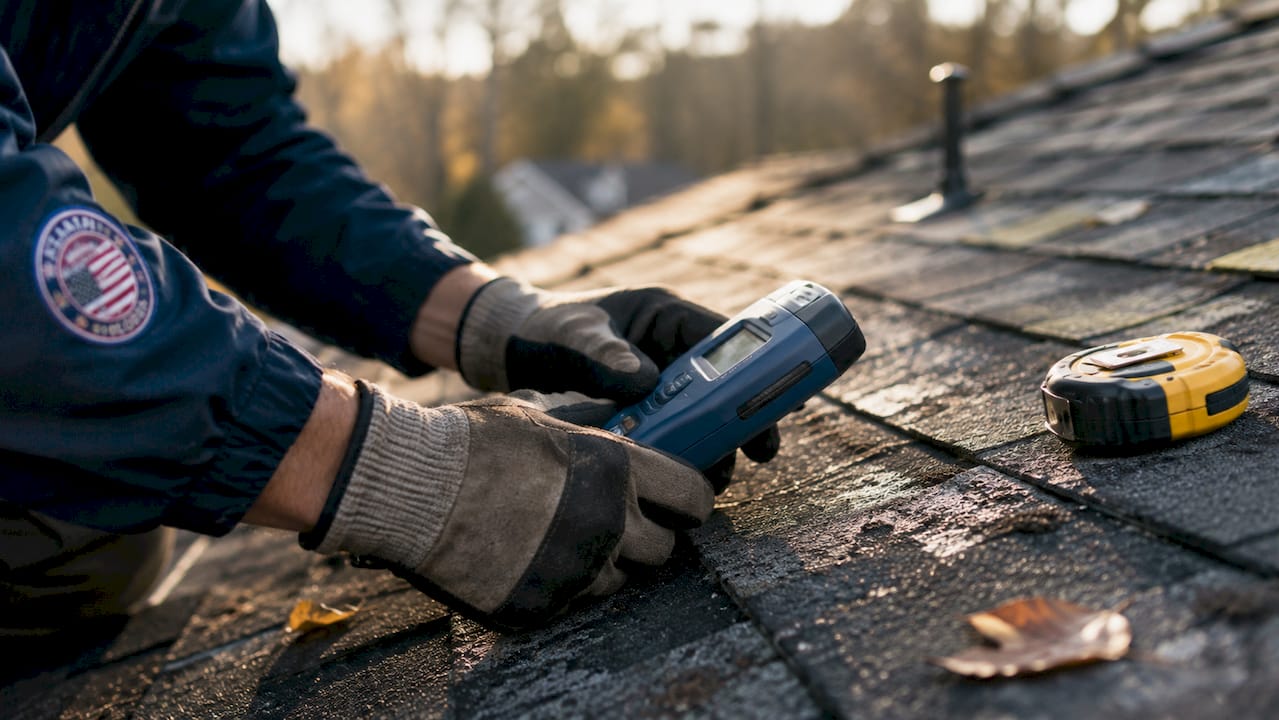
Coverage duration and terms vary significantly. System warranties covering both materials and labor can run 30–50 years on a non-prorated basis when installed by certified contractors. That is the best-case scenario. The more common reality is a "limited lifetime" warranty that sounds generous but becomes prorated after 10 years, meaning the manufacturer pays a shrinking fraction of repair costs as the roof ages. By year 15 or 20, the payout may cover only a small portion of actual repair expenses.
Warranties also carry strict exclusions. Storm damage, hail impact, and wind uplift are not covered because those are insurance events, not manufacturing failures. Maintenance neglect voids coverage entirely. Unauthorized modifications, such as a satellite dish installation or an HVAC contractor cutting through the roof deck without proper sealing, also void the warranty. The homeowner carries responsibility for routine upkeep.
- Material defects: covered under manufacturer warranty
- Installation errors: covered under workmanship warranty
- Storm or hail damage: excluded from warranty, covered by insurance
- Maintenance neglect: voids warranty coverage
- Unauthorized modifications: voids warranty coverage
Pro Tip: Keep a written log of every roof inspection, gutter cleaning, and repair. Warranty claims require proof that the damage was not caused by neglect, and a dated maintenance record is your best defense.
Certification matters for premium warranty benefits. Manufacturers require installation by credentialed contractors to activate their highest-tier coverage. An uncertified installer means the premium warranty is void before the first nail is driven.
How do roof insurance claims work and what do they cover?
A homeowners insurance claim is a formal request to your insurer to pay for roof damage caused by a covered peril. In Georgia, the most common covered perils are wind, hail, fire, and fallen trees. Gradual wear and tear, aging, and maintenance neglect are excluded from every standard policy.
The roof insurance claim process follows a clear sequence:
- Document the damage immediately after the event. Photograph every affected area from multiple angles, including close-ups of impact marks, missing shingles, and damaged flashing.
- Contact your insurer to open a claim. Provide the date of the storm or event and a description of visible damage.
- Schedule an adjuster inspection. The adjuster assesses the damage and determines whether it meets the policy's covered peril definition.
- Receive the estimate. The insurer issues a scope of work and payment based on either actual cash value or replacement cost value.
- Hire a licensed contractor to complete the approved repairs or replacement.
The distinction between actual cash value (ACV) and replacement cost value (RCV) is significant. ACV policies deduct depreciation from the payout, meaning an older roof yields a smaller check. RCV policies pay the full cost to restore the roof to its pre-damage condition. Georgia homeowners should verify which type their policy carries before a storm hits.
Wind and hail claims occur at an average frequency of 2.80 per 100 insured homes annually. That rate reflects how often Georgia homeowners actually need to use their insurance for roof damage. Deductibles matter here. Roof repair costs range from $400 to $2,000, and full replacements from $3,500 to $12,000 per 1,000 sq. ft. If your deductible is $2,500 and the repair costs $1,800, filing a claim makes no financial sense and may raise your premium.
Pro Tip: Before filing, get a contractor's written estimate. Compare it to your deductible. If the repair cost is close to or below your deductible, pay out of pocket and protect your claims history.
What are the key differences between roof warranties and insurance claims?
The core difference is the trigger. A warranty responds to internal failures, meaning defects in materials or errors in installation. Insurance responds to external events, meaning sudden, accidental damage from storms, fire, or falling objects.
| Factor | Roof warranty | Insurance claim |
|---|---|---|
| Coverage trigger | Material defect or workmanship error | Sudden, accidental damage from covered peril |
| Who pays | Manufacturer or installing contractor | Homeowners insurance carrier |
| Duration | 10–50 years depending on terms | Annual policy, renewed each year |
| Exclusions | Storm damage, neglect, unauthorized work | Gradual wear, maintenance neglect, age |
| Claim process | Contact contractor or manufacturer | Contact insurer, schedule adjuster |
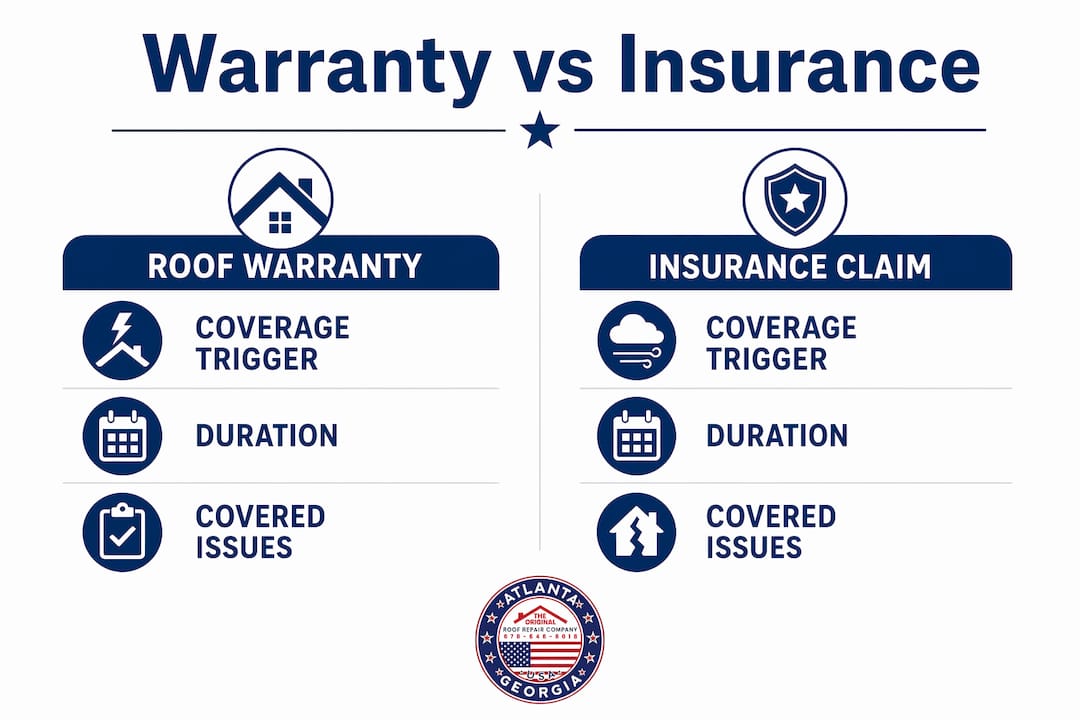
Insurance and warranties are complementary. A hailstorm that cracks shingles is an insurance event. Shingles that crack on their own due to a manufacturing flaw are a warranty event. The cause of damage determines who you call first.
A common misconception is that a warranty replaces the need for insurance. It does not. Warranties do not cover acts of nature. Insurance does not cover poor installation. Roof failure disputes frequently involve four parties: the insurer, the manufacturer, the installer, and the homeowner. Without clear documentation, each party points to another, and the homeowner absorbs the cost.
Pro Tip: When damage occurs, photograph everything before any repairs begin. Clear documentation of the cause, whether storm impact or material failure, determines which coverage applies and prevents disputes.
How to decide between a warranty claim and an insurance claim?
The decision starts with identifying the cause of damage. Ask one question: did something happen to the roof, or did the roof fail on its own?
- Storm, hail, wind, or fire damage: Contact your insurer first. This is a covered peril event.
- Shingles cracking, blistering, or failing without a weather event: Contact the manufacturer or your installing contractor. This is a potential warranty claim.
- Leaks around flashing or penetrations with no storm history: Contact the installing contractor. This is likely a workmanship issue.
- Damage after an unauthorized modification: Neither warranty nor insurance may cover it. Consult a licensed roofing contractor for an honest assessment.
Maintenance records are critical in both scenarios. Keeping documentation of biannual gutter cleaning and inspections proves that damage was sudden and accidental, not the result of neglect. Insurers and manufacturers both use maintenance history to evaluate claims.
Timing matters. File insurance claims promptly after a storm event. Most Georgia policies require notification within a reasonable period after damage occurs. Delayed reporting gives adjusters grounds to question whether the damage is storm-related or pre-existing.
Cost thresholds also guide the decision. Roof repairs in the $400 to $800 range rarely justify an insurance claim when deductibles are $1,500 or higher. For those smaller repairs, a warranty claim or direct out-of-pocket payment protects your premium rate. For full roof replacement after a major storm, an insurance claim is the appropriate path.
Theoriginalroofrepaircompany handles both sides of this process. The team documents storm damage with photographs and written assessments, then works directly with carriers and adjusters on the homeowner's behalf. For warranty-related repairs, the repair-first approach identifies whether the issue stems from installation or materials before any work begins.
Key Takeaways
Roof warranties and insurance claims cover different damage causes, and using the right one for the right situation is the single most important decision a Georgia homeowner makes after roof damage occurs.
| Point | Details |
|---|---|
| Warranties cover internal failures | Manufacturer defects and workmanship errors are warranty events, not insurance events. |
| Insurance covers external events | Wind, hail, fire, and fallen trees trigger insurance claims, not warranty claims. |
| Certification unlocks premium coverage | Only certified contractor installations activate 30–50 year non-prorated system warranties. |
| Maintenance records protect both claims | Documented upkeep prevents denials from both insurers and manufacturers. |
| Cost thresholds guide the decision | Compare repair cost to your deductible before filing an insurance claim on smaller repairs. |
What I've learned after four years of roof repairs in Georgia
Most homeowners I meet have never read their warranty document or their insurance policy declarations page. They find out what is and is not covered at the worst possible moment, standing in a wet living room after a storm.
The biggest mistake I see is homeowners assuming their insurance covers everything. It does not. A roof that fails because the installer used the wrong nail pattern, or skipped the starter strip, is a workmanship issue. Insurance will not pay for that. The contractor who installed it is responsible, and if they issued a workmanship warranty, that document is your leverage.
The second mistake is the opposite. Homeowners with a storm-damaged roof call the manufacturer instead of their insurer, waste weeks in a back-and-forth, and then miss the window to file a timely insurance claim. Hail damage is an insurance event. Always start there.
My honest advice: read both documents before you need them. Know your deductible. Know whether your warranty is prorated or non-prorated. Know which contractor installed your roof and whether they were certified. That preparation takes 30 minutes and can save you thousands.
Georgia gets real weather. Storms, hail, and wind are not hypothetical risks here. Treat your roof coverage the same way you treat your health insurance. Understand it before the emergency, not after.
— Eric
Theoriginalroofrepaircompany: local help with warranties and insurance claims
Sorting out roof damage in Georgia is easier with a contractor who knows both sides of the coverage equation.

Theoriginalroofrepaircompany serves Cherokee County and 11 surrounding counties with a repair-first approach that starts with an honest diagnosis. For storm damage, the team documents hail and wind impact and works directly with your carrier and adjuster through the full insurance claim process. For workmanship or material concerns, the team identifies the cause before recommending any repair. When urgent damage needs immediate attention, emergency roof repair is available across the service area. BBB accredited, family-owned, and built on transparent pricing with no pressure.
FAQ
What is the difference between a roof warranty and insurance?
A roof warranty covers material defects and installation errors for a set period. Homeowners insurance covers sudden, accidental damage from covered perils like wind, hail, or fire.
Does a roof warranty cover storm damage in Georgia?
No. Storm damage is excluded from manufacturer and workmanship warranties. Storm damage is an insurance event and must be filed with your homeowners insurance carrier.
How long does a roof warranty last?
Warranty terms range widely. System warranties installed by certified contractors can run 30–50 years non-prorated. Standard limited lifetime warranties often become prorated after 10 years, reducing payout value significantly.
When should I file a roof insurance claim instead of a warranty claim?
File an insurance claim when damage results from a storm, hail, fire, or fallen tree. File a warranty claim when the roof fails without an external event, pointing to a material defect or installation error.
Can a roof warranty and insurance claim apply to the same damage?
Rarely, but it is possible in sequential situations. For example, a storm may expose a pre-existing installation flaw. In that case, the insurance claim covers the storm damage, and the workmanship warranty may cover the underlying installation failure. Document both causes separately and contact your insurer and contractor independently.