
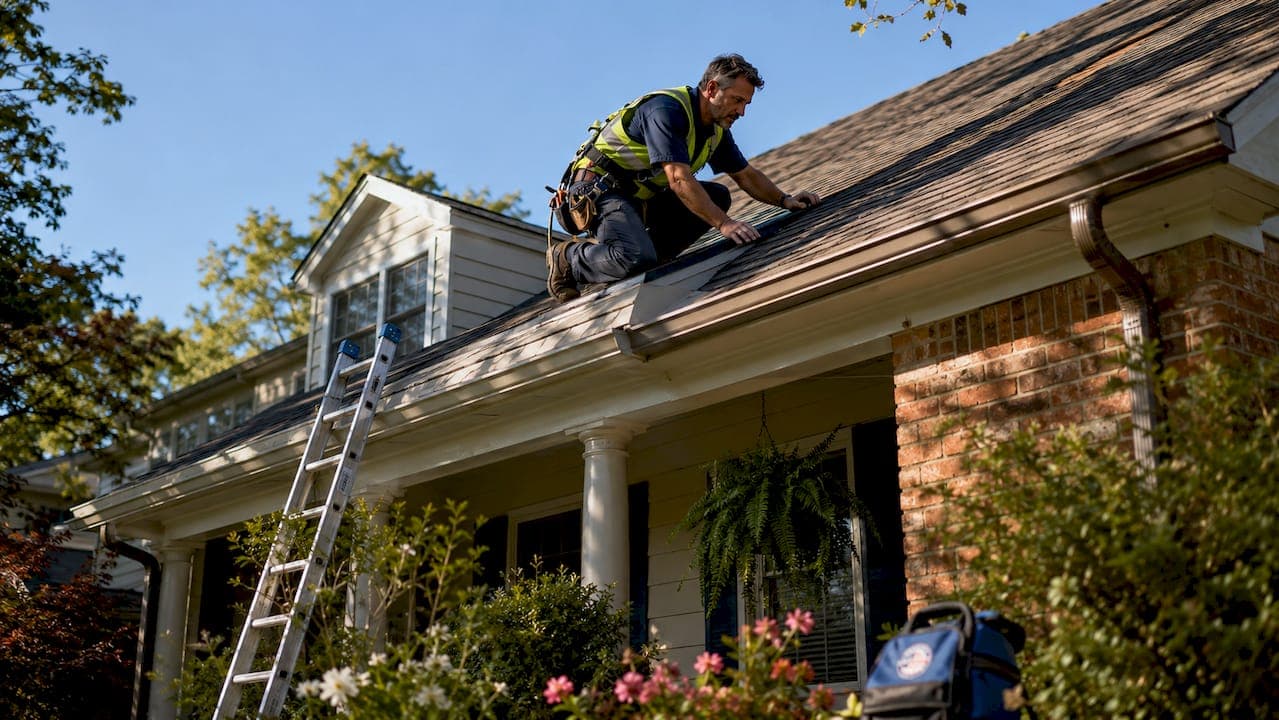
Annual roof inspection is defined as a systematic, professional evaluation of every component of your roofing system, conducted at least once per year to identify damage before it becomes a structural or financial crisis. Georgia homeowners face a specific set of risks: high humidity, severe thunderstorms, hail, and wide seasonal temperature swings that accelerate roof wear faster than most national averages suggest. The National Roofing Contractors Association (NRCA) recommends professional inspections at least twice per year, and skipping them is one of the most expensive maintenance mistakes a homeowner can make. This guide explains why roof needs annual inspection, what professionals look for, what it costs, and what Georgia's climate means for your schedule.
Why roof needs annual inspection: the core case
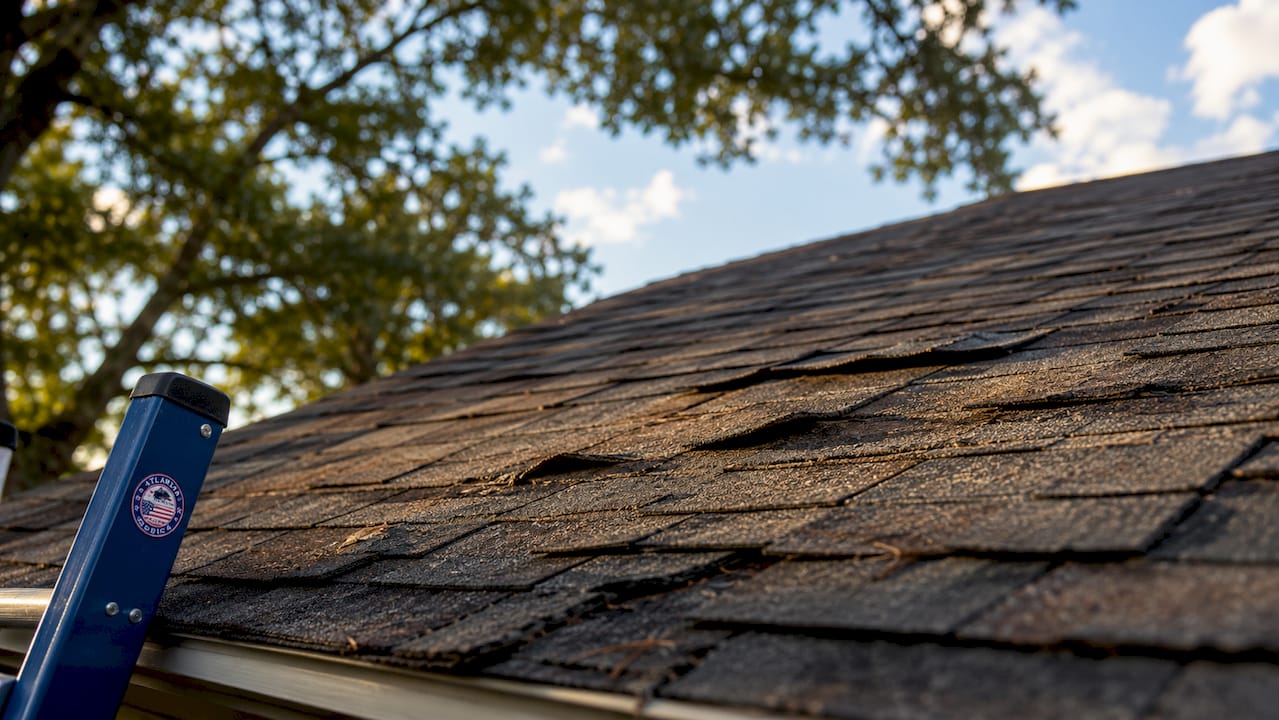
A roof does not fail all at once. It fails gradually, through small cracks in flashing, a few lifted shingles, or a compromised boot seal around a pipe. None of these are visible from the ground, and most homeowners never notice them until water appears on the ceiling. By that point, the damage has typically spread to the decking, insulation, and sometimes the framing.
Documented roof inspections serve as vital evidence for insurance claims and manufacturer warranty compliance. That means skipping an inspection does not just risk the roof. It risks your ability to file a valid claim when something goes wrong.
Preventive roof maintenance typically costs 1–3% of the roof's total value annually, whereas neglecting minor repairs can lead to costs ten times higher for reactive repair programs. That ratio is the clearest financial argument for annual inspections. A $300 inspection that catches a $400 flashing repair prevents a $4,000 water damage claim.
Annual inspections also protect home value. Maintaining roof condition through regular inspections leads to an estimated 15% increase in home appraisal value by preventing structural damage. For a $350,000 home in Cherokee County, that is a meaningful number.
How often should Georgia homeowners schedule roof inspections?
The NRCA's guidance is clear: schedule professional inspections at least twice annually, in spring and fall, with additional inspections required within 72 hours after any severe weather involving hail or wind gusts over 60 mph. For Georgia homeowners, that recommendation is not conservative. It is practical.
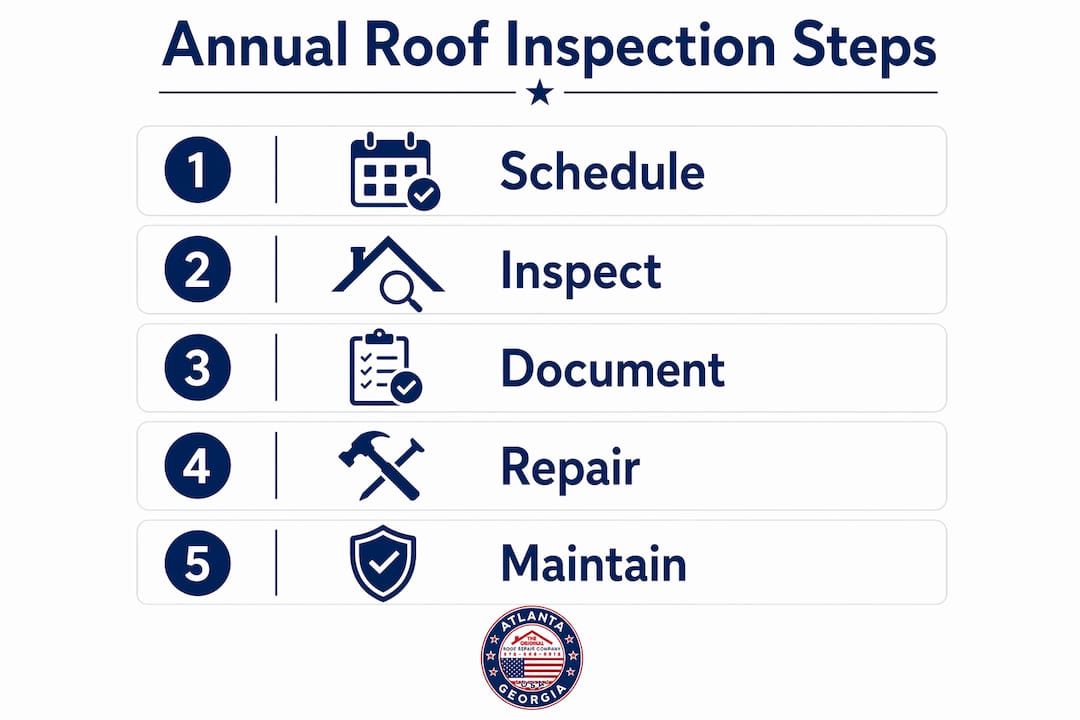
Spring inspections catch damage from winter ice, freeze-thaw cycles, and debris accumulation. Fall inspections prepare the roof for cold weather and identify any summer storm damage before it worsens. Georgia's active storm season runs from March through October, which means the window between inspections can include multiple damaging events.
Timing recommendations for Georgia homeowners:
- Spring (march to April): Check for winter damage, lifted shingles, and clogged gutters from leaf and debris buildup.
- Fall (october to November): Identify summer storm damage and prepare drainage systems before winter.
- After any major storm: Post-storm inspections are essential within 72 hours when hail exceeds one inch or sustained winds top 60 mph.
- Older roofs: Roofs exceeding 75% of their estimated service life should be inspected at least twice yearly as a critical risk-mitigation step, often expected by insurers.
- After nearby tree work: Falling limbs and debris from trimming operations can cause impact damage that looks minor but compromises shingle integrity.
Pro Tip: Sign up for Theoriginalroofrepaircompany's weather alerts to get notified when a storm in Cherokee County or surrounding areas warrants a post-storm inspection.
What does a professional roof inspector examine?
Professional roof inspectors conduct a systematic evaluation that goes far beyond a visual scan from the driveway. A thorough inspection covers ventilation, flashing, and structural integrity to catch issues invisible from the ground or during casual reviews. That depth is what separates a professional inspection from a homeowner's walk-around.
A standard annual inspection checklist covers these core areas:
- Roof materials: Shingles are checked for cracking, curling, missing granules, blistering, and impact marks from hail. Inspectors look for patterns of wear, not just isolated damage.
- Flashing and penetrations: Metal flashing around chimneys, skylights, vents, and pipe boots is the most common source of leaks. Inspectors check for separation, rust, and improper sealing.
- Drainage systems: Gutters and downspouts are examined for blockages, sagging, and improper slope that causes water to pool against the fascia.
- Water damage indicators: Staining, soft spots, and moss or algae growth signal moisture intrusion that may already be affecting the decking below.
- Attic and ventilation: Inspectors enter the attic to check for daylight penetration, moisture staining on rafters, insulation compression, and signs of inadequate airflow that accelerate shingle aging.
- Structural elements: Ridge lines, valleys, and eaves are checked for sagging or deflection that signals decking or framing issues.
Professional inspections typically last 45 minutes to 2 hours depending on home size and complexity, and cost $150 to $400. That time investment produces a written report with photographs, which becomes your documentation for warranty claims and insurance filings.
Pro Tip: Ask your inspector to provide a written report with timestamped photos. That documentation is what your insurance adjuster will want to see if you file a claim after a storm.
What are the financial benefits of annual roof inspections?
The financial case for annual inspections is straightforward. Proactive annual maintenance can save approximately $0.11 per square foot, totaling over $230,000 in savings over 21 years on a large commercial roof. The principle scales directly to residential properties. Catching a $200 flashing repair early prevents a $2,000 interior water damage repair later.
| Scenario | Estimated Cost |
|---|---|
| Annual professional inspection | $150–$400 |
| Minor repair caught during inspection | $200–$800 |
| Water damage repair from ignored leak | $2,000–$8,000 |
| Full roof replacement from deferred maintenance | $10,000–$20,000+ |
| Insurance claim denial from no inspection records | Full repair cost out of pocket |
The insurance angle is particularly important for Georgia homeowners. Many carriers require documented proof of maintenance when processing storm damage claims. Without inspection records, a carrier can argue that pre-existing damage contributed to the loss and reduce or deny the payout. Inspection documentation protects your investment by establishing a clear maintenance history that supports your claim.
Theoriginalroofrepaircompany's roof insurance claims service works directly with carriers and adjusters on the homeowner's behalf, using documented inspection findings to support accurate claim settlements.
How can homeowners safely inspect their own roofs?
Homeowners can perform basic visual checks without climbing onto the roof. Ground-level observation with binoculars covers a surprising amount of surface area and can reveal obvious problems like missing shingles, visible sagging, or heavy moss growth. These checks are worth doing after every significant storm.
Safe DIY inspection steps from the ground and ladder:
- From the ground: Use binoculars to scan the full roof surface for missing, curled, or discolored shingles. Check gutters from the ground for granule buildup, which signals shingle wear.
- From a ladder at the eave: Inspect gutters for debris and check the fascia board for rot or staining. Do not step onto the roof without proper footwear and a safety harness.
- Inside the attic: Check for daylight coming through the decking, dark staining on rafters, and any damp insulation. This is the safest and most revealing DIY check available.
- After rain: Walk the perimeter and look for water pooling near the foundation, which can indicate drainage failure at the gutters or downspouts.
Significant signs that require a professional evaluation include soft spots on the decking, active leaks, visible structural sagging, and any damage following a storm with hail or high winds. DIY checks are a useful supplement, not a replacement for professional inspection.
Pro Tip: Take dated photos during every DIY check. If damage appears later, those photos establish a timeline that helps your insurance claim.
What unique challenges do Georgia homeowners face?
Georgia's climate creates specific roofing risks that homeowners in drier or colder states do not deal with at the same intensity. High humidity accelerates algae and moss growth on shingles, which traps moisture and degrades the granule layer faster than normal weathering. Cherokee County and the surrounding north Georgia region also sit in a corridor that sees frequent severe thunderstorms, hail events, and occasional high-wind events from tropical systems moving inland.
Key Georgia-specific inspection considerations:
- Humidity and biological growth: Algae streaking and moss are common on north-facing roof sections. Both retain moisture and shorten shingle life. Inspectors check for growth patterns that signal chronic moisture exposure.
- Hail frequency: North Georgia sees multiple hail events per year. Even small hail can crack or dent shingles in ways that are not visible without close inspection but create entry points for water.
- Seasonal temperature swings: Temperatures in Cherokee County can swing 40–50 degrees between winter nights and summer afternoons. That thermal cycling stresses sealants and flashing joints over time.
- Insurance documentation requirements: Georgia insurers increasingly require proof of maintenance when processing storm claims. Annual inspection records directly support claim approvals.
- Asphalt shingle prevalence: Most Georgia homes use asphalt shingles, which have a typical service life of 20–30 years but require consistent maintenance to reach that range in Georgia's climate.
Key Takeaways
Annual roof inspections are the single most cost-effective maintenance step a Georgia homeowner can take, preventing repair costs that routinely run ten times higher than the inspection fee itself.
| Point | Details |
|---|---|
| Inspect at least once per year | The NRCA recommends biannual inspections, with additional checks after storms with hail over one inch or winds over 60 mph. |
| Inspections protect insurance claims | Documented inspection records serve as required evidence for insurance claim approvals and manufacturer warranty compliance. |
| Early repairs cost far less | Preventive maintenance costs 1–3% of roof value annually; ignoring repairs leads to costs ten times higher. |
| Georgia climate demands consistency | Humidity, hail, and thermal cycling accelerate roof wear, making annual inspections more critical than in milder climates. |
| Home value rises with roof condition | Maintained roofs contribute an estimated 15% increase in home appraisal value by preventing structural damage. |
What I've learned after four years of Georgia roofs
Most homeowners call me after the ceiling is already stained. That is the pattern I see more than any other. The leak did not start the week before the call. It started months earlier, at a flashing joint or a cracked boot seal, and worked its way inward slowly. By the time water shows up inside, the decking is often soft and the repair cost has tripled what it would have been at the source.
The part that surprises homeowners most is how little the original problem looked like a problem. A lifted shingle edge. A small gap where the flashing meets the chimney. These are not dramatic failures. They are the kind of thing you walk past a hundred times without noticing, because you are not looking for them and you do not know what to look for.
Annual inspections change that equation. A qualified inspector knows exactly where roofs fail first in Georgia's climate, and they check those spots systematically. That knowledge is not something a homeowner builds without years on rooftops. It is also not something you should have to build. That is what professionals are for.
My advice is simple: treat your roof the way you treat your HVAC system. You service the HVAC every year without waiting for it to stop working. Your roof deserves the same discipline. The cost is low. The protection is real. And in Georgia, where storms can hit hard and fast, the documentation from a professional inspection is worth its weight when you are sitting across from an insurance adjuster.
— Eric
Theoriginalroofrepaircompany serves Georgia homeowners year-round
Theoriginalroofrepaircompany is a family-owned roofing business based in Canton, Georgia, serving Cherokee County and 11 surrounding counties. The team handles the inspections, repairs, and insurance documentation that protect your home before and after Georgia's storm season.

When an inspection finds damage, Theoriginalroofrepaircompany's professional roof repair team addresses it directly, with transparent pricing and a repair-first approach. For urgent situations after a storm, emergency roof repair service is available across the service area. The company also provides full insurance claim advocacy, working with your carrier and adjuster to document damage and support a fair settlement. Contact Theoriginalroofrepaircompany to schedule your annual inspection before the next storm season arrives.
FAQ
Why does a roof need an annual inspection?
Annual roof inspections identify hidden damage from weather, aging, and wear before it becomes a structural or water intrusion problem. Catching issues early prevents repair costs that routinely run ten times higher than the inspection fee.
How much does a professional roof inspection cost in Georgia?
Professional residential roof inspections typically cost $150 to $400 and last 45 minutes to 2 hours depending on home size and complexity.
How does a roof inspection help with insurance claims?
Documented inspection records serve as required evidence for insurance claim approvals and manufacturer warranty compliance. Without inspection history, carriers can reduce or deny storm damage claims by citing pre-existing conditions.
Can homeowners safely inspect their own roofs?
Homeowners can perform basic visual checks from the ground and from a ladder at the eave, but professional inspections remain necessary because trained inspectors identify damage invisible from ground level, including flashing failures, attic moisture, and structural issues.
How often should older roofs be inspected?
Roofs that have exceeded 75% of their estimated service life should be inspected at least twice per year. Many insurers expect this frequency as a standard risk-mitigation requirement for aging roofing systems.