
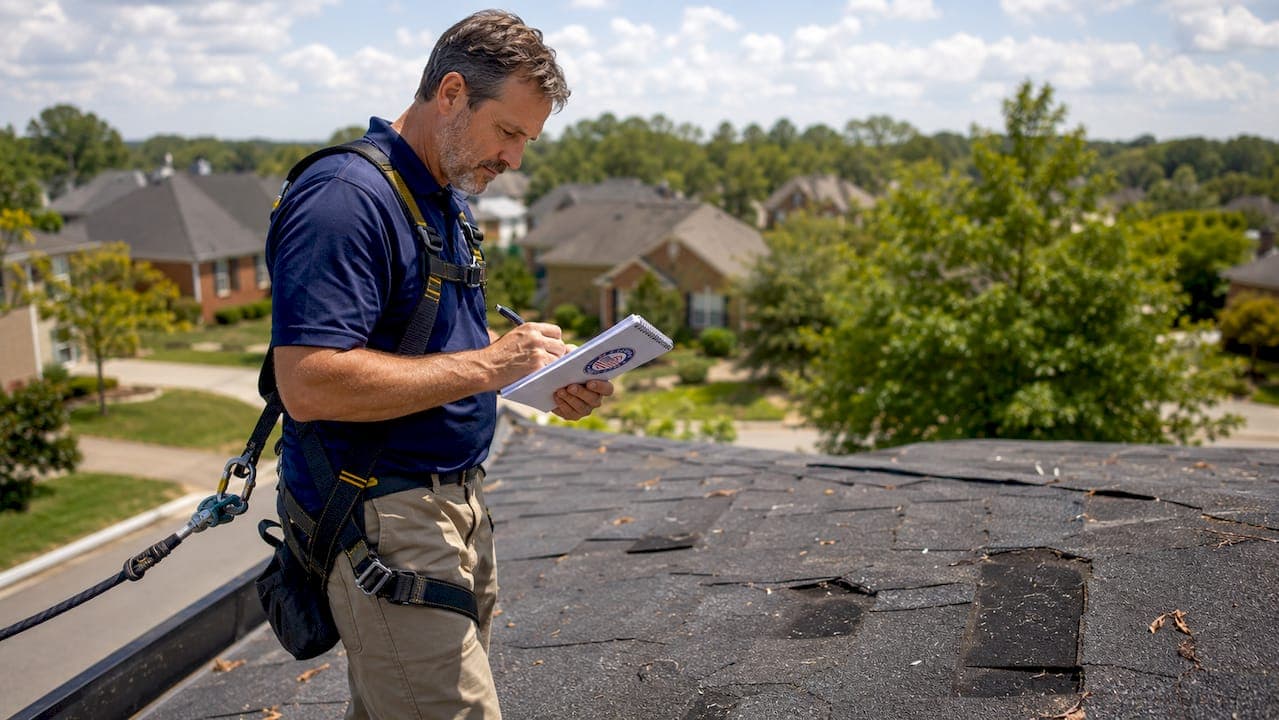
An adjuster underpays a roof claim when their estimate fails to cover all necessary repairs due to missed damage, an incomplete scope, or undervalued pricing. This is the leading cause of roof damage claim disputes across Georgia, particularly after hail and windstorms. The industry term for this problem is "claim underpayment," and it affects homeowners whose adjusters conducted rushed or superficial inspections. Understanding why adjuster underpays roof claim situations happen is the first step toward getting the settlement you are owed.
Why does an adjuster underpay a roof claim?
Adjusters work for the insurance company, and their estimates reflect the company's interest in minimizing payouts. This is not always intentional fraud. It is a systemic incentive built into how insurance carriers structure their claims process. The result is that adjuster estimates routinely fall short of what licensed contractors actually charge to complete the same repairs.
The gap between an adjuster's estimate and a real contractor bid is the clearest sign your claim was underpaid. When multiple licensed contractor bids all exceed the insurance estimate by a significant margin, the issue is almost always incomplete coverage of damaged areas, not a simple pricing disagreement. That gap tells you the adjuster missed something.

Underpayments fall into two categories: depreciation issues and scope gaps. Depreciation reduces your actual cash value (ACV) payment on older roofs. Scope gaps mean the adjuster left entire repair items off the estimate entirely. Scope gaps are the primary reason claims stay low even after accounting for depreciation, and they are the harder problem to spot without a professional review.
What hidden roof damage do adjusters commonly miss?
Adjusters conducting quick inspections regularly miss damage that is not visible from a standing position on the roof. Rushed or limited inspections frequently overlook damage to less visible roof slopes, gutters, vents, and interior water intrusion. Each missed item reduces your claim payment directly.
The most commonly overlooked damage types include:
- Lifted shingles that appear intact from a distance but have broken seals underneath, allowing water infiltration
- Damaged decking beneath the shingles, which is only visible after partial demolition during repair
- Compromised step flashing around chimneys, skylights, and walls, which fails gradually and causes interior leaks
- Underlayment damage that becomes apparent only once shingles are removed
- Soft-metal components including gutters, vents, and flashing that show hail strikes clearly but are frequently excluded from estimates
- Interior water intrusion caused by storm damage that has already reached ceilings or insulation
Underlayment and decking damage are invisible from the ground and often become apparent only after partial demolition during repair. This is why initial adjuster inspections so frequently underestimate necessary repairs. The adjuster sees the surface. The contractor sees what is underneath.
Pro Tip: Document every room in your home with photos after a storm, including ceiling stains, wet insulation, and attic moisture. Interior evidence of water intrusion strengthens your claim for hidden roof damage.
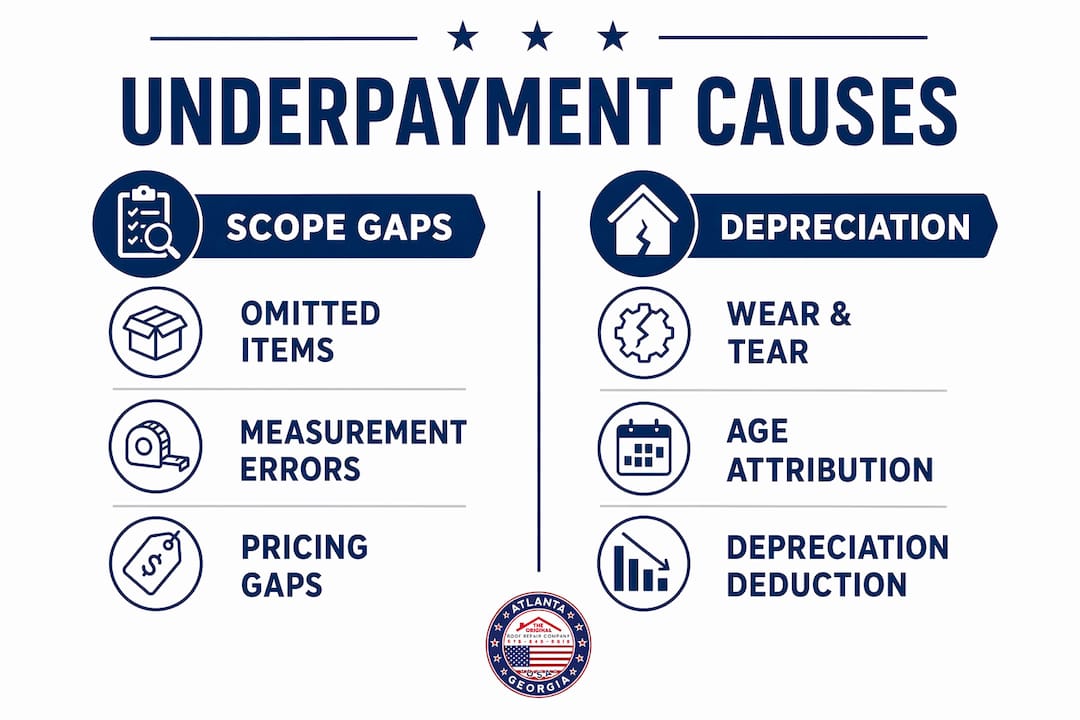
How do scope errors and pricing gaps cause low settlements?
Technical errors in an adjuster's scope of work are the most common cause of claim underpayment. Adjusters frequently omit essential components like drip edge, starter strips, ridge cap, step flashing, and haul-off costs. These are standard line items in any legitimate contractor bid, but they disappear from insurance estimates with surprising regularity.
Measurement errors compound the problem. An adjuster who calculates roof squares incorrectly will underprice the entire job from the start. Even when measurements are accurate, the pricing applied to each line item often does not match local market conditions in Cherokee County or the surrounding Georgia counties. Adjusters frequently use pricing software with outdated data that does not reflect current material and labor costs.
The table below shows common scope omissions and their real-world impact:
| Omitted Item | Why It Matters |
|---|---|
| Drip edge | Required by Georgia building code; omitting it means the homeowner pays out of pocket |
| Starter strips | Necessary for proper shingle installation; skipping them voids manufacturer warranties |
| Haul-off and disposal | Dumpster and debris removal costs are real and significant; adjusters routinely exclude them |
| Step flashing replacement | Flashing around chimneys and walls must be replaced with shingles; often listed as reusable when it is not |
| Underlayment upgrade | Code-required synthetic underlayment costs more than felt; estimates often use felt pricing |
A line-by-line scope comparison between the adjuster's estimate and a contractor's bid reveals exactly which items are missing. That comparison is the foundation of any successful supplement or dispute.
Pro Tip: Ask your contractor to format their bid using the same line-item structure as the insurance estimate. Side-by-side comparison makes omissions impossible to ignore.
How do wear-and-tear attributions reduce your claim payment?
Insurers frequently attribute roof damage to wear and tear rather than storm events, and this distinction directly reduces what they pay. Wear and tear is a policy exclusion. When an adjuster labels damage as pre-existing deterioration rather than storm-caused, the insurer legally owes nothing for that portion of the repair.
This tactic is especially common on roofs older than 10 years. The signs of wear and tear, including granule loss, cracked caulk, and minor shingle curling, can coexist with genuine storm damage. Adjusters sometimes use the presence of wear to discount or deny storm-related claims entirely. The result is a payment that covers only a fraction of what the storm actually caused.
Common ways this shows up in Georgia claims include:
- Attributing hail strikes on soft metals to "normal aging" rather than impact damage
- Labeling lifted shingles as "wind-weakened before the storm" rather than storm-caused
- Citing granule loss as evidence of an old roof rather than hail impact
- Applying heavy depreciation to roofs over 15 years old, reducing ACV payments to near zero
Depreciation hits older roofs especially hard. An adjuster can acknowledge storm damage and still pay very little if they apply steep depreciation to an aging roof. Understanding whether your policy pays replacement cost value (RCV) or actual cash value (ACV) determines how much depreciation affects your final check.
What steps can Georgia homeowners take to dispute a low claim?
Disputing an underpaid claim requires documentation, not just disagreement. Georgia homeowners should request detailed written explanations from their insurer and supply supplementary evidence including photos, independent inspections, and licensed contractor estimates. A verbal complaint accomplishes nothing. A written, documented dispute backed by evidence accomplishes a great deal.
Follow these steps in order:
- Request the full written estimate. Ask your insurer for the complete Xactimate or itemized estimate, not just the payment summary. You need every line item.
- Get at least two licensed contractor bids. Each bid should be itemized and cover the same scope as the adjuster's estimate. Gaps become obvious in direct comparison.
- Photograph everything before any repairs begin. Capture all slopes, all soft metals, gutters, vents, and any interior damage. Date-stamped photos are your strongest evidence.
- Request a re-inspection. You have the right to ask the insurer to send a different adjuster or a field supervisor to review the damage in person.
- File a supplemental claim. Hidden storm damage like underlayment and decking issues often surfaces during repair. Supplements are common and legitimate. File one as soon as new damage is discovered.
- Hire an independent inspector or public adjuster. An independent professional assesses damage without any financial incentive to minimize it.
- Consult a property insurance attorney if needed. Georgia law provides homeowners with legal remedies when insurers act in bad faith. An attorney who specializes in property claims can evaluate whether your situation qualifies.
Pro Tip: Never accept a settlement check without confirming it is not marked "final payment" or "full and final settlement." Cashing a check with that language can waive your right to file a supplement later.
Precise written roof scopes with line-item specificity, including damaged squares, component lists, and critical assumptions, create stronger claims and reduce disputes over payment amounts. Arguing total dollar amounts rarely works. Arguing specific missing line items almost always does.
Key Takeaways
Adjuster underpayment is a scope and documentation problem, not just a pricing disagreement, and Georgia homeowners who document damage thoroughly and compare estimates line by line recover significantly more from their claims.
| Point | Details |
|---|---|
| Scope gaps drive underpayment | Missing line items like drip edge, haul-off, and flashing cause larger payment gaps than depreciation alone. |
| Hidden damage requires demolition | Underlayment and decking damage is invisible until repair begins; file supplements when new damage appears. |
| Adjuster incentives matter | Adjusters work for the insurer; their estimates reflect cost-minimization, not full repair coverage. |
| Documentation is your leverage | Date-stamped photos, multiple contractor bids, and written requests form the basis of any successful dispute. |
| Wear-and-tear attribution is disputable | Hail and wind damage can coexist with aging; challenge attributions with independent inspection evidence. |
What I've learned after four years of Georgia roof claims
After four years of working directly with homeowners across Cherokee County and the surrounding area, I can tell you that the pattern is consistent. The adjuster visits, spends 20 to 30 minutes on the roof, and produces an estimate that leaves out half the work. The homeowner gets a check that does not come close to covering what a licensed contractor actually quotes. Then the homeowner assumes they did something wrong.
They did not do anything wrong. The system is built this way.
What I have found is that the homeowners who recover fair settlements are the ones who treat the claim like a negotiation from day one. They photograph everything before the adjuster arrives. They get two or three contractor bids in writing. They read the adjuster's estimate line by line and circle every item that is missing. That level of preparation changes the outcome.
The most common mistake I see is accepting the first check too quickly. Once you cash that check and it is marked as final settlement, your options narrow significantly. The second most common mistake is arguing about the total dollar amount instead of the specific missing items. Insurers respond to documentation, not frustration.
Theoriginalroofrepaircompany documents storm and hail damage thoroughly before any adjuster visit and works directly with carriers on the homeowner's behalf. That process exists because I have seen what happens when homeowners go through it alone.
— Eric
Roof claim support from Theoriginalroofrepaircompany
Georgia homeowners dealing with a low insurance settlement do not have to figure it out alone. Theoriginalroofrepaircompany provides roof insurance claim advocacy for storm, hail, and wind damage across Cherokee County and 11 surrounding counties, documenting damage thoroughly and working directly with carriers and adjusters on your behalf.

When storm damage requires immediate attention, the emergency roof repair service gets a professional on site fast, with documentation that supports your claim from the start. For general storm and hail repairs, the roof repair service covers everything from missing shingles to flashing failures, with transparent pricing and no-pressure guidance. Contact Theoriginalroofrepaircompany to get a professional assessment before accepting any settlement.
FAQ
Why is my roof insurance claim payment so low?
Low payments typically result from an incomplete adjuster scope that omits standard repair items like drip edge, flashing, and haul-off costs, or from outdated pricing that does not match current local labor and material rates. Comparing the adjuster's estimate line by line against a licensed contractor bid reveals the specific gaps.
Can I dispute an underpaid roof claim in Georgia?
Yes. Georgia homeowners can request a re-inspection, file a supplemental claim, hire an independent inspector or public adjuster, and consult a property insurance attorney if the insurer acts in bad faith. Submitting written documentation and itemized contractor estimates strengthens any dispute.
What is a supplemental roof claim?
A supplemental claim is an additional claim filed after the initial settlement when new damage is discovered during repair, such as underlayment or decking damage that was not visible during the original inspection. Supplements are a standard and legitimate part of the roofing claims process.
How do I know if my adjuster missed roof damage?
The clearest sign is a large gap between the adjuster's estimate and multiple licensed contractor bids. Other signs include no mention of soft-metal damage, missing line items for flashing or underlayment, and no documentation of interior water intrusion despite visible ceiling stains.
Does roof age affect my insurance claim payment?
Yes. Insurers apply depreciation to older roofs, which reduces the actual cash value payment. Policies that pay replacement cost value (RCV) recover that depreciation after repairs are complete, while ACV-only policies do not. Heavy depreciation on roofs over 15 years old can reduce payments to a fraction of actual repair costs.