
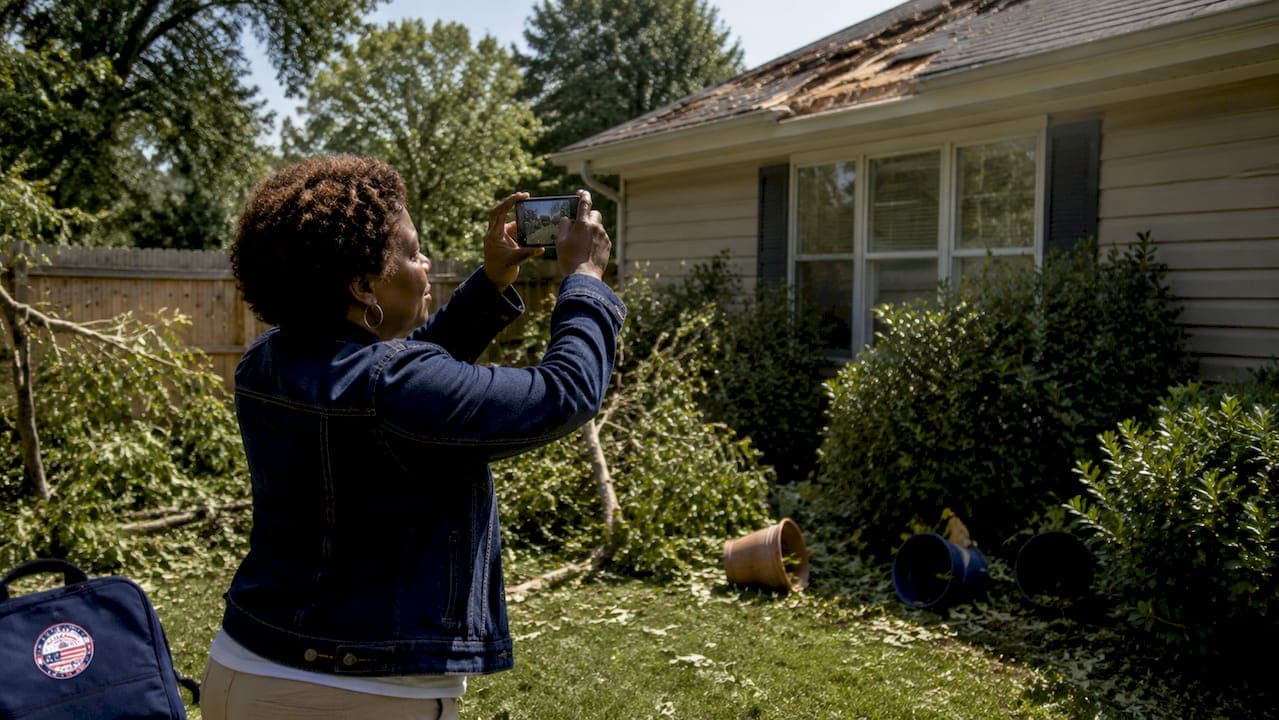
A wind damage roof claim checklist is a structured, step-by-step documentation plan homeowners must complete to file a valid insurance claim after windstorm damage. Georgia insurance policies require prompt reporting within 30–45 days of the storm. Missing that window gives insurers grounds to deny coverage entirely. Thorough, organized evidence is the single biggest factor separating approved claims from denied ones. This guide walks you through every item on that checklist so your claim is built to hold up.
1. What immediate steps should you take after discovering wind damage?
Safe, immediate action sets the foundation for every step that follows. Start with a ground-level visual inspection only. Do not climb onto the roof before a professional has assessed structural safety.

From the ground, note visible damage: missing or lifted shingles, bent flashing, detached gutters, and exposed decking. Then move inside. Check ceilings, attic insulation, and walls for water stains, damp spots, or discoloration. Interior water intrusion must be documented within 48 hours because evidence fades quickly before an adjuster arrives.
Pull the National Weather Service storm report for your area. This official record confirms the storm's date, wind speeds, and path. It is the single most credible third-party document you can attach to your claim.
- Conduct a safe ground-level visual inspection only
- Note missing shingles, lifted flashing, and gutter damage
- Check attic and ceilings for water stains or damp insulation
- Photograph and video all damage with timestamps before any cleanup
- Download the National Weather Service storm report for your county
- Contact your insurer to open a claim within 30–45 days
Pro Tip: Set your phone's camera to embed GPS and timestamp data automatically. This metadata becomes part of your legal photo record and is far harder for an insurer to dispute than a handwritten note.
2. Which documents are essential for a strong wind damage claim?
Organized, chronological wind damage claim documentation is what separates a full settlement from a partial one. Insurers expect clear evidence that connects damage directly to the wind event, not to gradual wear and tear.
The core documents you need are listed below.
- Timestamped exterior photos and video from multiple angles, including wide shots showing the full roof plane and close-ups of each damaged area
- Interior damage photos showing ceiling stains, wet insulation, or damaged drywall, linked to the specific roof breach above
- Written damage description prepared by a licensed contractor on company letterhead
- Detailed contractor estimate with line-item pricing, including ventilation, ridge caps, drip edges, and any code upgrade costs
- National Weather Service storm report confirming wind event date and speed in your county
- Receipts for emergency repairs such as tarping or temporary patching completed before permanent work begins
- Communication log recording every call, email, and visit with your insurer and adjuster, including dates and names
- Your insurance policy documents showing your coverage limits, deductibles, and any wind damage exclusions
- Building permits or code upgrade documentation if local Georgia codes require upgrades during repair or replacement
A structured photo log is especially powerful. Chronological photo evidence that shows baseline roof condition, then storm damage, then interior effects gives adjusters and attorneys a clear cause-and-effect record.
| Document | Why It Matters |
|---|---|
| Timestamped exterior photos | Proves damage occurred at the time of the storm |
| NWS storm report | Confirms the wind event is real and locatable |
| Contractor line-item estimate | Catches items adjusters routinely miss |
| Interior damage photos | Links roof breach to water intrusion inside the home |
| Communication log | Protects you if the insurer disputes what was discussed |
3. How to prepare for and work with your insurance adjuster
Being present during the adjuster's inspection is one of the most effective things you can do. Bring your contractor. An independent roofing professional on-site can point out damage the adjuster might overlook, including ventilation damage, ridge cap loss, and drip edge failures.
Adjusters often miss code upgrade costs or ventilation line items in their initial estimates. That omission directly reduces your settlement. Your contractor's detailed, Xactimate-based estimate gives you a written comparison tool to challenge the insurer's number line by line.
- Be present and bring your contractor to the adjuster's inspection
- Compare the insurer's Xactimate estimate against your contractor's line-item estimate
- Flag missing items: ventilation, ridge caps, drip edges, and code upgrades
- Keep all communication professional, factual, and in writing
- Request a second inspection in writing if the initial estimate is significantly lower than your contractor's
- Submit supplemental claims promptly if new damage surfaces during repair
Pro Tip: Ask your contractor to produce an Xactimate estimate before the adjuster visits. Adjusters use Xactimate software themselves, so a matching format makes line-by-line comparison straightforward and harder to dismiss.
4. What common mistakes can sink a Georgia wind damage claim?
The most damaging mistake a homeowner can make is starting permanent repairs before documenting everything. Making repairs before documentation destroys the photographic evidence that proves your claim. Tarping is acceptable. Replacing shingles before the adjuster visits is not.
Delaying the claim filing is the second most common error. Filing beyond 30–45 days gives insurers grounds to argue the damage came from a later storm or from neglect rather than the original wind event. That argument alone can void your coverage.
- Do not make permanent repairs before documenting all damage
- Do not wait more than 30–45 days to file your claim
- Do not rely solely on the insurer's initial estimate without getting your own
- Do not submit photos without timestamps or storm event references
- Do not skip interior documentation, even if the ceiling stain looks minor
- Do not let any adjuster conversation go unrecorded in your communication log
Weak documentation is the third failure point. A claim built on a few blurry photos and no storm data is easy for an insurer to reclassify as pre-existing wear and tear. Linking interior ceiling stains to specific missing shingles with timestamped photos is the standard that prevents that reclassification.
5. Why getting an independent contractor estimate matters early
Waiting for the adjuster's estimate before hiring a contractor is a mistake that consistently produces incomplete claims. Adjusters work on volume. They use standard pricing databases and frequently undercount labor, materials, and code-required upgrades specific to Georgia.
An independent contractor who inspects your roof before the adjuster visits gives you a full picture of the damage first. That estimate becomes your negotiating baseline. If the insurer's number is lower, you have a documented, professional counter-estimate ready to submit immediately. You can learn more about why adjusters underpay Georgia homeowners and what to do about it.
The contractor's estimate should include every component: field shingles, starter strips, ridge caps, drip edge, ice and water shield, ventilation, and any code upgrades required by Cherokee County or your local jurisdiction. Missing even one line item can reduce your settlement by hundreds of dollars.
6. The complete step-by-step wind damage roof claim checklist
This checklist covers the full wind damage claim process explained in the order you should follow it.
- Conduct a safe ground-level inspection immediately after the storm. Note all visible exterior and interior damage without climbing onto the roof.
- Photograph and video all damage within 24–48 hours. Capture wide shots, close-ups, and interior water intrusion with timestamps active.
- Pull the National Weather Service storm report for your county. Confirm the storm date, wind speeds, and affected area.
- Contact your insurer to open the claim. Do this within 30–45 days. Get a claim number and adjuster contact in writing.
- Hire an independent roofing contractor for a full inspection. Request a detailed, line-item estimate before the adjuster visits.
- Organize your documentation package: photos, video, NWS report, contractor estimate, emergency repair receipts, and policy documents.
- Attend the adjuster's inspection with your contractor present. Take notes. Photograph anything the adjuster examines.
- Compare estimates line by line. Identify missing items and submit a written request for a supplemental review if needed.
- Document all repairs as they are completed. Keep every receipt and take photos of the finished work for your records.
- Submit supplemental claims if additional damage surfaces during repair. Prompt submission protects your right to full coverage.
Pro Tip: Create a single folder, either physical or digital, that holds every document in this checklist. Adjusters and attorneys respond faster when evidence is organized and complete. A disorganized claim signals a homeowner who can be lowballed.
An annual roof inspection before storm season gives you baseline photos of your roof's condition. Those pre-storm images are powerful proof that damage is new, not pre-existing.
Key Takeaways
A complete wind damage roof claim checklist, filed within 30–45 days and backed by timestamped photos, an NWS storm report, and a contractor's line-item estimate, is the most reliable way to protect your settlement.
| Point | Details |
|---|---|
| File within 30–45 days | Georgia policies require prompt notice to prevent claim denial based on storm timing disputes. |
| Document before any repairs | Permanent repairs made before documentation destroy the evidence your claim depends on. |
| Get an independent estimate first | A contractor's line-item estimate before the adjuster visits gives you a negotiating baseline. |
| Link interior to exterior damage | Timestamped photos connecting ceiling stains to specific roof breaches prevent wear-and-tear reclassification. |
| Keep a communication log | Every adjuster call and email should be recorded with dates and names to protect your position. |
What I've learned after four years of Georgia wind damage claims
After working through dozens of wind damage claims across Cherokee County and the surrounding area, the pattern is clear. Homeowners who lose money on claims almost always made one of two mistakes. They either started repairs before documenting, or they trusted the insurer's first estimate without question.
The documentation gap is the one I see most often. A homeowner calls us after the adjuster has already been out, the initial estimate is low, and the roof has already been partially repaired. At that point, we are working backward. We can still help, but the claim is harder to supplement without original evidence.
The interior-to-exterior link is the piece most homeowners miss entirely. A water stain on your ceiling is not just cosmetic evidence. It is proof of a specific breach point on your roof. When you photograph that stain and then photograph the missing shingle directly above it, you have built a cause-and-effect chain that is very difficult for an insurer to dismiss. Without that link, the insurer can argue the stain is old or unrelated.
My honest advice: treat your claim like a legal case from day one. Organize everything. Document everything. Get your own contractor estimate before the adjuster arrives. And call a professional roofer within the first 48 hours, not after the adjuster has already set the number.
— Eric
Theoriginalroofrepaircompany is ready to help with your claim
Storm damage moves fast. So does the clock on your claim filing deadline.

Theoriginalroofrepaircompany provides professional roof inspections and insurance claim support for homeowners across Cherokee County and 11 surrounding counties. We document wind damage thoroughly, produce detailed contractor estimates, and work directly with adjusters on your behalf. If your roof needs immediate stabilization, our emergency roof repair team responds quickly to protect your home and your claim. We know Georgia's insurance requirements and we know what adjusters look for. Contact Theoriginalroofrepaircompany for a no-pressure inspection before you file.
FAQ
How long do I have to file a wind damage claim in Georgia?
Most Georgia insurance policies require claim notice within 30–45 days of the storm. Filing later gives insurers grounds to deny coverage by arguing the damage came from a different event.
Should I repair my roof before the adjuster visits?
Temporary fixes like tarping are acceptable and necessary to prevent further damage. Permanent repairs made before the adjuster's inspection can eliminate the photographic evidence your claim requires.
What if the insurer's estimate is lower than my contractor's?
Submit your contractor's line-item estimate as a formal supplement to the claim. Proactive contractor engagement that includes ventilation, code upgrades, and ridge caps routinely increases settlements above the insurer's initial offer.
Do I need an NWS storm report for my claim?
Yes. The National Weather Service storm report confirms the event date and wind speeds in your specific county. Without it, an insurer can argue the damage was caused by a different storm or by gradual deterioration.
What interior damage should I document for a wind damage claim?
Document any ceiling stains, wet insulation, or damp drywall and photograph the damaged roof area directly above each interior sign. Linking interior stains to specific exterior breach points is the standard that prevents insurers from classifying the damage as pre-existing.