
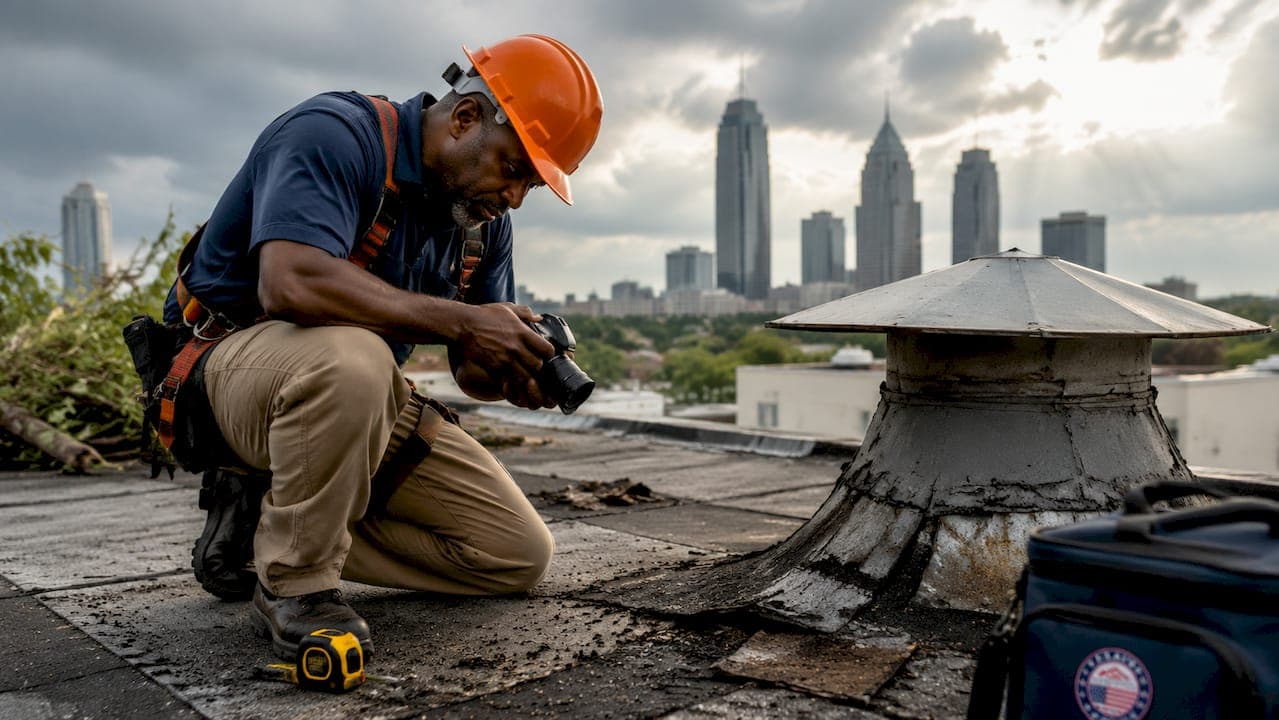
A roofing expert is defined as a licensed professional who inspects, documents, and advocates for the full scope of storm damage on your behalf during the insurance claim process. Georgia homeowners who skip this step routinely receive settlements that fall short of actual repair costs. A proper post-storm inspection takes 45 to 60 minutes to uncover damage that a quick walk-around misses entirely. Insurance adjusters work for the carrier, not for you. Understanding why a storm claim needs a roofing expert is the first step toward protecting your home and your payout.
Why storm claims need a roofing expert from the start
The core reason is documentation. Insurance adjusters are generalists. A roofing expert is a specialist who knows exactly where storm damage hides and how to record it in language that matches your policy. Meticulous documentation of granule loss, lifted shingles, dents, and attic evidence is what separates a claim approval from a denial. Getting that documentation right before you contact your insurer puts you in control of the claims narrative from day one.
The smartest move any Georgia homeowner can make is to get a professional inspection before calling the insurance company. That sequence matters because it gives you an independent record of damage that the adjuster cannot easily dispute. Without it, the adjuster's notes become the only official account of what happened to your roof.
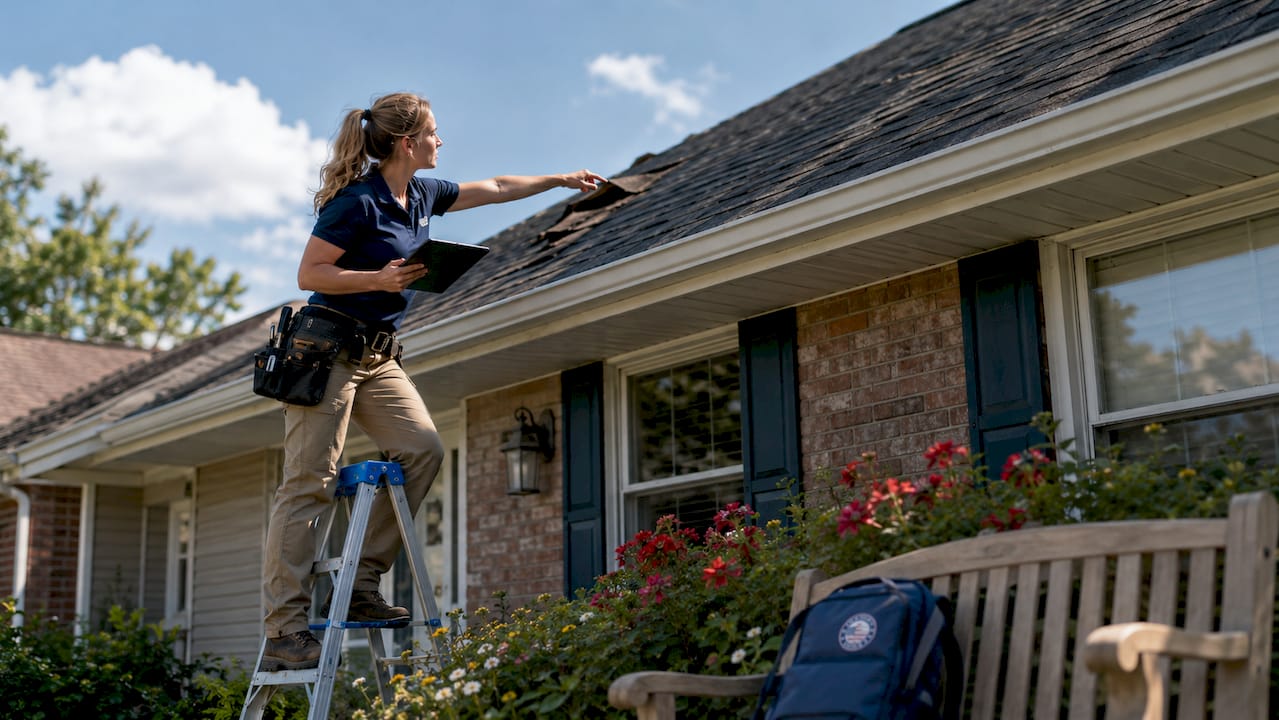
What does a roofing expert inspect during a storm damage assessment?
A thorough storm damage assessment covers far more than shingles. A trained roofer examines every component of the roof system, including areas that look fine from the ground but are failing underneath.
A complete inspection covers:
- Shingles and granule loss: Hail and wind strip protective granules, accelerating aging and voiding manufacturer warranties.
- Fiberglass mat integrity: Fractured mats are invisible to the naked eye but cause shingles to crack and curl within months.
- Lifted and displaced shingles: Wind can break the adhesive seal without visibly moving a shingle, leaving gaps that funnel water into the deck.
- Flashing at chimneys, vents, and valleys: These transition points fail first in storms and are the most common source of interior leaks.
- Ventilation components: Ridge vents, soffit vents, and turbines sustain impact damage that restricts airflow and accelerates deck rot.
- Attic conditions: Attic walkthroughs reveal daylight penetration, water stains, and damp insulation that directly strengthen the documented claim scope.
The attic step is one most homeowners overlook entirely. Interior evidence of water intrusion is some of the strongest proof you can submit to an insurer.
Pro Tip: Ask your roofer to photograph every defect with a measuring tape or coin for scale. Adjusters respond better to photos that show damage size in concrete terms.
Each finding gets recorded with annotated photos, GPS coordinates, and written descriptions. That package becomes the evidence file your insurer reviews. A 10-minute inspection produces none of this. A 45 to 60 minute inspection does.
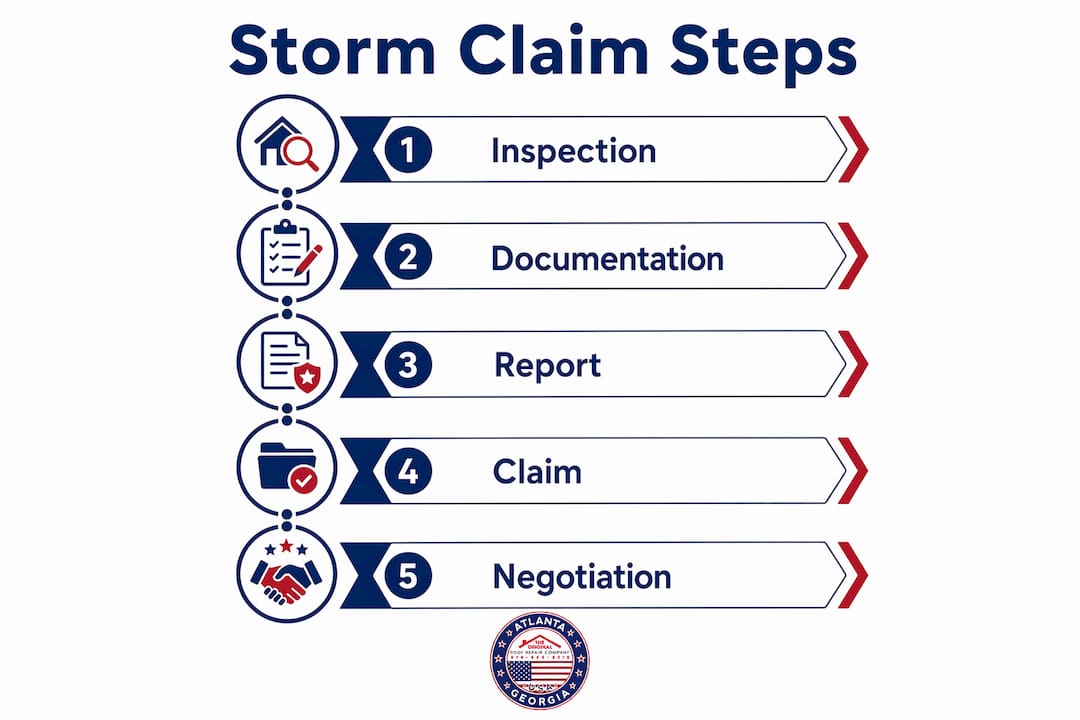
How do roofing experts support insurance claims and negotiations?
A roofing expert does not just inspect. The professional also attends the adjuster meeting, submits photo-backed supplements, and understands the Xactimate estimating software that most carriers use to price claims.
Here is how that process works in practice:
- Adjuster meeting attendance: A roofer who meets the insurance adjuster on-site can explain complex damage and roof system components in real time, preventing critical items from being overlooked or undervalued.
- Xactimate supplement filing: Contractors proficient in Xactimate recover $7,000 to $8,000 more per claim by submitting supplements that address code upgrades and hidden damage the initial estimate missed.
- Code compliance documentation: Georgia's building codes require that certain repairs meet current standards. A roofing expert documents those requirements so the claim reflects the actual legal cost of repair, not a discounted patch job.
- Supplement follow-up: When an adjuster's initial estimate is low, a contractor can file a formal supplement with supporting photos and line-item justification. This process is standard and legal.
Pro Tip: Never sign a contract with a roofer who "guarantees" a specific claim outcome. A professional presents facts and documentation. Promises about payout amounts are a red flag.
Some homeowners consider hiring a public adjuster instead. Public adjusters charge 5% to 20% of the insurance payout for their services. A roofing contractor who provides claim support at no extra charge is often the better value for routine storm damage claims. Public adjusters are best reserved for complex or disputed cases where the carrier has already denied or severely underpaid a claim.
Documentation that matches insurance policy language and local building codes substantially improves claim approval rates and final payouts. That alignment is something a knowledgeable roofing contractor builds into every report.
Why timing and local expertise matter for Georgia storm damage claims
Georgia homeowners face specific deadlines and code requirements that make local expertise non-negotiable. Filing late or filing without proper documentation can result in partial payment or outright denial.
Key timing and code factors for Georgia homeowners:
- Claim filing windows: Most Georgia homeowners insurance policies require storm damage claims to be filed within one year of the event, though some carriers set shorter windows. Check your policy immediately after a storm.
- Inspection timing: The sooner a roofing expert inspects, the easier it is to prove storm causation. Damage that sits for weeks can be attributed to wear and tear rather than the specific storm event.
- Georgia's 25% rule: Local building codes require a full roof replacement when more than 25% of the roof surface is damaged. Adjusters unfamiliar with this rule may approve a partial repair that does not meet code, leaving the homeowner liable for the difference.
- Supplement approval timelines: Carriers typically have 15 days to acknowledge a supplement and 30 days to accept or deny it under Georgia law. A contractor who tracks these deadlines keeps your claim moving.
| Factor | Risk without a roofing expert | Outcome with a roofing expert |
|---|---|---|
| Inspection timing | Damage attributed to wear and tear | Storm causation clearly documented |
| Code compliance | Partial repair approved below code | Full replacement funded per Georgia law |
| Supplement filing | Missed items, lower payout | Hidden damage recovered in supplements |
| Adjuster meeting | Key damage overlooked | All damage explained and recorded on-site |
Atlanta-area storms, including the severe hail and wind events that move through Cherokee County and surrounding counties each spring, create specific damage patterns that a local expert recognizes immediately. A contractor who works in the region every day understands which carriers are active in the market and how their adjusters typically approach claims.
What mistakes do homeowners make without a roofing expert?
The most common and costly mistake is filing a claim before getting an independent inspection. Filing without confirmed, documented damage can negatively affect future premiums and renewals, even if the claim is later withdrawn. The insurer records the inquiry regardless of outcome.
"Accepting the first settlement offer without contractor input is one of the most expensive decisions a homeowner can make. Initial estimates routinely miss hidden damage, code upgrades, and interior repairs. A roofing expert reviews that estimate line by line and identifies what was left out."
Other frequent mistakes include:
- Relying on a short visual inspection: A 10-minute walk-around does not find fractured fiberglass mats, lifted shingle seals, or attic moisture. Homeowners who accept this as sufficient documentation leave money on the table.
- Hiring storm-chaser contractors: Out-of-state contractors who arrive after major weather events often provide misleading inspections and disappear before repairs are complete. Established local experts offer trustworthy, thorough evaluations and stand behind their work.
- Skipping the adjuster meeting: Homeowners who let the adjuster inspect alone have no advocate on-site to point out damage the adjuster misses or misclassifies.
- Delaying repairs after approval: Once a claim is approved, delaying repairs can lead to secondary damage that the carrier refuses to cover in future claims.
A wind damage claim checklist built around professional inspection steps helps homeowners avoid these pitfalls before they make contact with their insurer.
Key Takeaways
A roofing expert is the single most effective asset a Georgia homeowner has when filing a storm damage insurance claim, because professional inspection and documentation directly determine claim approval and payout size.
| Point | Details |
|---|---|
| Inspection depth matters | A 45 to 60 minute inspection finds hidden damage that a quick walk-around misses entirely. |
| Expert documentation controls the narrative | Getting an independent inspection before calling your insurer puts you in control of the claim record. |
| Contractor supplements recover more money | Xactimate-proficient contractors recover $7,000 to $8,000 more per claim through supplement filings. |
| Georgia codes require local knowledge | The 25% replacement rule and local filing deadlines require a contractor who knows Georgia law. |
| Timing and contractor choice are critical | Filing too early without documentation, or hiring a storm chaser, are the two most costly mistakes. |
What I've learned working storm claims in the Atlanta area
After four years of inspecting roofs across Cherokee County and the surrounding Atlanta metro, I have seen the same pattern repeat. Homeowners who call their insurer first, without an independent inspection, consistently receive lower settlements. The adjuster's initial estimate becomes the baseline, and fighting it after the fact is harder than establishing the right baseline from the start.
The detail that surprises most homeowners is the attic. I have walked into attics weeks after a storm and found soaked insulation, daylight coming through the decking, and stains that prove the leak started the day of the storm. That interior evidence is often worth thousands of dollars in claim scope. Without a roofer who checks the attic, that evidence never makes it into the claim file.
My advice is simple: be proactive, not reactive. Schedule a professional roof inspection within 48 hours of a significant storm event. Choose a contractor with a local reputation, a physical address, and verifiable reviews. Patience in selecting the right contractor pays off far more than speed in filing a claim without proper documentation. The claim process rewards preparation, and preparation starts with the right inspection.
— Eric
Storm damage claims and repairs in Georgia: how we can help
The Original Roof Repair Company provides thorough roof inspections that meet insurance documentation standards for Georgia homeowners across Cherokee County and 11 surrounding counties. Every inspection includes annotated photos, written damage descriptions, and attic assessment, giving you a complete evidence file before you contact your insurer.
The team attends adjuster meetings on your behalf, files Xactimate-based supplements for overlooked damage, and tracks carrier response deadlines under Georgia law. For homeowners dealing with active leaks or structural exposure after a storm, emergency roof repair is available to protect your home while the claim is processed. For full claim advocacy from inspection through settlement, visit the roof insurance claims service page to schedule your assessment.
FAQ
Why does a storm claim need a roofing expert?
A roofing expert provides the detailed inspection and photo documentation that insurance adjusters need to approve a full claim. Without expert documentation, hidden damage like fractured fiberglass mats and lifted shingles is routinely missed, resulting in underpayment.
Should I call a roofer or my insurance company first?
Call a roofer first. Getting an independent inspection before contacting your insurer gives you a documented record of damage that controls the claims narrative and prevents the adjuster's notes from becoming the only official account.
How much more can a roofing contractor recover on my claim?
Contractors proficient in Xactimate software recover $7,000 to $8,000 more per claim on average by filing supplements that address code upgrades and hidden damage the initial adjuster estimate missed.
What is Georgia's 25% roof replacement rule?
Georgia building codes require a full roof replacement when more than 25% of the roof surface is damaged. Adjusters unfamiliar with this rule may approve a partial repair that does not meet code, leaving the homeowner responsible for the cost difference.
How soon after a storm should I get a roof inspection?
Schedule a professional inspection within 48 hours of a significant storm event. Early inspection makes it easier to prove storm causation and prevents secondary damage from being excluded in future claims.