
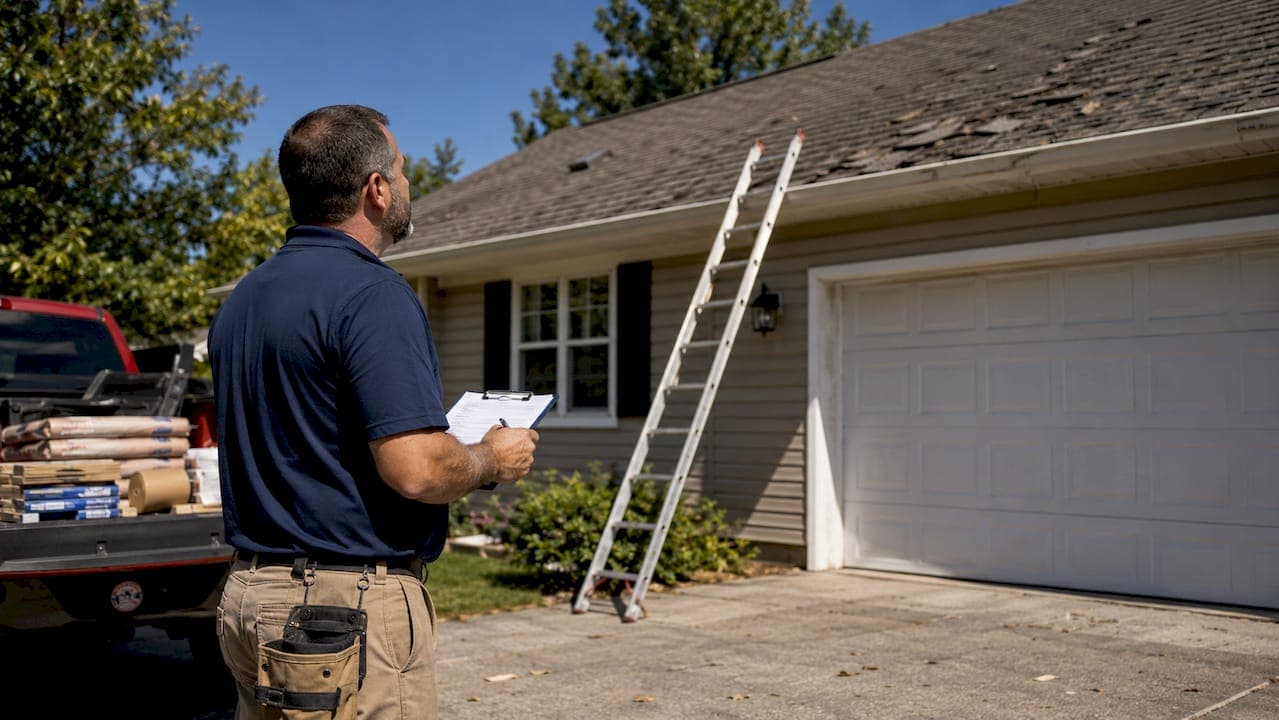
Knowing when to call a roofing professional is the difference between a $300 repair and a $15,000 structural failure. Active leaks, missing shingles, sagging rooflines, and storm damage are the four conditions that require a licensed roofer's assessment without delay. Homeowners often underestimate hidden moisture damage or overreact to minor surface wear. A professional inspection cuts through both extremes, delivering a factual assessment of what the roof actually needs. Theoriginalroofrepaircompany, based in Canton, Georgia, operates on a repair-first approach: diagnose the real problem, price it transparently, and recommend replacement only when repair costs exceed $4,000 and replacement is the smarter financial choice.
What are the key signs it's time to call a roofing professional?
Visible and hidden damage both signal the need for professional evaluation. Homeowners who wait for an obvious ceiling collapse have already allowed secondary damage to spread through insulation, framing, and drywall. The signs below cover the full spectrum, from urgent to easy to miss.
Signs that require immediate professional attention:
- Active leaks or water stains on interior ceilings or walls. Even a small drip indicates a breach in the roof system.
- Missing, curling, or cracked shingles. These expose the underlayment to UV and rain, accelerating deterioration.
- Granule loss in gutters. Asphalt shingles shed granules as they age. Heavy granule accumulation in downspouts signals shingles near the end of their service life.
- Sagging rooflines or soft spots. Structural deformation points to compromised decking or framing. This is a safety issue, not a cosmetic one.
- Storm impact. Hail, high winds, and falling debris cause damage that is not always visible from the ground. A professional inspection after any significant storm is the only reliable way to assess the full extent.
- Attic odors, mold, or moisture. Hidden moisture damage in attic insulation or around roof penetrations can be more destructive than visible shingle damage. Interiors can appear dry while rot spreads unseen above.
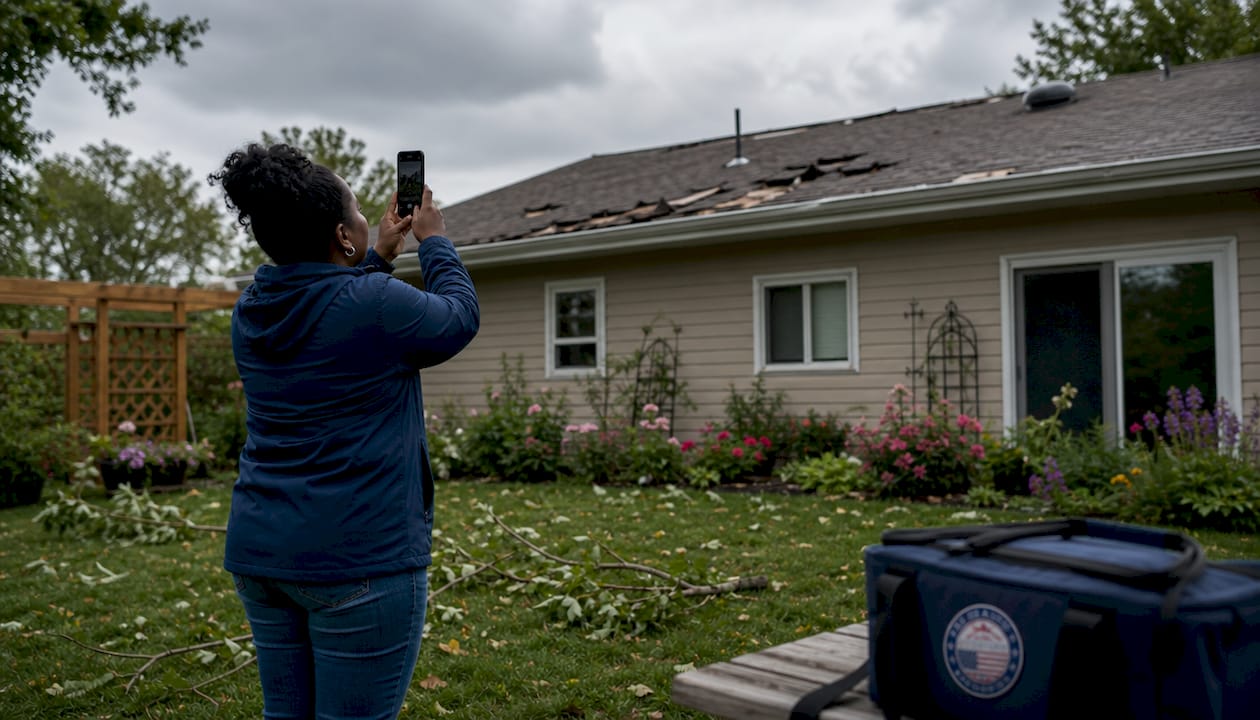
Pro Tip: After a storm, photograph your roof from the ground before any contractor arrives. That photo record protects you during insurance claims and prevents disputes about pre-existing damage.
Granule loss and curling shingles are the two most commonly missed early warning signs. Both are visible from the ground with binoculars, and both indicate that the roof's protective layer is failing.
How to prepare for a roofing inspection and what to expect
Preparation before a professional arrives makes the inspection faster and the report more useful. A disorganized inspection produces a vague estimate. A well-documented one produces a clear repair plan.
Steps to take before the inspector arrives:
- Photograph all visible damage from the ground and from inside the attic. Include date-stamped images if your phone supports it.
- Clear attic access. Move stored items away from the hatch so the inspector can check insulation, ventilation, and moisture levels without obstruction.
- Note the date of any recent storms and pull your homeowner's insurance policy. Knowing your deductible and coverage limits before the inspection prevents surprises.
- List all symptoms you have observed: drips, stains, odors, or sounds during rain. Inspectors work faster when homeowners can point to specific problem areas.
- Avoid signing anything before the inspection is complete. Reputable contractors do not require signatures before they assess the damage.
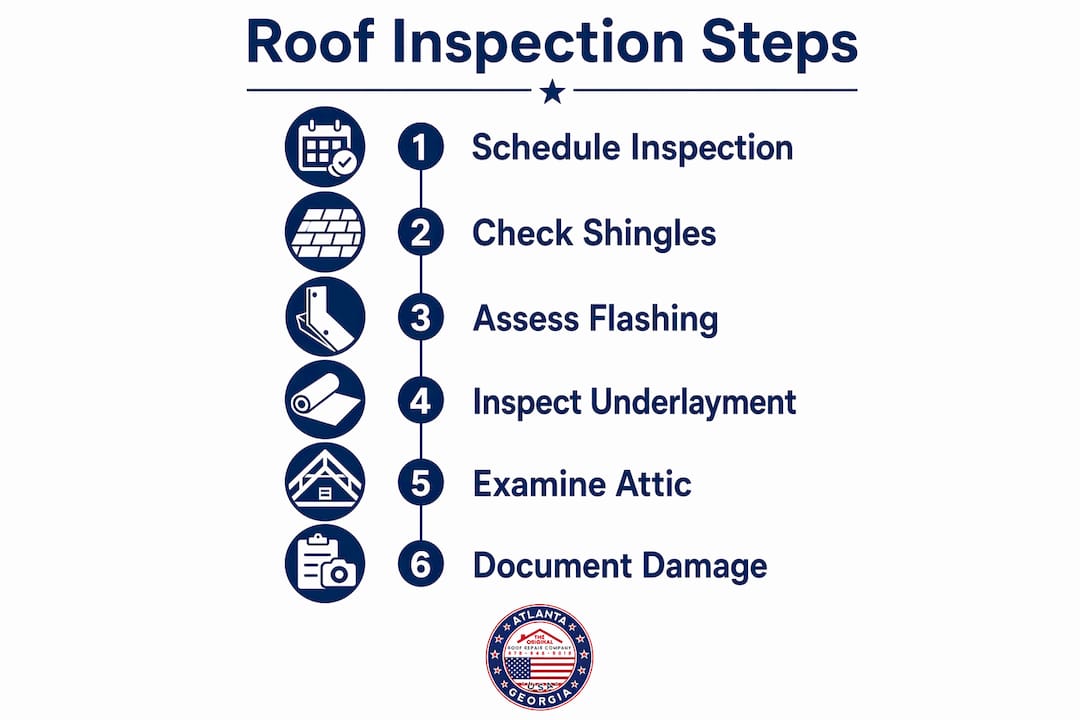
Professional inspections typically last 1–2 hours. During that time, a qualified roofer checks flashing integrity around chimneys and skylights, shingle condition across all slopes, underlayment exposure, attic moisture levels, and the condition of boots around pipe penetrations.
| Inspection Area | What the Roofer Checks |
|---|---|
| Shingles | Curling, cracking, missing sections, granule loss |
| Flashing | Gaps, rust, improper sealing at joints |
| Underlayment | Exposure, tears, moisture infiltration |
| Attic | Moisture, mold, insulation damage, ventilation |
| Gutters | Granule buildup, improper drainage, separation |
Pro Tip: Schedule your inspection before filing an insurance claim. A professional report with photos and itemized damage documentation gives your adjuster a clear picture and reduces the chance of a disputed or underpaid claim. Theoriginalroofrepaircompany handles roof insurance claims directly with carriers on the homeowner's behalf.
After storms, contractor backlogs can delay full repairs by several weeks. Emergency tarping is typically available same-day and prevents secondary water damage while the repair schedule is confirmed.
How to hire a roofing professional safely and effectively
Hiring the wrong contractor costs more than the original damage. Storm chasers, unlicensed operators, and high-pressure sales tactics are common after severe weather events. Knowing how to vet a contractor protects both your roof and your wallet.
What to verify before signing any contract:
- Active state license. Licensing requirements vary by state, but a licensed contractor has met minimum competency standards. Ask for the license number and verify it independently with your state's contractor licensing board.
- Liability insurance and workers' compensation. Workers' compensation is mandatory in 49 states. Request a certificate of insurance directly from the insurer, not just a copy from the contractor.
- Written, itemized estimates. Get at least two estimates. Each should list materials, labor, disposal fees, and projected timeline separately. Vague lump-sum bids are a red flag.
- Local references. Ask for three recent jobs in your area and follow up. A contractor with no local references has no local reputation to protect.
- No large upfront deposits. Reputable roofers do not demand 50% or more before work begins. A deposit of 10–30% is standard for material procurement.
Recognizing storm chasers is a specific skill worth developing. These contractors appear in neighborhoods immediately after storms, offer unusually low bids, pressure homeowners to sign contingency agreements on the spot, and disappear after collecting payment. Legitimate local roofers focus on documentation, clear contracts, and reputation built over time.
Pro Tip: Search the contractor's business name plus your city on the Better Business Bureau website before signing. A BBB-accredited contractor with a clean record is a reliable baseline. Theoriginalroofrepaircompany is BBB accredited and has served Cherokee County and 11 surrounding counties for four years.
Permit requirements add another layer of vetting. Most jurisdictions require permits for roof replacements involving decking or structural modifications. A contractor who discourages permit-pulling is signaling that their work may not meet local code.
How long do roof repairs take, and when does replacement make sense?
Repair timelines depend on damage severity, material availability, weather, and roof access. Homeowners who understand realistic timelines avoid being pressured into rushed decisions or unnecessary upgrades.
| Repair Type | Typical Duration |
|---|---|
| Single shingle replacement | 1–5 hours |
| Minor leak repair | 2–6 hours |
| Flashing replacement | Half day to full day |
| Storm damage repair (moderate) | 1–3 days |
| Full roof replacement | 2–5 days |
Minor shingle repairs typically take 1–5 hours. Storm damage repairs can extend to 1–3 days depending on the scope. Full replacements run 2–5 days under normal conditions.
Weather is the most common delay factor. Rain, high winds, and freezing temperatures halt exterior work. Material availability also affects timelines. Matching new shingles to weathered existing ones takes extra time, and reputable contractors use blending techniques to maintain consistent roof appearance rather than rushing a mismatch.
Replacement becomes the smarter financial choice when repair costs exceed 25% of the full replacement value of the roof. At that threshold, the money spent on repairs delivers diminishing returns compared to a new roof with a full manufacturer's warranty.
Unexpected rot or deck damage can add 10–20% to repair costs. A contingency budget of that size prevents sticker shock when the contractor opens up the decking and finds deterioration that was not visible during the initial inspection. Theoriginalroofrepaircompany applies this threshold directly: repairs are recommended up to $4,000, and replacement is recommended when that figure makes more financial sense for the homeowner.
DIY roofing repairs are generally less economical long-term. Professionals use safety harnesses and pneumatic nailers, and improper DIY work risks voiding manufacturer warranties and creating new leak points.
Key Takeaways
Calling a roofing professional at the first sign of damage prevents minor issues from becoming structural failures that cost ten times more to fix.
| Point | Details |
|---|---|
| Act on visible warning signs | Missing shingles, water stains, granule loss, and sagging all require a professional assessment without delay. |
| Prepare before the inspection | Document damage with photos, clear attic access, and gather insurance policy details before the roofer arrives. |
| Vet contractors thoroughly | Verify state licensing, liability insurance, and workers' comp before signing any estimate or contract. |
| Know the replacement threshold | Repair costs exceeding 25% of full replacement value signal that a new roof is the better financial decision. |
| Budget for hidden damage | Set aside a 10–20% contingency for rot or deck damage discovered after work begins. |
What I've learned from four years of repair-first roofing
The most expensive mistake homeowners make is waiting. Not panicking, not overreacting. Just waiting. A small flashing gap that costs $200 to seal in october becomes a $3,000 decking repair by the following spring. I have seen this pattern more times than I can count.
The second most expensive mistake is hiring the first contractor who shows up after a storm. Storm chasers are real, and they target neighborhoods in Cherokee County and the surrounding area every time a significant weather event rolls through. They use urgency, low bids, and contingency agreements to lock homeowners in before they have time to think. The documentation step matters here. Photograph the damage before anyone touches the roof, and do not sign anything until you have at least two written estimates from contractors you have independently verified.
Hidden moisture is the issue I want every homeowner to take seriously. Your attic can be actively rotting while your ceilings look perfectly fine. By the time water stains appear on drywall, the damage above has usually been spreading for months. A professional inspection after any storm, even one that looks minor from the street, is the only way to know what is actually happening up there.
The repair-first approach Theoriginalroofrepaircompany uses is not just a business philosophy. It is the honest answer to what most roofs actually need. Most roofs do not need full replacement. They need a specific repair done correctly, with the right materials, by someone who will still be in business next year if something goes wrong.
— Eric
Theoriginalroofrepaircompany: professional roofing when it matters most
Roof damage does not wait for a convenient time, and neither does Theoriginalroofrepaircompany. Serving Canton, Georgia, and 11 surrounding counties, the company handles the repairs that larger roofers often decline: small leaks, missing shingles, flashing failures, chimney drips, and boot replacements.

For homeowners dealing with storm damage, emergency roof repair is available with same-day tarping to stop water intrusion while a full repair is scheduled. For homeowners weighing repair against replacement, the roof repair services page outlines what to expect, including transparent pricing and a repair-first recommendation process. BBB accredited, locally owned, and founded on no-pressure service, Theoriginalroofrepaircompany gives homeowners a straight answer about what their roof actually needs.
FAQ
When should I call a roofing professional immediately?
Call a roofing professional immediately if you observe active leaks, visible sagging, missing or curling shingles, or any storm impact. These conditions can escalate to structural failure if left unaddressed.
How long does a professional roof inspection take?
A professional roof inspection typically takes 1–2 hours. The inspector checks shingles, flashing, underlayment, attic moisture, and gutters before producing a written report.
How do I know if my roof needs repair or full replacement?
Replacement becomes the better choice when repair costs exceed 25% of the full replacement value of the roof. A professional inspection is the only reliable way to make that determination accurately.
What is a storm chaser contractor, and how do I avoid one?
A storm chaser is a transient contractor who solicits work immediately after severe weather using high-pressure tactics and large upfront deposit demands. Verify licensing, request a certificate of insurance directly from the insurer, and get multiple written estimates before signing anything.
Can I do roof repairs myself to save money?
DIY roof repairs are generally less economical long-term. Improper work risks voiding manufacturer warranties, creating new leak points, and incurring safety injuries that professional roofers avoid with proper equipment and training.