
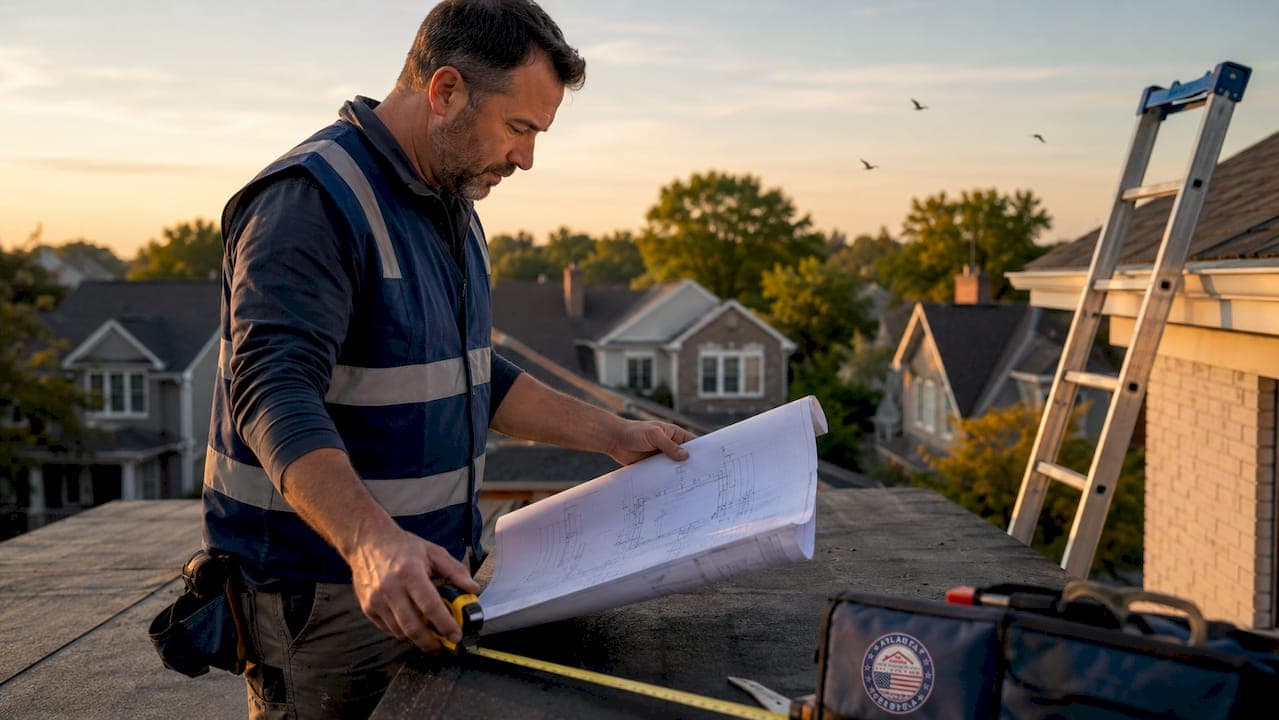
A roofing square is defined as exactly 100 square feet of roof surface area. Every contractor estimate, material order, and insurance claim in the roofing industry runs through this single unit. Understanding what a roofing square means gives you the ability to read a bid, verify a claim payout, and catch errors before they cost you money. The National Roofing Contractors Association recognizes the roofing square as the standard unit for both labor and material pricing across the industry.
What is a roofing square and how is it calculated?
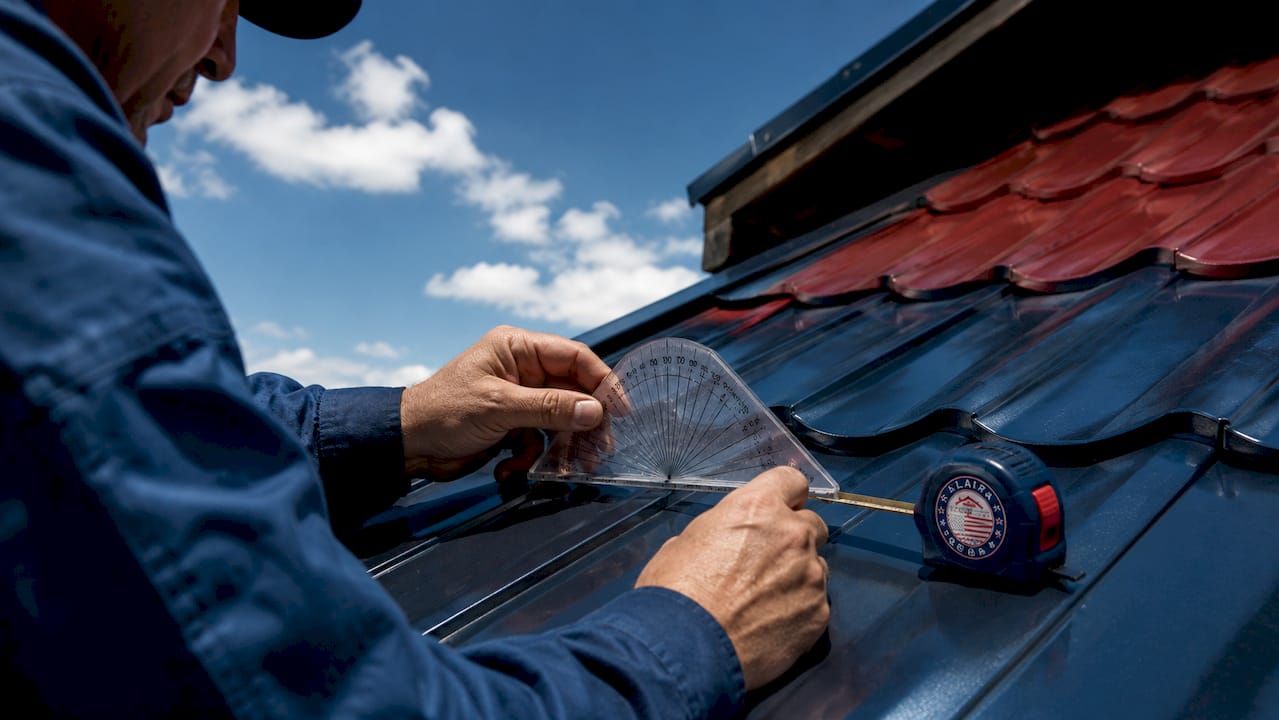
The roofing square calculation starts with your roof's horizontal footprint, not the floor plan of your house. You measure the length and width of each roof section, multiply them together, and add those section totals. That gives you the footprint area in square feet.
The critical step most homeowners miss is the pitch multiplier. A sloped roof covers more surface than its flat footprint suggests. Pitch multipliers adjust for this: a 4/12 pitch uses 1.054, a 6/12 pitch uses 1.118, and a steep 12/12 pitch uses 1.414. A steeper roof means more material, more labor, and a higher total square count.
The formula works like this:
- Measure the horizontal footprint of each roof section (length × width).
- Add all section areas together to get the total footprint in square feet.
- Multiply the total footprint by the correct pitch multiplier for your roof slope.
- Divide that result by 100 to get your total roofing squares.
For example, a house with a 2,000 square foot footprint and a 6/12 pitch calculates as: 2,000 × 1.118 = 2,236 square feet of actual roof surface, which equals 22.36 roofing squares.
Pro Tip: Measure each roof section separately if your home has multiple slopes or dormers. Adding them all together before applying the pitch multiplier produces an inaccurate result.
What is the difference between base squares and project squares?
Base squares, also called net squares, represent the actual roof surface area divided by 100. Project squares are what your contractor actually orders from the supplier. The difference is the waste factor, and it matters more than most homeowners realize.
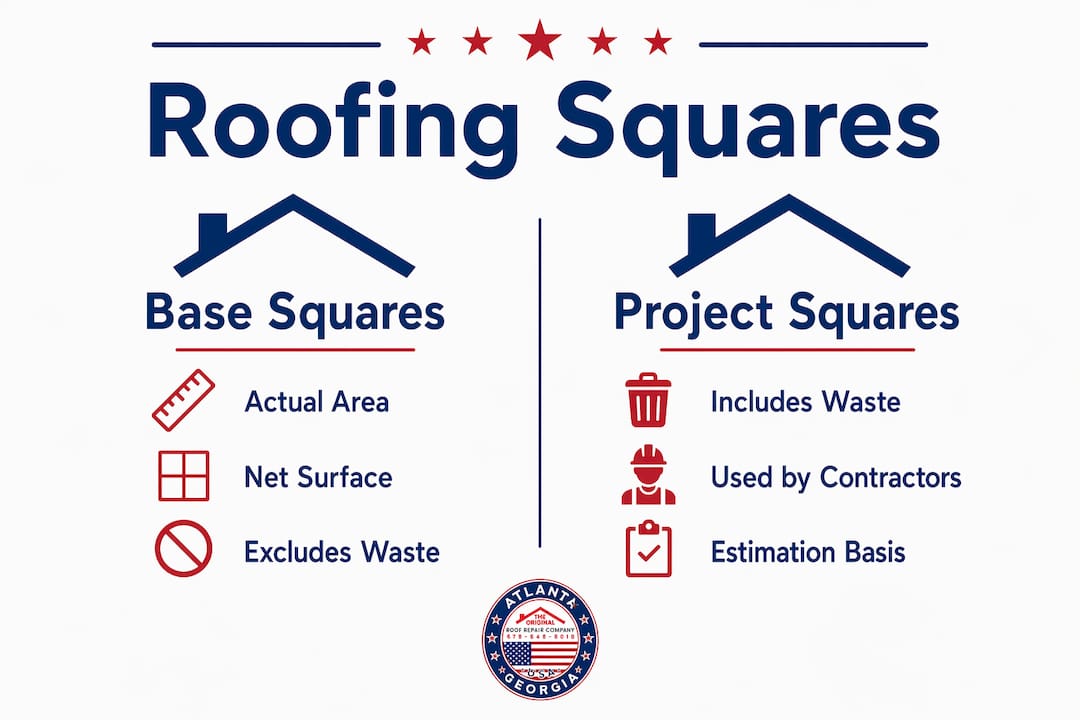
Waste factors account for the material lost to cuts, fitting around valleys, and trimming at edges. Simple roofs with few angles carry a 5–7% waste factor. Complex roofs with multiple valleys, dormers, and chimneys run 12–15%. Contractors round up to the nearest whole square because suppliers do not sell fractional squares.
Key points about waste factors and project squares:
- A simple gable roof on a 20-square base might require 21–22 project squares after waste.
- A complex hip roof on the same 20-square base could need 23–24 project squares.
- Rounding up is standard practice and protects against running short mid-job.
- Shingle bundles are standardized to this unit: three bundles of architectural shingles cover one square, and four bundles cover one square for Class 4 impact-resistant shingles.
- Underlayment rolls and labor quotes follow the same square-based pricing structure.
The gap between base squares and project squares is where contractor quotes can look very different from each other. One contractor may quote 22 project squares while another quotes 24 for the same roof. Neither is necessarily wrong. The difference usually comes from differing waste assumptions or how they handle complex roof sections.
Pro Tip: Ask every contractor to show you their base square count and their waste percentage separately. If they cannot or will not provide both numbers in writing, that is a red flag.
Why do roofing squares matter for insurance claims and contractor estimates?
Accurate square counts are the foundation of a fair insurance claim. Overstating the square count inflates a claim. Understating it leaves money on the table. Insurance adjusters use the square count to calculate material and labor reimbursement, so a measurement error directly affects your payout.
Installation costs in 2026 average $350–$550 per square, covering both materials and labor. That range varies by region and roofing material. On a 25-square roof, a $100 per square pricing difference equals $2,500. Getting the square count right is not a minor detail.
Roofing squares also give you a fair way to compare contractor bids. When every contractor quotes by the square, you can line up bids side by side and see exactly where the differences come from. Without a square count, you are comparing total prices with no way to know if the scope of work is even the same.
Practical steps for using roofing squares when reviewing estimates:
- Request the total square count in writing from every contractor before signing anything.
- Ask for the price per square broken out from the total project cost.
- Confirm whether the quote uses base squares or project squares.
- Verify that the square count reflects the actual sloped surface area, not just the house footprint.
- For insurance claims, ask your adjuster to show the square count used in the settlement calculation.
Theoriginalroofrepaircompany handles roof insurance claims by documenting storm, hail, and wind damage and working directly with carriers and adjusters. Accurate measurement is the starting point for every claim the company advocates on behalf of homeowners in Cherokee County and the surrounding area.
Common misconceptions homeowners have about roofing squares
The most expensive mistake a homeowner can make is assuming the house footprint equals the roof area. Actual roof surface area is typically 1.3 to 1.5 times the building footprint because of pitch and overhangs. A 1,500 square foot house footprint can easily translate to 2,100 square feet of actual roof surface. That gap changes your material budget significantly.
Other common errors include:
- Ignoring pitch entirely. A flat or low-slope roof and a steep roof with the same footprint are not the same job. Pitch multipliers exist for a reason.
- Confusing base squares with project squares. Ordering materials based on net squares without adding a waste factor leads to running short before the job is done.
- Trusting satellite measurements without verification. Satellite measurements for complex roofs can be 5–10% inaccurate. Dormers, chimneys, and multiple valleys create measurement errors in digital tools that only a physical inspection catches.
- Skipping manual verification. For any roof with significant complexity, manual measurement or a professional assessment is the only reliable method.
Pro Tip: If a contractor's square count looks significantly lower than another's, ask them to walk you through how they measured. A lower count is not always better. It may mean they are underestimating the job, which leads to change orders later. Reviewing common roof repair mistakes can help you spot these issues before they become costly.
Key Takeaways
A roofing square equals 100 square feet of actual sloped roof surface, and accurate square counts directly determine material costs, labor pricing, and insurance claim payouts.
| Point | Details |
|---|---|
| Roofing square definition | One roofing square equals exactly 100 square feet of actual roof surface area. |
| Pitch multipliers matter | Apply pitch multipliers (1.054 for 4/12, up to 1.414 for 12/12) to get accurate surface area. |
| Base vs. project squares | Project squares add a 5–15% waste factor to base squares; contractors round up to the nearest whole square. |
| Insurance claim accuracy | Square count errors directly affect claim payouts; always verify the adjuster's measurement. |
| Get it in writing | Request base square count, waste percentage, and price per square in writing from every contractor. |
What I've learned from years of measuring roofs
Homeowners consistently underestimate how much the pitch changes the math. I have seen estimates come in thousands of dollars apart on the same house, and when I trace the difference back, it almost always comes down to one contractor measuring the footprint and another measuring the actual sloped surface. Neither one explains this to the homeowner, and the homeowner has no way to know which number is right.
The waste factor conversation is equally important. A contractor who quotes a low project square count on a complex roof is not giving you a deal. They are setting up a conversation later about ordering more material at a higher per-unit cost. Asking for the waste percentage upfront takes about 30 seconds and saves real money.
For insurance claims specifically, I cannot overstate how much a precise square count matters. Adjusters work from measurements, and if their measurement is low, your settlement is low. The homeowner who understands roofing squares can have a productive conversation with an adjuster. The homeowner who does not is at a disadvantage from the start.
My advice is simple. Learn the number. Ask for it in writing. Verify it against your own rough calculation using the pitch multiplier formula. You do not need to be a roofer to catch a significant error.
— Eric
Roofing measurement and repair services from Theoriginalroofrepaircompany
Theoriginalroofrepaircompany provides accurate roof measurement, transparent estimates, and full insurance claim advocacy for homeowners across Cherokee County and 11 surrounding counties in Georgia.

Whether you need a roof repair estimate after storm damage or help navigating an insurance claim, the company documents actual sloped surface area, applies correct pitch multipliers, and presents square counts in writing. Theoriginalroofrepaircompany also handles emergency roof repair when damage cannot wait. Founded by Eric Manly and BBB accredited, the company's repair-first approach means you get an honest assessment before any recommendation for replacement.
FAQ
What does one roofing square equal?
One roofing square equals exactly 100 square feet of actual roof surface area. This unit is the standard measurement for material ordering, labor pricing, and insurance claims across the roofing industry.
How do I calculate roofing squares for my home?
Multiply your roof's horizontal footprint by the appropriate pitch multiplier (for example, 1.118 for a 6/12 pitch), then divide by 100. The result is your total number of roofing squares.
Why is my contractor's square count different from another contractor's?
Differences usually come from varying waste factor assumptions or whether the contractor measured the sloped surface or just the footprint. Always ask each contractor to provide base squares and waste percentage separately in writing.
How do roofing squares affect my insurance claim?
Insurance adjusters use square counts to calculate material and labor reimbursement. An inaccurate square count, whether too high or too low, directly changes your settlement amount. Verify the adjuster's measurement against an independent professional assessment.
How many shingle bundles cover one roofing square?
Three bundles of standard architectural shingles cover one roofing square. Impact-resistant Class 4 shingles require four bundles per square due to their heavier weight and thicker profile.