

A roof claim supplement is a formal, itemized request submitted to your insurance carrier to increase the original claim payout by covering damage or code-required repairs missed in the initial estimate. For Georgia homeowners dealing with storm or hail damage, understanding this process is the difference between a fully restored roof and one that falls short of local building codes. The supplement process is not claim inflation. It is a correction that ensures your roof is repaired completely and correctly. The Original Roof Repair Company works directly with carriers and adjusters across Cherokee County and the greater Atlanta area to make sure supplements are filed accurately and approved.
What is a roof claim supplement and why does it matter?
A roof claim supplement is a formal, itemized request to obtain additional funds for missed or hidden damaged items discovered after the initial claim settlement, including code-required upgrades, and it does not impact your insurance premiums. The initial adjuster estimate is a starting point, not a final number. Adjusters work quickly, often from the exterior, and cannot see everything before tear-off begins.
Supplements arise for several common reasons:
- Hidden damage discovered only after tear-off, such as rotted decking or failed underlayment
- Code-required upgrades mandated by Georgia building codes, including ventilation and flashing standards
- Missed line items like permit fees, waste factors, or valley flashing
- Pricing gaps between the carrier's estimate and actual material and labor costs
Supplements correct gaps in the initial visible damage assessment. They are not claim inflation. The goal is accurate, code-compliant restoration of the roof's condition, nothing more.
Pro Tip: Ask your contractor to review the initial adjuster estimate line by line before any work begins. Catching missed items early is far easier than filing a supplement after the claim file has been archived.
How does the roof claim supplement process work?
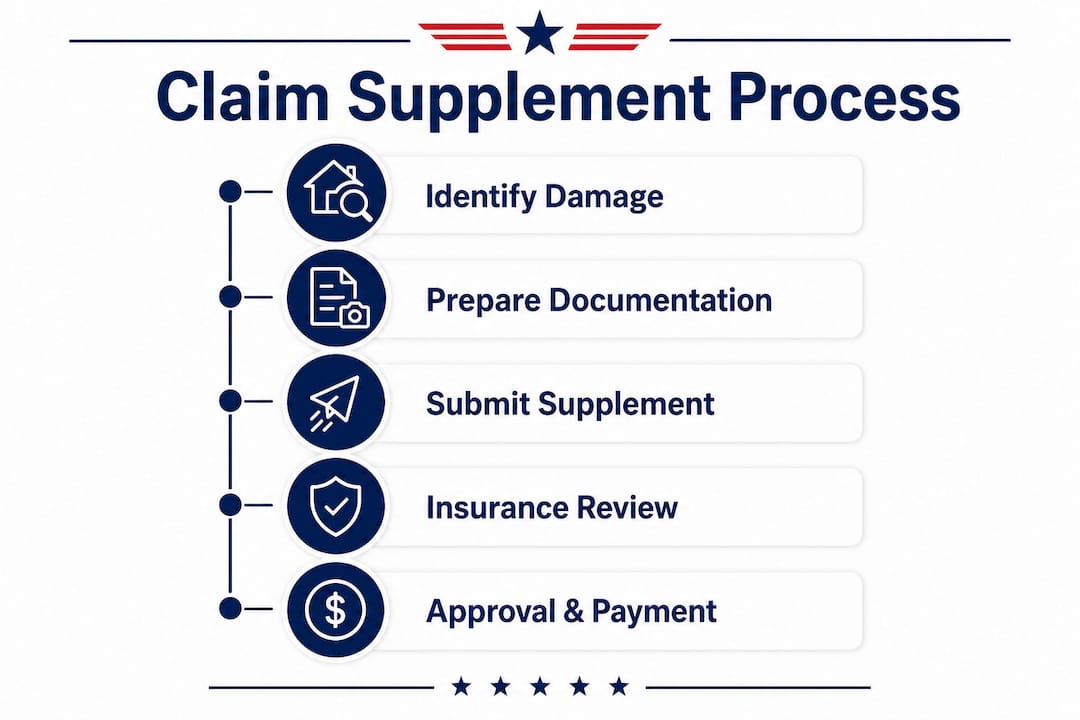
The supplement process typically follows five steps involving contractor review, detailed documentation, professional estimate building, submission to the carrier, and carrier review. The full cycle is usually completed within 10–28 days of the initial settlement. Knowing each step helps you set realistic expectations and avoid delays.
- Contractor review. Your contractor compares the carrier's estimate against the actual scope of work needed. Any item that is missing, underpriced, or required by local code gets flagged.
- Documentation gathering. The contractor collects high-quality photos, measurements, and written references to Georgia building codes. Initial adjuster estimates are rarely final since hidden conditions like rotted decking are only visible after tear-off.
- Estimate preparation. The contractor builds a line-itemized supplement estimate, typically in Xactimate format. Xactimate mirrors the pricing databases carriers use, which makes the submission easier to review and approve.
- Submission to the carrier. The supplement is submitted through the carrier's preferred channel, along with photos, code citations, and a written explanation for each added item.
- Carrier review and approval. Insurance companies have supplement teams that review submissions, often by desk review without a physical re-inspection, if the documentation is thorough. Well-prepared supplements can be approved in as little as one to two weeks.
Contractors often handle all supplement-related advocacy work, including reviewing policies, preparing documentation, and negotiating with carriers. Homeowners typically authorize the submission and let the contractor manage correspondence and follow-up.
Pro Tip: File the supplement as soon as new costs are identified. Filing supplements promptly improves success odds and prevents complications from adjuster reassignments or archived claim files.

Common items included in roof supplements in Georgia
Georgia building codes drive a significant portion of supplement claims. Local codes mandate specific upgrades during full roof replacements, and those upgrades are frequently missed in the initial adjuster estimate.
Common items that appear in Georgia roof supplements include:
- Ventilation upgrades required to meet current code ratios
- Ice and water shield at eaves, valleys, and penetrations
- Rotted or damaged decking discovered after tear-off
- Valley and step flashing replacement
- Permit fees required by Cherokee County and surrounding jurisdictions
- Waste factors for complex roof geometries with multiple hips and valleys
- Drip edge installation required by Georgia residential code
Local Georgia building codes mandate upgrades such as ventilation and flashing during full roof replacements. These code-required items are among the most commonly supplemented costs in the Atlanta metro area.
The table below shows how these items typically appear in supplement documentation:
| Supplement Item | Why It Gets Missed | Code or Pricing Driver |
|---|---|---|
| Ventilation upgrades | Not visible from exterior | Georgia residential building code |
| Ice and water shield | Assumed present, often absent | IRC Section R905 |
| Rotted decking | Hidden under shingles | Discovered only at tear-off |
| Permit fees | Overlooked in initial estimate | Required by local jurisdiction |
| Waste factor | Underestimated on complex roofs | Actual material usage vs. square footage |
| Drip edge | Omitted from adjuster scope | Georgia code requirement |
Claims without precise measurements and relevant code citations face higher denial rates. Carriers accept supplements within one to two years of the loss date, but the strongest submissions arrive early with clear evidence attached.
What to do if your roof supplement is denied or delayed
Supplement denials are frustrating, but they are rarely final. Common reasons for supplement denials include insufficient or unclear documentation, late submissions, or disputes over whether the damage is related to the covered event or properly priced. Each reason points to a specific fix.
Steps to take after a denial:
- Request the denial in writing. Carriers must explain why a supplement was denied. That explanation tells you exactly what evidence to add.
- Address carrier feedback directly. Do not resubmit the same package. Add clearer photos, stronger code citations, and a written response to each objection.
- Escalate within the carrier. Ask to speak with a senior adjuster or supplement team supervisor if the desk reviewer is unresponsive.
- File a complaint with the Georgia Department of Insurance. If a denial appears unreasonable or the carrier is unresponsive, Georgia homeowners have the right to file a formal complaint. The Georgia Department of Insurance oversees carrier conduct and can intervene.
- Consider a public adjuster. For large or complex supplements, a licensed public adjuster can represent your interests independently of the carrier.
Pro Tip: Keep a communication log from the first day of your claim. Dates, names, and notes from every call or email become critical evidence if a supplement dispute escalates.
How to file a roof supplement: practical steps for Georgia homeowners
Filing a supplement successfully comes down to preparation and timing. The following steps reflect what The Original Roof Repair Company follows when managing supplements for homeowners across the Atlanta area.
- Review the initial estimate line by line. Sit down with your contractor and compare the carrier's scope against the actual work required. Flag every missing item and every underpriced line.
- Document all damage with high-quality photos. Take photos before tear-off and after. After photos showing rotted decking or failed underlayment are among the strongest evidence you can submit.
- Gather Georgia building code references. Your contractor should identify which specific code sections require the upgrades being supplemented. Vague references do not satisfy carrier supplement desks.
- Build a line-itemized Xactimate estimate. Successful supplement requests use detailed, line-itemized Xactimate estimates that mirror carrier pricing databases, include code references, photos, and clear written justification for each added item. Lump-sum or vague requests face denials.
- Submit through the carrier's preferred method. Most carriers have a dedicated supplement portal or email address. Confirm the correct submission channel before sending.
- Follow up consistently. Check the status every five to seven business days. Delays often come from high claim volume, not active denial. Consistent follow-up keeps your file moving.
For homeowners who want to understand how the broader insurance claim process works before a supplement is even needed, reviewing the full claim workflow helps set accurate expectations from the start.
Key Takeaways
A roof claim supplement is the most reliable tool Georgia homeowners have to ensure their insurance payout covers the full, code-compliant cost of restoring a storm-damaged roof.
| Point | Details |
|---|---|
| Supplements are corrections, not inflation | They cover missed damage and code upgrades, not additional profit for contractors. |
| Documentation drives approval | Line-itemized Xactimate estimates with photos and code citations get approved faster. |
| Georgia codes create supplement items | Ventilation, flashing, and drip edge upgrades are frequently required by local code. |
| File promptly after discovery | Earlier submissions avoid archived files and adjuster reassignments. |
| Denials are appealable | Address carrier feedback directly with stronger evidence and written code references. |
What I've seen go wrong with supplements in Georgia
Most homeowners I meet in Cherokee County and across the Atlanta area have never heard the word "supplement" before their first major storm claim. That gap in knowledge costs them real money.
The biggest mistake I see is homeowners accepting the initial adjuster estimate as the final word. Adjusters are not trying to shortchange you. They are working fast, often from the ground or a ladder, before any material has been removed. They simply cannot see rotted decking, failed underlayment, or the ventilation deficiency that Georgia code now requires you to fix. That is not bad faith. It is a structural limitation of the initial inspection process.
The second mistake is waiting. I have seen homeowners sit on a claim for months, then try to file a supplement after the adjuster has been reassigned and the file has gone cold. Carriers do accept supplements within one to two years of the loss date, but the practical reality is that older files face more friction. File as soon as your contractor identifies the gap.
The third mistake is letting a contractor submit a vague, lump-sum supplement. I have reviewed carrier denials where the entire rejection came down to one line: "insufficient documentation." A supplement that says "additional repairs needed, $2,400" will be denied every time. The same work, documented with photos, Xactimate line items, and a code citation, gets approved.
My advice is simple. Be engaged. Read the initial estimate. Ask your contractor what is missing. And do not sign off on a supplement submission you do not understand.
— Eric
Roof claim support from The Original Roof Repair Company
The Original Roof Repair Company handles the full supplement process for homeowners across Cherokee County and the surrounding Atlanta metro area.

From the first inspection through carrier approval, the team documents damage, builds line-itemized estimates, cites Georgia building codes, and communicates directly with adjusters on your behalf. Whether you need help with a new storm claim or a supplement on an existing one, The Original Roof Repair Company provides transparent, no-pressure roof insurance claim assistance backed by four years of local experience and BBB accreditation. If your roof has sustained hail or wind damage, contact The Original Roof Repair Company for a free roof repair estimate and a clear explanation of what your claim should cover.
FAQ
What is a roof claim supplement?
A roof claim supplement is a formal, itemized request submitted to your insurance carrier to add funds for damage or code-required repairs missed in the initial estimate. It does not affect your insurance premiums.
How long does the supplement process take?
The supplement review process typically takes 10–15 additional days after submission when documentation is complete. Well-prepared supplements with clear photos and code citations can be approved in as little as one to two weeks.
Does filing a supplement raise my insurance rates?
No. A supplement is a correction to an existing claim, not a new claim. It does not trigger a separate loss event or affect your premium calculation.
What format should a roof supplement use?
Successful supplements use line-itemized Xactimate estimates that mirror carrier pricing databases, paired with photos and specific code citations. Lump-sum or vague requests are routinely denied.
Can a denied supplement be appealed in Georgia?
Yes. Address the carrier's specific objections with stronger documentation, then resubmit. If the denial appears unreasonable, Georgia homeowners can file a complaint with the Georgia Department of Insurance for oversight and intervention.