
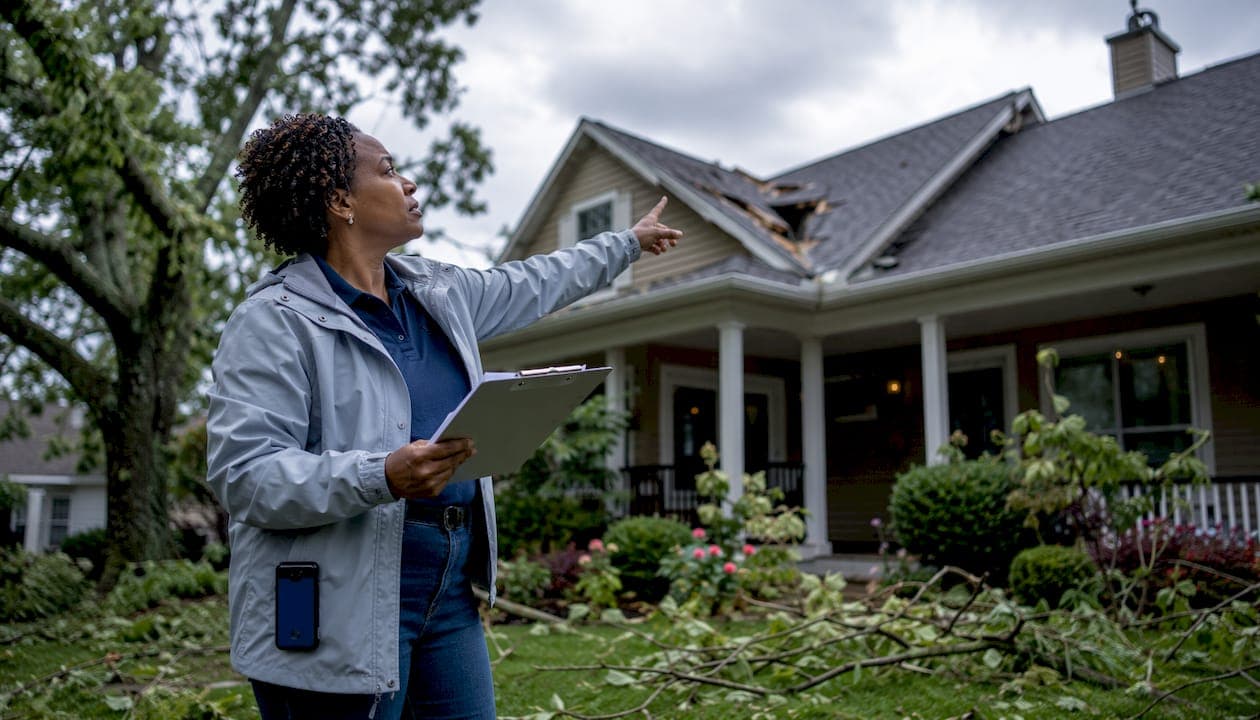
The most common storm damage claim mistakes homeowners make
Most storm damage claims that get denied or underpaid share the same root causes. Homeowners in Atlanta and across Georgia lose thousands of dollars every year not because their damage wasn't real, but because of preventable errors in how they filed, documented, or communicated their claims. Here are the mistakes that cost the most.
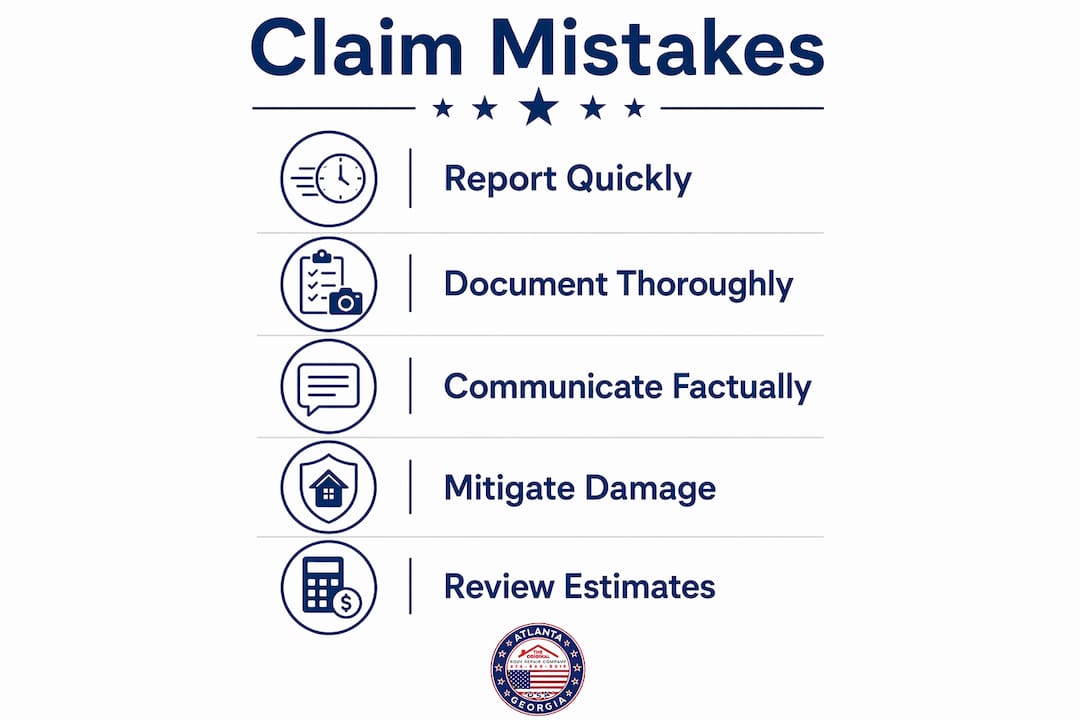
- Reporting too late. Many policies require storm damage reports within a short reporting window. Missing that window gives insurers grounds to dispute the damage timeline.
- Poor documentation. No photos, no video, no written records before cleanup means no proof.
- Throwing away damaged materials. Discarding debris before the adjuster inspects removes physical evidence.
- Misunderstanding coverage. Flood damage is not covered under standard homeowners insurance. Many homeowners find this out too late.
- Accepting the first offer. Initial settlements routinely miss hidden damage, code upgrades, and material matching costs.
- Saying the wrong thing. Casual comments to adjusters about roof age or past maintenance can trigger a denial.
- Starting permanent repairs early. Fixing damage before the adjuster visits eliminates the evidence they need to assess your claim.
Each of these errors can result in a reduced payout, a delayed settlement, or a full denial. The sections below explain exactly what to do instead.
What your policy actually covers, and what it doesn't
Standard homeowners insurance covers wind, hail, and storm-driven water damage. It does not cover flooding. If water entered your home because a storm overwhelmed drainage systems or caused a river to overflow, that is a flood loss and requires a separate policy through the National Flood Insurance Program administered by FEMA. Georgia homeowners who assume their standard policy covers all water damage often discover the gap only after filing.
Deductibles are another area where homeowners get caught off guard. In Georgia, some policies carry percentage-based deductibles of 1%–5% of the insured value for named storms, rather than a flat dollar amount. On a $300,000 home, a 2% named-storm deductible means $6,000 comes out of your pocket before the insurer pays anything. Read your declarations page carefully before a storm season begins—not after damage occurs.
Policy limits, exclusions, and reporting deadlines vary by carrier. Know your coverage for roofing insurance policies before you need to file. Misreading what is covered is one of the most common storm claim errors, and it is entirely avoidable.
How to document and report storm damage correctly
Speed and thoroughness are both required here. Waiting too long to report damage is one of the costliest errors a homeowner can make, creating disputes over when and how the damage occurred. File your claim within 24–72 hours of the storm, even if you haven't completed a full inspection yet.
Before touching anything, photograph and video every affected area. Capture wide shots for context and close-ups for detail. Document damaged shingles, gutters, siding, windows, interior water stains, and any debris. This visual record is your primary evidence if the adjuster's report later understates the scope.
- Do not discard damaged materials until the adjuster has inspected them.
- Keep all receipts for emergency supplies like tarps, plywood, and temporary repairs.
- Write down every conversation with your insurer, including dates, times, and names.
- Save all contractor estimates and written assessments.
Pro Tip: Get at least one contractor estimate before the adjuster visits. A written professional assessment gives you a baseline to compare against the adjuster's scope and strengthens your position if the numbers don't align. The Original Roof Repair Company provides storm damage documentation for Georgia homeowners as part of its claim advocacy process.
Why mitigation and professional involvement matter
After a storm, you are required to take reasonable steps to prevent additional damage. That means tarping exposed roof sections, boarding broken windows, and removing standing water. Emergency mitigation is mandatory under virtually every homeowners policy, and failing to act can give the insurer grounds to deny damage that occurred after the storm. Document every mitigation step with photos and save all receipts.
Do not start permanent repairs until the adjuster has completed their inspection. Replacing shingles or patching walls before the adjuster sees the damage removes the evidence they need to assess your claim accurately. Temporary fixes are fine and required. Permanent work waits.
Having a qualified roofing contractor present during the adjuster's visit can increase claim approval amounts, because a professional can identify damage the adjuster might overlook or undervalue. The contractor can point out functional damage, code-required upgrades, and material matching requirements that adjusters sometimes exclude from their initial scope. For a detailed walkthrough of this process, a post-storm inspection checklist covers the key steps applicable to homeowners throughout the Southeast.
- Request that the adjuster document every area you point out, in writing.
- Follow up every adjuster visit with a confirming email summarizing what was discussed.
- Consider a public adjuster if the claim is large or the insurer's offer is far below contractor estimates.
How insurers use delay, deny, and defend against your claim
The 3 D's strategy is a documented pattern in claims handling: insurers Delay processing to take advantage of investment float on your premiums, Deny claims based on narrow policy interpretations, and Defend those denials legally if policyholders push back. Law professor Jay Feinman's book Delay, Deny, Defend examined this pattern in detail, noting that the motivation is profit. Reducing claim payouts directly improves an insurer's bottom line.
Understanding this dynamic changes how you approach every interaction with your carrier. Insurers are not adversaries by default, but they are businesses with financial incentives to minimize payouts. Knowing that gives you a clearer picture of why documentation, professional advocacy, and written records matter so much.
- Respond to all insurer requests in writing and keep copies.
- Set calendar reminders for every deadline your insurer gives you.
- If your claim stalls without explanation, file a written complaint with the Georgia Insurance Commissioner.
- Never accept a verbal settlement offer. Get everything in writing before agreeing to anything.
Expert perspective from a Georgia roofing and claim advocate
The Original Roof Repair Company, founded by Eric Manly and based in Canton, Georgia, has spent four years working directly with homeowners across Cherokee County and 11 surrounding counties on storm damage claims. The company's repair-first approach means it documents actual damage honestly, advocates with carriers and adjusters on the homeowner's behalf, and recommends replacement only when repair costs exceed $4,000 and replacement is the more cost-effective path.
One of the most consistent patterns in claim denials across the Atlanta metro area involves what homeowners say during the first adjuster call. Phone calls are recorded, and statements about roof age, past leaks, or deferred maintenance become permanent parts of the claim file. A homeowner who mentions that "the roof has been showing its age" has just handed the insurer a reason to classify the damage as wear and tear rather than storm damage.
Georgia's weather patterns, including severe hail seasons and named tropical systems, create specific claim nuances that Atlanta-area homeowners need to understand. Named storms can trigger percentage-based deductibles, and hail damage often requires a professional to distinguish functional damage from cosmetic damage. The Original Roof Repair Company's BBB-accredited team handles that distinction as part of every roof insurance claim engagement.
- Never mention roof age, prior leaks, or maintenance history unless directly asked.
- Do not speculate about the cause of damage. "I found it after the storm" is a complete answer.
- Casual comments during adjuster visits can lead adjusters to classify storm damage as maintenance-related.
- Ask for the adjuster's full scope document before signing anything.
What to do if your claim is partially or fully denied
A denial is not the end of the process. Every homeowners policy includes an appeal or dispute mechanism, and Georgia law gives policyholders the right to challenge claim decisions. Start by requesting the insurer's written explanation of the denial, including the specific policy language they relied on.
Compare that explanation against your documentation, contractor estimates, and any professional assessments you gathered. If the denial cites "deferred maintenance" or "pre-existing condition" but your records show the damage followed a specific storm event, that discrepancy is the foundation of your appeal. Submit a formal written appeal with supporting evidence, including dated photos, contractor reports, and weather records confirming the storm.
If the insurer does not respond adequately, you have several options. A public adjuster can re-inspect the property and prepare an independent scope. An attorney specializing in insurance disputes can review the denial for bad-faith handling. Filing a complaint with the Georgia Insurance Commissioner creates a formal record and often prompts faster insurer response.
Claim statement mistakes that lead to denial
What you say, and how you say it, shapes the entire claim outcome. Recorded statements become permanent parts of your claim file. Adjusters are trained to identify language that implies gradual damage, neglect, or pre-existing conditions, all of which give insurers grounds to reduce or deny a payout.
The most damaging phrases are ones that sound harmless. Saying "the roof is getting old" or "we've had a few small leaks before" shifts the narrative from storm damage to wear and tear. Guessing at the cause of damage is equally risky. If you speculate incorrectly and a contractor later identifies a different cause, you now have a conflicting record that triggers delays and investigations.
Stick to facts you know with certainty. "I found the damage when I returned home after the storm on [date]" is a complete, safe answer. If you don't know how something happened, say so. Stating "I don't know" is always safer than guessing.
How to document repair costs that support your claim
Adjuster estimates are typically generated using software like Xactimate, which prices repairs based on regional labor and material averages. Those estimates can undervalue actual repair costs, particularly for specialty materials, code-required upgrades, or matching requirements on partial replacements. Getting independent contractor estimates gives you a direct comparison.
Collect at least two written estimates from licensed contractors before accepting any settlement. Each estimate should itemize labor, materials, disposal, and any code-compliance upgrades required by local building standards. Keep all receipts for emergency repairs and mitigation work, since those costs are typically reimbursable under your policy.
A roof damage assessment that follows a structured workflow produces the kind of documentation adjusters and insurers take seriously. Pair that with a wind damage checklist specific to Georgia conditions, and your claim file becomes much harder to undervalue.
How to negotiate effectively with your insurance adjuster
Negotiation starts before the adjuster arrives. Having your documentation organized, your contractor estimates ready, and a clear written record of the storm event puts you in a stronger position from the first conversation. Adjusters work from what they document during the inspection, so your job is to make sure nothing gets missed.

During the visit, walk the adjuster through every area of damage. Do not assume they will find it themselves. Point out water stains, missing shingles, damaged flashing, and any interior damage. After the visit, send a written summary of what was discussed and what areas were inspected. That email creates a record that is difficult to contradict later.
When the settlement offer arrives, compare it line by line against your contractor estimates. If the adjuster's scope omits items your contractor identified, submit a written supplement with supporting documentation. Insurers can and do revise initial offers when presented with clear evidence. Accepting the first offer without review is one of the most frequent insurance claim pitfalls Georgia homeowners encounter.
Common mistakes when reading adjuster assessment reports
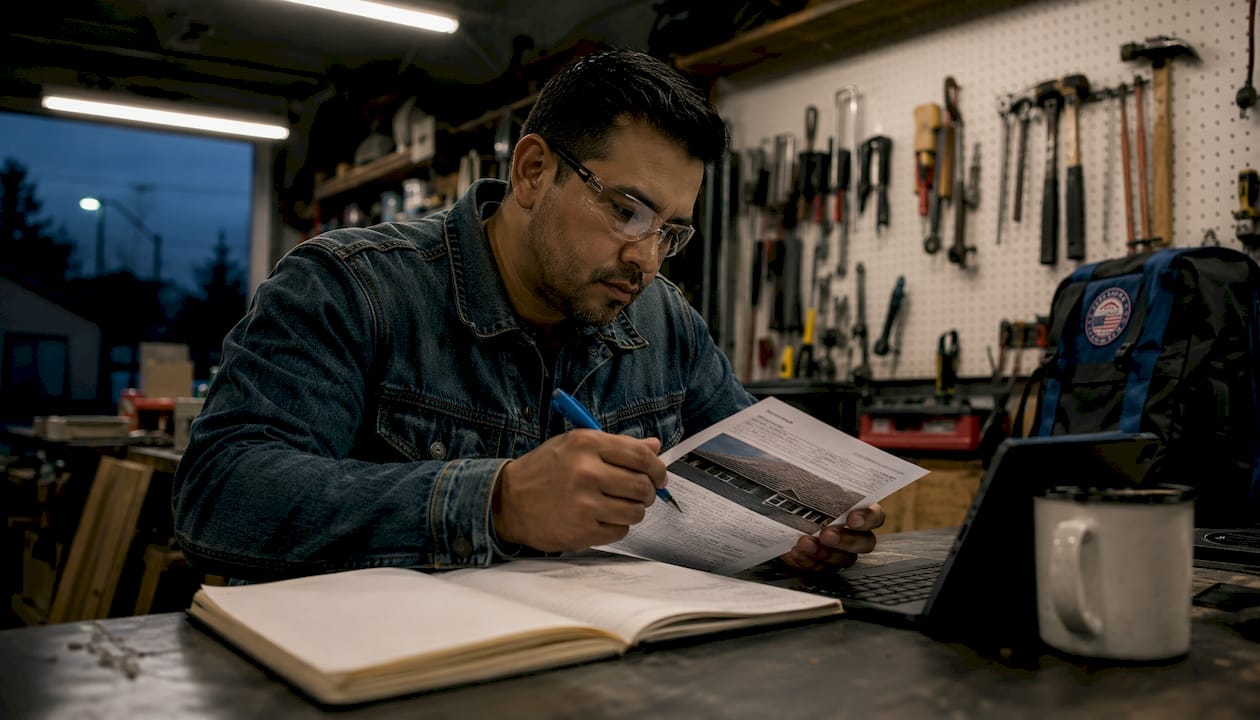
Adjuster reports look authoritative, but they are not final. The most common mistake homeowners make is treating the scope document as a complete and accurate account of their damage. Adjusters sometimes omit areas that were verbally discussed, use depreciation calculations that reduce actual cash value significantly, or apply exclusions that may not apply to your specific situation.
Read every line of the scope document carefully. Check that every area you pointed out during the inspection appears in the report. Verify that the materials listed match what is actually on your roof or in your home. If the report references "matching" for a partial replacement, confirm that the insurer is accounting for the full cost of bringing the repaired section into visual alignment with the rest of the structure.
If the report cites depreciation, understand whether your policy pays actual cash value or replacement cost value. Replacement cost value policies reimburse the full cost of repair or replacement without deducting for age. Actual cash value policies subtract depreciation, which can significantly reduce your payout on older roofs. Knowing which type you have before you receive the report prevents surprises.
Working with The Original Roof Repair Company on your claim

Atlanta-area homeowners dealing with storm damage don't have to navigate the claims process alone. The Original Roof Repair Company provides professional damage documentation, adjuster advocacy, and transparent repair estimates for homeowners across Cherokee County and surrounding Georgia counties. The team attends adjuster inspections, identifies damage that gets missed, and communicates directly with carriers on the homeowner's behalf.
For urgent situations, emergency roof repair services are available to stop active leaks and protect your home while the claim process moves forward. Every engagement starts with an honest assessment of what the damage actually is, not what's most profitable to replace.
Contact The Original Roof Repair Company to schedule a storm damage inspection and get professional support for your insurance claim.
Key Takeaways
Avoiding common storm damage claim mistakes requires fast reporting, thorough documentation, careful communication, and professional support throughout the claims process.
| Point | Details |
|---|---|
| Report within 24–72 hours | Late reporting gives insurers grounds to dispute the damage timeline and deny your claim. |
| Document before cleanup | Photograph every damaged area before touching anything, and keep all damaged materials for adjuster inspection. |
| Watch what you say | Recorded statements about roof age or past maintenance can shift damage classification from storm to wear and tear. |
| Don't accept the first offer | Initial settlements often miss hidden damage, code upgrades, and material matching costs. |
| Get a contractor at the inspection | A qualified roofing contractor present during the adjuster visit can increase your approved claim amount by 25–40%, because a professional can identify damage the adjuster might overlook or undervalue. |
FAQ
What should you never say to a home insurance adjuster?
Never mention roof age, prior leaks, deferred maintenance, or speculate about the cause of damage. Recorded statements become permanent parts of your claim file and can be used to justify a denial based on wear and tear or pre-existing conditions.
What is the most common reason an insurance claim gets rejected?
The most common reason is a finding of "deferred maintenance" or "pre-existing condition," meaning the insurer argues the damage resulted from neglect rather than a covered storm event. Thorough documentation of the storm event and professional contractor assessments are the strongest defenses against this classification.
What are the 3 D's of insurance claims?
The 3 D's are Delay, Deny, and Defend. Insurers use these tactics to stall claims, reject them on narrow policy grounds, and then defend those decisions legally if policyholders challenge them.
What is the difference between storm damage and flood damage coverage?
Standard homeowners insurance covers wind, hail, and storm-driven water damage but excludes flooding. Flood damage requires a separate policy, typically through FEMA's National Flood Insurance Program. Georgia homeowners in low-lying areas near Atlanta should verify their flood exposure before storm season.
Can you appeal a denied storm damage claim?
Yes. Request the insurer's written denial with the specific policy language cited, then submit a formal written appeal with contractor estimates, dated photos, and weather records. If the insurer does not respond adequately, a public adjuster or insurance attorney can assist, and a complaint to the Georgia Insurance Commissioner creates a formal record.