
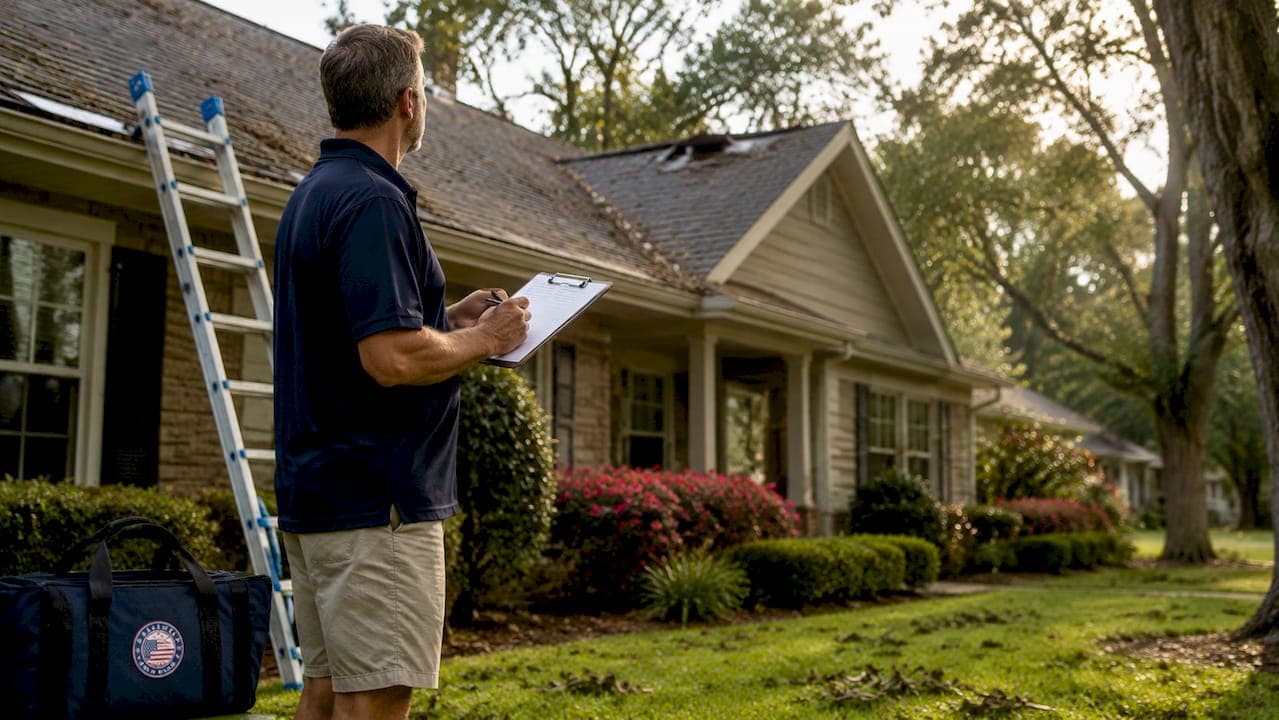
Standard Georgia homeowners insurance, specifically the HO-3 policy form, covers sudden, accidental damage from wind, hail, lightning, and fallen trees, but excludes flood damage entirely. Cherokee County homeowners filing claims after severe weather need to understand exactly which types of storm damage covered under their policy before contacting their insurer. Flood damage requires a separate National Flood Insurance Program (NFIP) or private flood policy, even for homes outside high-risk zones. Wind and hail deductibles often differ from standard deductibles and can cost thousands out of pocket. Knowing these distinctions before storm season is the difference between a paid claim and a costly surprise.
1. What types of wind-related storm damage are covered?
Wind damage is one of the most common covered storm damage types under Cherokee County homeowners policies. Covered wind damage includes lifted or missing shingles, broken siding, shattered windows, and structural harm caused by falling trees or wind-driven debris. Water that enters through a storm-created opening in your roof or wall is also covered. Pure flooding from rising water outside the home is not.
Documenting wind damage correctly is what separates a paid claim from a denied one. Date-stamped photos linked to National Weather Service (NWS) reports give adjusters verifiable proof that damage occurred during a specific storm event. Filing that documentation promptly matters too. Most Georgia policies require storm damage notification within 30–45 days to avoid disputes over claim validity.
Common signs of legitimate wind damage on a roof include:
- Shingles lifted, curled, or missing in a pattern that follows wind direction
- Granule loss concentrated on one side of the roof
- Damaged or displaced ridge cap shingles
- Broken fascia boards or soffit panels
- Dents or cracks in gutters from wind-driven debris
Pro Tip: Pull a free weather history report from the NWS website for your Cherokee County address. Attach it to your claim file alongside your photos. Adjusters cannot dispute damage timing when you have official weather data on record.
Wind deductibles add another layer of complexity. Percentage-based wind/hail deductibles are calculated against your dwelling coverage limit, not a flat dollar amount. On a $350,000 home with a 2% wind deductible, you pay the first $7,000 of any wind-related claim before your insurer covers the rest. That figure surprises most homeowners the first time they file.
2. How hail storm damage is covered and documented
Hail damage coverage under standard Cherokee County policies applies to roofs, siding, gutters, and windows when the damage is sudden and storm-related. Metro Atlanta and the broader Dixie Alley region see recurring spring hail events that generate significant insurance activity each year. Knowing how to document hail damage correctly determines how much your insurer actually pays.

Roofs older than 10–12 years are often settled on an Actual Cash Value (ACV) basis rather than Replacement Cost Value (RCV). ACV means the insurer deducts depreciation from the payout based on your roof's age and condition. A 15-year-old roof may receive a fraction of actual repair costs, leaving you responsible for the balance.
Common hail damage signs to document before filing a claim:
- Circular bruise-like dents on asphalt shingles with granule loss at the impact point
- Dents on metal flashing, gutters, or downspouts
- Cracked or broken skylights and window screens
- Soft spots on siding that dent under light pressure
- Damaged HVAC equipment or outdoor fixtures
Claim pitfalls to avoid:
- Waiting too long to file after a hail event
- Failing to photograph damage from multiple angles and distances
- Accepting an ACV settlement without confirming your policy type
- Skipping a professional inspection before the adjuster visits
Pro Tip: Schedule a professional roof inspection before the insurance adjuster arrives. A written inspection report from a qualified roofer gives you an independent damage assessment to compare against the adjuster's scope. This is one of the most effective ways to prevent underpayment on hail claims.
Understanding roof age depreciation schedules before a storm hits lets you plan for out-of-pocket costs. Review your policy declarations page now to confirm whether you have ACV or RCV coverage.
3. Lightning strikes and related storm damage covered
Lightning damage covered by homeowners insurance typically includes fire caused by a direct strike, structural damage to the home, and in many cases, damage to permanently installed electrical systems. Fire and structural harm from lightning strikes are standard covered perils under HO-3 policies in Georgia.
Secondary damage is where coverage gets complicated. Power surge damage not directly caused by a lightning strike may be excluded. If a utility line surge damages your appliances during a storm, that claim may fall under a separate equipment breakdown endorsement rather than your standard policy.
Steps to take immediately after a lightning strike:
- Call 911 if there is any fire or structural risk
- Document all visible damage with photos before any cleanup
- List every damaged appliance or system with model numbers and purchase dates
- Contact your insurer within 24 hours to open a claim
Georgia homeowners in Cherokee County and the greater Atlanta area experience frequent summer thunderstorms. A professional inspection after any confirmed strike helps identify hidden damage to roof decking, attic framing, or electrical entry points that are not visible from the ground.
4. Fallen trees and debris damage
Most standard policies cover damage from fallen trees or storm debris when the tree falls on an insured structure during a storm event. This includes structural repairs to the roof, walls, or other damaged areas, as well as the cost of removing the fallen tree from the structure. Coverage limits and deductibles apply the same way they do for other storm damage types.
One important distinction: if a tree falls in your yard but does not hit a structure, most policies will not pay for removal. The tree must cause physical damage to a covered structure to trigger the claim. Homeowners often assume any storm-related tree removal is covered. It is not.
Neighbor liability is another common misunderstanding. If a healthy tree from your property falls on a neighbor's home during a storm, your neighbor's own policy typically covers their damage. If the tree was dead or diseased and you had been notified, liability may shift to you. Document the condition of large trees on your property annually.
5. Why flood damage is not covered by standard policies
Flood damage is specifically excluded from standard HO-3 homeowners policies in Cherokee County and across Georgia. Flood damage requires a separate policy, either through the National Flood Insurance Program (NFIP) or a private flood insurer, regardless of whether your home sits in a FEMA-designated high-risk flood zone. This is one of the most consequential types of storm damage not covered that homeowners overlook.
The same storm event can produce both covered and excluded damage. Wind-driven rain through a storm-created opening is covered. Rising water that enters through the foundation or flows in from outside is not. The distinction comes down to the source of the water, not the storm itself.
Consequences of lacking flood coverage after a storm event:
- Full out-of-pocket responsibility for water damage, mold remediation, and structural repairs
- No federal disaster assistance unless a presidential disaster declaration is issued for your county
- Potential mortgage lender penalties if flood insurance is required by your loan terms
Cherokee County and parts of Metro Atlanta have experienced significant flooding from storm events in recent years. Homeowners near creeks, low-lying areas, or properties with poor drainage should evaluate flood insurance needs based on their specific location and FEMA flood zone designation. The NFIP offers policies through participating insurers, and private flood policies often provide broader coverage with faster claims processing.
Key takeaways
Standard Georgia homeowners insurance covers wind, hail, lightning, and fallen tree damage but excludes flood damage, which requires a separate policy purchased before a storm occurs.
| Point | Details |
|---|---|
| Covered storm damage types | Wind, hail, lightning, and fallen trees are covered under standard HO-3 policies in Cherokee County. |
| Flood damage exclusion | Flood damage requires a separate NFIP or private flood policy, even outside high-risk zones. |
| Wind/hail deductibles | Percentage-based deductibles on a $350,000 home at 2% mean $7,000 out of pocket before coverage applies. |
| Roof age affects payouts | Roofs older than 10–12 years are often settled at Actual Cash Value, reducing your claim payment. |
| Documentation is critical | Date-stamped photos linked to NWS weather data prevent claim denials and support fair settlements. |
What I've learned about storm claims in Cherokee County
After four years of inspecting storm-damaged roofs across Cherokee County and Metro Atlanta, the single biggest mistake I see homeowners make is assuming their policy covers everything a storm touches. It does not. The policy language is specific, and adjusters work within those definitions.
The wind/hail deductible issue catches people off guard every single time. Most homeowners have no idea their deductible is percentage-based until they get the claim summary. Review your declarations page before storm season. If your dwelling coverage is $400,000 and your wind deductible is 2%, you owe $8,000 before your insurer pays a dollar. That is not a surprise you want after a bad storm.
I also see homeowners file claims without any documentation linking the damage to a specific weather event. Adjusters can and do deny claims when the damage timeline is unclear. Pull the NWS data for your address, photograph everything the day of the storm, and get a professional inspection report before the adjuster visits. That combination gives you the strongest possible claim file.
Proactive annual roof inspections are the most underused tool in a homeowner's arsenal. They catch pre-existing issues that could complicate a future claim, and they give you a documented baseline condition report. If a storm hits six months later, you have proof of what was there before.
— Eric
Storm damage support from The Original Roof Repair Company
Cherokee County homeowners dealing with storm damage need fast, accurate documentation to protect their claim.

The Original Roof Repair Company provides emergency roof repair services for wind, hail, and storm-related damage across Cherokee County and 11 surrounding counties. The team also handles roof insurance claims from start to finish, documenting damage, preparing inspection reports, and working directly with carriers and adjusters on your behalf. Whether you need a targeted repair or a full assessment after a severe weather event, The Original Roof Repair Company delivers honest evaluations and transparent pricing with no pressure. Contact the team to schedule an inspection after your next storm.
FAQ
What storm damage does homeowners insurance cover in Georgia?
Standard Georgia HO-3 policies cover sudden, accidental damage from wind, hail, lightning, and fallen trees. Flood damage is excluded and requires a separate policy.
Is wind-driven rain covered by homeowners insurance?
Yes. Water that enters through a storm-created opening in your roof or walls is covered. Water from rising ground levels or external flooding is not.
What are the types of storm damage not covered by standard policies?
Flood damage, sewer backup, and power surge damage unrelated to a direct lightning strike are common exclusions under standard Cherokee County homeowners policies.
How does a wind/hail deductible work in Georgia?
Wind and hail deductibles are often percentage-based. On a $350,000 home with a 2% deductible, you pay the first $7,000 of any covered wind or hail claim before your insurer contributes.
Does roof age affect my storm damage claim payout?
Yes. Roofs older than 10–12 years are frequently settled at Actual Cash Value, meaning the insurer deducts depreciation and pays less than full replacement cost.