
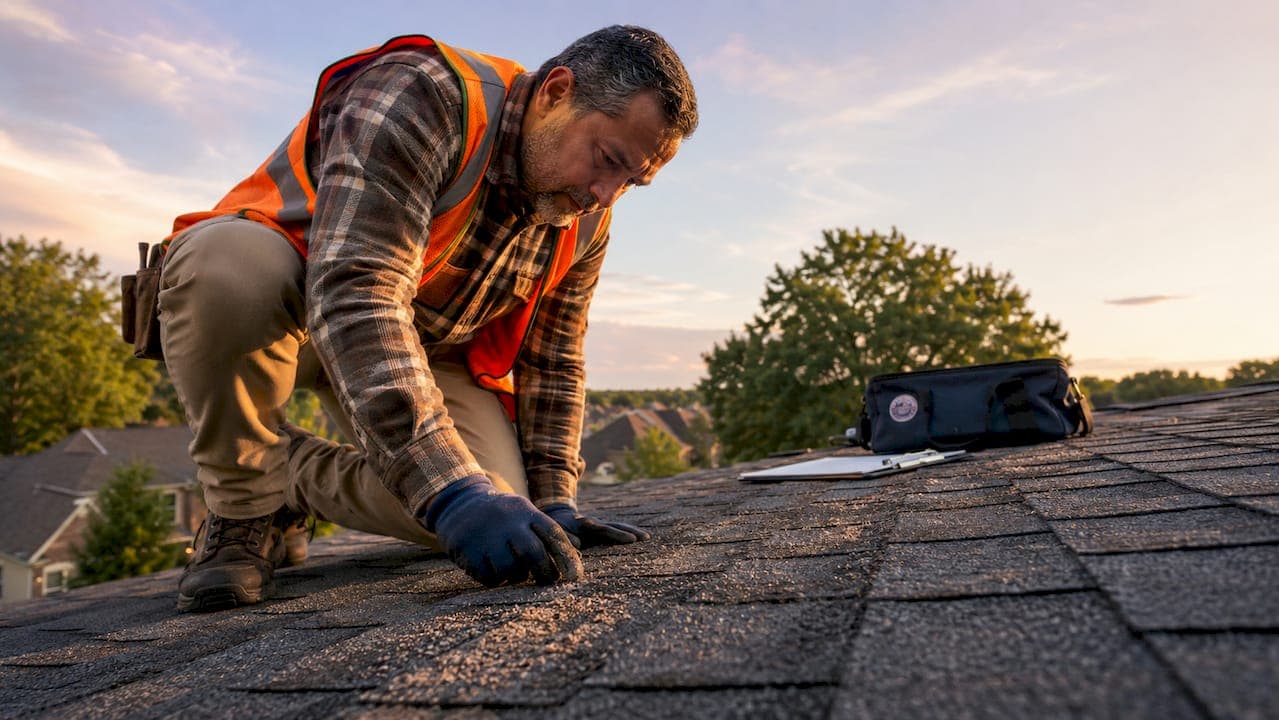
Functional damage to a roof is defined as any impairment that reduces the roof's ability to shed water, resist wind uplift, or protect the structure, regardless of whether an active leak is present. This distinction matters enormously for Georgia homeowners dealing with storm aftermath or filing insurance claims. The industry standard, recognized by IIBEC, goes further: functional damage includes any reduction in expected roof life or reliability, covering thermal protection and wind uplift resistance, not just water intrusion. Understanding this definition is the first step toward making informed repair decisions and building a credible insurance claim.
What is functional damage to a roof, exactly?
Functional damage is the industry term for roof deterioration that compromises performance. A roof can look intact from the street and still have serious functional damage underneath. Exposed fiberglass mats, cracked shingle substrates, broken sealant strips, and punctures in roofing membranes all qualify as functional damage because they impair what the roof is designed to do.
The clearest way to understand functional damage is through its effects on three core roof functions:
- Water shedding: Cracked or curled shingles allow water to migrate under the surface, even without a visible interior drip.
- Wind resistance: Broken sealant strips between shingles let wind get underneath and lift the tabs, accelerating further damage with every storm.
- Structural protection: Punctures in flat roof membranes or exposed mats on asphalt shingles leave the decking vulnerable to moisture absorption and rot.
- Thermal protection: Diminished thermal performance is also classified as functional damage, meaning a roof that no longer insulates properly has lost part of its designed function.
- Service life reduction: Any damage that shortens the roof's expected lifespan counts as functional, even if the roof is not currently leaking.
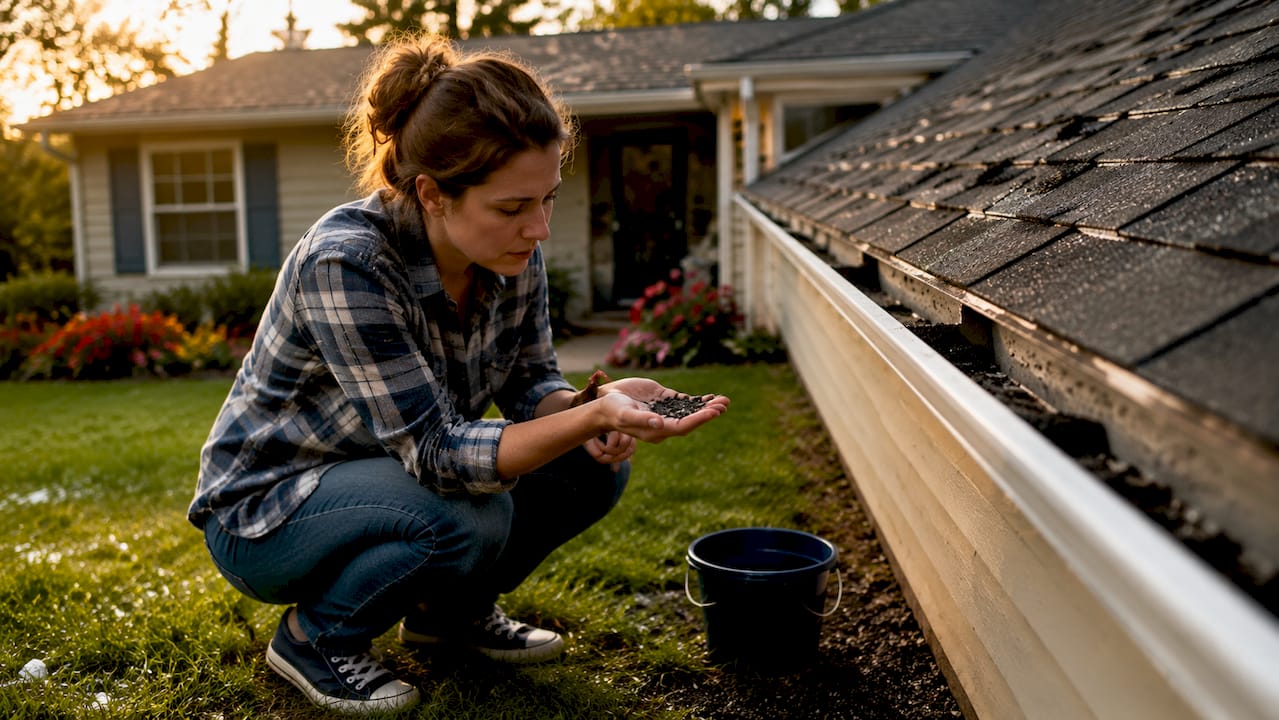
Granule loss on asphalt shingles is one of the most common examples Georgia homeowners encounter after hail storms. Heavy granule loss exposes the asphalt layer to UV radiation, which accelerates brittleness and cracking. That process shortens the roof's service life by years, making it a textbook case of functional damage.
Pro Tip: Walk your property after any significant storm and look for granule accumulation in gutters or at downspout outlets. Excessive granules after a storm signal functional damage to the shingle surface, not just cosmetic wear.
How does functional damage differ from cosmetic damage?
The difference between functional and cosmetic damage determines whether your insurance claim gets paid. Cosmetic damage affects only the appearance of the roof without reducing its performance or lifespan. A small dent in a metal panel from hail, a scuff mark on a shingle, or minor surface discoloration all fall into the cosmetic category.
The table below shows how the two types compare across key characteristics:
| Characteristic | Functional damage | Cosmetic damage |
|---|---|---|
| Affects performance | Yes | No |
| Shortens roof lifespan | Yes | No |
| Covered by most policies | Yes | Often excluded |
| Requires professional assessment | Yes | Not always |
| Examples | Cracked shingles, broken seals, exposed mats | Dents, scuffs, surface marks |
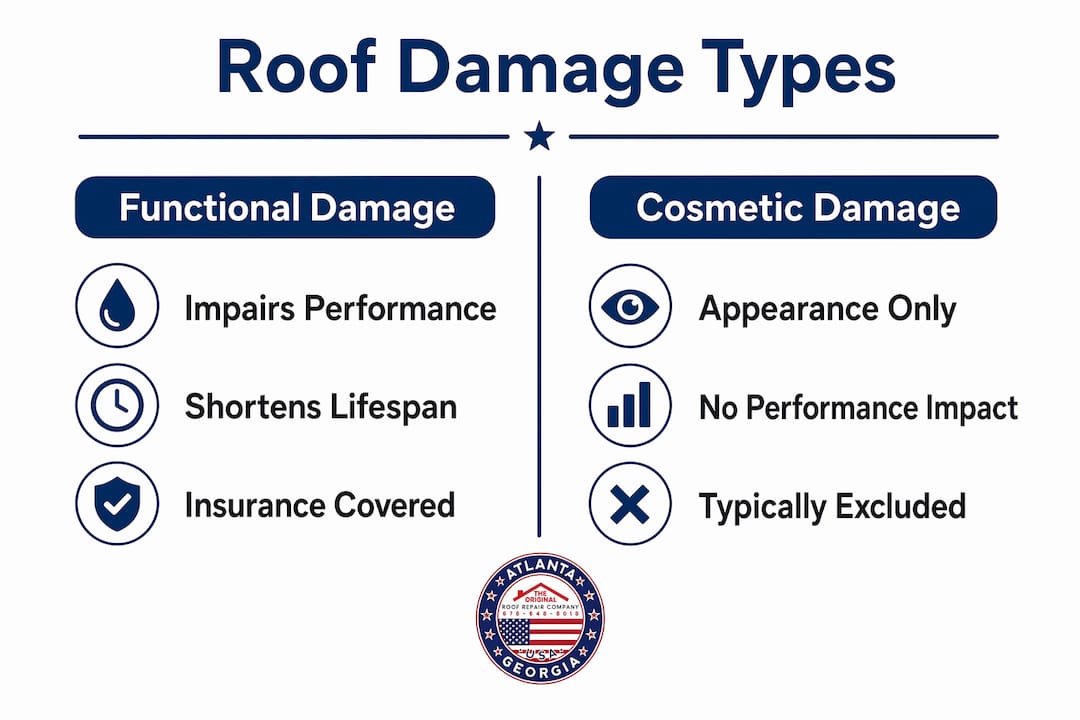
Cosmetic damage exclusions in insurance policies are designed to exclude appearance-only damage. The critical point is that these exclusions do not apply when the damage compromises performance. Cracked shingles, broken seals, and accelerated granule loss remain covered under functional damage provisions even when a cosmetic exclusion exists in the policy.
Insurance adjusters sometimes misclassify functional damage as cosmetic. This is one of the most common and costly errors Georgia homeowners face after a storm. Professional reports that focus on broken seals and exposed mats, rather than surface appearance, are the most effective tool for disputing that classification.
Pro Tip: Ask your adjuster specifically whether each damaged area was assessed for performance impairment, not just appearance. If the answer is unclear, request a written explanation of how each item was classified.
What causes functional roof damage in Georgia?
Georgia's climate creates a specific set of conditions that accelerate functional roof damage. Severe storms are the most immediate cause, but age, installation quality, and maintenance gaps all contribute.
- Hail storms: Hail must reach a size threshold relative to the roofing material to cause functional damage. Wind-driven hail and perpendicular impacts cause the most damage because they concentrate force on a small area, fracturing the shingle substrate or denting metal panels beyond cosmetic thresholds.
- High winds: Wind lifts shingle edges and tears flashing away from penetrations. Once the sealant strip breaks, the shingle is functionally compromised even if it stays in place.
- Age and sealant degradation: Sealant strips on asphalt shingles weaken significantly after 7–10 years. An older roof sustains functional damage from a storm that a newer roof would survive without issue.
- Poor installation: Improper nailing patterns, inadequate underlayment, and incorrect flashing installation all create weak points that convert moderate storm energy into functional damage.
- Moisture and rot: Persistent moisture from clogged gutters or failed flashing causes decking rot, which is structural functional damage that spreads silently over months.
Georgia's combination of summer thunderstorms, occasional hail events, and high humidity makes roofs here particularly vulnerable to the compounding effect of these factors. A roof weakened by age and a minor installation flaw can sustain functional damage from a storm that would leave a newer, properly installed roof untouched. Understanding what causes roof damage in your specific climate helps you prioritize inspections and maintenance.
How should you document functional damage for an insurance claim?
Proper documentation is the single most important factor in a successful functional damage claim. Insurance policies cover functional damage without requiring an active leak, but the burden of proof falls on the homeowner to show that performance has been compromised.
Follow these steps to build a strong claim:
- Get a professional inspection immediately after a storm. A qualified roofer documents impact patterns, granule loss, broken seals, and cracked substrates. Ground-level visual checks miss most functional damage because fractures and broken seals are not visible without close inspection and, in some cases, magnification.
- Photograph every affected area. Capture wide shots showing the overall damage pattern, then close-ups of individual shingles showing granule loss, cracks, or lifted edges. Date-stamp every image.
- Document the storm event. Save weather service records showing hail size, wind speed, and storm path for your area on the date of the event. This establishes the cause of damage.
- Request a written inspection report. A detailed written report from a licensed roofing contractor or forensic engineer carries far more weight with an adjuster than photographs alone.
- Review your policy for cosmetic exclusions. Read the exact language carefully. If your policy contains a cosmetic damage exclusion, confirm with your contractor that the documented damage meets the functional damage standard before filing.
- Dispute denials with engineering evidence. Denied claims classified as cosmetic can be challenged with professional engineering reports that focus on functional impairment rather than appearance.
Theoriginalroofrepaircompany provides roof insurance claim advocacy for homeowners across Cherokee County and 11 surrounding counties. The team documents storm, hail, and wind damage and works directly with carriers and adjusters on the homeowner's behalf.
Pro Tip: Never accept a verbal denial. Request the adjuster's written report and the specific policy language used to classify your damage. That documentation is your starting point for a formal dispute.
Key Takeaways
Functional damage is any roof impairment that reduces performance or shortens lifespan, and proving it with professional documentation is the key to a successful insurance claim.
| Point | Details |
|---|---|
| Functional damage definition | Any impairment reducing water shedding, wind resistance, thermal protection, or roof lifespan. |
| Differs from cosmetic damage | Cosmetic damage affects appearance only; functional damage affects performance and is covered by most policies. |
| Common Georgia causes | Hail, high winds, sealant aging after 7–10 years, poor installation, and moisture accumulation. |
| Documentation is critical | Professional inspection reports and dated photographs are required to prove functional damage to an insurer. |
| Denied claims can be disputed | Engineering reports focused on functional impairment, not appearance, successfully overturn cosmetic misclassifications. |
What I've learned from functional damage assessments in Georgia
One thing I see repeatedly is homeowners assuming that if the roof isn't actively dripping, there's no real damage. That assumption costs people thousands of dollars. Functional damage is often invisible from the ground and sometimes invisible even from the roof surface without a close inspection. I've walked roofs that looked fine from the street and found shingles with fractured substrates, broken sealant strips, and granule loss severe enough to cut years off the roof's life.
The other mistake I see just as often is the opposite: homeowners convinced that every mark on their roof is functional damage and filing claims that adjusters correctly deny. That pattern damages your credibility with the carrier and makes future legitimate claims harder to win. The standard is specific. Damage must impair performance, not just look bad.
My honest advice is to get a forensic-quality inspection from someone who knows how to separate storm damage from normal weathering. Roofs over 7–10 years old need especially careful documentation because aging sealants change the damage picture significantly. The difference between a paid claim and a denied one often comes down to one detailed inspection report. Don't skip it. And if your claim gets denied, don't accept that as the final answer. A well-documented functional damage assessment has reversed many denials I've seen in this area.
— Eric
Theoriginalroofrepaircompany can help with your functional damage claim
Functional damage is not always obvious, and the claims process adds another layer of complexity for Georgia homeowners. Theoriginalroofrepaircompany specializes in exactly this situation.
Theoriginalroofrepaircompany provides professional roof damage inspections and full insurance claim advocacy for homeowners across Canton, Cherokee County, and the surrounding region. The team documents functional damage with the detail adjusters require, and handles direct communication with carriers on your behalf. For urgent situations, emergency roof repair is available to stop further damage while your claim moves forward. Contact Theoriginalroofrepaircompany for a transparent assessment with no-pressure recommendations.
FAQ
What is functional damage to a roof in insurance terms?
Functional damage is any roof damage that reduces performance, including water shedding, wind resistance, or thermal protection, regardless of whether an active leak exists. Insurance policies cover functional damage even when cosmetic exclusions apply.
Does functional damage always mean the roof needs replacement?
Not always. Functional damage can often be repaired if it is caught early and limited in scope. Theoriginalroofrepaircompany recommends replacement only when repair costs exceed $4,000 and replacement is the more cost-effective choice.
Can I file a claim for functional damage without a leak?
Yes. Insurance policies cover functional damage without requiring an active leak, provided you can document that the roof's performance has been compromised through professional inspection and photographic evidence.
How do I know if my roof has functional damage after a hail storm?
Functional damage from hail includes fractured shingle substrates, broken sealant strips, and significant granule loss. These conditions are often not visible from the ground and require a close professional inspection to identify accurately.
What if my insurance company says my roof damage is only cosmetic?
Request the written adjuster report and the specific policy language used to make that classification. If the damage includes cracked shingles, broken seals, or exposed mats, it meets the functional damage standard and the denial can be disputed with a professional engineering report.