
Insurers require a repair estimate to establish a priced baseline for restoring your property or vehicle to its pre-loss condition. That estimate is the foundation for indemnification and reserve-setting — it tells the carrier how much to hold in reserve and what to pay out. Without it, there is no agreed scope, no verifiable cost, and no way to confirm the claim matches the actual damage.
Before you accept any number the insurer hands you, take two steps:
- Document everything first. Photograph all visible damage with timestamps before any temporary repairs begin.
- Get at least one independent estimate from a licensed contractor or shop so you have a comparison point if the insurer's figure looks low.
The NAIC model guidance and standard claims-handling practice both treat the estimate as a carrier-position starting point, not a final settlement. Pricing tools like Xactimate (used for property claims) and Mitchell and CCC (used for auto claims) generate those starting points from regional databases that can lag real market costs. For Atlanta and Georgia homeowners dealing with roof damage, The Original Roof Repair Company provides independent estimates and claims documentation to help you negotiate from an informed position.
Table of Contents
- Why do insurance companies require a repair estimate?
- What are the insurer's actual goals when requiring an estimate?
- Who prepares estimates and how do insurers calculate costs?
- Should you get an independent estimate before or after filing a claim?
- How do you read the line items on an insurance estimate?
- What happens after the insurer has an estimate?
- What are your rights if you disagree with an insurance estimate?
- Why do contractor bids often differ from insurance estimates in Georgia?
- Key Takeaways
- A contractor's view on why independent estimates protect you
- Roof repair estimates and insurance claims in Atlanta and Georgia
- Useful sources and where to learn more
- FAQ
Why do insurance companies require a repair estimate?
An insurance repair estimate is a priced, itemized document created for one purpose: indemnification. It is not a contractor's competitive bid designed to win work. Its job is to define the scope of damage and attach a dollar amount that returns the property or vehicle to its pre-loss condition, nothing more and nothing less.
| Feature | Insurance Repair Estimate | Contractor Bid |
|---|---|---|
| Primary purpose | Indemnification under policy terms | Win the job at a competitive price |
| Who produces it | Adjuster, desk estimator, or approved software | Licensed contractor or repair shop |
| Pricing basis | Regional database (Xactimate, Mitchell, CCC) | Current market labor and material costs |
| Timing | Pre-disassembly or initial inspection | Often post-inspection or post-disassembly |
| Binding? | Carrier's starting position | Contractor's offer to perform work |
The insurer uses the estimate during loss adjustment to set a reserve, authorize payment, and verify that the claimed scope matches the physical damage. A company adjuster, desk adjuster, or third-party estimator signs off on it before any funds move.
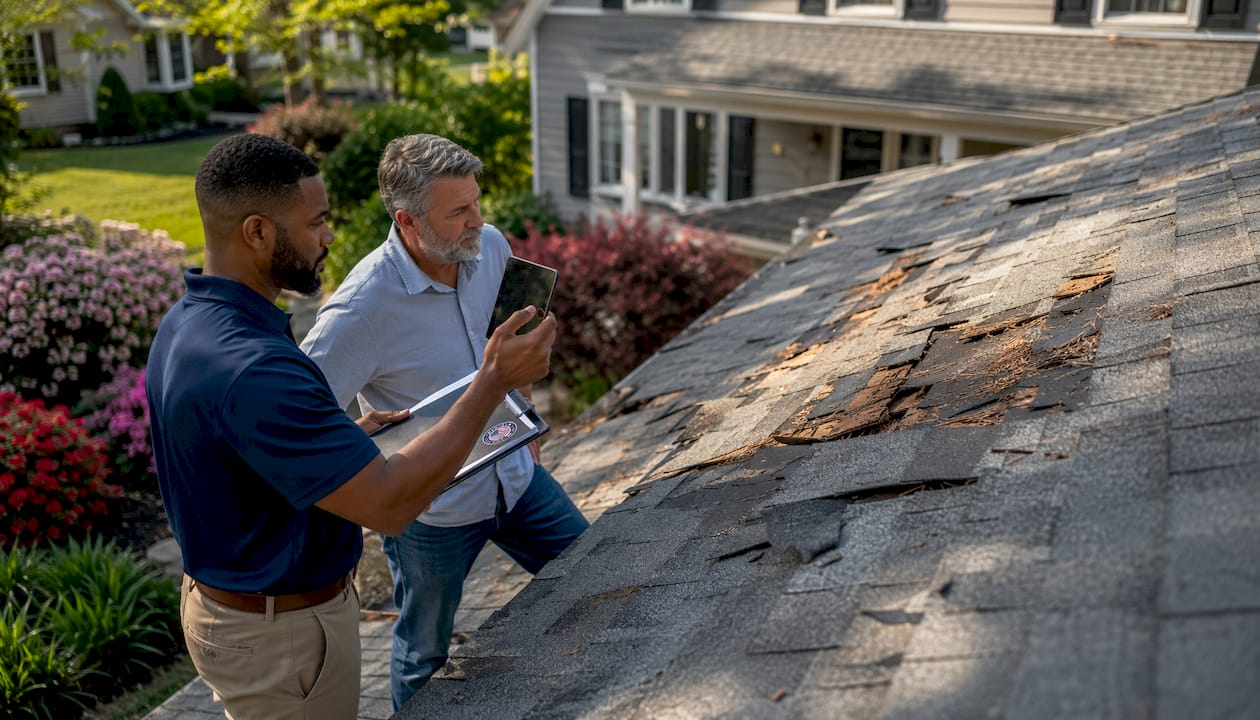
Pro Tip: If the document you received lists only visible damage and notes that "additional damage may be identified during repair," it is a preliminary adjuster estimate. A shop scope built during disassembly will typically be more complete and is the document you want when negotiating supplements.
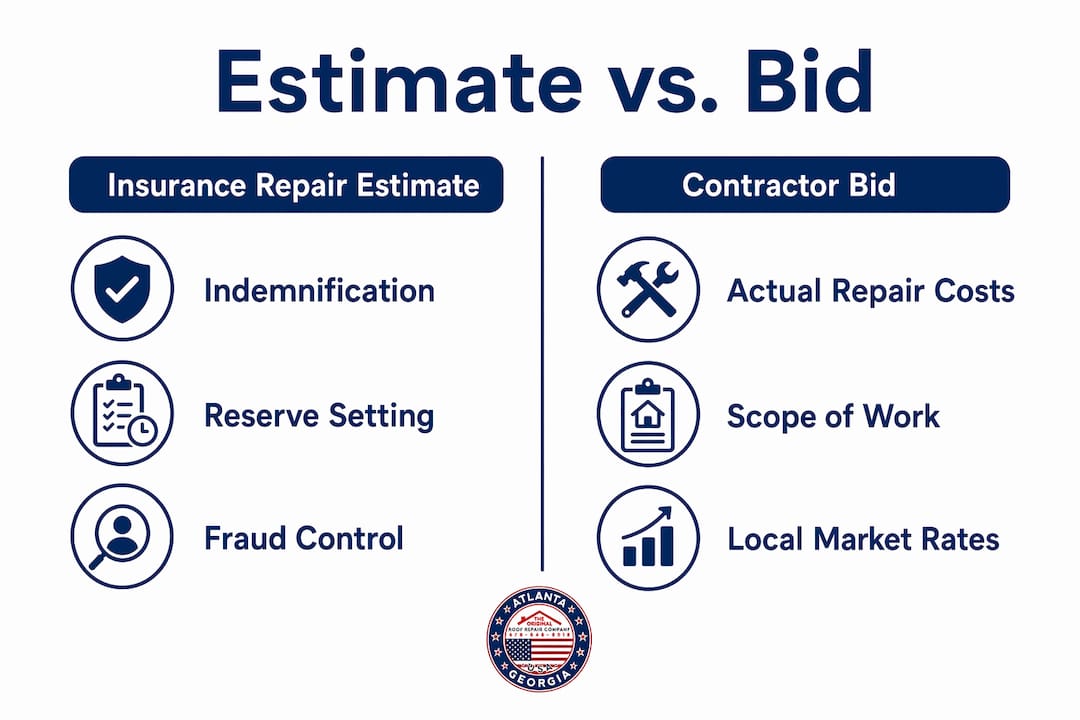
The structural distinction between an insurance estimate and a contractor bid matters because the incentives are different. An adjuster resolving a claim efficiently is not the same as a contractor pricing the full scope of work needed to do the job right.
What are the insurer's actual goals when requiring an estimate?
Four goals drive the requirement:
- Indemnification. The estimate sets the amount needed to restore the property to its pre-loss state. Paying more would be a windfall; paying less would leave the policyholder undercompensated.
- Reserve and cash-flow management. Carriers set financial reserves based on estimated claim costs. An accurate estimate keeps reserves aligned with real exposure.
- Fraud control. Standardized estimates make it easier to flag claims where the scope or cost is inconsistent with the reported event.
- Efficiency. Software-based pricing speeds up settlements across thousands of claims simultaneously.
That last point carries a real cost for policyholders. Database-generated prices can lag actual market conditions, producing underpayments during high-demand periods. Adjusters work for carriers and have incentives to resolve claims efficiently, which means their estimates represent the carrier's position, not an independent assessment of what repairs actually cost.
After a major storm in the Atlanta metro area, local labor and material costs spike. A database price list updated quarterly may not reflect what a licensed roofer charges in Cherokee County the week after a hail event.
Who prepares estimates and how do insurers calculate costs?
The people involved
Several different actors can produce an estimate depending on the claim type and carrier:
- Company adjusters handle claims in-house and typically use carrier-approved software.
- Desk adjusters work remotely, reviewing photos and documentation without a site visit.
- Field adjusters inspect the property or vehicle in person.
- Third-party estimators are independent firms hired by carriers to manage volume during catastrophe events.
- Shop or contractor estimates are sometimes requested by the carrier, especially for minor damage.
The software behind the numbers
For property claims, Xactimate is the dominant pricing platform. For auto claims, Mitchell and CCC are the standard tools. Each pulls regional labor rates and parts prices from databases updated on a set schedule. These are pre-disassembly best guesses, and supplements are a normal part of the process when shops find damage the initial estimate missed.
What goes into the calculation
| Line Item | What It Covers |
|---|---|
| Labor hours | Time to remove, install, or repair each component |
| Material unit costs | Shingles, panels, parts priced from the database |
| Paint/blend (auto) | Color matching adjacent panels |
| Diagnostic scans (auto) | ADAS calibration, airbag module resets |
| Overhead and profit (O&P) | General contractor markup for managed projects |
| Depreciation | Reduction for age and wear (ACV basis) |
| Code upgrades | Required building-code improvements triggered by repair |
Why do software outputs frequently differ from what a contractor charges? Several reasons:
- Database prices lag real market conditions, especially post-disaster.
- Pre-disassembly estimates cannot account for hidden damage.
- Regional labor rate variations are averaged, not localized.
- Line items like O&P, code upgrades, and matching are often omitted or undervalued.
Should you get an independent estimate before or after filing a claim?
The timing decision depends on the size and nature of the damage.
Reasons to get an independent estimate before filing:
- You can make an informed decision about whether to file at all (small claims may not exceed your deductible).
- A documented pre-claim estimate speeds up disputes if the insurer's number comes in low.
- For major roof damage in Atlanta or Georgia, a licensed roofing contractor's inspection captures storm evidence while it is fresh.
Reasons to wait until after the insurer's adjuster visits:
- The insurer's estimate establishes the baseline you are negotiating from.
- You retain the right to independent bids at any point in the process.
- Getting an estimate before filing does not obligate you to use that contractor.
Cons to consider either way:
- Independent estimates cost time and sometimes money.
- If your pre-claim estimate is higher than the insurer's, the carrier may use it against you in negotiations.
- Policy notice requirements vary; check your policy for reporting deadlines.
When a pre-claim estimate is worth the effort:
- Suspected structural damage or hidden water intrusion
- Possible total loss (vehicle or roof system)
- Major hail or wind event in the Atlanta metro area where demand for contractors spikes quickly
- Any situation where you expect the insurer's number to be contested
Pro Tip: Review common storm damage claim mistakes before you file. Knowing what to avoid can protect your claim value from the start.
How do you read the line items on an insurance estimate?
A typical estimate lists damage by category, with quantities, unit prices, and totals for each line. Here are the terms you will encounter most often:
- RCV (Replacement Cost Value): The cost to repair or replace the damaged item with new materials at current prices.
- ACV (Actual Cash Value): RCV minus depreciation. This is what the insurer pays initially on most policies.
- Recoverable depreciation: The withheld amount you can claim back after repairs are completed and documented.
- O&P (Overhead and Profit): A markup applied when a general contractor manages multiple trades. Insurers sometimes omit this; it is often negotiable.
- Supplement: An additional estimate submitted when more damage is found during repair.
- Scope of loss: The written description of all damaged items and required repair operations.
- Matching: The requirement to replace undamaged materials to achieve a uniform appearance. State rules on matching vary.
When reviewing the document, check that the dimensions and quantities match your property. A roof estimate should list the correct square footage. An auto estimate should account for every damaged panel. If a line item is missing, that is a supplement opportunity.
Pro Tip: Photograph all damage before any work begins, timestamp the images, and keep every receipt and vendor note. That documentation is your evidence base for supplement requests and any dispute that follows.

Estimate accuracy depends on inspection thoroughness, database recency, scope interpretation, and policy language. An underscoped inspection is the most common driver of underpayment.
What happens after the insurer has an estimate?
- Adjuster review. The carrier reviews the estimate internally and issues an initial payment or explanation of benefits.
- Initial payment. On an ACV policy, the first check covers the ACV amount minus your deductible. On an RCV policy, the first check is typically the ACV portion; the remainder is released after repairs are verified.
- Policyholder decision. You decide whether to proceed with repairs, negotiate the settlement, or accept a cash payout. Accepting a cash settlement may release the carrier from further obligation, so read the release language carefully.
- Repair work and supplements. Once the shop or contractor begins work, additional damage found during disassembly triggers a supplement request. The carrier may send an adjuster to reinspect before approving the additional cost.
- Final payment. After documented repairs are complete, the carrier releases recoverable depreciation (on RCV policies) and closes the claim.
Documents to collect throughout this process:
- The insurer's initial estimate with all line items
- Your contractor's detailed invoice with matching line-item descriptions
- Photos taken during disassembly showing hidden damage
- All supplement requests and carrier responses
- Any written communication about scope disagreements
A note on lienholders: If you have a mortgage, your lender is likely listed as a co-payee on the claim check. Most lenders require proof of completed repairs before releasing funds. Coordinate with your lender early to avoid delays, especially during Atlanta's spring and fall storm seasons when contractor schedules fill quickly.
What are your rights if you disagree with an insurance estimate?
You are not required to accept the insurer's initial figure. Policyholders can provide independent repair bids to support a higher settlement, and industry guidance recommends obtaining at least two independent estimates from licensed professionals before entering negotiations.
Here is a practical playbook:
- Collect independent estimates. Get bids from two or more licensed contractors or shops. Make sure each bid covers the same scope so comparisons are valid.
- Build a scope-of-loss comparison. United Policyholders recommends preparing a scope-of-loss document without prices first, so every party is pricing the same work. Then attach the prices.
- Request an adjuster reinspection. Submit your independent estimates and any disassembly photos in writing and ask the carrier to reinspect.
- Submit a formal supplement. Attach documentation: photos, contractor line-item mapping to the insurer's estimate, and any parts invoices.
- Invoke the appraisal clause. Most property policies include an appraisal clause that allows each side to hire an independent appraiser; the two appraisers then select an umpire. This is faster and cheaper than litigation.
- File a state DOI complaint. If the carrier is unresponsive or acting in bad faith, file a complaint with your state Department of Insurance. In Georgia, that is the Georgia Department of Insurance. Include all written correspondence, estimates, and your timeline.
- Hire a public adjuster or attorney. For large disagreements, coverage denials, or complex claims, a licensed public adjuster or insurance attorney can represent your interests. Public adjusters typically work on a percentage of the settlement.
When to escalate immediately:
- The gap between the insurer's estimate and your contractor's bid exceeds $2,000.
- The carrier denies coverage without a clear policy basis.
- The insurer refuses to reinspect after you submit documentation.
In most U.S. jurisdictions, insurers cannot force you to use a specific repair shop. Review your policy declarations for "right to repair" clauses, but in general, you retain contractor choice. Choosing your own contractor does not void coverage, though carrier-preferred vendors may offer carrier-backed workmanship warranties that independent contractors do not.
Why do contractor bids often differ from insurance estimates in Georgia?
The gap between an insurer's estimate and a contractor's bid is not usually a sign that someone is wrong. It reflects structural differences in how each document is produced.
Root causes of the difference:
- Scope mismatch. The adjuster and contractor are often pricing different scopes. Establishing the exact scope of required work before reconciling price is the most effective way to close the gap.
- Pre-disassembly vs. post-disassembly pricing. Adjuster estimates are written before the roof or vehicle is opened up. Hidden damage only appears once work begins.
- Database lag. Xactimate price lists are updated periodically, not in real time. In a high-demand market, they can run below what local contractors charge.
- O&P treatment. Insurers sometimes omit overhead and profit when a general contractor is managing multiple subcontractors. That omission is a legitimate supplement item.
- Code upgrade lines. Georgia building codes may require upgrades when a roof is repaired or replaced. These are real costs that database estimates frequently exclude.
Local conditions in Atlanta and Georgia: Seasonal installer demand after spring hail events and fall wind storms compresses contractor availability and pushes labor costs above database defaults. Cherokee County and the surrounding Atlanta metro area see significant storm activity, and the weeks immediately following a major event are when database lag is most pronounced.
Pro Tip: When preparing a supplement packet for the insurer, include a scope-of-loss comparison (adjuster scope vs. contractor scope, side by side), disassembly photos with timestamps, manufacturer parts invoices, and a signed contractor estimate with each line item mapped to the corresponding line in the insurer's estimate. That level of documentation significantly reduces back-and-forth.
The Original Roof Repair Company handles this documentation process for homeowners across Cherokee County and the Atlanta metro area. When adjusters underpay roof claims in Georgia, a well-prepared supplement packet is often the difference between an underpaid claim and a fair settlement. The company's repair-first approach also means that when a repair estimate comes in under $4,000, repair is recommended. When it exceeds that threshold and replacement is the smarter choice, that recommendation is made honestly.
Key Takeaways
Insurers require a repair estimate because it is the priced baseline for indemnification, reserve-setting, and fraud control — and you have the right to challenge it with independent bids at any stage of the claim.
| Point | Details |
|---|---|
| Estimate purpose | The insurer's estimate sets the indemnification baseline, not the final settlement amount. |
| Your right to independent bids | Get at least two licensed contractor estimates before accepting the insurer's figure. |
| Software vs. shop differences | Xactimate and Mitchell/CCC outputs can run 8–15% below contractor costs in high-demand markets. |
| Supplements are normal | Hidden damage found during repair triggers a supplement; document everything with photos and invoices. |
| Escalation options | Use the appraisal clause, your state DOI, or a public adjuster if the carrier is unresponsive. |
| The Original Roof Repair Company | Provides independent estimates and claims documentation for Atlanta and Georgia homeowners disputing roof damage settlements. |
A contractor's view on why independent estimates protect you
The most common mistake homeowners make is treating the insurer's estimate as the final word. It is not. It is the carrier's opening position, produced by software that cannot see inside your walls, under your shingles, or behind your fascia boards.
Contractors who work regularly with insurers know that the supplement process is standard, not exceptional. The initial estimate covers visible damage. The real scope emerges during disassembly. A contractor who photographs every step, labels hidden damage clearly, and maps each new line item back to the insurer's original estimate will move through supplement approvals faster than one who submits a vague change order.
For homeowners in the Atlanta metro area, the timing of documentation matters as much as the quality. Storm evidence degrades. Hail bruising on shingles becomes harder to distinguish from normal wear relatively soon. Getting a licensed contractor on the roof quickly, with a camera and a moisture meter, is not just good practice. It is often the difference between a fully documented claim and one the adjuster can credibly dispute.
The Original Roof Repair Company's position on replacement vs. repair is straightforward: if the repair estimate remains relatively modest and addresses the actual problem, repair is the right call. When the scope of damage is more extensive, an honest replacement recommendation serves the homeowner better than a patchwork fix. That same honesty applies to storm claims — document what is there, price it accurately, and let the evidence drive the settlement.
Roof repair estimates and insurance claims in Atlanta and Georgia
Storm damage in Cherokee County and the surrounding Atlanta metro area moves fast, and so do insurance deadlines. The Original Roof Repair Company inspects roofs, documents damage with photos and written scopes, and works directly with carriers and adjusters on the homeowner's behalf. BBB accredited and locally operated, the company serves homeowners across 12 counties within a 35-mile radius of Canton, Georgia.

If your insurer's estimate looks low, or if you have not yet filed and want documentation before you do, The Original Roof Repair Company can provide an independent estimate and a supplement-ready scope of loss. For homeowners whose damage crosses the repair threshold, the roof insurance claims page outlines the full claims advocacy process. To get started, request an inspection and expect a straightforward assessment of what the damage is, what it will cost to fix, and what your claim should cover.
For immediate storm damage, the emergency roof repair service is available to stabilize the roof and document conditions before evidence degrades.
Useful sources and where to learn more
The sources below are authoritative starting points for homeowners and vehicle owners who want to go deeper on any part of the claims process.
| Source | What You Will Find There |
|---|---|
| United Policyholders | Consumer-focused claim guidance, scope-of-loss templates, and negotiation strategies for property losses |
| Insurance Information Institute | Explanation of how insurers value vehicles and calculate repair costs, including database pricing |
| Insurance Repair Authority | Estimate standards, O&P guidance, and database limitation analysis for both property and auto claims |
| Progressive Claims FAQ | Insurer-facing explanation of how auto repair estimates work and what happens when supplements arise |
| Georgia Department of Insurance | State-specific consumer rights, complaint filing, and adjuster licensing information for Georgia policyholders |
- United Policyholders is a nonprofit consumer advocacy organization. Its scope-of-loss templates are worth printing and bringing to any adjuster meeting.
- Insurance Information Institute provides neutral industry data on valuation methods, useful when you need to understand the insurer's methodology.
- Insurance Repair Authority publishes practitioner-level guidance on estimate standards that contractors and public adjusters use regularly.
- Georgia Department of Insurance is the primary resource for filing a complaint, verifying an adjuster's license, or understanding your rights under Georgia law.
For a checklist specific to wind damage documentation, the wind damage roof claim checklist covers the documentation steps Georgia homeowners should follow before and after filing.
FAQ
What is an insurance repair estimate?
An insurance repair estimate is a priced, itemized document that lists the materials, labor, and operations needed to restore a property or vehicle to its pre-loss condition. It functions as the carrier's baseline for indemnification and reserve-setting, not as a final invoice or a contractor's competitive bid.
Do I have to accept the insurance company's estimate?
No. Policyholders are not required to accept the insurer's initial estimate and may submit independent bids from licensed contractors to support a higher settlement. If the gap is significant, the appraisal clause in your policy provides a formal dispute mechanism.
Can I keep the insurance claim check and make repairs myself?
In most cases, yes, if you own the property outright. If you have a mortgage, your lender is typically listed as a co-payee and may require documented repairs before releasing funds. Accepting a cash settlement may also release the carrier from paying supplements if additional damage is found later, so review any release language carefully before signing.
What should I not tell my insurance company?
Avoid speculating about the cause of damage if you are not certain, and do not minimize the scope before a licensed contractor has inspected. Statements made during the initial report can be used to limit the claim later. Stick to observable facts: when you noticed the damage, what you can see, and what temporary steps you took to prevent further loss.
Does choosing my own contractor affect my coverage?
In most U.S. jurisdictions, insurers cannot require you to use a specific repair shop. Choosing an independent contractor generally does not void coverage, though carrier-preferred vendors may offer carrier-backed workmanship warranties that independent contractors provide separately. For Georgia homeowners, reviewing your policy declarations for any "right to repair" clause is the first step.
This article provides general information about the insurance claims process and is not legal or financial advice. For guidance specific to your policy and situation, consult a licensed insurance professional, public adjuster, or attorney, and verify current rules with your state Department of Insurance.