
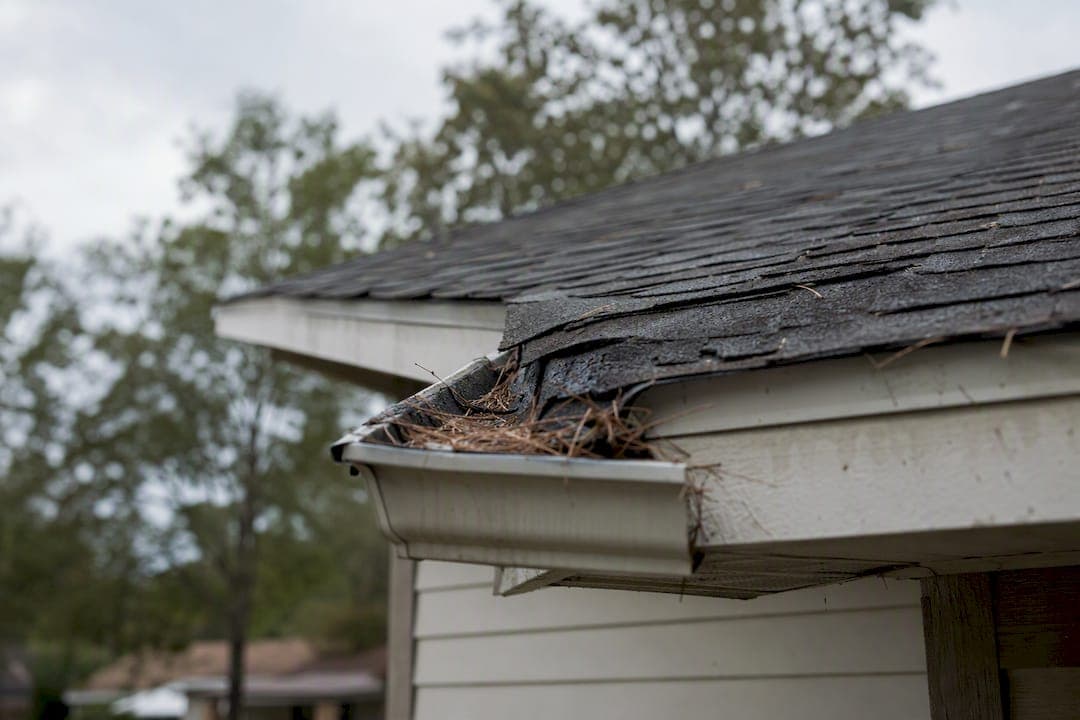
Missing shingles, curled edges, deep creases, and bare spots stripped of granules are the clearest signs of wind damaged shingles. If you spot any of these, stay off the roof, photograph the damage from the ground, cover exposed decking only if it's safe to do so, and schedule a professional inspection right away. Careful documentation now protects your insurance claim later, and The Original Roof Repair Company offers free inspections across Atlanta and the surrounding Georgia counties.
TL;DR:
- Wind damage often begins at the roof perimeter with missing shingles, curled edges, or granule buildup, rather than obvious large-scale failure.
- Damage can occur at lower wind speeds for older, poorly sealed, or unsealed shingles, with gusts over 50 mph capable of causing significant harm.
- Thorough documentation, including photos of every slope and attic details, is essential for fast insurance claims and should be gathered before calling your insurer.
- Widespread uplift, heavy granule loss, or an aging roof generally warrant full replacement, especially if repair costs approach several thousand dollars.
- Professional inspection and temporary repairs like tarping should prioritize safety and timely evidence collection to support insurance and avoid unnecessary costs.
Table of Contents
- What Are the Signs of Wind Damaged Roof Shingles?
- How Does Wind Actually Damage Shingles?
- How Do I Document Wind Damage for an Insurance Claim?
- Should You Repair or Replace Wind Damaged Shingles?
- What Should You Do Next to Protect Your Roof?
- What Makes a Roofing Inspection Trustworthy?
- An Editorial Take on Wind Damage Claims
- Free Roof Inspection and Storm Damage Support
- Sources
- FAQ
What Are the Signs of Wind Damaged Roof Shingles?
Walk your property line after a storm and look up before you assume everything is fine. Wind rarely announces itself with one obvious clue. It shows up as a pattern of small failures that add up to a real problem.
Check for these seven signs:
- Missing shingles or tabs visible from the ground, in gutters, or scattered across the lawn
- Lifted, curled, or unsealed edges, along with horizontal creases running across the shingle surface
- Granule buildup that looks like coarse sand collecting in gutters and downspouts
- Damaged or displaced flashing, ridge caps, drip edges, or soffit and fascia trim
- Interior warning signs: new ceiling stains, damp attic insulation, or visible daylight through the roof deck
- Impact marks near penetrations from tree branches or debris around vents and chimneys
- Starter strip or rake edge failures, often the first place wind gets underneath the roof system
Any single item on this list is worth a closer look. Several together usually mean the storm did real work on your roof.
How Does Wind Actually Damage Shingles?
Wind doesn't push down on a roof. It gets underneath it. As air moves over the roofline, it creates uplift pressure that's strongest at edges, corners, and ridges, according to the Asphalt Roofing Manufacturers Association. That's why damage rarely starts in the middle of a slope. It starts at the vulnerable perimeter and works inward.
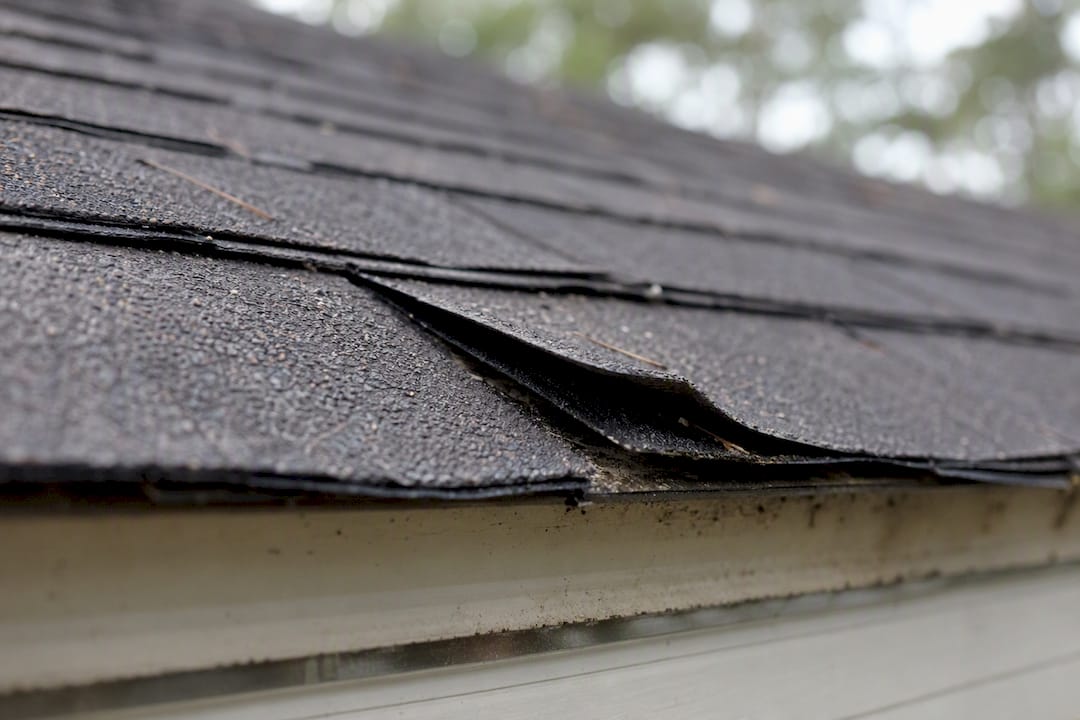
A crease is functionally the same as a missing shingle, even though it looks intact. The mat inside the shingle has already cracked, and that shingle will fail again in the next moderate wind event.
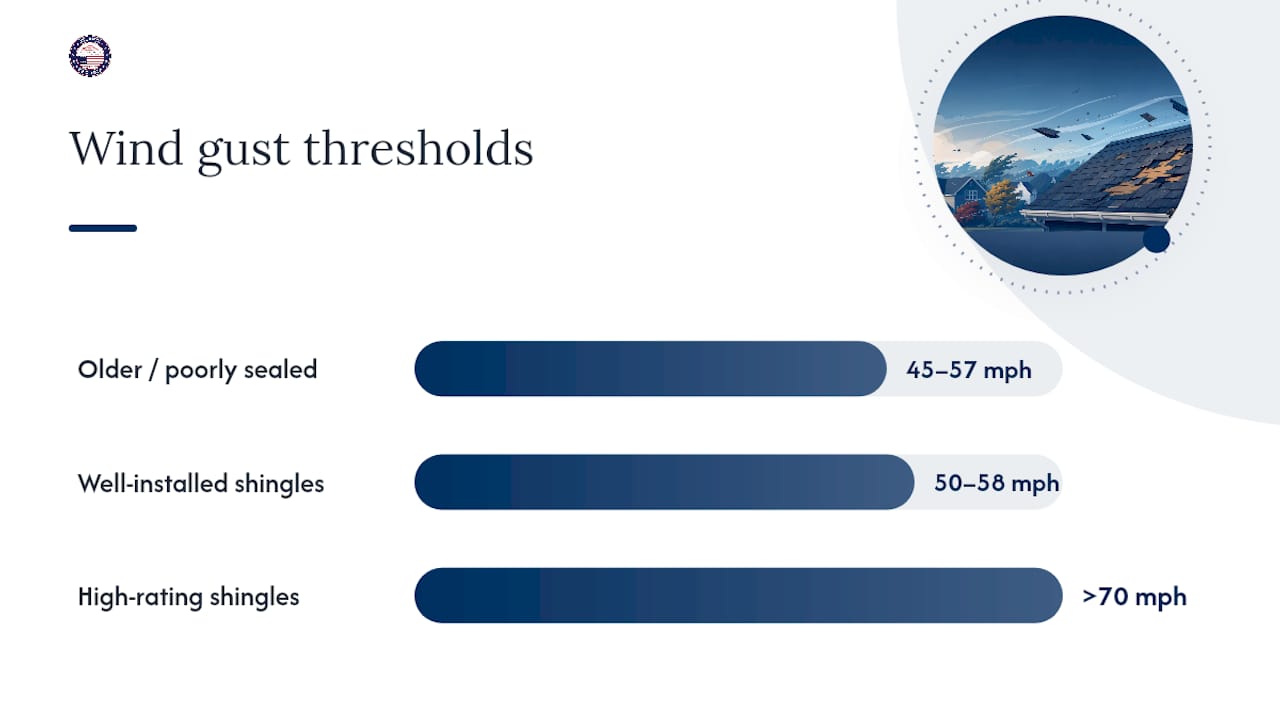
Wind speed thresholds give you a rough guide, not a guarantee. Gusts in the 45 to 57 mph range can loosen shingles that are already older or poorly sealed. Sustained gusts above roughly 50 to 58 mph are commonly cited as capable of damaging even well-installed asphalt shingles, and gusts topping 70 mph can damage shingles carrying higher wind ratings. Sustained wind speed matters less than the peak gust, since a single strong gust can do more damage than an hour of steady breeze. Insurance adjusters know this, which is why they pull peak gust data from the nearest National Weather Service station tied to your ZIP code and date of loss, rather than relying on a general storm summary.
How Do I Document Wind Damage for an Insurance Claim?
Insurers approve claims faster when the evidence removes doubt. A folder of clear, organized photos does more work than any phone call to your agent.
- Photograph every slope, starting with a wide establishing shot, then corner close-ups, then detail shots of specific damage with a tape measure or chalk line for scale.
- Get into the attic and photograph any daylight coming through the deck, damp or matted insulation, and staining around rafters.
- Record the date of loss and pull the peak gust report for your ZIP code from the nearest NWS station before that data ages out of easy reach.
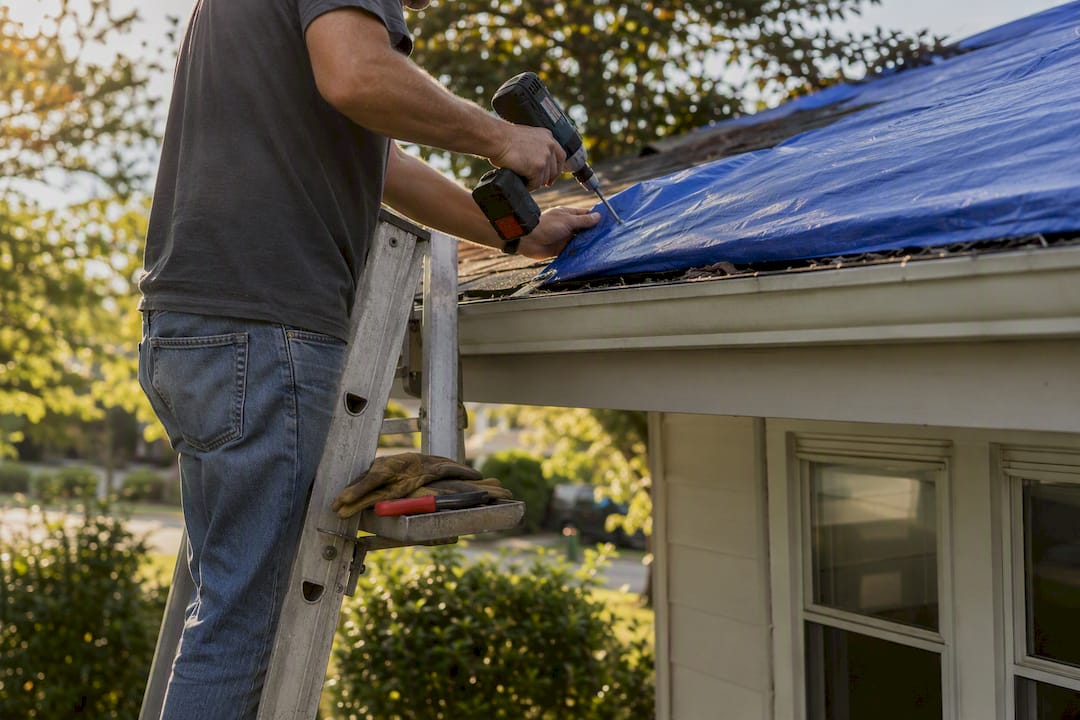
- Tarp exposed decking within 24 to 48 hours to meet your mitigation duty, and keep every receipt for temporary repairs since they're typically reimbursable up to policy limits.
- Avoid signing away claim rights to any contractor before an adjuster has inspected the roof.
Adjusters lean heavily on time-stamped, verifiable evidence. A detailed claim guide built around slope-by-slope photos and station gust records cuts denial risk significantly, since insurers most often deny wind claims on grounds of wear and tear, late filing, or damage they classify as cosmetic only. Pre-storm photos, maintenance records, and a written contractor report are your best defense against each of those arguments. Filing promptly matters. Georgia homeowners typically have a defined window to report storm damage, and waiting weeks to call your carrier hands them a wear-and-tear argument for free. Our wind damage claim checklist walks through this process in more detail, and our guide to preparing evidence photos shows exactly how to frame each shot.
Should You Repair or Replace Wind Damaged Shingles?
Isolated damage on a relatively new roof is usually a repair job, assuming matching shingles are available and the decking underneath is dry. Widespread uplift across multiple slopes, heavy granule loss, or an older roof usually points to replacement, especially if local building rules require full slope or roof replacement once damage is extensive. Insurers often apply similar logic when scoping a claim.
| Repair type | Typical cost range |
|---|---|
| Emergency tarp | a few hundred dollars |
| Small isolated repair (a few shingles) | moderate cost |
| Single slope replacement | several thousand dollars |
| Full roof replacement | tens of thousands of dollars |
These ranges come from industry claim and repair guidance and vary based on roof pitch, material, and access. When repair costs approach several thousand dollars, full replacement often becomes the more cost-efficient choice.
Shingle matching deserves attention too. A roof patched with a slightly different shade or profile can violate your policy's "like kind and quality" language, and it looks bad from the street. Before any inspection wraps up, ask about the roof's age, any prior repairs, remaining warranty coverage, and whether there's visible decking or underlayment damage. Our guide on repairing curled shingles covers when that kind of damage is genuinely fixable versus when it's a sign the whole slope is past its useful life.
What Should You Do Next to Protect Your Roof?
Stay off wet or steep roof surfaces. Collect any fallen shingles as physical evidence, and tarp exposed areas only if you can do it safely from a ladder rather than the roof itself. Schedule a professional inspection before you make any repair decisions on your own.
When vetting a local contractor, ask for proof of license and insurance, a written line-item estimate (ideally in Xactimate format, since that's what most insurers use), and references from recent jobs. Walk away from anyone pushing you to sign an Assignment of Benefits contract before an adjuster has even seen the roof.
If replacement is on the table, ask about higher wind-rated shingles, a six-nail fastening pattern for high-wind zones, heavy-duty starter strips, and upgraded flashing and attic ventilation. Our guide to emergency roof repair covers safe temporary fixes in more depth.
- Keep every photo, inspection report, invoice, and warranty registration in one folder
- Request that registration in writing at the time of installation
Pro Tip: Photograph your roof once a year, even without a storm. A "before" set makes every future wind claim easier to prove, because you can show exactly what changed and when.
What Makes a Roofing Inspection Trustworthy?
Eric Manly founded The Original Roof Repair Company in Canton, Georgia, on a repair-first principle: fix the actual problem instead of pitching a replacement nobody needs. The company is BBB accredited and has spent four years building a reputation across Cherokee County and the wider Atlanta metro on that same honesty.
A trustworthy inspection means a full photo checklist of every slope, attic access to check for hidden moisture, a written scope of work, and direct help communicating with your insurance adjuster. Replacement only gets recommended when a repair estimate exceeds $4,000 or when replacement is clearly the more cost-effective path. Having handled storm season after storm season in Georgia, our crews know how local wind patterns tend to hit roofs, and what a legitimate claim actually looks like on paper.
An Editorial Take on Wind Damage Claims
The roofing industry oversells drama and undersells discipline. Most articles on wind damage focus on scary wind-speed numbers, as if a single gust reading settles the question of whether your roof qualifies for a claim. It doesn't. What actually settles a claim is boring, methodical documentation: photos taken the same week as the storm, an attic check nobody bothers to do, and a written inspection report from someone who has no reason to inflate the scope.
The conventional advice tells homeowners to "call their insurance company first." I'd flip that. Document first, then call. Adjusters work from what they can see and verify, and a homeowner who shows up with a disorganized memory of "it was really windy that night" loses leverage against one who shows up with a dated photo folder and a contractor's written scope.
The biggest gap I see is homeowners treating a crease as cosmetic. It isn't. That shingle has already failed structurally, whether or not it's leaking yet. Prioritize the attic check, the photo timeline, and a straight answer from a contractor who isn't trying to sell you a full roof you don't need.
— Eric
Free Roof Inspection and Storm Damage Support
If your roof took a hit in the last windstorm, you don't need to figure out the repair-versus-replace question alone. The Original Roof Repair Company gives Atlanta-area homeowners a free inspection and, when the exposure is urgent, same-day emergency tarping to stop water intrusion before it spreads to your attic and ceilings.

Beyond the repair itself, we handle the parts of a wind damage claim that trip most homeowners up: documenting every slope and attic detail with the same photo standard adjusters expect, meeting the adjuster on-site, and producing a written line-item estimate that matches your carrier's own claims process. If your shingles came off the roof and not out of your pocket, that distinction is worth defending. Start with a free emergency roof repair inspection, or explore our roof repair and roof replacement services to see which fits your situation. Reach out today and we'll get someone on your roof, not just on the phone.
Sources
For technical detail beyond this guide, check the National Weather Service spotter reference for wind thresholds, the Asphalt Roofing Manufacturers Association for shingle damage mechanics, and the GAF windy season guide for repair criteria. Our own insurance claim steps list tracks the filing process end to end.
FAQ
Does Insurance Cover Wind Blown Roof Shingles?
Most homeowner policies cover wind damage to shingles, but coverage depends on your policy's wind/hail deductible, whether the damage exceeds normal wear and tear, and how promptly you file. Documentation from a licensed contractor and NWS gust data for your area strengthen the claim considerably.
Are Wind Damaged Roof Shingles Worth Replacing?
Isolated missing or creased shingles on a younger roof are usually worth repairing rather than replacing. Widespread uplift, heavy granule loss, or a roof already near the end of its lifespan typically make full replacement the more cost-effective choice.
Can Unsealed Shingles Be Damaged by Wind?
Yes. Shingles that never fully sealed after installation, often due to cold weather during roofing or manufacturing issues, are far more vulnerable to wind uplift even at moderate gust speeds well below the 50 to 58 mph range that typically threatens properly sealed shingles.
What Should You Do if Your Roof Is Damaged by Wind?
Stay off the roof, photograph the damage from the ground and attic, tarp exposed decking within 24 to 48 hours if it's safe to do so, and schedule a professional inspection. The Original Roof Repair Company offers free inspections for homeowners across Atlanta and the surrounding Georgia counties.