

Dwelling coverage, formally listed as Coverage A on your homeowners policy, pays to repair or rebuild the physical structure of your home after a covered peril. The limit is based on what it costs to rebuild your home at current local labor and material prices, not what the home would sell for on the market. Most homeowners carry this protection under an HO-3 policy form, which is the standard in the United States. For homeowners in Atlanta and across Georgia, where hail and windstorms are a regular threat, understanding exactly what Coverage A does and does not protect is the difference between a smooth claim and an expensive surprise.
Table of Contents
- What does dwelling coverage actually protect?
- Which perils does dwelling coverage typically include?
- What does dwelling coverage usually exclude?
- How does Coverage A differ from Coverage B, C, and D?
- How do dwelling limits and deductibles work?
- How to file a dwelling claim and document damage
- How roof damage is handled under dwelling coverage
- How building codes affect your dwelling claim
- Common misconceptions about dwelling coverage
- Key Takeaways
- Roof damage after a storm? The Original Roof Repair Company can help
- Useful sources
- FAQ
What does dwelling coverage actually protect?
Coverage A covers the physical structure of your home and everything permanently attached to it. That includes:
- Roof, walls, and foundation — the core structural shell
- Floors, ceilings, and interior framing
- Built-in systems — HVAC, plumbing, and electrical wiring
- Attached garages, porches, and decks
- Permanently attached fixtures — built-in cabinets, countertops, and built-in appliances
A fire that burns through the roof and collapses a wall is a straightforward Coverage A claim. So is a fallen tree that punches through the roof deck and damages the framing below. Both are sudden, accidental events that affect the physical structure.
One boundary worth knowing: an attached garage falls under Coverage A, but a detached storage shed sits under Coverage B (other structures). The physical connection to the main house is what determines the category.
Mortgage lenders typically require borrowers to carry Coverage A at a limit sufficient to cover the full replacement cost of the home. If your dwelling limit falls short, you may be in breach of your loan agreement and exposed to a gap in coverage after a major loss.
Which perils does dwelling coverage typically include?
Standard HO-3 policies use an open-perils (all-perils) approach for the dwelling structure. That means the structure is covered for any cause of loss that the policy does not explicitly exclude. Common covered perils include:
- Fire and smoke
- Windstorm and hail
- Lightning strikes
- Explosions
- Vandalism and malicious mischief
- Sudden and accidental water damage (e.g., a burst pipe)
- Weight of ice, snow, or sleet
Because coverage is defined by what is excluded rather than what is listed, the policy wording matters. Read your declarations page and the exclusions section carefully. Two policies can both be labeled HO-3 and still differ on how they define a covered water event.
Pro Tip: Document the timing and cause of damage immediately after an event. A dated photo taken within hours of a storm carries more weight with an adjuster than one taken a week later.
What does dwelling coverage usually exclude?
Several common and costly damage types fall outside standard Coverage A. Knowing them ahead of time lets you fill the gaps before a loss occurs.
- Flood damage — requires a separate flood policy, typically through the National Flood Insurance Program or a private carrier
- Earthquake damage — requires a separate earthquake policy or endorsement
- Sewer and drain backups — usually excluded unless you add a specific endorsement
- Wear and tear / gradual deterioration — insurers routinely deny claims when damage results from age or lack of upkeep
- Termite damage and wood rot
- Mold from long-term leaks — if the leak was slow and ongoing, the claim is likely denied
- Intentional acts
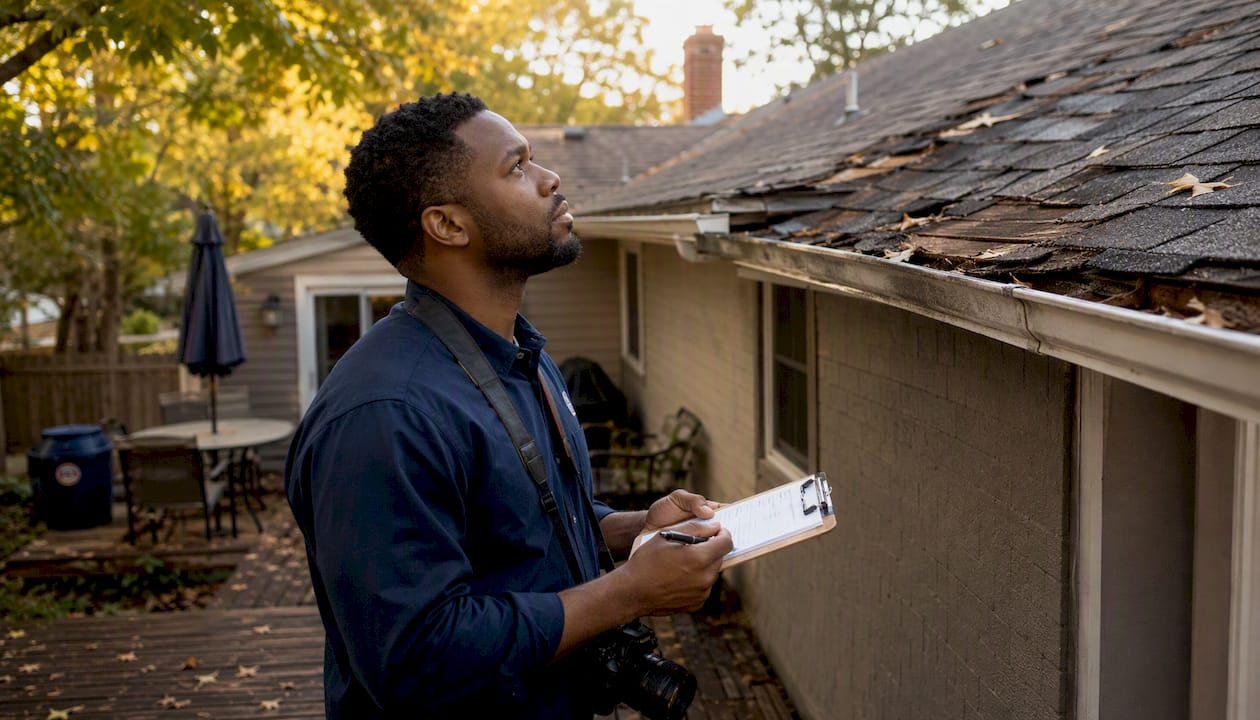
The wear-and-tear exclusion is the one that catches homeowners off guard most often. A roof that has been deteriorating for years is not a sudden event, and carriers will look for evidence of prior neglect when evaluating any roof claim.
Pro Tip: Keep a maintenance log with dated receipts for repairs, inspections, and replacements. This record is your best defense if an insurer questions whether damage was pre-existing.

How does Coverage A differ from Coverage B, C, and D?
Homeowners policies divide protection into four main coverage parts. Understanding the boundary between them prevents both gaps and duplicate claims.
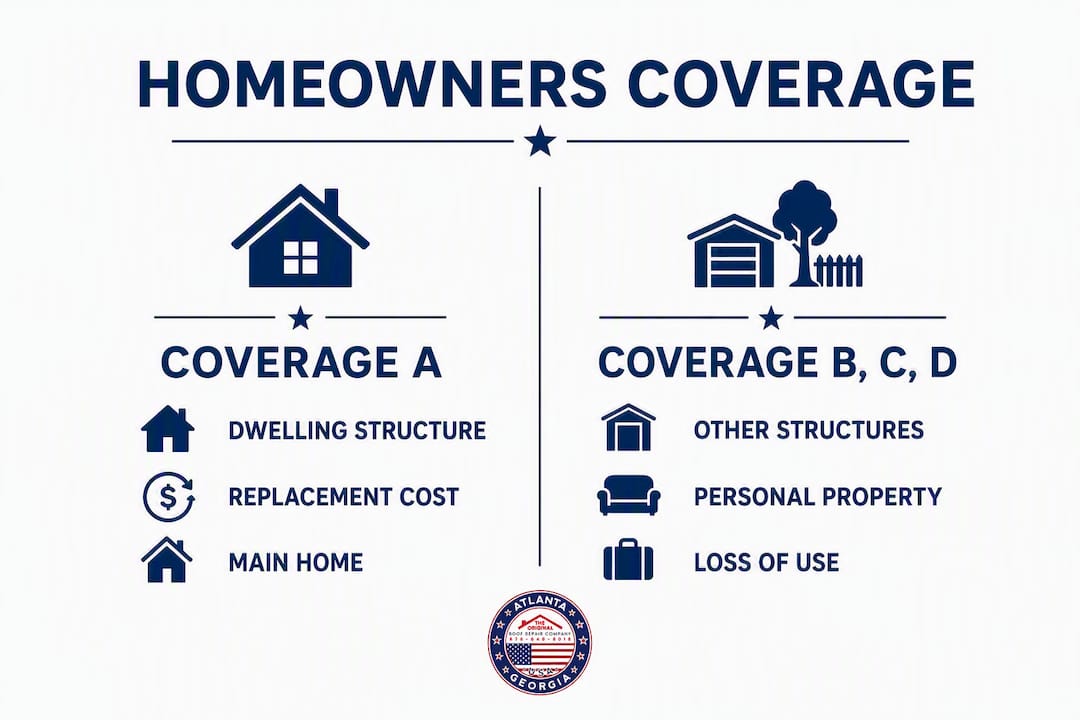
| Coverage | What it protects | Typical limit basis | Example items |
|---|---|---|---|
| A — Dwelling | The home's physical structure and attached systems | Replacement cost | Roof, walls, HVAC, attached garage |
| B — Other structures | Detached structures on the property | Usually 10% of Coverage A | Detached garage, fence, shed |
| C — Personal property | Belongings inside the home | Replacement cost or actual cash value | Furniture, electronics, clothing |
| D — Loss of use | Additional living expenses while home is uninhabitable | Percentage of Coverage A | Hotel stays, restaurant meals |
Coverage A is almost always written on a replacement-cost basis. Coverage C can be written either way, and actual cash value (ACV) policies subtract depreciation, which can leave a meaningful gap. Two endorsements worth adding to Coverage A are Extended Replacement Cost (pays a percentage above the policy limit if rebuild costs spike) and Guaranteed Replacement Cost (pays whatever rebuilding actually costs, regardless of the limit). A third, Ordinance or Law, covers the added expense of rebuilding to current building codes after a major loss.
How do dwelling limits and deductibles work?
Your dwelling limit should equal the estimated cost to rebuild your home at current local labor and material prices, not its market value. A home in the Atlanta suburbs might sell for $400,000 but cost $280,000 to rebuild, or vice versa. The two numbers move independently.
Replacement-cost calculations should include:
- Square footage × local cost per square foot — your insurer or a contractor can provide a current estimate
- Debris removal — often 5–10% of the rebuild cost and frequently overlooked
- Code upgrade allowance — older homes may require electrical, plumbing, or structural upgrades to meet current code
- Contractor mobilization and overhead — especially relevant after a widespread storm when labor is in short supply
Your deductible is the amount you pay out of pocket before the policy pays. Many policies carry a separate, higher deductible for wind and hail claims, listed as a percentage of the dwelling limit rather than a flat dollar amount. Check your declarations page for both figures.
Pro Tip: Review your dwelling limit every year and immediately after any significant improvement — a new roof, kitchen remodel, or addition. Travelers recommends annual reviews specifically because local construction costs shift and renovations increase rebuild value.
How to file a dwelling claim and document damage
Acting quickly and methodically after damage occurs gives you the strongest possible claim file.
- Ensure safety first — do not re-enter a structurally compromised home
- Mitigate further damage — cover exposed areas with tarps; keep all receipts for emergency materials
- Report to your insurer promptly — most policies require notice within a reasonable time after a loss
- Document everything with dated photos and video — shoot wide angles and close-ups of every damaged area
- Request a professional inspection — a contractor's written report carries more weight than homeowner photos alone
- Preserve damaged materials — do not discard shingles, framing samples, or other evidence before the adjuster visits
- Track all expenses — hotel stays, meals, and temporary repairs are potentially reimbursable under Coverage D
When the adjuster arrives, the claim typically proceeds through a scope-of-loss negotiation, an initial payment at actual cash value, and a final payment (the "recoverable depreciation") once repairs are completed and documented. Your deductible comes off the top of the ACV payment.
- Keep a copy of any pre-loss inspection reports or recent repair receipts
- Request the adjuster's scope of loss in writing
- Get at least one independent contractor estimate before accepting a settlement
Pro Tip: In storm-heavy markets like Atlanta, get an independent roofing inspection and written damage report before the adjuster visit. Independent documentation can shift a carrier's determination from "repairable" to full replacement when the damage warrants it.
How roof damage is handled under dwelling coverage
Roof claims are where Coverage A disputes happen most often. Carriers distinguish between damage that warrants a repair and damage that warrants full replacement, and that line is not always drawn where homeowners expect.
Insurers look at the age of the roof, the extent of damage, and whether the affected area can be matched with current materials. An older roof with localized hail damage may receive an ACV settlement that reflects depreciation, leaving the homeowner responsible for a significant portion of the replacement cost.
What Georgia homeowners should document after a storm:
- Dated photos and video taken within hours of the event
- National Weather Service reports or radar screenshots confirming storm timing and severity
- Shingle samples or physical evidence of impact damage
- A written roof damage report from a licensed contractor
- Prior maintenance records showing the roof was in serviceable condition before the storm
Independent, contractor-supplied roof reports and careful pre- and post-storm photo documentation can materially affect whether a claim is paid as a repair or a replacement. In Georgia's storm-prone areas, rapid contractor response and contemporaneous weather data are regularly used by claim advocates to prove the timing and severity of damage.
Underwriters also review prior maintenance history. A recent professional inspection or documented repair can be decisive when the roof is older and the carrier questions whether damage is storm-related or pre-existing.
Pro Tip: Follow The Original Roof Repair Company's storm damage documentation guide to build a photo record that supports your claim from the first day.
How building codes affect your dwelling claim
Standard Coverage A pays to rebuild what existed before the loss, using materials and methods that match the original construction. It does not automatically pay to bring the structure up to current building codes.
This matters because local codes change. A home built in the 1990s may have wiring, framing, or insulation standards that no longer meet current Georgia requirements. After a major loss, the local building department will require the rebuilt structure to comply with today's code, and that upgrade cost can be substantial.
Ordinance or Law coverage (sometimes called Code Upgrade coverage) fills this gap. It typically covers three components: the loss to the undamaged portion of the structure that must be demolished to comply with code, the cost to demolish and remove that undamaged portion, and the increased cost of construction to meet current standards. For older homes in the Atlanta metro, this endorsement is not optional in any practical sense.
Extended Replacement Cost and Guaranteed Replacement Cost endorsements address a related but different risk: the scenario where local labor and material costs spike after a widespread disaster and the rebuild exceeds the policy limit. Both endorsements are worth discussing with your agent when you set or review your Coverage A limit.
Common misconceptions about dwelling coverage
"My dwelling limit should match my home's market value." Market value reflects land, location, and buyer demand. Rebuild cost reflects labor, materials, and square footage. The two numbers often differ significantly, and your Coverage A limit should track rebuild cost, not sale price.
"All water damage is covered." Sudden events like a burst pipe are generally covered. Slow leaks, seepage, and flooding from outside the home are not. The source and speed of the water intrusion determine coverage.
"My personal belongings are covered under Coverage A." Furniture, electronics, and clothing fall under Coverage C (personal property), not the dwelling. Coverage A covers only what is permanently attached to the structure.
"Flood damage is included in a standard policy." It is not. Flood requires a separate policy. This is one of the most consequential misunderstandings homeowners carry, particularly in areas with heavy seasonal rainfall.
"If my insurer sends a check, the claim is settled." An initial ACV payment is not a final settlement. Once repairs are completed, you can claim the recoverable depreciation to bring the total payment to replacement cost, provided your policy is written on that basis.
Key Takeaways
Dwelling coverage (Coverage A) protects the physical structure of your home at replacement cost, not market value, and requires annual review to stay accurate after renovations or local cost changes.
| Point | Details |
|---|---|
| Coverage A definition | Pays to repair or rebuild your home's physical structure after a covered peril. |
| Replacement cost rule | Set your limit based on rebuild cost, not market value; include debris removal and code upgrades. |
| Major exclusions | Flood, earthquake, wear-and-tear, and sewer backups are not covered without separate policies or endorsements. |
| Annual limit review | Review your dwelling limit every year and after any significant home improvement or roof replacement. |
| The Original Roof Repair Company | Provides free roof inspections, storm damage documentation, and insurance-claim advocacy for Atlanta-area homeowners after covered losses. |
What homeowners get wrong about Coverage A
Most homeowners treat dwelling coverage as a background item — something set once at closing and forgotten. That approach works fine until a storm hits, and then the gaps become expensive.
The most common mistake is carrying a dwelling limit tied to the home's purchase price or tax-assessed value rather than its actual rebuild cost. Those numbers can differ by tens of thousands of dollars, and the shortfall comes out of the homeowner's pocket after a major loss. The second mistake is assuming that because a storm caused the damage, the claim is automatically approved. Carriers look at the full picture: the age of the roof, the maintenance history, and whether the damage pattern is consistent with the reported event. A homeowner who has no maintenance records and no independent contractor report is in a weak position.
The practical fix is straightforward: get a professional roof inspection after every significant weather event, keep dated maintenance records, and review your Coverage A limit annually. In Georgia, where hail and wind seasons are real and recurring, that discipline is what separates a paid claim from a denied one.
Roof damage after a storm? The Original Roof Repair Company can help
When a storm damages your home in the Atlanta area, the first call most homeowners make is to their insurer. The second call should be to a local roofer who can document the damage before the adjuster arrives.

The Original Roof Repair Company serves Canton, Cherokee County, and 11 surrounding counties within a 35-mile radius of Atlanta, Georgia. Services relevant to dwelling claims include:
- Insurance claim advocacy — working directly with carriers and adjusters on your behalf, at no separate charge
- Emergency roof repair — immediate stabilization to prevent further damage and protect your claim
- Roof repair and replacement — repair-first approach, with full replacement recommended only when it is the smarter, more cost-effective choice
Insurance claim assistance is part of every inspection, not a separate service. To schedule a free inspection or get help with an active claim, contact The Original Roof Repair Company directly through theoriginalroofrepaircompany.com.
Useful sources
- What Is Dwelling Coverage for Homes and Condos? — NerdWallet: Covers Coverage A definitions, limit-setting guidance, and condo vs. homeowners distinctions.
- What Is Dwelling Coverage? — Insurance.com: Details HO-3 open-perils structure and endorsements including Ordinance or Law.
- Which Disasters Are Covered by Homeowners Insurance? — III.org: Authoritative overview of covered and excluded perils under standard homeowners policies.
FAQ
What is the meaning of "dwelling" in a homeowners policy?
In a homeowners policy, "dwelling" refers to the physical structure of your home, including the walls, roof, foundation, and permanently attached systems. Coverage A (dwelling coverage) pays to repair or rebuild that structure after a covered loss.
How do I know if I have enough dwelling coverage?
Your dwelling limit should equal the estimated cost to rebuild your home at current local labor and material prices, not its market value. Review the limit annually and after any significant renovation; if you are unsure, ask your insurer for a replacement-cost estimate or consult a local contractor.
Does dwelling coverage pay for flood or earthquake damage?
No. Standard Coverage A excludes both flood and earthquake damage. Flood coverage requires a separate policy, and earthquake protection requires either a standalone policy or an endorsement added to your homeowners policy.
What is the difference between Coverage A and Coverage B?
Coverage A (dwelling) protects the home's main structure and anything permanently attached to it. Coverage B (other structures) covers detached structures on the property, such as a detached garage, fence, or storage shed, typically at a limit of 10% of the Coverage A amount.
Can a local roofer help with a dwelling insurance claim?
Yes. A licensed roofer can provide a written damage report, timestamped photos, and material evidence that supports your claim. The Original Roof Repair Company offers free roof inspections and insurance claim advocacy for homeowners across the Atlanta, Georgia area, working directly with carriers and adjusters at no separate charge.