
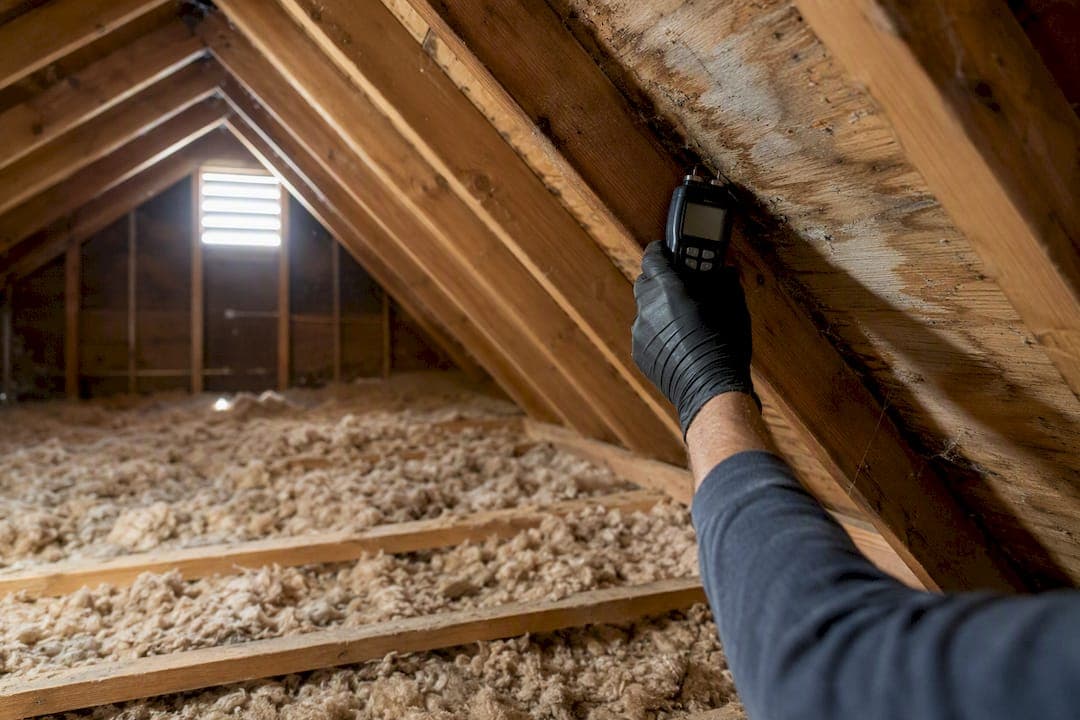
If water is coming through your ceiling right now, put a bucket under the drip, move anything valuable out of the way, and stop looking at the roof. Head to the attic first. Almost every attic water problem traces back to a specific entry point, and the fastest way to find it is from the inside, not the outside. Do not climb onto the roof and do not poke the ceiling to drain a bulge, no matter how tempting that feels.
If your attic stairs, flooring, or roof pitch feel unsafe to move around on, stop and call a professional instead of pushing through it.
Do this in the next 15 minutes:
- Set buckets or towels under active drips and move furniture, boxes, or electronics away from the wet zone.
- Photograph the ceiling stain and any dripping before you clean anything up.
- Grab a flashlight and head to the attic, stepping only on joists or a stable walk board.
- Mark the highest point where insulation or wood looks wet. That's your starting clue.
- If the attic access is blocked, flooded, or the decking feels soft underfoot, back out and call for help.
Pro Tip: Keep your phone's flashlight and camera running at the same time. A short video walking toward the wet spot gives a roofer far more to work with than a single photo.
Key Takeaways
Stopping attic water intrusion starts with an inside-out attic inspection to trace stains to their highest point, followed by safe containment and, when needed, a professional evaluation.
| Point | Details |
|---|---|
| Inspect the attic first | Trace the ceiling stain to the highest wet point in the attic before checking the roof exterior. |
| Contain, don't puncture | Use buckets and moved furniture; never poke a bulging ceiling to drain it. |
| Water travels sideways | Leaks can run along sheathing and rafters, so the entry point is often far from the visible stain. |
| Confirm with a hose test | A two-person, low-to-high hose test isolates the exact entry point when other checks are inconclusive. |
| Watch for health and structural red flags | Soft decking, mold spread, or multiple wet areas mean it's time to call a professional. |
| Call a local repair-first roofer | The Original Roof Repair Company offers free inspections and insurance documentation across Canton, Cherokee County, and the Atlanta metro area. |
Table of Contents
- How to Stop Attic Water Intrusion: The Attic Inspection Checklist
- Why the Leak's Entry Point Isn't Always Above the Stain
- Checking the Roof From the Ground for Common Failure Points
- How Do You Pinpoint a Leak With a Hose Test?
- Temporary Containment: What to Do and What to Avoid
- When Should You Call a Roofing Professional?
- Assessing Attic Insulation and Its Role in Water Damage
- Understanding the Health Risks of Attic Water Intrusion
- Detailed Safety Precautions for DIY Roof and Attic Work
- Emergency Roof Help for Cherokee County Homeowners
- Sources
- FAQ
How to Stop Attic Water Intrusion: The Attic Inspection Checklist
The attic is the fastest, safest place to find where water is actually getting in, and working backward from the ceiling stain to the highest wet mark is how professional roof inspectors determine a leak's cause. The ceiling stain tells you water arrived. It rarely tells you where it started.
Here's a safe way to inspect on your own:
- Gear up first. Bring a flashlight, a phone camera, a dust mask, and a way to keep your footing on joists (a walk board or plywood scrap works well).
- Step only on joists or decking you can see. Insulation hides the framing. Stepping between joists can put your foot through the ceiling below.
- Locate the ceiling stain's approximate position from below, then find that same spot in the attic before moving further.
- Scan outward and upward from that point, following any visible streaking, staining, or darkened wood toward the roofline.
- Mark the highest wet point you find with tape, chalk, or a pushpin. This is usually closer to the true entry point than the ceiling stain itself.
As you scan, look for these telltale signs:
- Wet or compressed, matted insulation
- Dark or black staining on the underside of the roof sheathing
- Rusted or dark-streaked nail heads poking through the decking
- Mold, mildew, or a musty smell concentrated in one area
- Visible daylight coming through the roof deck (a strong sign of a gap or hole)
Once you've found a likely spot, document it well. A common trick used by inspectors is pushing a thin nail or wire up through the suspected hole so it's visible on the roof surface later. Photograph the location with a tape measure showing distance from a vent, chimney, or the ridge, so you or a roofer can find it again from outside.
Pro Tip: If your attic has knob-and-tube wiring, no flooring at all, or a roof pitch so steep you can't stand upright anywhere, don't attempt this alone. Call a roofer for a professional inspection instead.
Why the Leak's Entry Point Isn't Always Above the Stain
Water rarely falls straight down. It travels along the underside of roof sheathing, runs down rafters, wicks through insulation, and drips off the lowest point it reaches, often several feet from where it actually entered the roof. This is why a ceiling stain in the hallway can trace back to a flashing gap over the chimney on the other side of the attic.
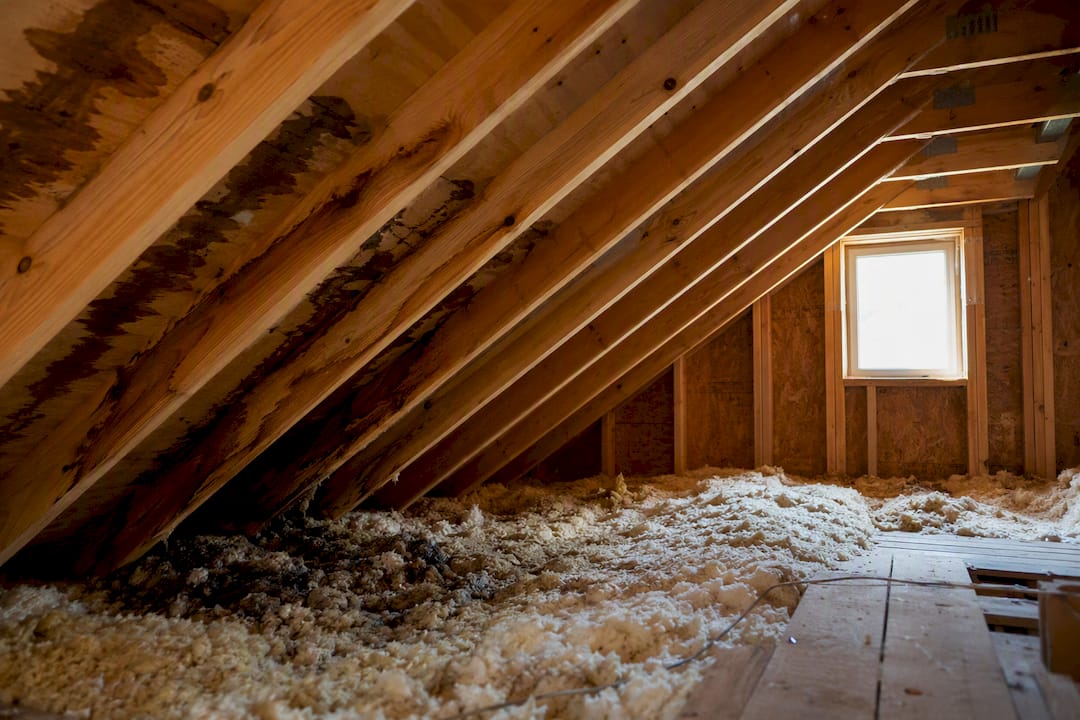
Mapping the wet area helps you see the pattern instead of chasing a single spot. Mark the highest point of moisture, then trace any streaking uphill toward the roofline, checking where rafters meet the ridge and where seams in the sheathing run. Water often follows the path of least resistance along these seams before it drips.
A moisture meter can confirm active dampness, but timing matters. Roof leak water can travel horizontally and leave "dry footprints" once it dries out, so moisture meters and infrared imaging work best while the area is still wet. A stain that's been dry for weeks may not register at all, even at the true source.
It also helps to know the difference between a leak and condensation. Leaks tend to show up during or right after rain and often follow wind direction. Condensation shows up with temperature swings, spreads more evenly across the attic, and points to a ventilation problem rather than a hole in the roof, a distinction the ASTM D7053 guide specifically warns inspectors not to confuse.
Checking the Roof From the Ground for Common Failure Points
Once you've marked the highest wet point in the attic, match that spot to the roof section directly above it and inspect it from the ground or a stable, low ladder. Climbing onto the roof itself isn't necessary for this step, and it isn't safe for most homeowners.
Look for these common failure points, which account for the majority of attic water problems:
- Cracked, curled, or missing shingles in the area above your marked spot
- Damaged or rusted flashing around chimneys, skylights, or roof valleys
- Loose, popped, or corroded nails visible along seams
- Torn or exposed underlayment, especially near a previous re-roof
- Clogged gutters or downspouts causing water to back up under the shingle edge
Routine checks like these, covering gutters, flashing, drip edges, and shingle condition, catch a large share of the issues that eventually cause attic water intrusion. If you can see any of these from the ground with binoculars, take a photo and note where it sits relative to a vent, chimney, or the ridge line, using the same reference points you used in the attic.
Pro Tip: If confirming the damage means climbing higher than a two-story ladder can safely reach, or the roof pitch is steeper than about 6:12, stop there. That's a job for a professional with the right harness and roof anchors.
Keep a written or photo log of what you find outside. It becomes useful both for a roofer's estimate and for insurance documentation if the damage turns out to be storm-related.
How Do You Pinpoint a Leak With a Hose Test?
When the attic and exterior checks point to a general area but not an exact spot, a controlled garden-hose test can confirm it. This method requires two people and some patience, but it works because it recreates the conditions of actual rainfall in a way you can control and observe.
- Position one person in the attic near the marked wet area, with a flashlight and phone for communication.
- Have the second person run a garden hose on a gentle stream, starting low on the roof section in question and working upward in small increments.
- Hold each position for several minutes before moving to the next section. Some leaks only show up after sustained water exposure, not an instant splash.
- The attic observer signals the moment water appears, noting the exact spot relative to the hose position outside.
Test methodically and go slow. A systematic, isolated hose test that soaks one small section at a time will find leaks that a general soaking misses entirely, especially ones that only activate during wind-driven rain from a specific angle.
Pro Tip: Never use a pressure washer for this test, and never spray water from an unstable or fully extended ladder. A garden hose on a gentle setting is all you need. Anything stronger can push water into places it wouldn't normally reach and give you a false result.
Temporary Containment: What to Do and What to Avoid
Containing the water matters more right now than fixing it permanently. Buckets, moved furniture, and clear photos of the damage are your best short-term tools while you arrange a permanent repair.
A few do's and don'ts worth knowing:
- Do use a tarp weighted with boards over the affected roof area if you can access it safely from a stable ladder, but never on a steep or wet roof.
- Do photograph every stage of the damage before you touch anything, including standing water and stains.
- Don't puncture or poke a bulging ceiling to "drain" it. This can cause a larger collapse and turn a contained drip into a much bigger repair.
- Don't attempt interior sealing (caulk, spray foam) around the stain. It can trap moisture behind the ceiling and encourage mold rather than stop the leak.
- Don't make permanent repairs before a planned insurance inspection. Keep receipts for any temporary fixes; adjusters typically reimburse reasonable emergency measures.
Pro Tip: If you're planning to file an insurance claim, take photos before and after every temporary fix. A gap in your documentation can slow down or reduce a settlement.
When Should You Call a Roofing Professional?
Call a professional when the leak source isn't obvious after your attic and exterior checks, when you find more than one wet area, when the decking feels soft or spongy underfoot, or when the roof itself is too steep, tall, or damaged to inspect safely. Those are the situations where DIY troubleshooting reaches its limit.
Watch for these red flags specifically:
- Sagging or soft-feeling roof decking (a sign of prolonged water damage, not a fresh leak)
- Visible mold growth beyond a small, isolated spot
- Multiple wet areas that don't trace back to a single point
- A roof pitch, height, or condition that makes safe access impossible without professional equipment
A professional roof inspection typically includes:
- An interior attic check, verifying and expanding on what you've already found
- A close inspection of decking, flashing, and sheathing condition
- A controlled exterior test to confirm the exact entry point
- Full documentation suitable for an insurance claim
- An honest recommendation on repair versus replacement
The Original Roof Repair Company takes a repair-first approach for homeowners across Canton, Cherokee County, and the greater Atlanta metro area, and only recommends full replacement when a repair estimate would exceed a reasonable threshold. That distinction protects homeowners from being sold a new roof when a targeted flashing or shingle repair would solve the problem.
Assessing Attic Insulation and Its Role in Water Damage
Wet insulation isn't just a symptom of a leak. It's a mechanism that makes the damage worse over time. Fiberglass and cellulose insulation both lose most of their insulating value once saturated, and wet insulation stays damp far longer than exposed wood does, creating a slow-release moisture source that keeps feeding mold growth long after the roof itself has dried.
Compressed or matted insulation is one of the clearest attic clues you'll find during inspection. It usually marks exactly where water has been pooling or running, which makes it a useful marker even when the sheathing above looks dry. If you press on insulation during your attic walkthrough and it feels heavier or clumps together rather than springing back, treat that spot as a priority.
Insulation touching the roof deck without an air gap also raises the odds of condensation problems, since warm, moist household air can hit the cold underside of the roof and condense there, especially in winter. That's a ventilation issue as much as a leak issue, and it's worth mentioning to a roofer during inspection so they check both possibilities rather than assuming every wet spot came from rain.
Once a leak is repaired, wet insulation almost always needs to be replaced rather than dried out and reused. Leaving it in place risks trapping moisture against the deck and framing, undoing the benefit of the repair itself.
Understanding the Health Risks of Attic Water Intrusion
Mold needs three things to grow: moisture, an organic food source, and time. Attic water intrusion supplies all three, since wood sheathing, insulation paper, and dust provide plenty to feed on once conditions stay damp for even a couple of days.
Mold and mildew in an unfinished attic space might seem contained, but attic air exchanges with the living space below more than most homeowners realize, particularly through recessed lighting fixtures, attic hatch gaps, and HVAC returns. Musty odors that seem to come from nowhere in a bedroom or hallway often trace back to an attic mold colony rather than anything happening inside the room itself.
Exposure symptoms vary by person and by mold type, but commonly include respiratory irritation, worsened asthma or allergy symptoms, headaches, and skin irritation with direct contact. Household members with existing respiratory conditions or weakened immune systems face higher risk from prolonged exposure.
The practical takeaway: don't treat a slow attic leak as a "someday" problem just because it isn't dripping into your living room yet. A leak that's been active for weeks or months, even a small one, gives mold enough time and moisture to establish itself in insulation and wood framing where it's much harder to remove than a fresh, contained repair.
Detailed Safety Precautions for DIY Roof and Attic Work
Attic and roof inspections carry real injury risk, and most of that risk comes from a handful of predictable mistakes. Knowing them ahead of time is the difference between a productive inspection and a trip to the emergency room.
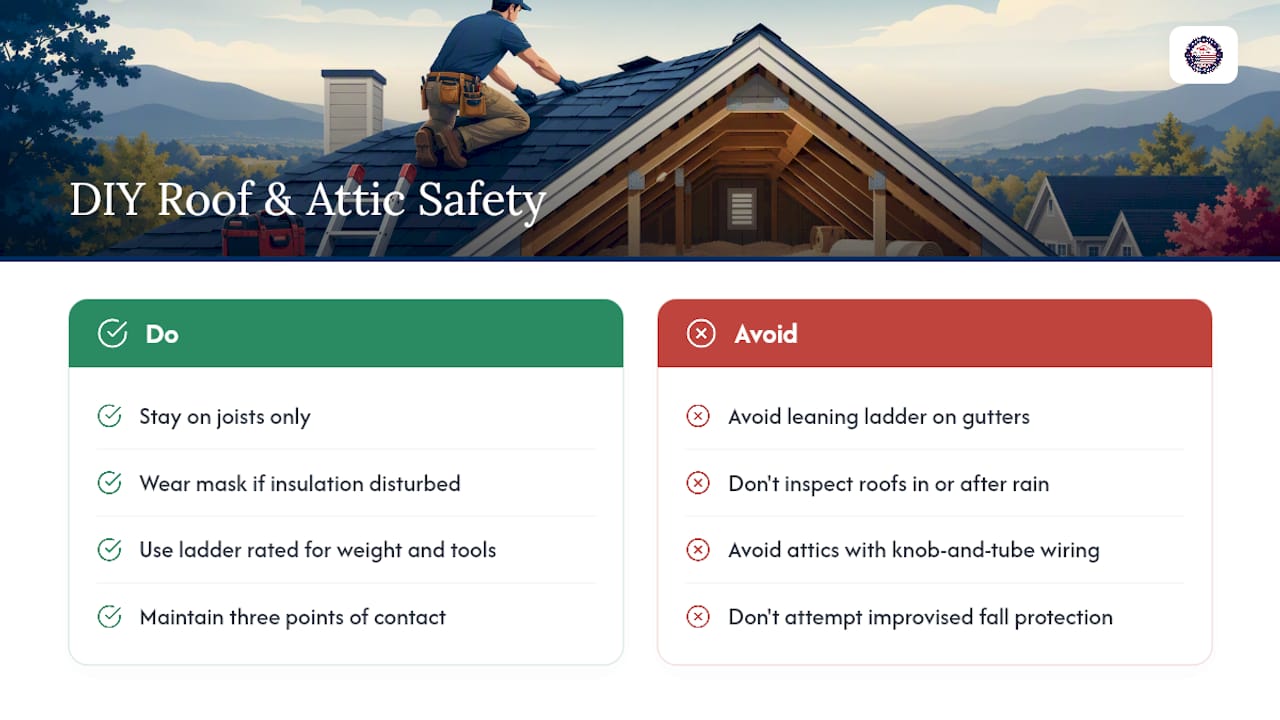
Inside the attic, the single biggest hazard is stepping between joists rather than on them. Insulation conceals the framing underneath, and a misplaced foot can go straight through drywall, causing a fall and significant additional ceiling damage. Wear a dust mask or respirator if the insulation looks disturbed or moldy, since disturbing wet or moldy material releases spores into the air you're breathing.
Outside, ladder safety rules apply strictly. Use a ladder rated for your weight plus tools, set it on firm and level ground, and maintain three points of contact at all times. Never lean a ladder against gutters, which can bend or detach under load. Never inspect a roof during or immediately after rain, when surfaces are slick even on a low slope.
Know your limits on pitch and height. A roof steeper than roughly 6:12, or a home taller than two stories, calls for professional equipment like roof anchors and harnesses that most homeowners don't own and shouldn't attempt to improvise. Electrical hazards also deserve attention. Older attics with knob-and-tube wiring or exposed junction boxes should be treated as off-limits for DIY inspection.
If you feel unsteady, rushed, or unsure at any point during an inspection, stop. A delayed repair costs less than a fall.
A Note From a Local Roofer
I've walked into more attics than I can count where the ceiling stain was nowhere near the actual leak. That's why we always start inside, trace the water up to its highest point, and document everything before recommending a repair. We serve homeowners across Canton, Cherokee County, and the Atlanta metro, and every inspection we run is built around safety first and honest documentation your insurance company can actually use.
Emergency Roof Help for Cherokee County Homeowners
If you've followed these steps and you're still not sure where water is entering, or the situation feels bigger than a DIY fix, The Original Roof Repair Company offers free, repair-first inspections across Canton, Cherokee County, and the greater Atlanta metro area.

Our approach centers on diagnosing the actual problem rather than defaulting to a full roof replacement. We handle:
- Free inspections that identify the exact entry point, not just the general area
- Emergency tarping to stop active water intrusion while a permanent repair is scheduled
- Targeted repairs for flashing, shingles, boots, and sheathing joints
- Full photo and measurement documentation for insurance claims and adjuster calls
- Honest repair-versus-replace evaluations, recommending replacement only when a repair estimate exceeds a reasonable cost threshold
If water is actively coming through your ceiling right now, our emergency roof repair team responds fast to get a tarp on your roof and stop further damage. For leaks you've already contained and want diagnosed and fixed properly, our roof repair page walks through what an inspection and estimate involve. Either way, the next step is simple: request your free inspection and we'll tell you exactly what's happening on your roof.
Sources
- 5 Steps for Roof Leak Cause Determination
- D7053/D7053M Standard Guide for Determining and Evaluating Causes of Water Leakage of Low-Sloped Roofs
- Inspectapedia — Roof leaks: Finding and fixing roof leaks
- Understanding residential roof repairs: How do I know if my roof needs to be replaced? (GAF)
FAQ
What is the fastest way to stop attic water intrusion?
Contain the water inside with buckets and moved furniture, then go straight to the attic to trace the stain to its highest wet point rather than starting on the roof.
Should I poke a hole in a bulging, water-filled ceiling?
No. Puncturing a ceiling to drain it can cause a larger collapse; contain the water with buckets and call a professional instead.
How does a hose test find a roof leak?
A second person sprays a gentle, controlled stream on small roof sections from low to high while an observer in the attic watches for water, confirming the exact entry point.
Can attic mold from water intrusion affect my health?
Yes. Mold from a prolonged attic leak can trigger respiratory irritation, worsen asthma or allergies, and cause musty odors that spread into living spaces below.
When should I call The Original Roof Repair Company instead of doing it myself?
Call a professional when the leak source stays unclear after inspection, when decking feels soft, or when roof access is unsafe; The Original Roof Repair Company offers free repair-first inspections across Canton, Cherokee County, and the Atlanta metro area.