
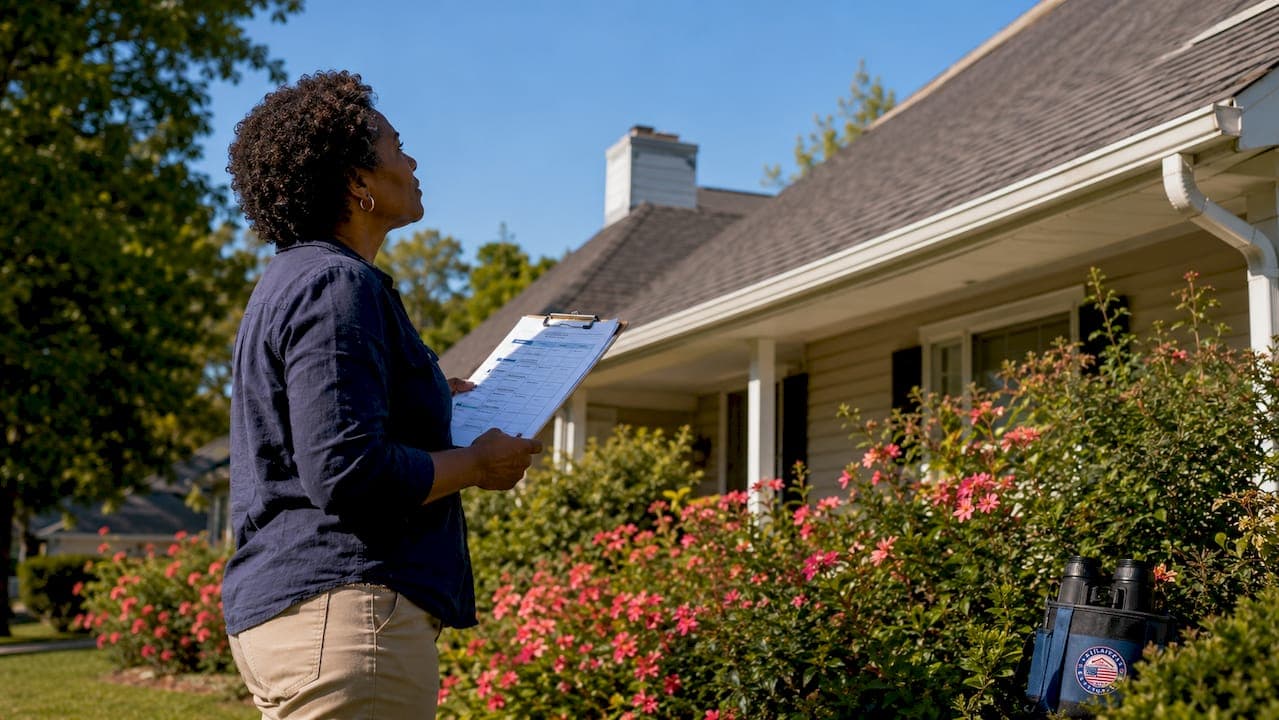
A roof inspection checklist for homeowners is a targeted list of critical areas to evaluate your roof's condition, covering everything from shingles and flashing to attic ventilation and gutters. Routine inspections twice a year catch small problems before they become expensive repairs. For Georgia homeowners, where humidity, summer storms, and wind are constant threats, a structured checklist is not optional. It is the difference between a $200 repair and a $10,000 replacement. The Original Roof Repair Company recommends every homeowner in the Atlanta area complete a basic roof condition assessment each spring and fall.
1. What goes on a roof inspection checklist for homeowners?
A complete homeowner roof inspection checklist covers six core areas: the roofing surface, flashing, gutters, roof edges, ventilation, and the attic interior. DIY checklists range from 6 to 30 points, depending on roof complexity. Covering all six areas gives you a full picture of your roof's health.
Roofing surface (shingles or panels):
- Missing, cracked, or curling shingles
- Granule loss visible in gutters or on the ground
- Dark streaks or moss growth indicating moisture retention
- Blistering or bubbling on flat roof membranes
Flashing around chimneys, vents, and skylights:
- Cracks or gaps in sealant
- Rust or corrosion on metal flashing
- Lifted or separated flashing edges
Gutters and downspouts:
- Blockages from leaves or debris
- Sagging sections or loose brackets
- Granules accumulating at downspout outlets (a sign of shingle wear)
- Water pooling near the foundation
Roof edges and drip edges:
- Rust or damage along the drip edge
- Fascia boards showing rot or water staining
- Gaps where the drip edge meets the shingles
Ventilation and soffits:
- Blocked soffit vents
- Damaged or missing vent covers
- Signs of pest entry around vent openings
Attic interior:
- Daylight visible through roof boards
- Damp or compressed insulation
- Musty odors or visible mold
- Water stains on rafters or sheathing
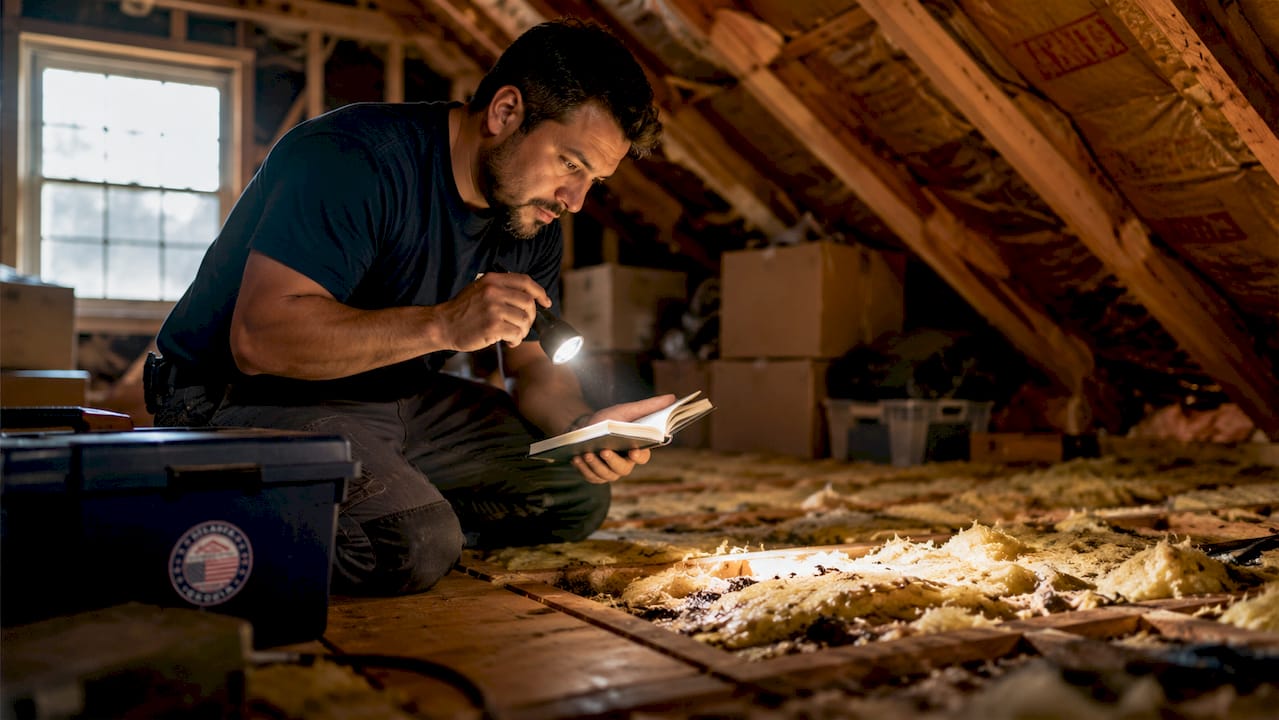
Attic inspections reveal early signs of leaks and structural decay that are invisible from outside. Checking the attic first often tells you exactly where to focus your exterior inspection.
Pro Tip: Take a flashlight into the attic on a sunny day. Any pinpoints of light coming through the roof boards indicate gaps that need immediate attention.
2. How often should you inspect your roof?
Homeowners should inspect their roofs at least twice a year, ideally in spring and fall. Spring checks catch damage from winter ice and wind. Fall checks prepare the roof for cold weather and heavy rain. For roofs older than 15 years, more frequent checks are worth the time.
Certain events require an inspection outside the regular schedule:
- After any severe storm, hail event, or high winds
- Before listing a home for sale or after purchasing one
- When filing a roof insurance claim
- When you notice interior water stains or ceiling damage
Certified inspections are mandatory for home purchases, insurance claims, and situations requiring an unbiased written report. A DIY check works well for routine maintenance, but it does not carry the documentation weight that insurers and buyers require.
Pro Tip: Sign up for The Original Roof Repair Company's weather alerts to get notified after major storms in Cherokee County and surrounding Georgia counties. That timing cue removes the guesswork on when to inspect.
3. What tools do homeowners need for a roof inspection?
The right tools make a homeowner roof inspection safer and more thorough. You do not need to climb on the roof to conduct a useful inspection.
Basic roof inspection tools for homeowners:
- Binoculars for ground-level surface assessment
- A flashlight for attic and soffit checks
- A digital camera or smartphone for photo documentation
- A sturdy ladder for inspecting gutters and eaves (use with a spotter)
- Non-slip footwear if you do access the roof surface
Safety experts recommend ground-level inspections using binoculars rather than climbing on the roof. Falls from roofs are a leading cause of home injury. Binoculars let you spot missing shingles, granule loss, and flashing gaps without the risk.
For homeowners who want more detail, advanced options exist. Infrared cameras detect hidden moisture pockets inside the roof assembly. Drone-mounted cameras capture angles that are impossible to see from the ground. These tools are typically used by professional inspectors, but infrared thermography and drones detect hidden moisture that visual checks miss entirely.
Documenting findings with geo-tagged photos and detailed notes speeds up professional assessment and repair quoting significantly. When you call a contractor, clear photos with location descriptions cut the diagnostic time in half.
Pro Tip: Before starting, print or pull up your checklist on your phone. Walk the perimeter of the home first, then check the attic, then use binoculars from multiple angles. A structured sequence prevents missed areas.
4. How Georgia's climate changes what you inspect
Georgia's weather creates specific roof wear patterns that a generic checklist does not address. Winter storms and humidity in Atlanta and across Georgia increase the risk of moisture buildup, wind uplift, and storm damage. Tailoring your checklist to local conditions is the practical approach.
| Roof type | Primary inspection focus | Georgia-specific concern |
|---|---|---|
| Asphalt shingles | Granule loss, curling, missing tabs | Wind uplift from summer storms |
| Metal roofing | Rust, fastener backing out, seam separation | Humidity-driven corrosion at fasteners |
| Tile (clay or concrete) | Cracked or slipped tiles, mortar at ridge | Impact damage from hail |
| Flat or low-slope | Membrane bubbling, ponding water, drain blockage | Heavy rain accumulation |
Asphalt shingles are the most common roof type across Cherokee County and the Atlanta metro. Wind uplift is the top failure mode after Georgia's summer thunderstorm season. Check the corners and ridge line first, since those areas take the most wind stress.
Poor attic ventilation shortens a roof's lifespan by trapping heat and moisture inside the home. In Georgia's humid summers, an under-ventilated attic can push attic temperatures above 150°F, accelerating shingle deterioration from the inside out. Checking soffit and ridge vents is not optional in this climate.
Metal roofs in Georgia need a close look at fasteners and seams after each storm season. Humidity drives corrosion at exposed fastener heads faster than in drier climates. Tile roofs need mortar checks at the ridge cap, since freeze-thaw cycles in north Georgia winters crack mortar over time.
5. When to call a professional instead of doing it yourself
DIY inspections catch surface wear, but professionals with technology identify underlying moisture and structural problems. Knowing the line between the two saves money and prevents missed damage.
Call a professional inspector when:
- You see interior water stains but cannot find the exterior source
- The roof is over 15 years old and has not been professionally assessed
- You are buying or selling the home
- You are filing a storm or hail insurance claim
- You suspect structural sagging or deck damage
Professional roof inspections in 2026 range from $150 to $600, depending on the method. A basic visual inspection runs $150–$250 and takes 45 minutes to two hours. Drone and infrared services run $300–$600 and provide detailed moisture mapping and thermal imaging reports.
For insurance claim support, a professional inspection report is the foundation of a successful claim. The Original Roof Repair Company documents storm, hail, and wind damage and works directly with carriers and adjusters on the homeowner's behalf across Cherokee County and 11 surrounding Georgia counties.
Pro Tip: If a contractor offers a free inspection after a storm, ask whether they provide a written report with photos. A verbal assessment is not useful for an insurance claim.
6. How to document your inspection findings
Structured documentation turns a casual walkthrough into a useful record. Geo-tagged photos with captions and location details accelerate contractor evaluations and produce fairer repair quotes. A contractor who sees clear photos before arriving can give a more accurate estimate.
Use this documentation approach:
- Photograph each area of concern from two angles: close-up and wide-shot for context
- Note the location using compass direction or roof section (e.g., "north slope, third row from ridge")
- Record the date and weather conditions at the time of inspection
- Keep a running log with each inspection date and findings
A simple spreadsheet or notes app works well for tracking changes over time. If the same area shows worsening granule loss across three inspections, that trend tells a contractor the shingles are nearing end of life. Trend data is more useful than a single snapshot.
For homeowners managing wind damage claims, organized photo documentation is the single most effective tool for a fair settlement. Insurers respond to evidence, not descriptions.
Key Takeaways
A complete roof inspection checklist for homeowners covers six areas: the roofing surface, flashing, gutters, roof edges, ventilation, and the attic interior, with inspections completed twice yearly and after every major storm.
| Point | Details |
|---|---|
| Inspect twice a year | Complete checks in spring and fall, plus after any major storm or hail event. |
| Attic first, exterior second | Attic signs like stains and daylight gaps reveal leak sources before exterior damage appears. |
| Stay on the ground | Use binoculars and a camera for surface checks to avoid fall injuries. |
| Document with photos | Geo-tagged photos with location notes speed up contractor quotes and support insurance claims. |
| Match checklist to roof type | Georgia's humidity and storms require tailored checks for asphalt, metal, tile, and flat roofs. |
What I've learned from watching homeowners miss the same spots
After years of inspecting roofs across Cherokee County and the Atlanta metro, the pattern is consistent. Homeowners check the obvious stuff: missing shingles, visible leaks. They skip the attic, the flashing at the chimney base, and the soffit vents. Those three areas account for the majority of the hidden damage I find on properties that "looked fine" from the street.
The checklist approach works because it forces you to look at areas you would otherwise skip. A homeowner who walks the attic with a flashlight twice a year will catch a slow leak months before it becomes a structural problem. That is not a small thing. Replacing damaged decking and insulation costs far more than sealing a flashing gap.
My honest recommendation: do the DIY inspection, take photos, and keep a log. But pair it with a professional inspection every two to three years, or immediately after a significant storm. DIY checks are valuable for spotting surface wear. They are not a substitute for infrared moisture detection or a trained eye on the flashing details. Atlanta-area homeowners who combine both approaches consistently avoid the expensive surprises.
— Eric
Professional roof inspections and repairs for Georgia homeowners
When your checklist turns up something you cannot identify or fix yourself, The Original Roof Repair Company is the repair-first option for homeowners across Cherokee County and the Atlanta metro.

The Original Roof Repair Company takes on the repairs that larger contractors pass over: flashing failures, missing shingles, chimney drips, and boot replacements. Every job starts with an honest diagnosis and transparent pricing. If a repair is the right call, that is what gets recommended. For storm damage, the team documents findings and works directly with your insurance carrier. Contact The Original Roof Repair Company for emergency roof repair or a full roof repair assessment tailored to Georgia's climate and your specific roof type.
FAQ
How many items should a homeowner roof inspection checklist have?
A thorough DIY checklist covers 6–30 points across shingles, flashing, gutters, ventilation, and the attic interior. Start with the six core areas and add detail based on your roof type and age.
Is it safe for homeowners to walk on their roof during an inspection?
Safety experts recommend staying on the ground and using binoculars for surface checks. Roof access carries a real fall risk, and most surface issues are visible from the ground or from a ladder at the eaves.
How much does a professional roof inspection cost in Georgia?
Professional inspections range from $150 to $600 in 2026. Basic visual inspections run $150–$250, while drone and infrared services run $300–$600 and detect hidden moisture that visual checks miss.
What does the attic reveal during a roof inspection?
The attic shows early signs of leaks through daylight gaps in roof boards, damp insulation, musty odors, and water staining on rafters. These signs often appear before any visible exterior damage.
When should Georgia homeowners schedule a professional roof inspection?
Schedule a professional inspection after any major storm, before buying or selling a home, when filing an insurance claim, or any time you find interior water stains without an obvious exterior source.