
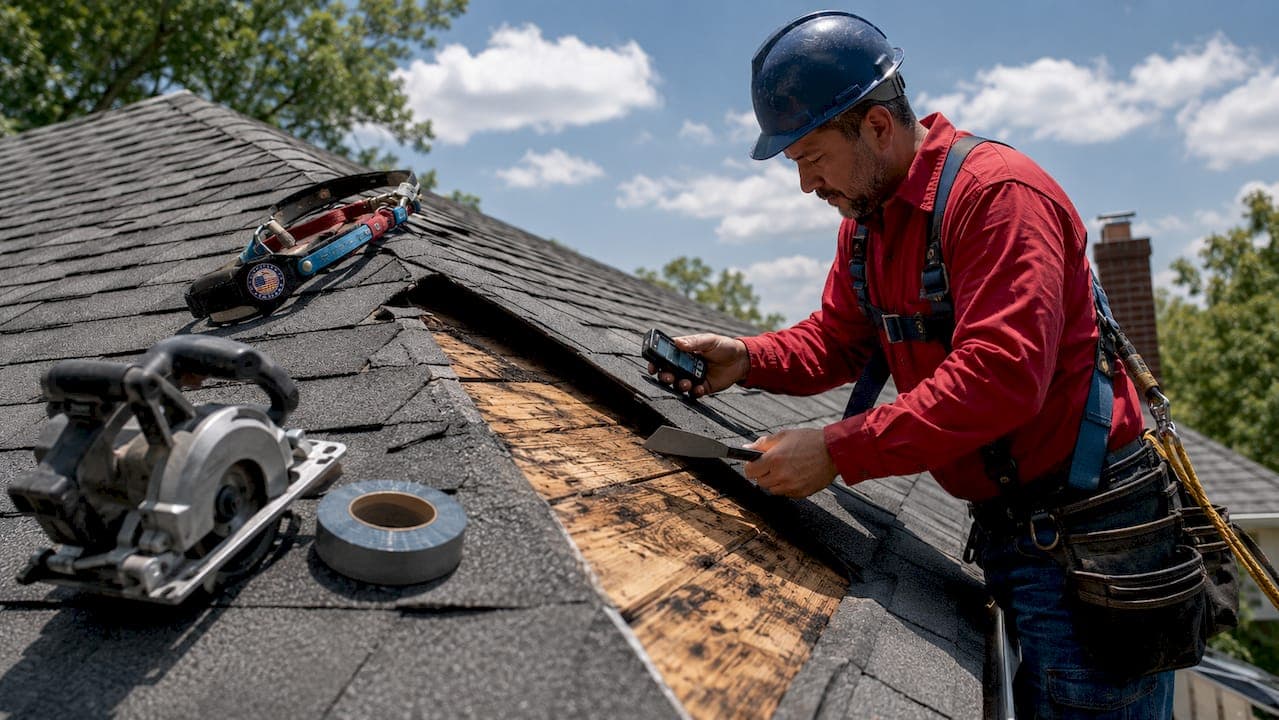
Roof decking damage is defined as the deterioration of the structural wood panels that sit directly beneath your shingles and form the base of your entire roof system. Identifying this damage early is the difference between a targeted repair and a full roof replacement. The 2026 industry standard sets a roofline deviation threshold of more than 1 inch over 10 feet as a structural warning sign. Granule loss beyond 25–30% accelerates moisture infiltration within 2–5 years. Theoriginalroofrepaircompany, based in Canton, Georgia, diagnoses these exact issues every week for homeowners across Cherokee County and 11 surrounding counties.
What are the visual signs of roof decking damage?
The clearest way to identify roof decking damage is to start from the ground with a careful exterior scan. Several visible signs point directly to compromised decking beneath the shingles.
- Sagging or wavy roofline. A roofline deviation exceeding 1 inch over 10 linear feet signals serious decking or framing failure. A wavy roofline is never a cosmetic issue. It indicates the structural panels beneath can no longer hold their shape under load.
- Curling, cracked, or missing shingles. Shingles that curl upward at the edges or crack across the face often reflect movement in the decking below. When the wood base shifts or softens, shingles lose their flat, secure bond.
- Granule loss and gutter debris. Granule loss beyond 25–30% accelerates moisture infiltration into the decking within 2–5 years. Heavy granule deposits in gutters after 5 years of service indicate accelerated aging and growing decking vulnerability.
- Soft or spongy areas underfoot. If you walk on the roof and feel any give or bounce beneath your feet, the decking has likely begun to rot. Sound decking feels firm and solid with no flex.
- Water stains or discoloration on roof surfaces. Dark streaks, mold patches, or discolored areas on the shingle surface often trace back to moisture that has already reached the decking layer.
Pro Tip: Stand at the corner of your house and sight down each roof slope at eye level. Any dip, wave, or sag becomes immediately visible from this angle and takes less than two minutes.
How to detect roof decking damage from the attic
The attic gives you direct access to the underside of your decking. This inspection often reveals damage that is completely invisible from the exterior.
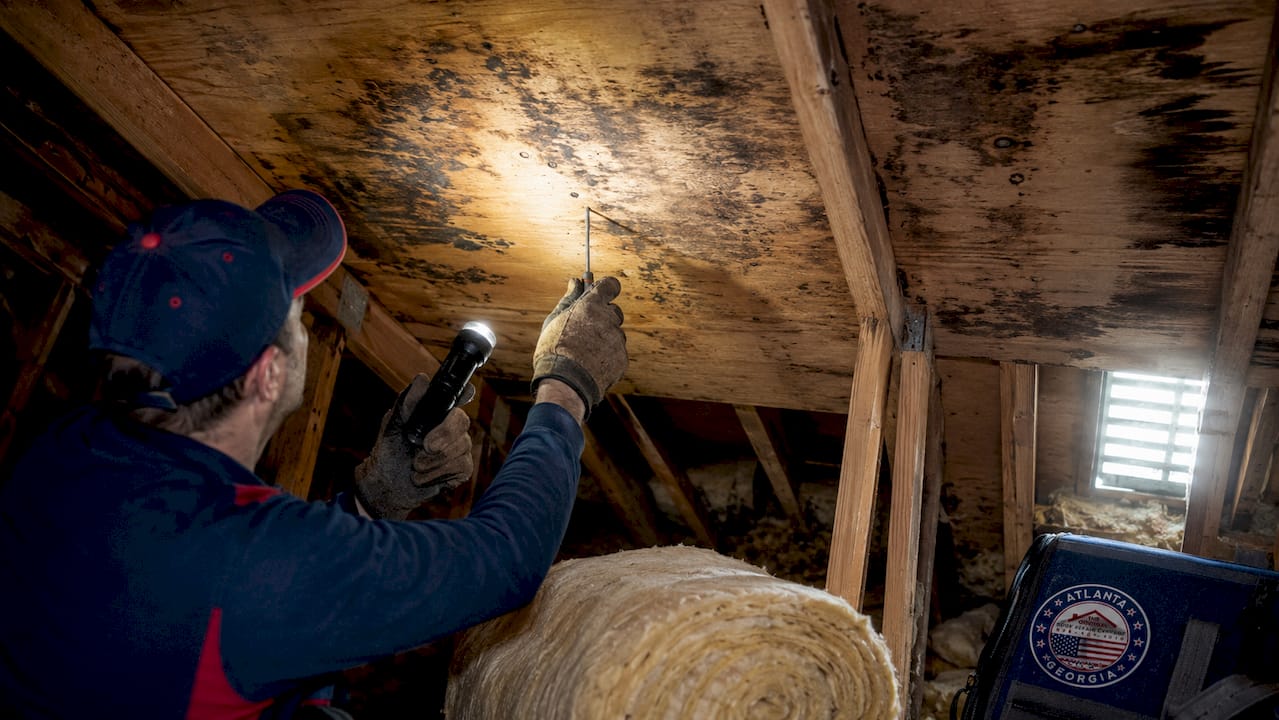
Start by entering the attic on a bright day with all interior lights off. Look for any pinpoints or streaks of daylight coming through the roof boards. Visible daylight through decking is a critical red flag that requires immediate professional attention.
Next, scan the underside of the boards for water stains, dark marks, or mold growth. A musty odor in the attic is also a reliable indicator of trapped moisture. Poor attic ventilation can cause interior condensation that rots decking from the inside out, even when the shingles above look completely intact. This is one of the most overlooked causes of structural decking failure.
Use a flashlight and probe the wood with a screwdriver or your finger. Soft, mushy, or crumbling wood confirms active rot. Firm wood with no give is a good sign.
Pro Tip: Check the attic after a heavy rain, not just on dry days. Active leaks show up as drips or wet spots that are easy to miss when the roof is dry.
One important limitation applies here. Decking can rot on the top surface near flashing or water collection points yet appear completely sound when viewed from the attic underside. Attic inspection alone is not sufficient to rule out damage. Probing from above is necessary to confirm the full condition of the decking.
What tools help detect decking issues accurately?
Visual inspection has real limits. Professional diagnostic tools catch damage that eyes and hands miss entirely.
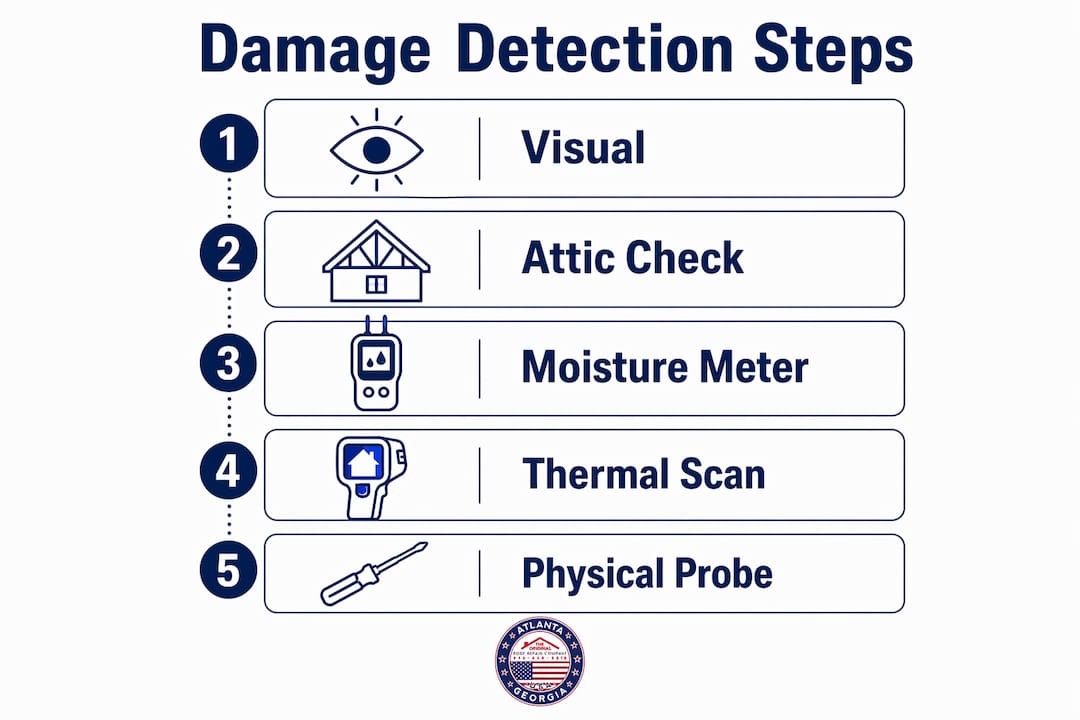
| Tool | What it detects | Best use case |
|---|---|---|
| Moisture meter | Elevated moisture content in wood | Confirming wet spots found visually |
| Thermal camera | Temperature differences from trapped moisture | Early detection before visible damage forms |
| Roof probe | Soft or rotted wood by physical resistance | Assessing rot depth and spread |
| Inspection software | Documenting and mapping damage areas | Insurance claims and repair planning |
Thermal imaging detects moisture accumulation beneath shingles by revealing temperature differences before any visible damage forms. This makes it the most effective tool for catching problems early, before a repair becomes a replacement.
Moisture meters give a quantitative reading of wood moisture content. A reading above 19% in OSB or plywood decking typically indicates conditions favorable for rot and mold growth. Roof probes allow a contractor to physically test the resistance of the wood surface, confirming whether soft spots are superficial or deep.
No single tool tells the complete story. Combining thermal imaging with physical probing and moisture measurement gives the most accurate picture of decking condition. This combination also produces the documentation needed for insurance claim support when storm damage is involved.
How to safely inspect your roof decking yourself
A safe self-inspection follows a specific sequence. Skipping steps or rushing the process leads to missed damage and unnecessary risk.
- Gather safety equipment. Use a sturdy extension ladder, non-slip footwear, and a safety harness if your roof pitch exceeds 6:12. Never inspect a wet or icy roof.
- Perform an exterior ground scan first. Walk the perimeter and look for sagging, missing shingles, granule deposits, and visible discoloration before climbing.
- Inspect the attic interior. Check for daylight, stains, mold, odor, and soft wood as described above. This step costs nothing and often reveals the most.
- Access the roof surface carefully. Step only on the lower third of each shingle to avoid cracking. Press lightly with your foot to test for soft spots.
- Check flashing points closely. Damage concentrates around chimneys, vents, valleys, and skylights. These are the highest-risk zones for water entry and top-surface rot.
The biggest mistake homeowners make is skipping the attic check because the shingles look fine from the street. Shingles can look perfect while the decking beneath is already failing from trapped moisture. The attic inspection is not optional. It is the most important step in the entire process.
Theoriginalroofrepaircompany recommends scheduling a professional annual inspection for any roof over 10 years old, even when no obvious signs are present. Self-inspection is a useful first step, not a replacement for expert evaluation.
How to decide between repair and full deck replacement
The scope of damage determines whether repair or full replacement is the right call. These thresholds guide that decision.
Repair is appropriate when:
- Less than 10% of the total decking area is affected
- Damage is localized to one section or slope
- The roof is under 15 years old with no history of moisture failure
- Decking replacement on roofs under 12 years old is uncommon unless a serious moisture management failure occurred
Replacement is necessary when:
- Rot or damage covers more than 20% of the decking area
- Sagging rooflines and granule loss appear across multiple slopes simultaneously
- Multiple damage types combine, such as rot, deflection, and flashing failure together
- The existing decking cannot hold fasteners securely
Insurance coverage adds another layer of complexity. Coverage for decking rot is often denied when damage stems from pre-existing moisture issues rather than a specific storm event. Thorough photo documentation, moisture readings, and a professional assessment report are the tools that separate a covered claim from a denied one. Theoriginalroofrepaircompany provides full insurance claim advocacy, working directly with carriers and adjusters on the homeowner's behalf.
Key Takeaways
Early detection of roof decking damage requires combining exterior visual inspection, attic assessment, and professional diagnostic tools to catch moisture and structural failure before it spreads.
| Point | Details |
|---|---|
| Roofline deviation threshold | A sag exceeding 1 inch over 10 feet is a structural warning requiring professional evaluation. |
| Granule loss signals risk | Loss beyond 25–30% accelerates moisture infiltration into decking within 2–5 years. |
| Attic inspection has limits | Top-surface rot near flashing may be invisible from below; probing from above is necessary. |
| Thermal imaging catches early damage | Thermal cameras detect moisture beneath shingles before any visible signs appear. |
| Document damage for insurance | Thorough documentation separates storm-related claims from denied pre-existing rot claims. |
What I've learned after years of roof inspections in Georgia
The single most underestimated cause of decking failure is poor attic ventilation. Homeowners focus on shingles, storms, and gutters. They rarely think about what happens when warm, humid air gets trapped in the attic with nowhere to go. That moisture condenses on the underside of the decking and begins to rot the wood from the inside. The shingles above can look completely normal for years while the structural base quietly deteriorates.
The second thing I've learned is that attic inspections, while valuable, give an incomplete picture. I have personally probed decking that looked solid from below and found significant rot on the top surface near a valley or flashing point. The only way to know for certain is to get on the roof and probe the surface directly, especially around high-risk areas like chimneys and skylights.
Thermal imaging has changed the way I approach early detection. It is not a replacement for physical inspection, but it reveals moisture patterns that no visual check can find. Combining a thermal scan with a moisture meter reading and a physical probe gives a complete, defensible picture of decking condition. That matters especially when an insurance claim is involved.
My honest advice: do not wait for a visible sag or an active leak to schedule an inspection. By the time those signs appear, the repair cost has already multiplied. A roof overlay assessment or a standard annual check costs a fraction of what deferred decking damage will eventually demand.
— Eric
Roof decking inspections from Theoriginalroofrepaircompany
Theoriginalroofrepaircompany provides thorough roof decking assessments for homeowners across Cherokee County and the surrounding region. The team uses physical probing, moisture measurement, and thermal imaging methods to identify damage accurately before it escalates.

Whether you need a targeted roof repair for a localized soft spot or an urgent response to active water intrusion, Theoriginalroofrepaircompany handles both. For situations that cannot wait, the emergency roof repair service provides same-day assessment and stabilization. The team also manages insurance documentation and adjuster communication directly, so you are not navigating the claims process alone. Transparent pricing and a repair-first approach mean you get an honest recommendation, not an upsell.
FAQ
What is roof decking damage?
Roof decking damage is the deterioration of the structural wood panels beneath your shingles, typically caused by moisture intrusion, rot, or physical impact. It compromises the structural base that holds your entire roofing system in place.
How do I know if my roof decking is rotting?
Soft or spongy areas underfoot, a sagging roofline, and musty odors or mold in the attic are the primary signs of decking rot. A screwdriver probe into soft wood that crumbles or offers no resistance confirms active rot.
Can I inspect roof decking damage myself?
A homeowner can perform a useful first inspection by scanning the exterior from the ground and checking the attic for stains, odors, and soft wood. Professional probing and thermal imaging are necessary to confirm the full extent of any damage found.
Does homeowners insurance cover roof decking damage?
Insurance typically covers decking damage caused by a specific storm event but often denies claims for rot from pre-existing moisture issues. Thorough photo documentation and a professional assessment report are critical to supporting a successful claim.
How often should roof decking be inspected?
Theoriginalroofrepaircompany recommends a professional inspection at least once per year for roofs over 10 years old, and after any significant storm event involving high winds, hail, or heavy rain.