
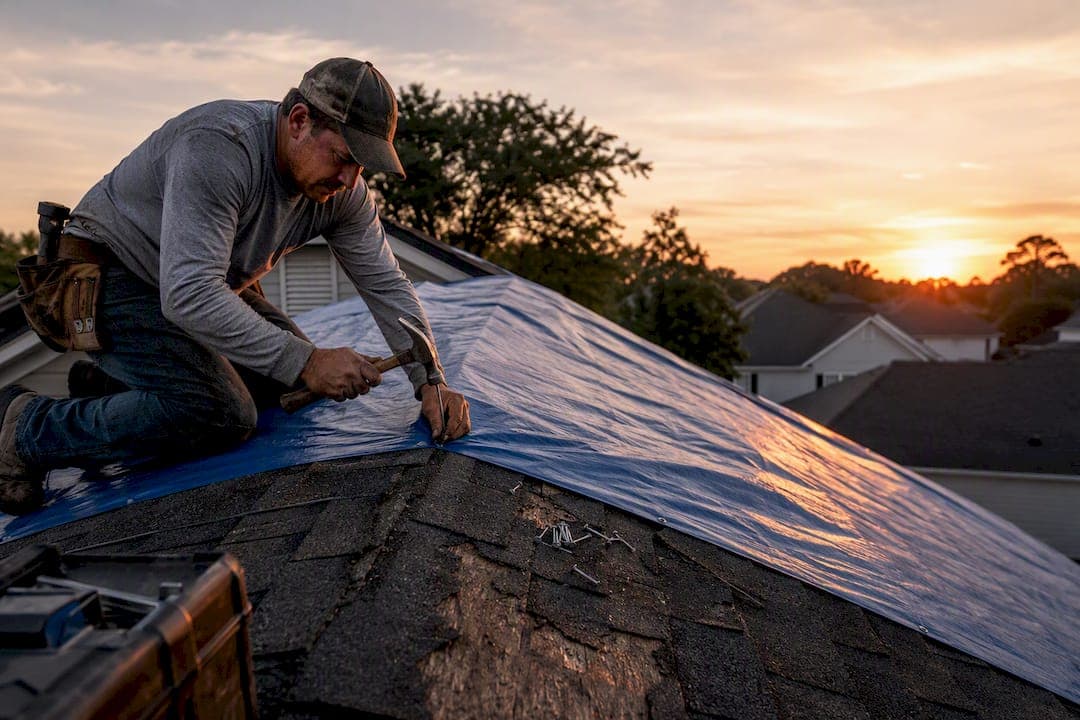
Most single-source roof leak repairs cost between $150 and $1,500, with the typical job landing around $600 to $900 once a roofer accounts for access and materials. If a written estimate comes back above $4,000, replacement usually becomes the smarter financial move rather than a repeat repair. For now, if water is actively coming in, secure the interior, place a bucket or tarp, and schedule a professional inspection before the damage spreads.
TL;DR:
- Repairs for small leaks typically cost between $150 and $400, with emergency or after-hours service adding a premium.
- Fixing flashing failures or chimney leaks often exceeds $350, and extensive damage to decking can surpass $4,000 if neglected.
- Cost varies significantly based on materials, roof pitch, and location, with tile and slate more expensive than asphalt shingles.
- Delaying repairs increases long-term costs, as moisture exposure can lead to mold and structural damage within days or weeks.
- Insurance usually covers storm-related damage but often excludes leaks from aging or maintenance issues, making prompt documentation crucial.
Table of Contents
- What Does Roof Leak Repair Cost by Severity?
- What Does It Cost to Fix a Roof Leak by Source?
- How Do Roof Material, Pitch, and Location Change the Price?
- What Happens If You Delay a Roof Leak Repair?
- Can You Fix a Roof Leak Yourself Safely?
- Will Homeowners Insurance Cover a Roof Leak?
- How Do You Evaluate a Roofing Quote?
- Why Local, Repair-First Expertise Matters
- What the Research Actually Tells Homeowners
- Get a Straight Answer on Your Roof Leak
- Sources
- FAQ
What Does Roof Leak Repair Cost by Severity?
The price tag on a roof leak depends less on the leak itself and more on what it takes to reach it. A pinhole in a rubber vent boot and a rotted valley board sit at opposite ends of the same job category, and the invoice reflects that gap.
Most contractors group pricing into three tiers based on scope and time on the roof:
- Small repairs ($150 to $400): sealant touch-ups, single shingle replacement, minor pipe boot fixes
- Medium repairs ($400 to $900): flashing resealing, small section reshingling, minor decking repair
- Major repairs ($900 to $1,500+): valley repair, chimney flashing rebuilds, or multiple leak points
Almost every roofer charges a service call or minimum job fee, typically $150 to $350, regardless of how small the fix turns out to be. That floor exists because a crew still has to load a truck, drive out, set up ladders, and inspect the roof before touching a single shingle. One industry cost breakdown notes that on small leaks, materials are cheap but mobilization sets the real price floor.
Emergency and after-hours calls add their own premium on top of standard rates, and a temporary tarp job can cost several hundred dollars depending on roof size and pitch.
What Does It Cost to Fix a Roof Leak by Source?
Not all leaks are created equal, and where the water enters usually tells you how much you'll pay to stop it. Flashing failures are the single leading cause of residential leaks, and they tend to be the costliest to fix properly because they often involve partial rebuilds and masonry work around chimneys, according to The Roofing Brief.
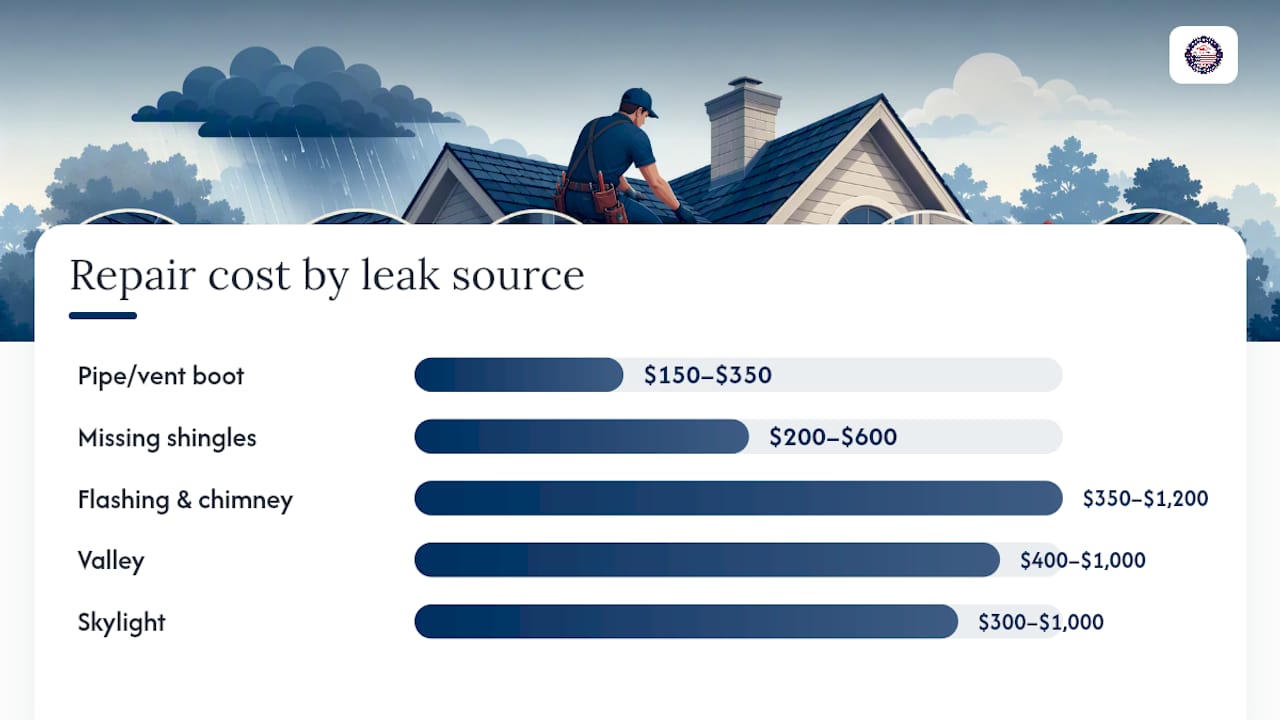
Here's how the average roof repair cost breaks down by common leak source:
- Pipe or vent boot leaks ($150 to $350): The rubber collar around a plumbing vent cracks with age and sun exposure. Swapping it is quick work for a pro and one of the cheapest fixes on this list.
- Missing or damaged shingles ($200 to $600): Wind lifts a few shingles or granule loss exposes the underlayment. Cost scales with how many courses need replacement and whether matching shingles are still available.
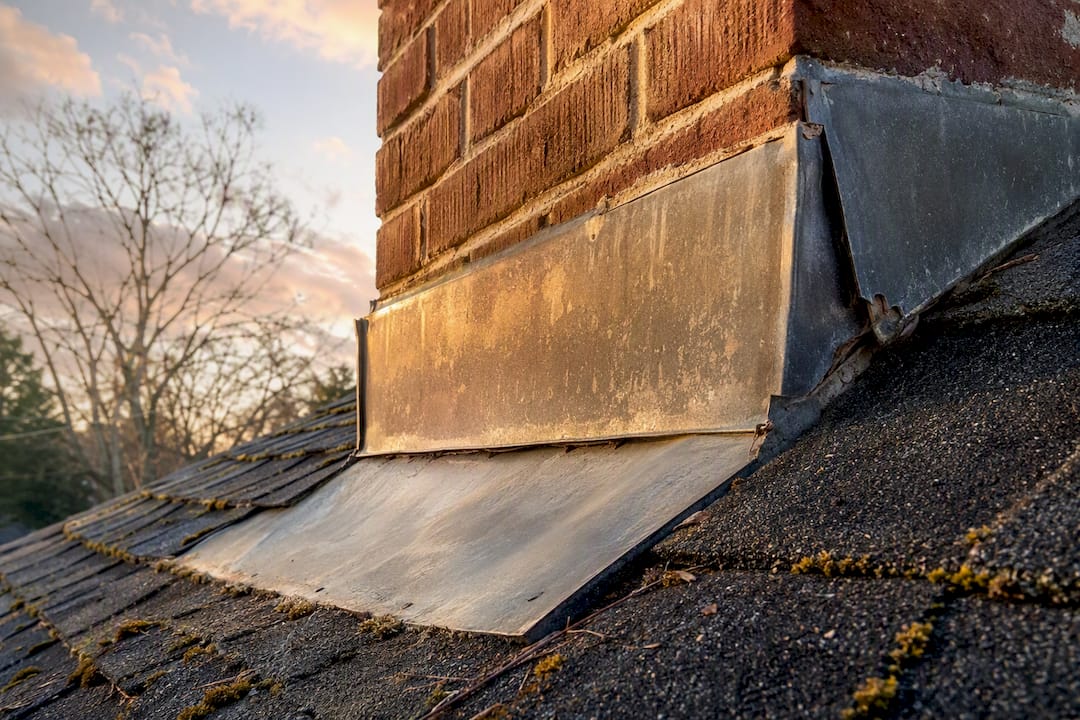
- Flashing and chimney leaks ($350 to $1,200): Step flashing, counter flashing, and chimney crickets involve metal work and sometimes mortar repair, which pushes labor time up significantly.
- Valley leaks ($400 to $1,000): Valleys channel more water than any other section of the roof, so repairs often mean removing and replacing multiple courses of shingles on both sides.
- Skylight leaks ($300 to $1,000): Failed seals or flashing around the skylight frame require careful resealing or a full flashing kit replacement.
- Widespread decking damage ($1,000 to $4,000+): Once water has soaked through to the plywood decking, a repair job starts to resemble a partial rebuild, and this is where the total can approach the replacement threshold.
Flashing failures alone account for a disproportionate share of service calls, which is why a repair-first roofer who has diagnosed hundreds of these leaks will spot the difference between a quick reseal and a job that needs new step flashing before ever pulling a shingle.
How Do Roof Material, Pitch, and Location Change the Price?
The same leak on two different roofs can carry two very different bills. Material, slope, and geography all move the number before a single shingle gets replaced.
- Roofing material: Asphalt shingle repairs sit at the lower end of most price ranges. Metal roof repairs often run 20% to 40% higher due to specialized fasteners and sealants. Tile and slate repairs can cost double or more because of the fragility of the material and the skill required to walk the roof without cracking adjacent tiles.
- Pitch and story height: A single-story roof with a gentle slope is the cheapest surface to work on. Steep-pitch roofs (above a 6:12 ratio) typically add 10% to 25% to labor costs because crews need additional fall protection and slower, more careful footing. Two-story homes usually add another premium for ladder setup and safety equipment.
- Regional labor and permits: Labor rates and permit fees vary by metro area. In Georgia, and particularly across the Atlanta metro, repair costs generally track close to national averages, though permit requirements and labor availability can shift pricing during high storm-demand seasons.
A repair cost calculator modeling these multipliers shows how quickly a modest repair can climb once pitch and story height enter the equation, which is exactly why an in-person inspection matters more than a phone estimate.
What Happens If You Delay a Roof Leak Repair?
A small leak rarely stays small. What starts as a $300 flashing fix can turn into a $3,000 remediation job if water sits behind drywall long enough to invite mold and rot.
Mold can begin forming within 48 hours of water intrusion, according to the CDC's mold cleanup guidance, and the EPA recommends addressing the moisture source immediately rather than treating mold as an isolated problem. Interior damage compounds fast once water finds a path through decking and insulation.
| Repair scenario | Typical cost range | What's included |
|---|---|---|
| Prompt repair (within days) | $150 to $900 | Roof-level fix only, no interior damage |
| Delayed repair (weeks to months) | $1,500 to $4,000 | Roof fix plus drywall and insulation replacement |
| Long-term neglect (mold present) | $4,000+ | Roof fix, framing repair, mold remediation, possible replacement |
The gap between the top and bottom rows isn't hypothetical. It's the difference between a Saturday-morning fix and a full insurance claim.
Can You Fix a Roof Leak Yourself Safely?
Some fixes genuinely don't need a professional. A single loose nail head, minor sealant crack, or an easily accessible vent boot retrofit can often be handled with $15 to $50 in materials from a hardware store.
Reasonable DIY tasks include:
- Resealing an exposed nail head with roofing cement
- Replacing an accessible pipe boot on a single-story, low-pitch roof
- Swapping one or two visibly cracked shingles on flat, easy-access sections
Where DIY stops making sense is anything involving working above six feet without proper fall protection. OSHA requires fall protection for professional work at that height for a reason: rooftop falls are a leading cause of serious injury in residential construction, and a homeowner without harnesses, anchors, or roof jacks is taking on real risk to save a few hundred dollars.
Concealed leaks, especially around flashing, valleys, and chimneys, are also nearly impossible to diagnose correctly without experience. Water often travels along the decking before it drips through the ceiling, so the wet spot on your drywall rarely sits directly under the actual entry point.
Pro Tip: If you're not sure whether a leak is DIY-friendly, take photos from the ground with a zoom lens first. A professional can often narrow down the likely cause before ever setting a ladder against the house, which saves you an unnecessary service call.
Will Homeowners Insurance Cover a Roof Leak?
Insurance typically covers sudden, accidental damage from storms, hail, or wind, but it generally excludes leaks caused by wear, age, or deferred maintenance, according to GAF's roofing guidance. A claim adjuster looking at a 20-year-old roof with granule loss will read that very differently than one looking at storm-torn shingles from last week's wind event.
Deductible math matters here too. If your deductible is $1,500 and the repair estimate comes in at $1,200, filing a claim usually isn't worth it. If the estimate is $4,000 after a hailstorm, the math flips.
To strengthen a claim:
- Photograph damage immediately, including any visible hail marks or wind-lifted shingles
- Keep the original repair estimate and any prior roof maintenance records
- Note the date of the storm event alongside your documentation
Roofers experienced in storm damage claims tend to catch details adjusters miss on a first pass. If a repair still exceeds what insurance and savings can cover, home equity lines or contractor financing plans are common ways homeowners bridge the gap.
How Do You Evaluate a Roofing Quote?
A quote is only as good as what it spells out. Vague estimates are where scope disputes and surprise change orders come from later.
- Check for an itemized breakdown. Labor, materials, disposal, and any permit fees should appear as separate line items, not a single lump sum.
- Ask what's causing the leak. A contractor should be able to name the specific source, not just "we'll seal it and see."
- Ask whether it's a permanent fix or a patch. Some quotes intentionally undersell scope to win the bid, then reveal the "real" fix once work starts.
- Confirm the warranty terms. Reputable repair work typically carries at minimum a one-year labor warranty; ask what's covered and for how long.
- Ask about insurance claim experience. If storm damage is involved, a roofer who has worked with adjusters before can save you weeks of back-and-forth.
Watch for red flags: pressure to sign same-day, no local address or BBB listing, or a bid dramatically lower than every other estimate you've collected. A pre-visit inspection checklist helps you walk into that first meeting with the right questions already in hand.
Why Local, Repair-First Expertise Matters
The Original Roof Repair Company, founded by Eric Manly and based in Canton, Georgia, has built a BBB-accredited, repair-first practice over four years serving Cherokee County and 11 surrounding counties, including the greater Atlanta metro area. The company's approach centers on fixing the actual problem, whether that's a failed flashing seal, a cracked boot, or storm-driven shingle loss, rather than pushing homeowners toward an unnecessary full roof replacement.
Replacement only enters the conversation when a repair estimate exceeds $4,000 and a new roof genuinely becomes the more cost-effective path forward. The company also handles insurance claim advocacy directly, documenting storm and hail damage and working with adjusters on the homeowner's behalf. For emergency situations, that local familiarity, similar to how regional responders like RX2 Restoration & Remodeling handle urgent water intrusion elsewhere, often means faster, more accurate diagnosis than a call center dispatch from an out-of-area company.
What the Research Actually Tells Homeowners
The conventional advice on roof leaks tends to boil everything down to "get three quotes and pick the middle one." That's not wrong, but it misses the bigger lesson buried in the cost data: the price spread between a $200 fix and a $4,000 disaster is almost entirely a function of time, not severity at the point of discovery.
Most leaks start small and cheap to fix. What turns them expensive is three to six weeks of moisture sitting behind drywall while a homeowner waits to "see if it gets worse." It almost always does. I'd argue the single most underrated cost-saving move isn't finding the cheapest contractor, it's calling for an inspection within days of noticing a stain, not months.
The other overlooked piece is diagnosis quality. A cheap patch on the wrong problem costs more in the long run than a slightly pricier repair that actually finds the source. That's where a repair-first roofer earns their fee: not by upselling a replacement, but by refusing to guess.
— Eric
Get a Straight Answer on Your Roof Leak
The Original Roof Repair Company gives Atlanta-area homeowners something most large roofing outfits won't: a repair-first estimate instead of an automatic push toward full replacement. When a national franchise or storm-chasing crew shows up after a hailstorm, the incentive often runs toward the bigger job. Our approach starts with finding the actual leak source and fixing it, and we only recommend replacement when the numbers genuinely support it, at $4,000 or more in repair costs.

If water is actively coming through your ceiling right now, our emergency roof repair team serves Canton, Cherokee County, and the surrounding Atlanta metro area. For a leak that's stable but needs a real diagnosis, our roof repair service starts with a free inspection and a transparent, itemized estimate. If a past storm left damage you haven't addressed yet, we can also help document it and work directly with your insurance carrier. Schedule a free inspection today and get a straight answer on what your repair will actually cost.
Sources
- Fall protection | Occupational Safety and Health Administration (OSHA)
- A guide to mold cleanup | Centers for Disease Control and Prevention (CDC)
- A brief guide to mold, moisture, and your home | U.S. EPA
- How to fix a leaking rooftop: detection, repair & prevention guide | GAF
- Roof leak repair in 2026: cost, DIY vs Pro | The Roofing Brief
FAQ
How much should a roof leak repair cost?
Most single-source roof leak repairs in the U.S. cost between $150 and $1,500, with typical jobs landing around $600 to $900 depending on the leak source, roof access, and material.
Will insurance pay for a roof leak?
Insurance generally covers sudden, storm-related damage like wind or hail but typically excludes leaks caused by age or wear, so documenting the damage promptly matters for a successful claim.
How long can a roof leak before it causes serious damage?
Mold can begin forming within 48 hours of water intrusion, and delayed repairs that stretch into weeks or months can push total costs from a few hundred dollars into the thousands once drywall, insulation, and framing are affected.
What should I do if my roof is leaking and I can't afford to fix it?
Start by containing the damage with a tarp or bucket and scheduling a free inspection. Many local roofers, including The Original Roof Repair Company, offer financing routes and can advise whether an insurance claim applies before you pay out of pocket.