
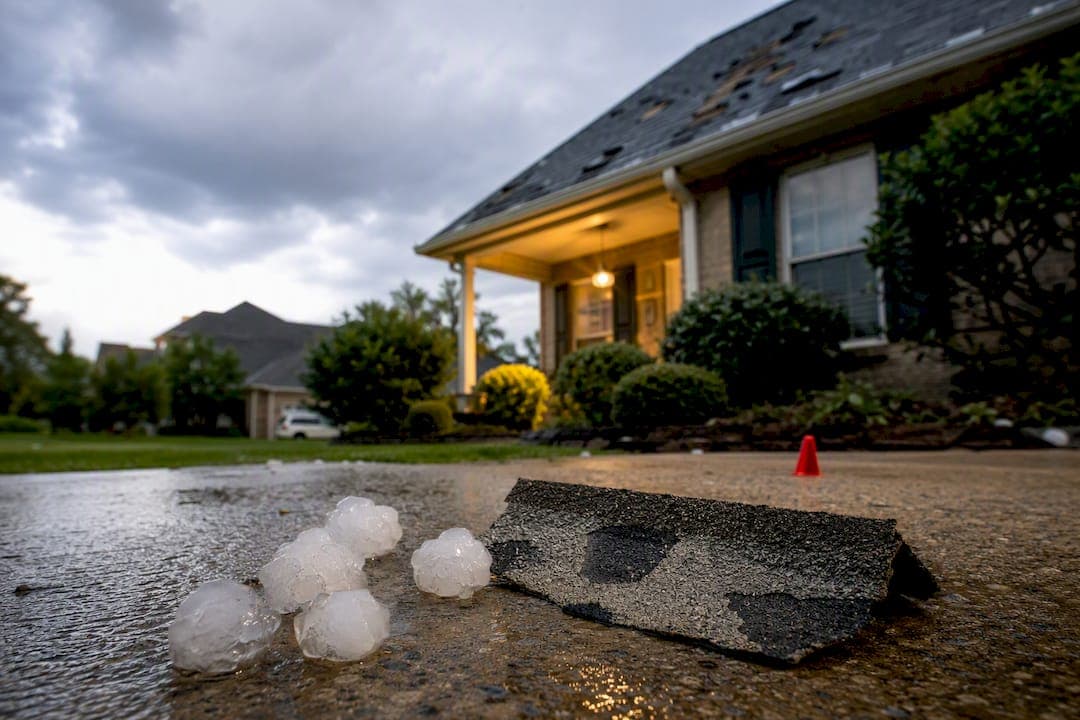
Hail damage roof cost in 2026 typically runs from a few hundred dollars for a small spot repair to more than $24,000 for a full replacement, with most homeowners landing somewhere in between depending on hailstone size, roof age, and material. If your roof took a hit, document the damage with photos now and schedule a professional inspection before storms make contractors hard to reach. Whether insurance covers the bill depends heavily on your deductible type and whether your policy pays actual cash value or replacement cost.
TL;DR:
- Hailstone size greatly influences repair costs, with golf-ball-sized hail causing significantly more damage than pea-sized hail, often leading to full roof replacements.
- The average cost for a full roof replacement ranges from $11,600 to over $24,000, with higher regional labor demand in Georgia pushing costs toward the upper end of this spectrum.
- Insurance deductibles, especially percentage-based ones, can result in homeowners paying thousands out of pocket, depending on claim size and policy type.
- Repair costs escalate quickly if more than 30-40% of the roof is damaged or if the roof is near or past its expected lifespan, shifting the balance toward replacement.
- Prompt, documented inspections within three days of a storm are essential to avoid secondary damage and ensure insurance claims are processed smoothly.
Table of Contents
- How Much Does Hail Damage Roof Cost by Severity?
- What Drives the Cost of Hail Damage Roof Repair?
- How Does Homeowners Insurance Cover Hail Damage?
- When Is Roof Repair Enough, and When Do You Need Replacement?
- What Should You Do in the First 72 Hours After a Hailstorm?
- How Do Contractors Build a Hail Damage Roof Estimate?
- A Local Look: Hail Damage Costs Around Atlanta and Cherokee County
- What Happens if Hail Damage Goes Unrepaired?
- How Long Does a Hail Damage Claim Take From Inspection to Completion?
- Why Repair-First Thinking Usually Wins for Homeowners
- Get a Free Roof Inspection From The Original Roof Repair Company
- Sources
- FAQ
How Much Does Hail Damage Roof Cost by Severity?
The dollar amount you'll pay depends almost entirely on how much of your roof got hit and how hard. A single hailstorm can produce anything from a few dozen bruised shingles to a roof that needs to come off entirely, and the cost gap between those two outcomes is enormous.
Spot repairs, covering isolated impact zones or a handful of damaged shingles, generally run $375 to $4,500 depending on how much material and labor the job requires. Partial or section replacement, where an entire slope or two needs new shingles because impacts are scattered across a wider area, typically falls between $1,500 and $11,200. Full roof replacement, the outcome when damage covers most or all of the roof or when insurers determine that patching won't produce a uniform, weathertight surface, commonly lands between $10,000 and $24,000 or more on larger or higher-end homes.
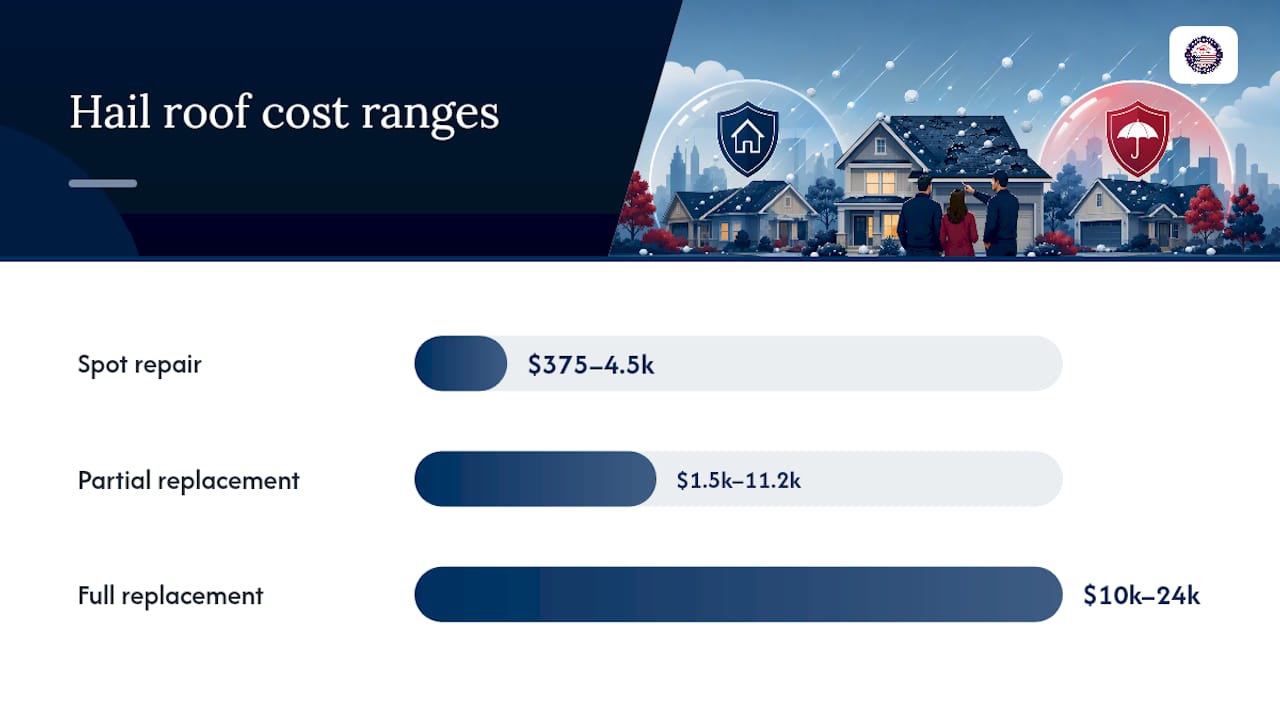
A 2026 hail damage cost analysis breaks these tiers down further: spot repair claims average $1,800 to $4,500, partial-slope jobs run $6,400 to $11,200, and full replacements span $11,600 to $24,000, not counting collateral damage like gutters or interior water intrusion.
Here's how those numbers play out with insurance factored in, using two common deductible structures:
| Damage tier | Typical repair cost | Flat $1,500 deductible (your cost) | 2% wind/hail deductible (your cost) |
|---|---|---|---|
| Spot repair | $1,800–$4,500 | $375–$3,000 | $1,800–$4,500 (often under deductible) |
| Partial-slope replacement | $6,400–$11,200 | $4,500–$9,700 | $6,400–$7,000* |
| Full replacement | $11,600–$24,000 | $10,000–$22,500 | $7,000–$24,000* |
*Assumes a $7,000 percentage deductible is met first; remaining balance is insurer-paid.
These are national figures. Georgia homeowners, particularly across the Atlanta metro, tend to see costs on the middle-to-upper end of these ranges because of higher labor demand following regional storm seasons and a mix of steep-pitch and complex roof designs common in older neighborhoods.
What Drives the Cost of Hail Damage Roof Repair?
Two roofs hit by the same storm can end up with wildly different repair bills. The differences come down to a handful of variables that either a contractor or an insurance adjuster will point to when explaining an estimate.
Hailstone diameter matters more than most homeowners expect. Kinetic energy scales with mass and velocity squared, so a jump from a 1-inch hailstone to a 1.75-inch one doesn't just modestly increase damage. It multiplies it, because larger hail carries dramatically more force on impact. That's why a storm packing golf-ball-sized hail can strip granules and crack shingles across an entire roof, while pea-sized hail from a milder storm might leave barely a mark.
Pro Tip: Check your local weather service's storm reports for recorded hailstone size after any hailstorm. If reports confirm hail of 1 inch or larger, insurers are far more likely to approve a claim without extensive pushback.
Beyond hail size, several other factors shape your final number:
- Roof size and pitch: Steeper roofs require more safety equipment and labor time, raising per-square costs.
- Roofing material: Asphalt shingle replacement averages around $10,000 nationally, while metal roof repairs average closer to $1,700 per the Insurance Institute for Business & Home Safety; tile and slate run considerably higher due to specialized labor and material sourcing.
- Roof age and condition: Roofs nearing the end of their expected lifespan sustain more damage from the same hail event, and some policies apply age-based depreciation schedules that reduce payouts.
- Local labor market and season: Post-storm demand spikes push contractor rates up temporarily in hard-hit regions, including much of Georgia during peak spring storm months.
Impact-resistant Class 4 shingles change this equation somewhat. They hold up better against hail impact and can qualify homeowners for insurance premium discounts of roughly 10% to 35%, a detail worth asking about when you eventually replace an aging roof.
How Does Homeowners Insurance Cover Hail Damage?
Most standard homeowners policies treat hail as a covered peril, but what you actually collect depends on three variables: your deductible structure, your roof's age, and whether your policy pays actual cash value or replacement cost value. For details on what insurance policies typically cover regarding storm damage, see storm damage awning insurance UK: what's covered.
Actual cash value (ACV) policies pay out the depreciated value of your roof, factoring in its age and wear. Replacement cost value (RCV) policies pay to replace the roof with new materials of similar kind and quality, though insurers commonly issue RCV payouts in two parts. You get an initial ACV payment upfront, then a second check covering recoverable depreciation once the work is completed and you submit proof.
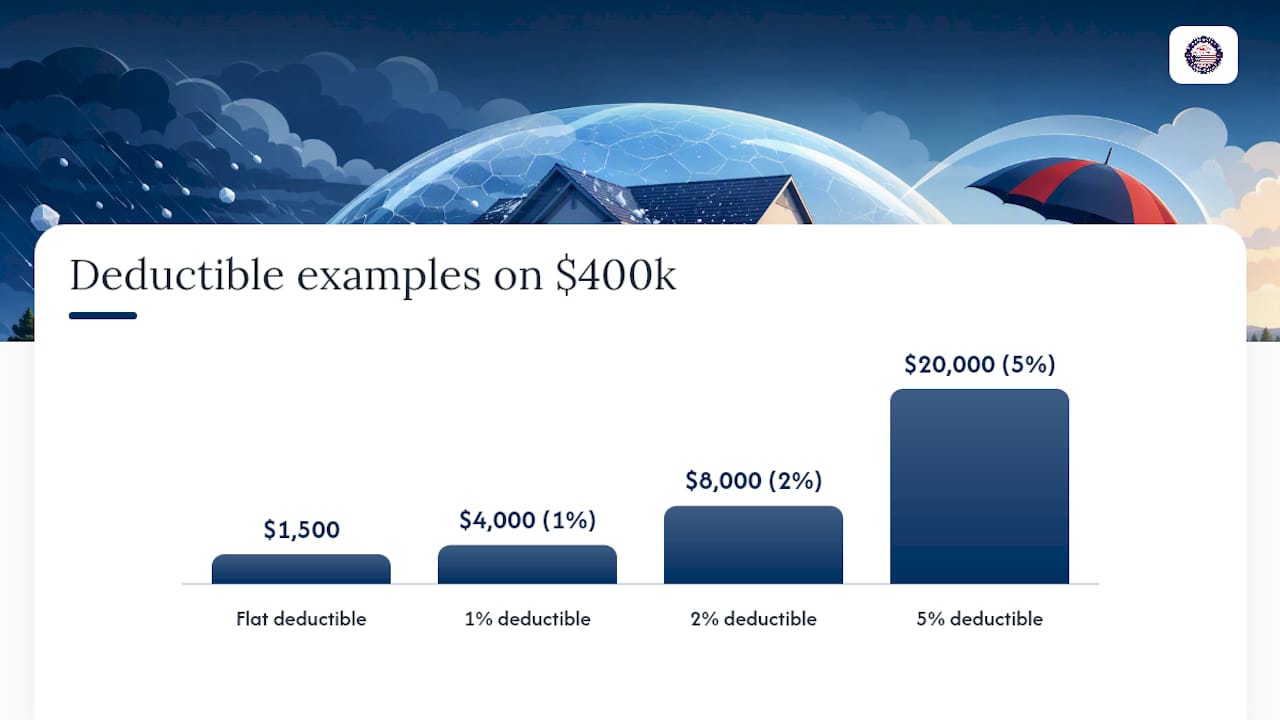
Deductibles complicate the math further. A flat-dollar deductible, say $1,500, is straightforward. But many hail-prone states, Georgia among them, allow insurers to write percentage-based wind and hail deductibles instead. These typically run 1% to 5% of your dwelling coverage, and the difference is significant: a 2% deductible on a $400,000 dwelling means $8,000 comes out of your pocket before the insurer pays a dime.
Follow these steps once you know a claim is likely:
- Review your declarations page to confirm whether your wind/hail deductible is flat or percentage-based.
- Request a professional roof inspection and get the damage documented in writing.
- File your claim promptly, most policies set a filing window, often one year from the date of loss.
- Get a written contractor estimate that matches or exceeds the insurer's scope before agreeing to a settlement.
- If the insurer disputes the scope, ask about invoking the appraisal clause to resolve the disagreement.
Insurers also distinguish between cosmetic damage (dented but still functional) and functional damage (compromised waterproofing or structural integrity). Cosmetic-only claims are far more likely to be denied or reduced, which is exactly why documentation and a qualified inspection matter so much before you file.
Pro Tip: Never accept a verbal settlement estimate over the phone. Get it in writing and compare it line by line against your contractor's scope before signing anything.
When Is Roof Repair Enough, and When Do You Need Replacement?
Most roofing professionals use a rough threshold: once damage affects roughly 30% to 40% of a single slope, or the roof overall, replacement usually becomes the more sensible option compared to patchwork repair. The math changes when repair costs start climbing toward that same territory.
Slope-matching is the detail most homeowners never consider until an adjuster brings it up. Shingles fade and weather over time, so a five-year-old roof patched with brand-new shingles on one slope will show a visible color and texture mismatch. Many states require insurers to address this under "like kind and quality" provisions, and it's often the single deciding factor in whether an insurer approves a full-slope or full-roof replacement instead of a spot patch.
A few scenarios where replacement typically wins out over repair:
- Damage is scattered across three or more slopes rather than concentrated in one area.
- The roof is already past 15 to 20 years old and nearing its expected service life.
- Discontinued shingle lines make color-matching impossible.
- Underlying decking shows rot or moisture damage discovered during inspection.
- Repair estimates approach or exceed $4,000, a threshold The Original Roof Repair Company uses as its own guideline for recommending replacement over continued patchwork.
What Should You Do in the First 72 Hours After a Hailstorm?
The actions you take in the first three days after a hailstorm often determine how smoothly your insurance claim goes and how much secondary damage you avoid. Skip the roof climb, though. A damaged, wet roof deck can give way underfoot, and that's not a risk worth taking to snap a few photos.
- Check for immediate hazards at ground level first: downed power lines, damaged gutters, or debris in the yard.
- Document everything with date-stamped photos and short video clips of visible damage, dents in gutters, siding, or window screens, and any interior ceiling stains.
- Arrange temporary tarping if there's active leaking or exposed decking, and keep every receipt since insurers typically reimburse reasonable emergency repair costs.
- Schedule a professional inspection and get at least one written contractor estimate before authorizing major work.
- Contact your insurer to open a claim, referencing your documentation and the inspection findings.
Pro Tip: Photograph a coin or ruler next to hail dents on soft metals like gutters or vents. It gives adjusters a quick, credible size reference without guesswork.
Following this roof insurance claim steps checklist in order also protects you if a dispute arises later, since insurers weigh timely, well-documented claims far more favorably than ones filed weeks after the fact with sparse evidence.
How Do Contractors Build a Hail Damage Roof Estimate?
A legitimate roofing estimate breaks down into distinct line items: materials, labor, tear-off or overlay costs, disposal fees, permit costs where required, and any decking replacement. Reputable contractors itemize each of these rather than handing you a single lump number, which makes comparing bids far easier.
Inspection fees typically run $125 to $600, and many contractors, including The Original Roof Repair Company, credit that fee toward the total job cost if you hire them for the work. That's worth asking about upfront before you commit to paying for multiple inspections.
Hidden costs are where estimates commonly balloon past initial quotes:
- Rotten or water-damaged decking discovered during tear-off, which can add $1,000 to $4,000 depending on how much sheathing needs replacing.
- Interior water damage from a leak that predates the visible roof repair.
- Permit fees or code-driven upgrades, particularly on older homes that need updated ventilation or flashing to meet current building code.
None of these are contractor padding. They're the reason a thorough inspection matters more than a quick walk-around, since decking problems in particular rarely show up until the old shingles come off.
A Local Look: Hail Damage Costs Around Atlanta and Cherokee County
Georgia sees a distinct hail season, generally running from late winter into early summer, and Atlanta metro homeowners often deal with steep-pitch, architecturally complex roofs that push repair costs toward the higher end of national ranges. Percentage-based wind/hail deductibles are increasingly common on Georgia policies too, so a storm that seems minor can still carry thousands in out-of-pocket exposure.
The Original Roof Repair Company, founded by Eric Manly and based in Canton, Georgia, built its approach specifically around this reality. The company only recommends full replacement when repair costs exceed $4,000 or when replacement is clearly the smarter, more cost-effective path, rather than defaulting to replacement on every claim the way some larger roofers do. That repair-first policy has helped the company earn BBB accreditation in its four years of operation.
Serving Canton, Cherokee County, and 11 surrounding counties within roughly 35 miles, including much of the Atlanta metro, the company offers free roof inspections, emergency tarping, and direct insurance claim advocacy, working the adjuster process on the homeowner's behalf rather than leaving them to navigate it alone.
What Happens if Hail Damage Goes Unrepaired?
A roof with unaddressed hail damage rarely stays a roof-only problem for long. Cracked shingles and exposed granule loss let water seep beneath the roofing membrane, and once that happens, the damage moves indoors fast.
Interior water intrusion typically shows up first as ceiling stains or peeling paint, but it can also mean saturated insulation, warped drywall, and damaged electrical fixtures if water tracks along wiring runs. Left unaddressed for even a few weeks in Georgia's humid climate, trapped moisture creates ideal conditions for mold growth behind walls and in attic spaces, and mold remediation alone can add several thousand dollars to what started as a roofing claim.
Underlying decking is the other silent cost. Roof sheathing that stays wet for an extended period can rot, and contractors frequently discover this only once tear-off begins, adding $1,000 to $4,000 in unplanned scope, as covered earlier in the estimate breakdown.
There's also a coverage angle homeowners overlook. Insurers routinely scrutinize the gap between the storm date and your claim filing date. A long delay can suggest the damage worsened due to neglect rather than the storm itself, which gives adjusters grounds to deny or reduce a claim that would otherwise have been straightforward. Filing promptly and tarping any active leaks isn't just about limiting damage. It protects your standing with the insurer, too.
How Long Does a Hail Damage Claim Take From Inspection to Completion?
Most straightforward hail damage claims move from initial inspection to final payment within four to eight weeks, though the timeline stretches considerably after major regional storms when adjusters and contractors both face backlogs.
The process generally starts with a contractor or public inspection within a few days of the storm, followed by filing the claim and an insurance adjuster's own inspection, which can take one to three weeks to schedule depending on storm volume in your area. Once the adjuster approves the claim, insurers typically issue the initial ACV payment within one to two weeks.
Actual repair or replacement work, once materials and a crew are scheduled, usually takes one to five days for most residential roofs, weather permitting. The final recoverable depreciation payment, if your policy is RCV, arrives after you submit proof of completed work, generally another one to two weeks.
Georgia homeowners filing claims during peak storm season, typically spring through early summer, should expect the adjuster and materials-scheduling stages to run longer than these averages, since regional demand spikes strain both insurance company staffing and contractor crews simultaneously. Booking your inspection early and having documentation ready speeds up every stage that follows.
Why Repair-First Thinking Usually Wins for Homeowners
Most homeowners assume hail damage automatically means a full roof replacement, and that assumption costs people money they didn't need to spend. A repair-first approach, patching genuinely isolated damage rather than replacing an entire roof, preserves years of remaining roof life and keeps the bill proportional to the actual problem.
That said, replacement is the right call more often than skeptics think, particularly when decking is compromised, slope-matching makes patchwork visibly obvious, or the roof was already near the end of its service life before the storm hit. The skill isn't defaulting to one answer. It's knowing which threshold you've actually crossed.
Working with a contractor who has handled insurance claims before matters more than most homeowners realize, since adjusters and contractors don't always agree on scope, and someone needs to advocate for an accurate estimate.
— Eric
Get a Free Roof Inspection From The Original Roof Repair Company
If your roof took a hit in a recent storm, the fastest way to know what you're actually dealing with is a free inspection, not a guess based on a few photos from the ground. The Original Roof Repair Company sends someone out to assess the actual damage, document it for insurance purposes, and give you a straight answer on whether you're looking at a repair or a replacement, without pushing you toward the bigger job by default.

The company's services cover exactly what a post-hail homeowner needs: free inspections, emergency roof repair for active leaks, insurance claim documentation and advocacy that works directly with your adjuster, and repair-first pricing that only escalates to replacement when the numbers genuinely call for it. During the inspection visit, expect a full damage assessment, photo documentation you can use for your claim, and a written scope of work you can compare against any insurer estimate.
Serving Canton, Cherokee County, and 11 surrounding counties across the greater Atlanta, Georgia area, The Original Roof Repair Company is BBB accredited and built its reputation on transparent, no-pressure service. Request your free inspection today and get a clear answer on your roof before you decide anything with your insurer.
Sources
A few resources are worth keeping handy if you're navigating a hail claim. AAA's guidance on hail and homeowners insurance explains how policy language affects your payout. Progressive's breakdown of wind/hail deductibles helps you understand percentage-based deductible math before you file. The Hail Damage Assessment Calculator gives tiered cost estimates by damage severity. Angi's repair cost guide covers inspection fee norms and contractor pricing patterns. And the IBHS resource library is worth reviewing if you're considering impact-resistant shingles on your next roof.
- Hail Damage Assessment Calculator (2026) — RoofingCalculatorHQ
- How hail damage affects home insurance — Progressive
- Hail damage roof repair cost guide — Angi
FAQ
How much does roof hail damage cost to fix?
Costs range from about $375 for a small spot repair to $24,000 or more for full replacement, with most claims falling between $1,800 and $11,200 depending on how much of the roof is affected.
What is the 25% rule for roofing?
The 25% rule refers to building codes in some jurisdictions requiring that if 25% or more of a roof needs replacement, the entire roof must be brought up to current code, which can turn a partial repair into a full replacement.
Is $30,000 too much for a roof?
$24,000 exceeds typical ranges for standard asphalt shingle replacement, so higher price points usually reflect premium materials like slate or tile, a very large roof, or extensive decking repair.
How much does a 2,000-square-foot shingle roof cost to replace?
An asphalt shingle roof replacement typically falls within the $10,000 to $24,000 range nationally, though Atlanta-area pricing can run toward the higher end due to labor demand and roof complexity.
Does homeowners insurance cover hail damage to a roof?
Most standard policies cover hail as a named peril, but your actual payout depends on your deductible type and whether your policy pays actual cash value or replacement cost value.