
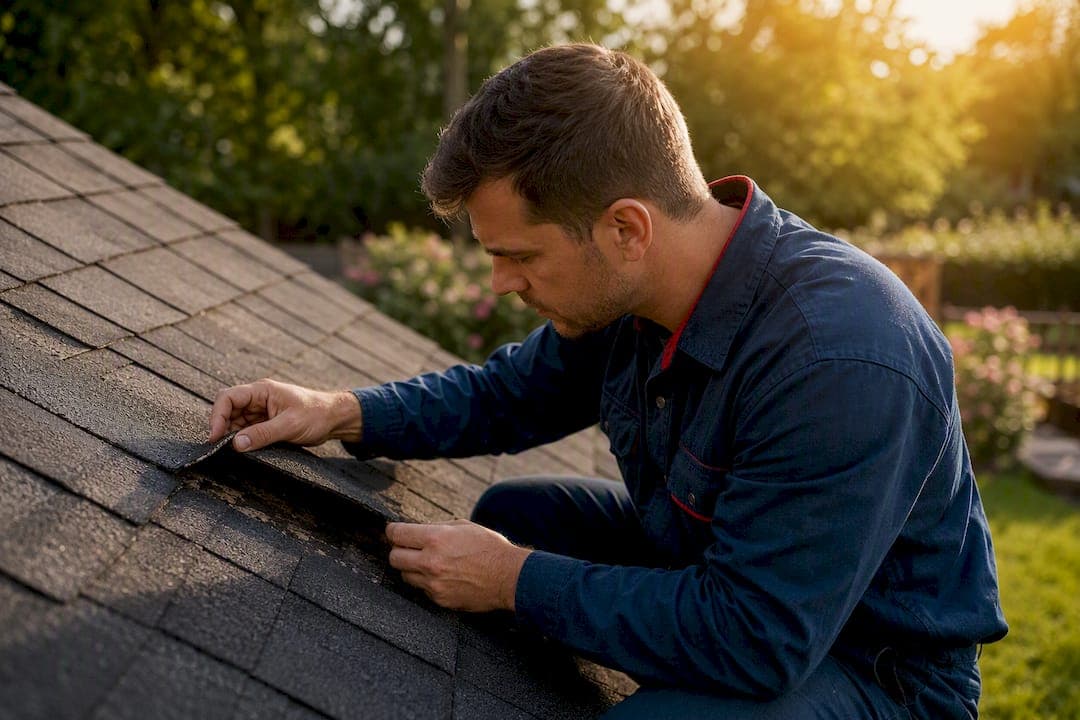
Hiring a BBB-accredited roofer gives you independent complaint mediation, proof-checked business records, and a contractor bound to the BBB's 8 Standards for Trust. That combination lowers your risk before a single shingle gets replaced.
Here's what accreditation actually gets you as a homeowner:
- Complaint mediation if a dispute over workmanship, timelines, or payment ever comes up
- A verified BBB Business Profile with ratings, complaint history, and business details you can check before signing anything
- Adherence to the 8 Standards for Trust, covering honest advertising, transparency, and responsiveness
- Proof of a minimum operating history and licensing, since accreditation requires at least six months in business before approval
Accredited businesses also report a real payoff for staying compliant: BBB onboarding materials cite IABBB Research from 2020 finding that Accredited Businesses are likely to receive more inquiries than non-accredited competitors. That visibility incentive is exactly why accredited contractors have a business reason to keep their conduct clean.
Key Takeaways
Hiring a BBB-accredited roofer reduces hiring risk because accreditation requires verified operating history, adherence to 8 enforceable trust standards, and access to third-party complaint mediation.
| Point | Details |
|---|---|
| Accreditation requires review | Local BBB boards approve applicants only after checking standards compliance and operating history. |
| Mediation is a real protection | Accredited contractors must participate in BBB's dispute mediation process if issues arise. |
| Profiles beat anonymous reviews | A BBB Business Profile shows verified reviews, ratings, and how complaints were resolved. |
| Accreditation isn't a guarantee | Still verify licenses, insurance, and references even when a roofer is accredited. |
| Local example | The Original Roof Repair Company is BBB accredited and serves Canton, Cherokee County, and the Atlanta metro with a repair-first, documentation-focused approach. |
Where to Verify These Details Yourself
- BBB Accreditation Standards for the full eligibility and continuous-obligation rules
- Why choose a BBB-accredited business for the consumer-side rationale
- How to hire a reliable and trustworthy general contractor for BBB's own hiring checklist
- BBB Welcome Booklet for how accreditation benefits are structured for businesses
- SBTDC analysis on accreditation's value for a third-party take on complaint-resolution benefits
Table of Contents
- What Does BBB Accreditation Actually Mean for a Roofer?
- What Protections Does Hiring a BBB Roofer Give You?
- How Does Accreditation Change a Real Roofing Job?
- How Do You Verify a Roofer's BBB Rating?
- What Should You Ask Before Signing With a Roofer?
- Sources
- FAQ
What Does BBB Accreditation Actually Mean for a Roofer?
BBB accreditation isn't a directory listing you buy your way into. A local BBB office reviews the application, checks the business against its standards, and a board approves it before the seal goes up. That review, plus an ongoing dues commitment, is what separates accreditation from a simple online profile.
To earn and keep that status, a roofing company agrees to the BBB's 8 Standards for Trust:
- Build trust through consistent, honest business practices
- Advertise honestly, with no bait-and-switch pricing
- Tell the truth in every customer interaction
- Be transparent about ownership, pricing, and terms
- Honor promises made in contracts and warranties
- Be responsive to customer concerns and complaints
- Safeguard customer privacy and data
- Embody integrity in daily operations
On the eligibility side, BBB standards require at least six months of operating history before a business can even apply. Roofers are also expected to carry current licensing, bonding, and insurance where state or local law requires it, which reviewers check during the application process.
What Protections Does Hiring a BBB Roofer Give You?
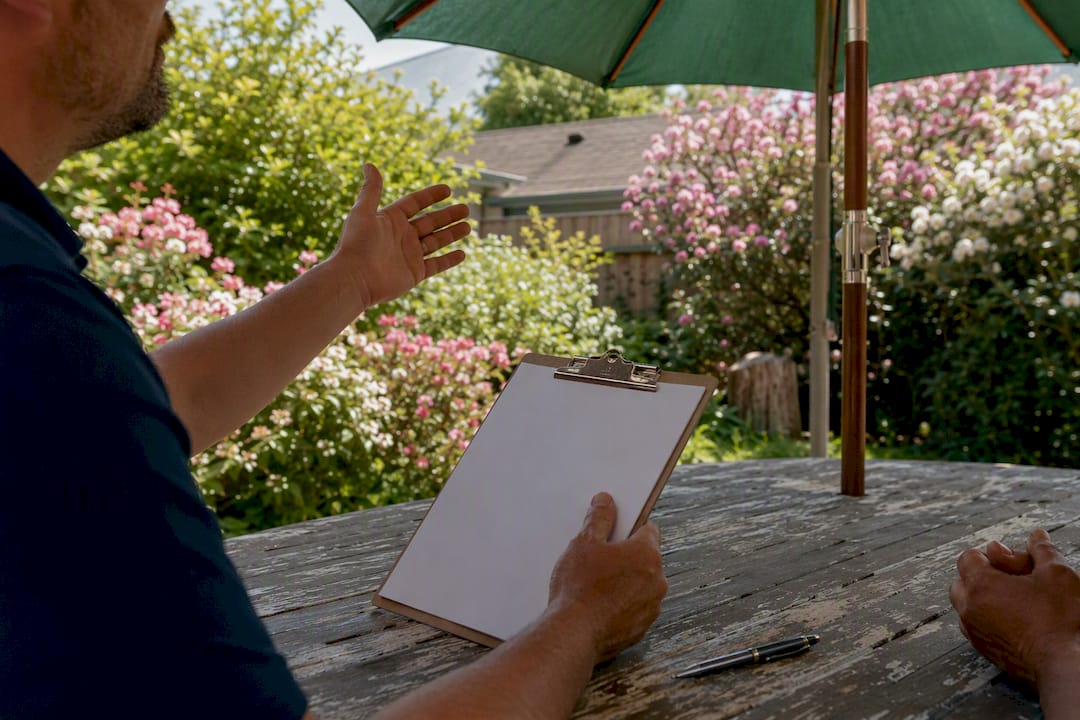
The single biggest practical advantage is complaint mediation. If a dispute comes up over a missed deadline, a warranty claim, or disputed payment, accredited contractors are obligated to participate in BBB's mediation process. That gives you a structured, third-party channel instead of a stalled phone call or a lawyer's letter.
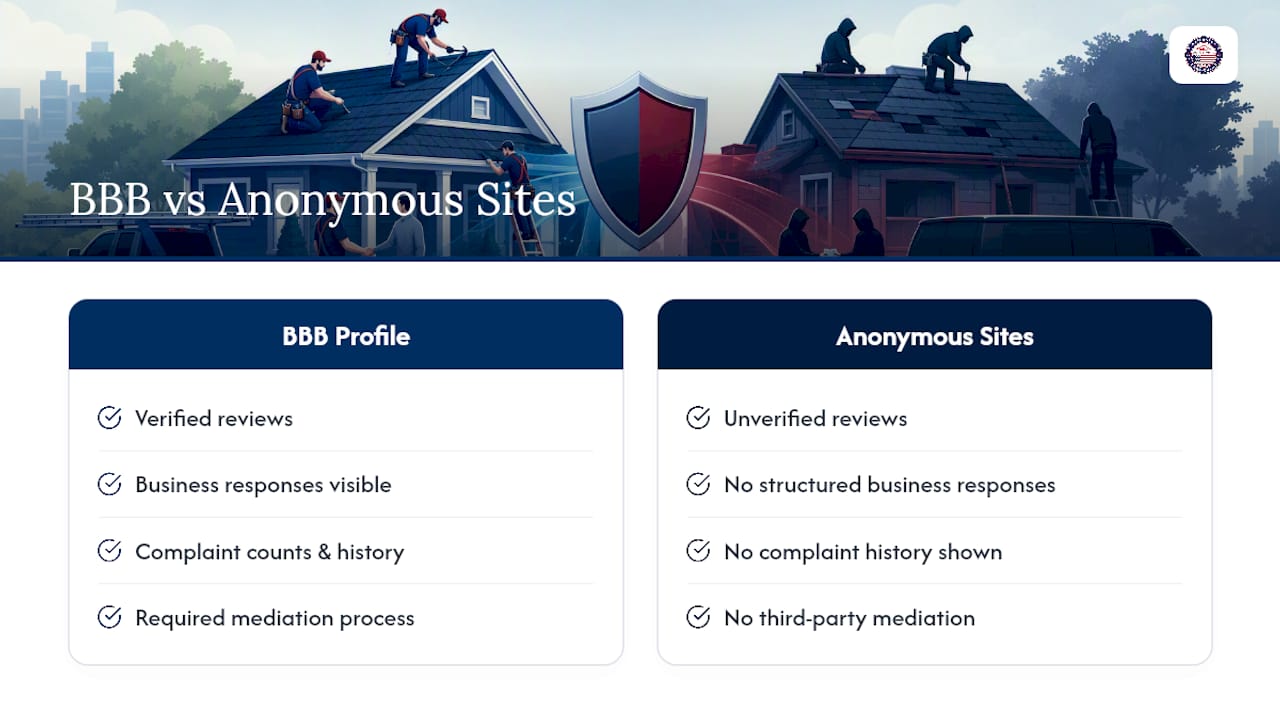
A verified BBB Business Profile matters too. Unlike anonymous review sites, BBB verifies reviews and gives the business a chance to respond to complaints, so you see both the complaint and how it was handled. That context, letter grade, complaint volume, and resolution pattern, tells you more than a star rating ever could.
Accredited roofers are also held to the standard of honoring contracts and advertising honestly, which cuts down on the two most common contractor risks: no-shows and vague, shifting quotes.
Pro Tip: A roofer with a few resolved complaints and clear responses is often a safer bet than one with zero complaints and no track record at all. Look at how disputes were handled, not just whether they happened.
How Does Accreditation Change a Real Roofing Job?
Accreditation shows up at every stage of a project, not just at the sales pitch.
- Before the job: Clearer written estimates and documented proof of licensing and bonds, which matter if you're filing an insurance claim that requires a licensed contractor's assessment
- After the job: A contractor bound by the responsiveness standard is more likely to follow through on warranty callbacks instead of going dark
- During disputes: If an insurance carrier or adjuster disagrees with the scope of damage, an accredited roofer's documentation habits and mediation option give you more leverage than an unaccredited one
Accreditation reduces the odds of a bad experience. It doesn't guarantee flawless workmanship. You still need to verify licenses, check references, and read the contract line by line before signing.
For homeowners navigating a claim, understanding how warranty coverage interacts with an insurance claim beforehand saves a lot of confusion later.
How Do You Verify a Roofer's BBB Rating?
Don't take a badge on a contractor's website at face value. Verify it directly:
- Go to BBB.org and search the business by name and location
- Confirm the profile explicitly says "Accredited," not just "BBB Rated"
- Check the letter grade and read the complaint history, not just the count
- Look at how the company responded to each complaint
- Confirm business details like ownership and contact information are transparent
A photo of a seal or a screenshot means nothing. Only BBB.org itself confirms current status, since accreditation can be revoked if standards slip. Cross-check licensing and insurance against your state or county contractor registry too. BBB accreditation and state licensure verify different things, and you want both confirmed.
What Should You Ask Before Signing With a Roofer?
Accreditation is a strong filter, but it's the start of your vetting process, not the end of it.
Documents to request before signing anything:
- Proof of current general liability insurance
- State or local contractor license number
- Bonding information, where applicable
- A written estimate with itemized scope of work
- Contract language covering warranties and how change orders are handled
- Proof of current BBB accreditation status
Questions worth asking during the estimate visit:
- Can you provide three local references from jobs completed in the last year?
- What does the workmanship warranty cover, and for how long?
- Will you use subcontractors, and who supervises them?
- Do you handle insurance claim documentation and adjuster communication directly?
Watch for these red flags regardless of what the sales pitch sounds like: high-pressure tactics demanding a same-day signature, requests for large cash payments before a contract exists, no written warranty, licensing details that don't match public records, or a BBB profile showing a pattern of unresolved complaints.
A practical order of operations: shortlist accredited businesses first using BBB's how-to-hire guidance, collect at least three comparable written bids, then cross-check references and BBB profiles before you commit. Homeowners hiring in the Atlanta area can pair this checklist with a closer look at how to hire an honest roofing contractor locally.
A Local Example of Accreditation at Work
A Cherokee County homeowner discovered a slow leak near a chimney flashing after a spring storm. The roofer documented the damage with photos and a written estimate before touching anything, then handled the back-and-forth with the insurance adjuster directly rather than leaving the homeowner to manage it alone.
The repair estimate came in well under the replacement threshold, so the fix was a flashing repair, not a full roof. The homeowner had a documented paper trail the whole way through, from initial inspection to insurer sign-off.
That kind of documentation habit is standard practice for accredited, repair-first contractors serving the Atlanta metro and surrounding Georgia counties, where storm and hail damage claims are common; check Roof Replacement & Repair in Omaha, NE | Spagnotti Contracting for a detailed example of roofing services and contractor warranties.
Why Accreditation Should Be One Filter, Not the Only One
Accreditation tells you a roofer has agreed to a set of enforceable standards and passed a real review, not just paid for a listing. That's meaningful. But it works best alongside licensing checks, local references, and a contract you've actually read. In Cherokee County and across the Atlanta metro, we've found the homeowners who fare best are the ones who use every filter available, not just one badge. Run the checklist above before you sign anything.
Get a Free Estimate From an Accredited, Local Roofer
If you're weighing accreditation as part of your hiring decision, verifying it takes two minutes on BBB.org, and it's worth doing before you sign anything. The Original Roof Repair Company is BBB accredited and serves Canton, Cherokee County, and the greater Atlanta metro with a repair-first approach: we diagnose the actual problem first and only recommend full replacement when a repair estimate exceeds $4,000. That means you're not paying for a new roof when a flashing fix or a handful of shingles would do the job.
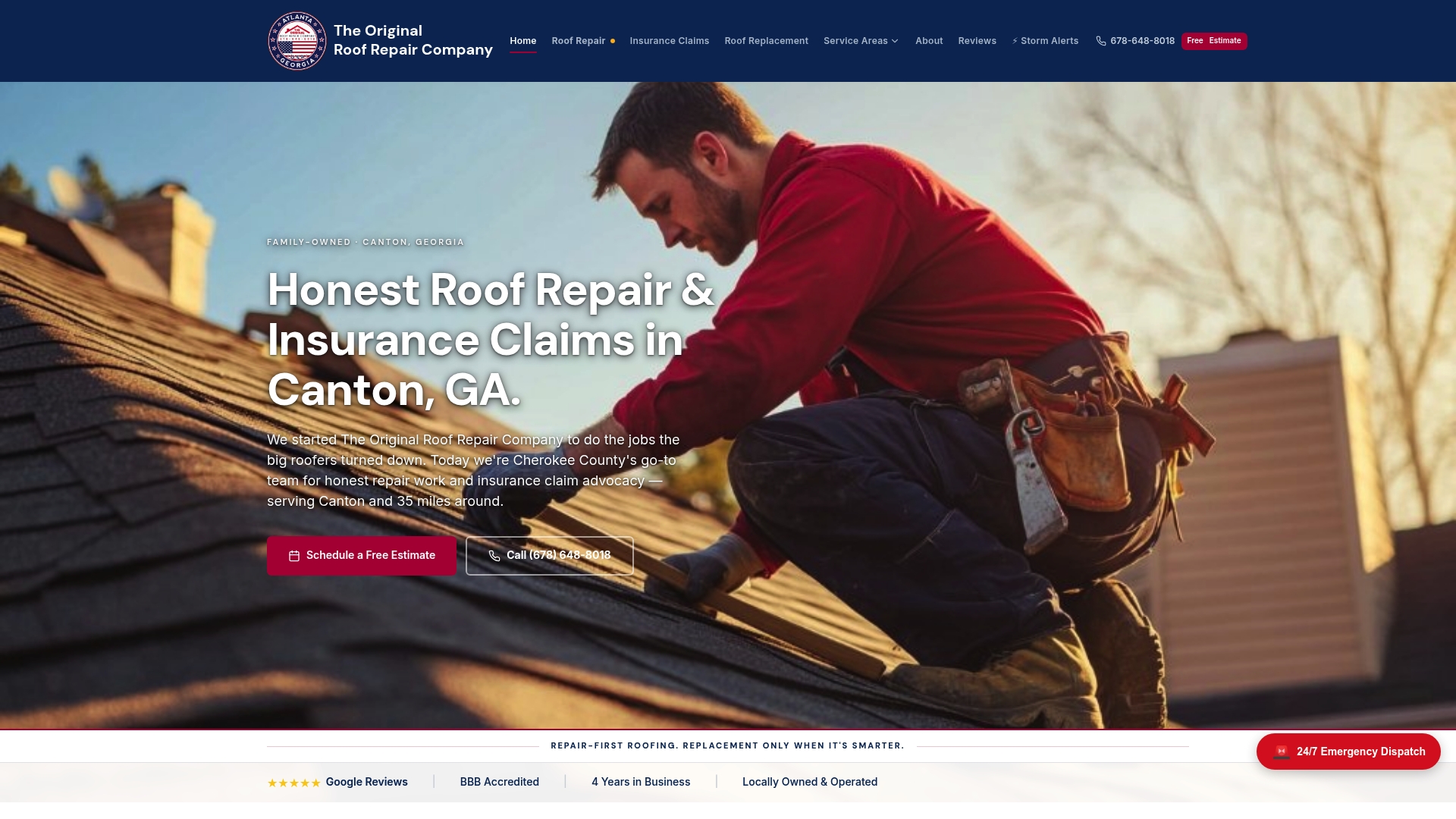
Next step: request a free roof inspection and estimate, and if storm or hail damage is involved, ask about our insurance claim advocacy so you're not negotiating with an adjuster alone. If the leak can't wait, our emergency roof repair line is the faster path.
Sources
- BBB Accreditation Standards
- BBB accreditation standards (overview)
- How to hire a reliable and trustworthy general contractor — BBB
- Is BBB accreditation worth the cost? (SBTDC analysis)
- BBB Welcome Booklet / onboarding materials
FAQ
Should a Roofing Company Be BBB Accredited?
It's a strong signal worth prioritizing, since accreditation requires a documented operating history and agreement to BBB's 8 Standards for Trust, but it should be paired with license and insurance checks.
Is BBB Accreditation Worth It?
For homeowners, yes: it adds a verified business profile and a mediation channel for disputes that unaccredited contractors aren't obligated to offer.
What Is the 25% Rule for Roofing?
Definitions of this rule vary by jurisdiction and insurance policy, so check your specific state building code or policy language rather than assuming a universal standard applies.
Does It Matter if a Company Is BBB Accredited?
Yes. Accreditation means the business passed a board review and agreed to enforceable standards, which is a meaningfully higher bar than an unverified online listing. The Original Roof Repair Company, for example, is BBB accredited and serves the Atlanta metro with documented, repair-first service.