
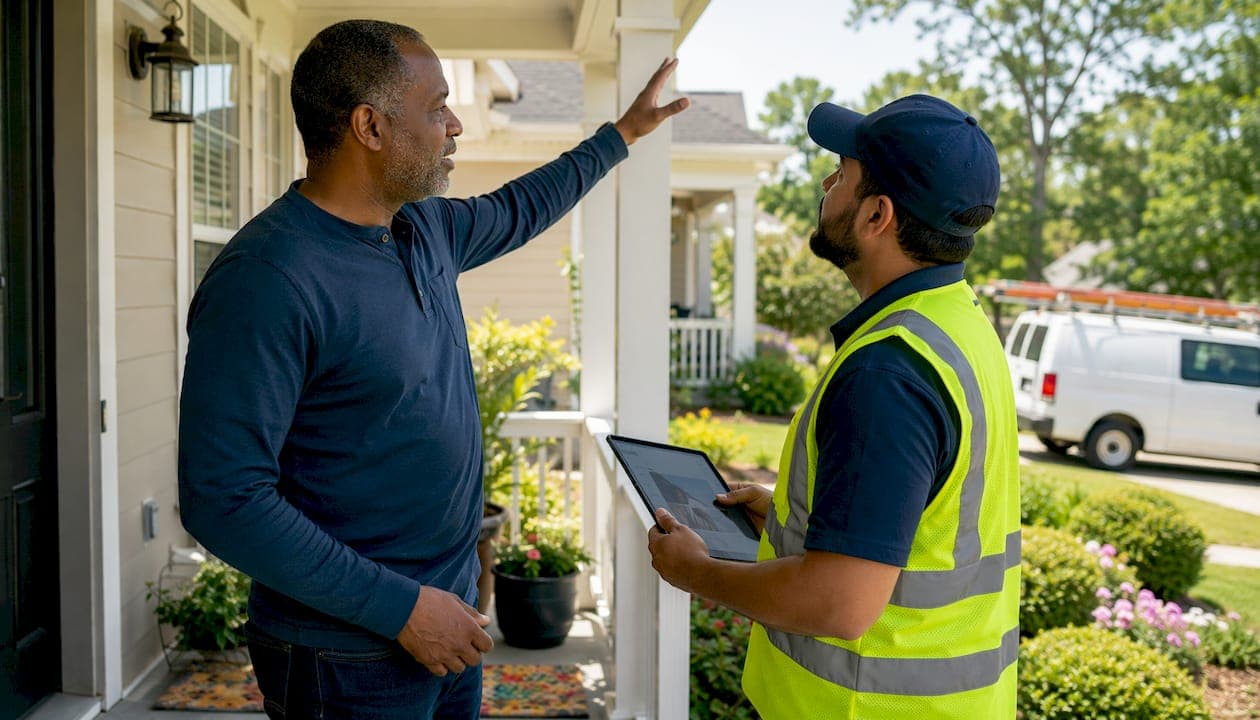
To hire an honest roofing contractor, confirm three things before you agree to anything: an active state license, a current Certificate of Insurance (COI), and a written, itemized estimate. Any contractor who cannot produce all three within 24 hours of your first call is not worth your time.
Here are the three fastest checks you can run right now:
- Look up the license. Georgia homeowners can search contractor license status at the Georgia Secretary of State's license lookup. Confirm the license is active, covers roofing work specifically, and shows no disciplinary actions.
- Ask for the COI. Request a Certificate of Insurance showing general liability and workers' compensation. Then call the insurer directly using a phone number you find independently, not the one printed on the certificate.
- Schedule a free inspection. A trustworthy contractor will inspect your roof, document what they find, and give you a written estimate before asking for a single dollar.
The Original Roof Repair Company offers free roof inspections for homeowners across the Atlanta metro and Cherokee County, Georgia. No pressure, no upsell, just an honest assessment.
Pro Tip: Do all three checks before the contractor ever sets foot on your roof. Skipping even one opens the door to fraud.
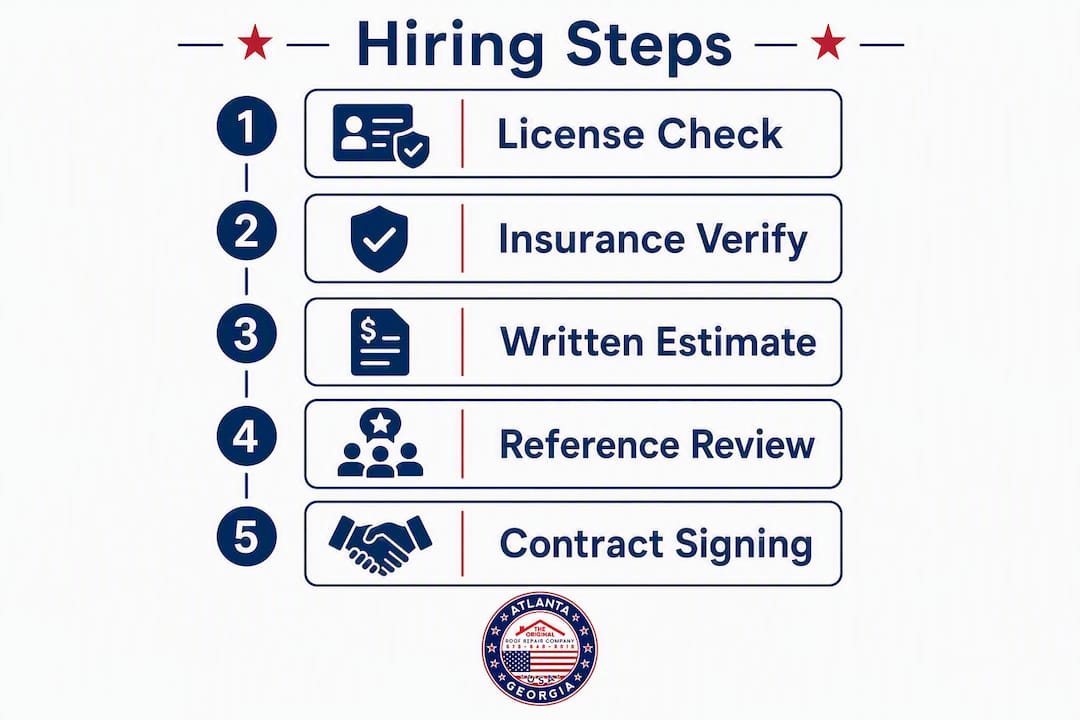
Table of Contents
- What does an honest roofing contractor look like?
- How to hire an honest roofing contractor, step by step
- What a proper roofing estimate should include
- Red flags that signal a dishonest roofer
- What roofing jobs typically cost and how long they take
- What workmanship and manufacturer warranties actually cover
- How The Original Roof Repair Company approaches honest roofing
- Key Takeaways
- Why repair-first and transparency matter more than homeowners realize
- The Original Roof Repair Company serves Atlanta homeowners who need honest answers now
- Where to verify credentials and learn more
- FAQ
What does an honest roofing contractor look like?
Honest contractors leave a paper trail. Their license is active, their insurance is current, and their name shows up in local permit records. That consistency across public records is the fastest way to separate a legitimate local roofer from a storm chaser who will be gone in six weeks.
Documents to request at first contact:
- Active state roofing license number (verify it yourself, do not take their word for it)
- Certificate of Insurance showing $1 million or more in general liability and a separate workers' compensation policy
- A sample workmanship warranty (length and what it covers)
- A sample contract showing payment milestones and permit responsibilities
- At least two project references with addresses completed 12 or more months ago
What to check beyond the documents:
- Permanent local business address (not a P.O. box or out-of-state address)
- Consistent presence on Google Business Profile, BBB, and industry association directories
- Permit history through your local building department portal — established contractors have a trail of recent permitted jobs
- No open complaints or disciplinary actions on the state license board record
Pro Tip: Drive past two of the reference addresses the contractor gives you. A roof that has survived a full Georgia summer and a winter freeze tells you more than any sales pitch.
Verification Callout: The four documents every homeowner should have in hand before signing anything: (1) license record printout from the state board, (2) COI with policy effective dates and limits, (3) written workmanship warranty, (4) itemized written estimate with permit line item included.
How to hire an honest roofing contractor, step by step
Following a structured process protects you from pressure tactics and gives you the information to make a confident decision. Here is a practical sequence, with realistic time estimates for each step.
-
Research online (30–60 minutes). Search Google, BBB, and your local building department permit portal. Shortlist three to five contractors with a permanent local address, recent reviews, and visible permit history in your county.
-
Make first contact by phone or email (15–20 minutes per contractor). Ask directly: Are you licensed in Georgia for roofing? Do you carry general liability and workers' comp? Will you pull the permit? A contractor who hedges on any of these questions is off the list.
-
Request on-site inspections (1–7 days to schedule). Never accept a bid based on photos alone. A legitimate contractor will walk the roof, document damage, and explain what they find before quoting.
-
Collect three itemized written estimates (3–10 days). Getting only one or two bids leaves you without a baseline. Industry checklists recommend at least three estimates and typically selecting from the middle two after scoring each contractor on vetting criteria, not just price.
-
Check permit history and call references (1–3 days). Pull up your county's permit portal and search each contractor's business name. Then call two references and ask how the contractor handled cleanup, communication, and any post-job issues.
-
Sign the contract and schedule work (1–2 weeks out, depending on crew availability). Confirm the contract includes permit responsibility, payment milestones, workmanship warranty terms, and a cleanup scope before you sign.
Questions to ask during the estimate visit:
- Who pulls the permit, and will you give me the permit number before work starts?
- Do you use subcontractors? If so, are they covered by their own workers' comp and liability?
- What is your workmanship warranty, and is it in writing?
- What does your cleanup process look like, including nail sweeps?
- Will you provide a lien release when the job is complete?
- What is your payment schedule, and do you require a large deposit upfront?
Contractors who use subcontractors are not automatically disqualified, but an honest contractor will disclose that arrangement clearly, confirm subs carry their own coverage, and accept full responsibility for the finished workmanship.
Pro Tip: Before work starts, photograph every section of your roof from the ground. During the job, photograph exposed decking and any replaced materials. After completion, photograph the finished surface and gutters. These images protect you if a warranty dispute arises later.
What a proper roofing estimate should include
A legitimate, itemized estimate is one of the clearest signals of an honest roofing contractor. Vague quotes that lump everything into one number make it impossible to compare bids or catch substitutions after the job starts.
| Line Item | What to Look For |
|---|---|
| Tear-off and disposal | Number of layers, dumpster or haul-away fee listed separately |
| Underlayment | Product name, grade (synthetic vs. felt), and square footage |
| Shingles | Brand, product line, color, and square count |
| Ice and water shield | Linear footage and locations (valleys, eaves, penetrations) |
| Drip edge | Material type and linear footage |
| Flashing | Chimney, pipe boots, step flashing — itemized by location |
| Ventilation | Ridge vent, box vents, or power vents listed by unit |
| Labor | Separate line from materials |
| Permit fee | Specific dollar amount |
| Sales tax | Applied to materials, not labor, in most Georgia jurisdictions |
| Cleanup and nail sweep | Explicitly stated |
Must-have contract clauses:
- Deposit limited to a small percentage consistent with Georgia's statutory caps; confirm with official state sources
- Material substitution clause: contractor must get written approval before swapping any specified product
- Permit responsibility: contractor's name, not yours, on the permit application
- Workmanship warranty length and what voids it
- Cleanup scope, including magnetic nail sweep
- Payment milestones tied to project stages, not calendar dates
- Lien release upon final payment
A reasonable payment schedule for a standard residential job looks like this: a small deposit consistent with Georgia's statutory caps at signing, a progress payment when materials are delivered and tear-off is complete, and the final balance only after the job passes inspection and cleanup is done. Never pay in full before work begins.
Bid Comparison Tip: Print all three estimates and align them line by line using the table above. When one bid is significantly lower, look first at underlayment grade, shingle product line, and whether the permit fee is included. Those three line items account for most of the price gap between honest and cut-rate bids.
Red flags that signal a dishonest roofer
Pressure and vagueness are the two most reliable warning signs. Honest contractors give you time to think and put everything in writing. Dishonest ones do the opposite.
Watch for these behaviors:
- Door-to-door solicitation immediately after a storm, often from out-of-state plates
- Pressure to sign a contract the same day, sometimes within the hour
- Cash-only payment demands with no written receipt
- License numbers that do not match the state board record when you look them up
- Requests for a large upfront deposit before any work begins
- Vague, one-page estimates with no line items or material specifications
- Offers to waive your insurance deductible (this is insurance fraud in Georgia and most states)
- No local permit history when you search the county portal
A common storm-chaser pattern in the Atlanta area: a crew shows up within 48 hours of a hail event, offers a free inspection, finds "significant damage," and pressures you to sign an Assignment of Benefits form before your own insurance adjuster has seen the roof. Once you sign, you lose control of your claim.
Pro Tip: If a contractor shows up unsolicited after a storm, take their card and say you will call them back. Do not sign anything on the spot. Then look up their license, search their business name in your county permit portal, and check their BBB profile before returning the call. If they push back on that process, that tells you everything you need to know.
For more on common roof repair mistakes that end up costing homeowners more, that resource covers the most frequent errors to avoid.
What roofing jobs typically cost and how long they take
Roofing costs vary significantly by roof size, pitch, material grade, and local labor rates. Georgia and Atlanta metro area costs generally align with national averages, though local conditions vary.
Key pricing drivers:
- Roof size (measured in squares, where 1 square = 100 sq. ft.)
- Number of layers to tear off (one layer vs. two adds cost and disposal fees)
- Pitch and accessibility (steep or complex roofs cost more to labor)
- Material grade (three-tab vs. architectural vs. impact-resistant shingles)
- Underlayment type and ice-and-water shield requirements
- Ventilation upgrades required by current building code
- Permit and inspection fees set by the local jurisdiction
- Whether code upgrades trigger a full replacement threshold
Typical ballpark ranges for U.S. residential roofing:
- Minor repair (single leak, flashing, boot replacement): $150–$600
- Moderate repair (multiple penetrations, small section of shingles): $500–$1,500
- Full replacement on a 1,200 sq. ft. footprint: $5,000–$10,000+ depending on material and complexity
- Full replacement on a 2,000–2,500 sq. ft. footprint: $8,000–$18,000+ for architectural shingles
These are general estimates. Always get three itemized bids for your specific roof before drawing any conclusions about fair pricing.
Typical project timeline:
- Free inspection and damage documentation: same day to 48 hours
- Written estimate delivered: 1–7 days after inspection
- Permit application and approval: varies by jurisdiction, typically 3–14 business days in Georgia
- Crew scheduling: 1–3 weeks out depending on season and backlog
- Installation on an average single-family home: 1–3 days for a standard replacement, 1 day or less for most repairs
- Final inspection and cleanup: same day as installation or next morning
Common schedule delays:
- Weather holds (rain, high winds, extreme heat)
- Permit office backlogs during high-storm seasons
- Material lead times for specialty products or impact-resistant shingles
- Supplemental insurance approvals when additional damage is found during tear-off
Some jurisdictions apply a threshold rule, sometimes called the 25% rule, that determines whether a repair triggers a full code-compliant replacement. A qualified local contractor will measure and document damage per slope and advise you on whether your job crosses that threshold. This is another reason local permit knowledge matters.
What workmanship and manufacturer warranties actually cover
These two warranties are not the same thing, and confusing them is one of the most common mistakes homeowners make after a roofing job.
A workmanship warranty covers the contractor's labor: improper installation, missed flashing, inadequate sealing, and similar installation errors. Lengths typically run from 5 to 25 years depending on the contractor's confidence and certification level. A contractor who offers only a one-year workmanship warranty on a full replacement is telling you something about how they stand behind their work.
A manufacturer warranty covers the shingle product itself against defects in materials. Standard architectural shingles carry limited lifetime warranties from manufacturers like GAF, Owens Corning, and CertainTeed, but the fine print matters. Most manufacturer warranties are prorated after the first 10–15 years, and they require proper installation and ventilation to remain valid. Contractors who hold certifications like GAF Master Elite or Owens Corning Platinum Preferred can offer enhanced warranty coverage with better transferability terms, which adds real value if you sell the home.
Documents to request before the job starts:
- Written workmanship warranty with specific length, what voids it, and who honors it if the contractor goes out of business
- Manufacturer's warranty documentation for the specific product being installed
- COI showing general liability and workers' compensation with policy effective dates and limits
What warranties typically do NOT cover:
- Normal wear from age and weather exposure
- Damage caused by a subsequent contractor working on the same roof
- Sections excluded because code upgrades were required but not completed
- Preexisting conditions present before the installation
- Damage from acts of nature beyond the scope of the original installation
To verify a COI is current, request the certificate and then call the insurance carrier using a phone number you find independently on the insurer's website, not the number printed on the certificate. Ask the carrier to confirm the policy is active and the coverage limits match what the contractor stated. COIs can be outdated or, in fraud cases, forged.
Pro Tip: Ask the contractor what happens to your workmanship warranty if they close or sell the business. A contractor with no answer to that question has not thought through their long-term commitment to the work.
For a deeper look at how warranties and insurance claims interact for Georgia homeowners, the warranty vs. insurance claim guide covers the distinctions clearly.
How The Original Roof Repair Company approaches honest roofing
The Original Roof Repair Company is a family-owned roofing business based in Canton, Georgia, founded by Eric Manly. The company serves homeowners across Cherokee County and 11 surrounding counties, covering the Atlanta metro area within a 35-mile radius of Canton.
The company's approach is repair-first. That means diagnosing the actual problem, quoting the repair honestly, and recommending full replacement only when a repair estimate exceeds $4,000 or when replacement is demonstrably the more cost-effective choice. Larger roofing companies routinely turn down small jobs. The Original Roof Repair Company takes them on, because a $300 flashing fix handled correctly today prevents a $6,000 deck replacement next year.
Services offered:
- Emergency roof repair with same-day triage for active leaks
- Small-leak repair, missing shingles, wind damage, flashing failures, chimney drips, and boot replacements
- Storm and hail damage documentation with photo evidence
- Insurance claim advocacy: working directly with carriers and adjusters on the homeowner's behalf
- Full roof replacement when repair is not viable or exceeds the $4,000 threshold
- Free roof inspections and written, itemized estimates
Trust signals:
- BBB accredited
- Active Georgia roofing license
- General liability and workers' compensation insurance
- Transparent, itemized written estimates with no pressure to sign
- Workmanship warranty on completed jobs
- Local permit history in Cherokee County and surrounding jurisdictions
- Four years of local operation with references available
Atlanta and Georgia homeowners dealing with storm damage can also get help navigating the insurance claim process directly through the company's claim advocacy service.
Pro Tip: If you have an active leak right now, do not wait for a full inspection appointment. The Original Roof Repair Company offers emergency roof repair with same-day response for homeowners across the Atlanta metro area.
Key Takeaways
Hiring an honest roofing contractor comes down to verifying three things before you commit: an active state license, current insurance, and a written itemized estimate. Every other step in this guide builds on those three.
| Point | Details |
|---|---|
| Verify the license first | Look up the contractor's license on the Georgia state board; confirm it is active and covers roofing. |
| Confirm insurance independently | Request the COI, then call the insurer directly using a number you find yourself. |
| Require an itemized estimate | Every line item, including permit fees and cleanup, must be listed separately before you sign. |
| Check permit history | Search your county's building department portal for the contractor's recent permitted jobs. |
| Know the red flags | Refuse same-day pressure, large upfront deposits, and any offer to waive your deductible. |
| The Original Roof Repair Company | A BBB-accredited, repair-first contractor serving Atlanta and Cherokee County, Georgia, with free inspections and no-pressure estimates. |
Two immediate action items:
- Search your contractor's license at CareerOneStop's license lookup, which links to each state's licensing board.
- Use your county's online permit portal to confirm the contractor has pulled permits for recent local jobs.
Why repair-first and transparency matter more than homeowners realize
Most roofing articles tell you to get three bids and check reviews. That advice is not wrong, but it misses the more important point: the structure of the roofing industry creates a financial incentive to recommend replacement over repair, and homeowners rarely know it.
A full replacement generates five to ten times the revenue of a repair job. That math shapes how some contractors diagnose your roof. When a contractor walks your roof and immediately quotes a full replacement without discussing repair options, the honest question to ask is whether repair was ever genuinely evaluated. A repair-first approach is not just a philosophy. It is a financial protection for the homeowner.
The permit record is the single most underused verification tool available to homeowners. A contractor who has been pulling permits in your county for years has a public record of completed, inspected work. A storm chaser with no local permit history has no such record, because they were never here long enough to build one. That distinction is worth more than any number of five-star reviews posted in the week after a storm.
Transparency in pricing protects you in a second way: it makes substitution fraud visible. When a contractor lists a specific shingle product, grade, and quantity in the estimate, swapping it for a cheaper product mid-job becomes a documented breach of contract. A vague estimate gives them cover to do exactly that.
The Original Roof Repair Company serves Atlanta homeowners who need honest answers now
Homeowners across the Atlanta metro and Cherokee County, Georgia, have a direct option for honest, repair-first roofing: The Original Roof Repair Company. The company's approach is straightforward. You get a free inspection, a written itemized estimate, and a clear recommendation based on what your roof actually needs, not on what generates the largest invoice.
For active leaks or storm damage, emergency roof repair is available with same-day response across the service area. For homeowners navigating an insurance claim after hail or wind damage, the company documents the damage and works directly with your carrier and adjuster. For routine repairs, missing shingles, flashing failures, or chimney leaks, the company takes on the jobs that larger contractors turn down. Schedule a free inspection at theoriginalroofrepaircompany.com or call to get on the schedule today.
Where to verify credentials and learn more
Use these resources to confirm a contractor's license, insurance, permit history, and warranty standing before you sign anything.
- Georgia contractor license lookup: Search the Georgia Secretary of State's licensing portal to confirm a roofing license is active and discipline-free.
- Local building department permit portals: Search your county or city building department's online portal by contractor name to confirm recent permitted roofing jobs. Cherokee County, Cobb County, and Fulton County all maintain searchable permit databases.
- BBB contractor search: Visit BBB.org to check accreditation status, complaint history, and resolution records for any contractor you are considering.
- Insurance carrier verification: Call the insurer listed on the COI using a phone number found on the insurer's official website. Ask whether the policy is active and the limits match the certificate.
- Manufacturer warranty pages: GAF, Owens Corning, and CertainTeed each publish warranty terms and contractor certification lookup tools on their websites. Confirm your contractor's certification level before choosing a shingle product.
Permit Portal Tip: When you search a contractor's name in your local building department portal, look for jobs completed in the past 12–24 months. A legitimate local contractor will have multiple entries. Zero results for a contractor who claims years of local experience is a serious warning sign.
FAQ
How do I know if a roofing contractor is being honest with me?
Honest contractors provide a written, itemized estimate without pressure, disclose their license number and insurance upfront, and pull permits for the work. If a contractor resists any of those three things, treat it as a warning sign.
What is the 25% rule for roofing?
Some jurisdictions require a full code-compliant roof replacement when cumulative damage or repairs exceed 25% of the total roof area. The rule varies by state and municipality, so ask your contractor to measure and document the affected area and confirm the local threshold with your building department.
How much does it cost to shingle a 1,200 sq. ft. roof?
A 1,200 sq. ft. home typically has a roof footprint larger than the floor plan once pitch is factored in. Ballpark U.S. costs for a full architectural shingle replacement on a home that size generally run $5,000–$10,000, depending on material grade, tear-off layers, local labor rates, and permit fees. Get three itemized bids for an accurate number.
How can I tell if a roofer is inflating my insurance claim?
A contractor who offers to waive your deductible, pressures you to sign an Assignment of Benefits before your adjuster visits, or writes a scope of work that includes damage your adjuster did not document is a red flag. Insurance fraud in Georgia carries serious legal consequences for both the contractor and the homeowner.
How much do roofing contractors charge per hour?
Most residential roofing contractors price by the job or by the square rather than by the hour. When hourly rates are quoted for small repairs, they typically range from $50–$150 per hour in the U.S., with Georgia rates generally in the middle of that range. Always request a flat written estimate for the full scope of work rather than an open-ended hourly agreement.