
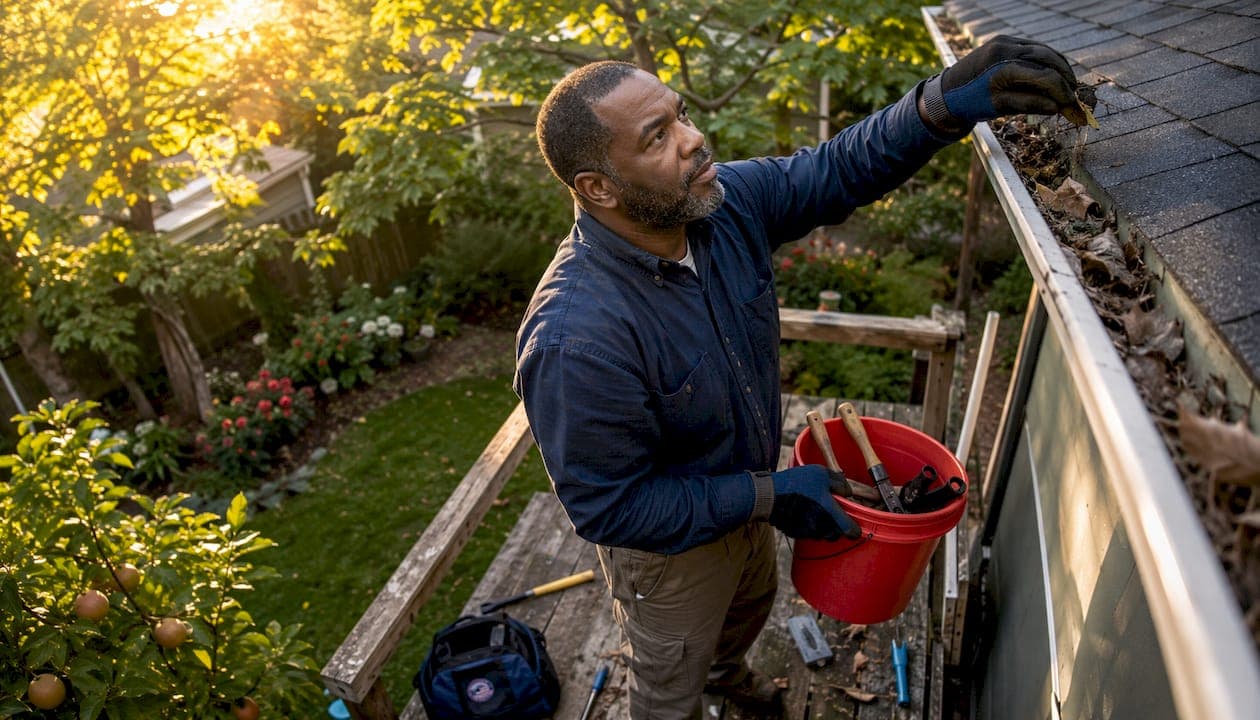
Regular roof maintenance is the most effective way to extend roof lifespan, and proactive care can add 10–15 years to your roof's service life. Atlanta homeowners face a specific set of challenges: high UV exposure, summer humidity, and freeze-thaw cycles in winter all accelerate wear. Skipping routine upkeep does not just shorten your roof's life. It turns small, inexpensive problems into structural failures that cost thousands. The good news is that most extend roof lifespan tips require only a few hours per year and a modest budget.
What maintenance tasks extend roof lifespan the most?
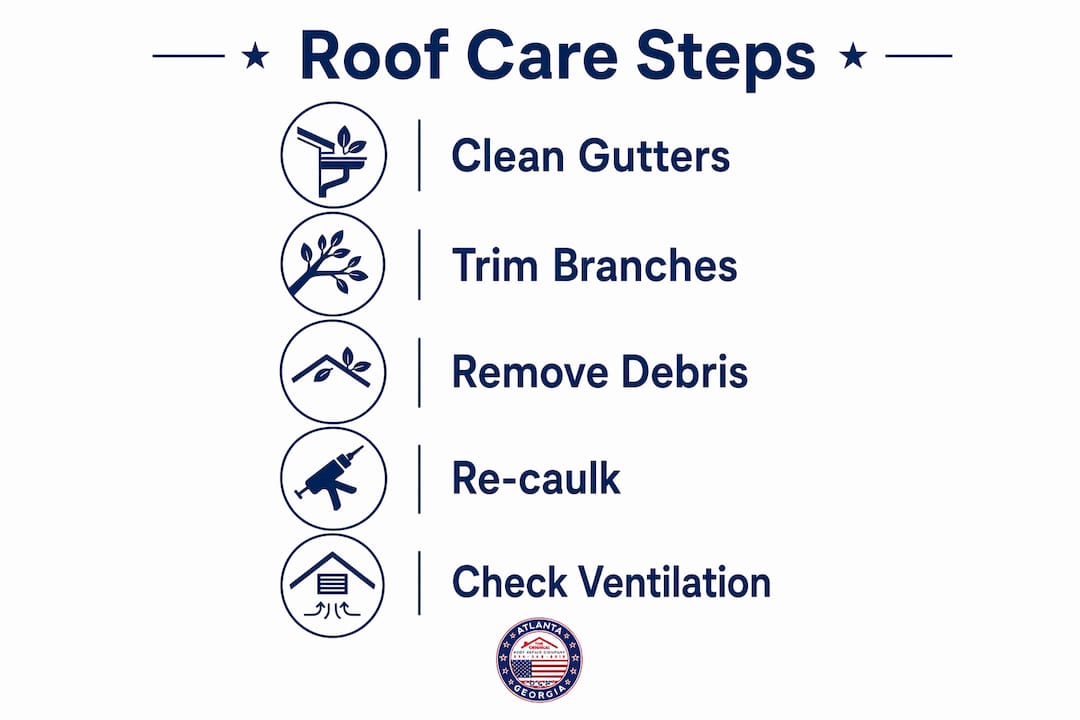
The five core maintenance tasks are gutter cleaning, branch trimming, debris removal, re-caulking penetrations, and verifying attic ventilation. Neglecting these tasks can shorten a roof's service life by 5–10 years. Each task targets a specific failure point, so skipping even one creates a gap in your roof's defense.
1. Clean gutters twice a year
Clogged gutters force water to back up under shingles and rot the fascia board behind them. Clean gutters in late spring after pollen season and again in late november after leaves fall. Atlanta's tree canopy is dense, so gutters fill faster here than in drier climates.
2. Trim branches at least 10 feet from the roof
Overhanging branches scrape shingles during wind events and deposit debris that holds moisture. Trim any branch within 10 feet of the roof surface. This also reduces the risk of a limb falling during one of Georgia's frequent summer storms.
3. Remove debris from valleys and flat sections
Leaves, pine needles, and seed pods collect in roof valleys and around chimneys. That debris stays wet long after rain stops, and standing moisture accelerates shingle decay. Clear these areas every fall and after any major storm.
4. Re-caulk plumbing boots and flashing every 5–7 years
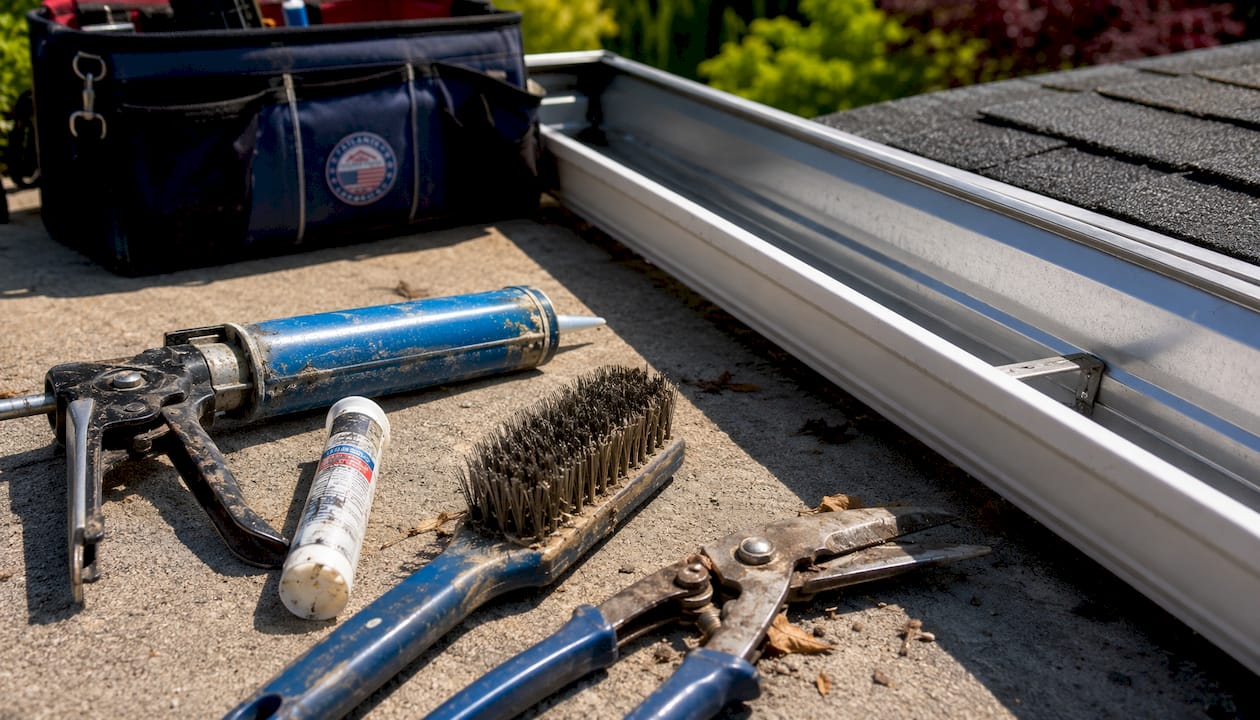
Rubber boot gaskets around vent stacks typically crack from UV exposure between years 8 and 12. Re-caulking costs $50–$150 per penetration. Ignoring a cracked boot can lead to leak repairs exceeding $1,500 once water reaches the decking or insulation.
5. Verify attic ventilation every fall
Walk into your attic before heating season and check that soffit vents are not blocked by insulation. Poor airflow is one of the most common and least visible causes of premature shingle failure. A flashlight and 10 minutes is all it takes.
Pro Tip: Use a garden hose to run water along each gutter section while a second person watches the downspout. If water pools or overflows before reaching the downspout, the gutter has a low spot or blockage that will cause fascia rot within one season.
- Gutter cleaning: twice yearly, spring and fall
- Branch trimming: any branch within 10 feet of the roof
- Debris removal: valleys, chimneys, and flat sections after every storm
- Re-caulking: every 5–7 years on all penetrations
- Attic ventilation check: every fall before heating season
How does attic ventilation affect roof longevity?
Poor attic ventilation is the single most underestimated cause of early roof failure. Attic temperatures can exceed 150°F in summer, baking shingles from below regardless of their quality or age. That heat degrades the asphalt binder in shingles, causing them to curl, blister, and lose granules years ahead of schedule.
The International Residential Code section R806 requires balanced intake and exhaust ventilation. The standard is the 1:300 rule: 1 square foot of net free vent area per 300 square feet of attic floor space. Most homes in the Atlanta area meet this ratio on paper, but blocked soffit vents eliminate the intake side of the equation entirely.
Blocked soffit vents are the most common ventilation problem The Original Roof Repair Company finds during inspections. Insulation batts pushed against the soffit during an attic renovation are the usual culprit. Installing baffles between rafters keeps the airflow channel open and costs under $5 per bay.
Pro Tip: Never install a powered attic exhaust fan without first confirming adequate soffit intake. Adding exhaust without intake pulls conditioned air from the living space instead of hot attic air, which increases energy bills and worsens moisture buildup under the roof deck.
Proper insulation also prevents ice dams in winter. When attic heat escapes through the roof deck, it melts snow that refreezes at the cold eaves. That ice forces water under shingles and into the structure. Keeping attic insulation at the correct R-value for Georgia's climate zone stops this cycle before it starts.
- Check that soffit vents are clear of insulation and debris
- Confirm ridge vents or gable vents are unobstructed
- Install rafter baffles if insulation contacts the soffit area
- Verify the 1:300 ventilation ratio with a roofing professional
- Schedule attic checks before each heating season
How do you know when to repair versus replace a roof?
The 25% rule is the clearest threshold for replacement decisions. When repair costs exceed 25–30% of a full replacement, or when damage covers more than 25% of the roof surface, replacement is the more cost-effective choice. Most isolated repairs fall well below that line.
Warning signs that require immediate attention
- Granule loss exposing the black asphalt mat beneath shingles
- Curling or cupping shingle edges, which signal heat or moisture damage
- Sagging roof sections, which indicate decking or structural failure
- Flashing failures around chimneys, skylights, or valleys
- Daylight visible through the attic ceiling boards
Cost context for repair vs. replacement
Typical repair costs run $300–$1,500 for isolated issues like a missing shingle section, a failed boot, or a small flashing repair. Full asphalt shingle replacement in the Atlanta market runs $9,000–$15,000 for an average home. That gap makes the case for catching problems early. A $200 repair today prevents a $12,000 replacement in five years.
Professional inspectors detect hail bruising, ventilation imbalance, and early flashing failure that homeowners miss from the ground. Annual inspections priced at $150–$300 deliver strong return on investment by catching these issues before they compound. The Original Roof Repair Company recommends scheduling a professional inspection after any storm and at the 15-year mark for any asphalt roof, regardless of visible condition.
You can use this roof inspection checklist to track what to look for between professional visits.
What care does your roof material need in Atlanta's climate?
Material selection and maintenance together determine how long a roof lasts. Atlanta's climate combines high UV exposure, summer humidity, and occasional freeze-thaw cycles, which stress different materials in different ways.
Asphalt shingles
Asphalt is the most common roofing material in Georgia. Clean asphalt shingles with a soft-wash chemical treatment, never a pressure washer. High-pressure water strips granules and voids most manufacturer warranties. Algae-resistant shingles with copper-infused granules are worth the upgrade in Atlanta's humid summers.
Metal roofs
Metal roofs last significantly longer than asphalt when properly maintained. The primary maintenance task is inspecting fasteners and seams annually for rust or separation. Scratches in the coating should be touched up promptly to prevent corrosion from spreading under the panel.
Tile roofs
Tile itself is extremely durable, but the underlayment beneath it is not. The underlayment typically needs replacement every 20–25 years even when the tile looks perfect. Walking on tile to inspect it can crack individual pieces, so use a professional for any tile roof inspection.
Biological growth on any material
Moss, algae, and lichen accelerate roof degradation by trapping moisture and lifting shingle edges. Soft-wash chemical treatments remove growth without damaging the surface. Installing zinc or copper ridge strips after cleaning provides ongoing prevention. As rain hits the metal strip, it releases trace amounts of metal ions that inhibit regrowth across the entire roof slope.
Pro Tip: Apply a zinc or copper strip treatment immediately after a professional soft-wash cleaning. Waiting until growth returns means the biological material has already caused additional granule loss and shingle lifting.
Key takeaways
Consistent, low-cost maintenance is the most reliable way to add years to a roof's service life and avoid premature replacement costs.
| Point | Details |
|---|---|
| Twice-yearly maintenance | Clean gutters, trim branches, and remove debris each spring and fall to prevent moisture damage. |
| Ventilation is critical | Blocked soffit vents cause attic heat above 150°F, which bakes shingles from below and shortens their life. |
| Re-caulk penetrations regularly | Plumbing boots and flashing should be re-caulked every 5–7 years to prevent leaks costing over $1,500. |
| Use the 25% repair rule | When repair costs exceed 25% of replacement cost, full replacement is the smarter financial choice. |
| Material care varies | Asphalt needs soft-wash cleaning, metal needs fastener checks, and tile needs underlayment monitoring. |
What I've learned after years of Atlanta roofs
Most homeowners call me after the damage is already done. A small ceiling stain becomes a $4,000 decking repair because the boot gasket cracked two years earlier and nobody noticed. The repair itself would have cost $100.
The pattern I see most often is reactive maintenance. Homeowners wait until something is visibly wrong, then discover the visible problem is just the end of a longer chain of failures. Flashing lifts, water gets in, the decking softens, and by the time a stain appears on the ceiling, the repair scope has tripled.
Atlanta's climate makes this worse than average. The combination of summer heat, humidity, and occasional hard freezes in january and february stresses roofs in multiple ways simultaneously. A roof that would last 25 years in a dry climate might give you 18 years in Cherokee County without proper care.
The homeowners who get the most out of their roofs are the ones who treat inspections as a fixed annual expense, not an optional cost. A $200 inspection every year is $2,000 over a decade. That same decade of neglect can easily cost $8,000 in avoidable repairs or force a full replacement five years early. The math is not complicated.
If you are unsure whether your roof needs attention, read through when to call a roofing professional before assuming everything is fine.
— Eric
Roof care support from The Original Roof Repair Company
The Original Roof Repair Company serves homeowners across Cherokee County and 11 surrounding counties in the Atlanta metro area. The company's repair-first approach means you get an honest diagnosis before any work is recommended.
Whether you need a professional roof repair for a failed boot or flashing, or you are dealing with storm damage that requires urgent attention, The Original Roof Repair Company handles the jobs that larger contractors often turn down. For situations that cannot wait, emergency roof repair services are available to stop water intrusion before it reaches your ceilings and walls. Pricing is transparent, and replacement is only recommended when repair costs exceed $4,000 and replacement is the smarter long-term choice.
FAQ
How often should a homeowner have their roof inspected?
Professional roof inspections should happen twice a year, ideally in spring and fall, plus after any significant storm. Annual inspections priced at $150–$300 catch early failures that prevent far more expensive repairs.
What is the most common cause of early roof failure?
Poor attic ventilation is the leading cause of premature shingle failure. Attic temperatures above 150°F degrade asphalt shingles from below, causing blistering and granule loss years before the shingles' rated lifespan.
Can homeowners clean their own roofs?
Homeowners can remove debris from gutters and valleys safely from a ladder. Roof surface cleaning should use soft-wash chemical treatments applied by a professional. Pressure washing strips granules and voids most shingle warranties.
How do I know if my roof needs repair or full replacement?
Use the 25% rule: if repair costs exceed 25–30% of a full replacement cost, or if damage covers more than 25% of the roof surface, replacement is typically the better financial decision. Isolated failures like a cracked boot or missing shingles almost always warrant repair, not replacement.
What is the best way to prevent moss and algae on an Atlanta roof?
Install zinc or copper ridge strips after a professional soft-wash treatment. The metal ions released by rainfall inhibit biological regrowth across the entire roof slope, reducing the need for repeat cleaning treatments.