
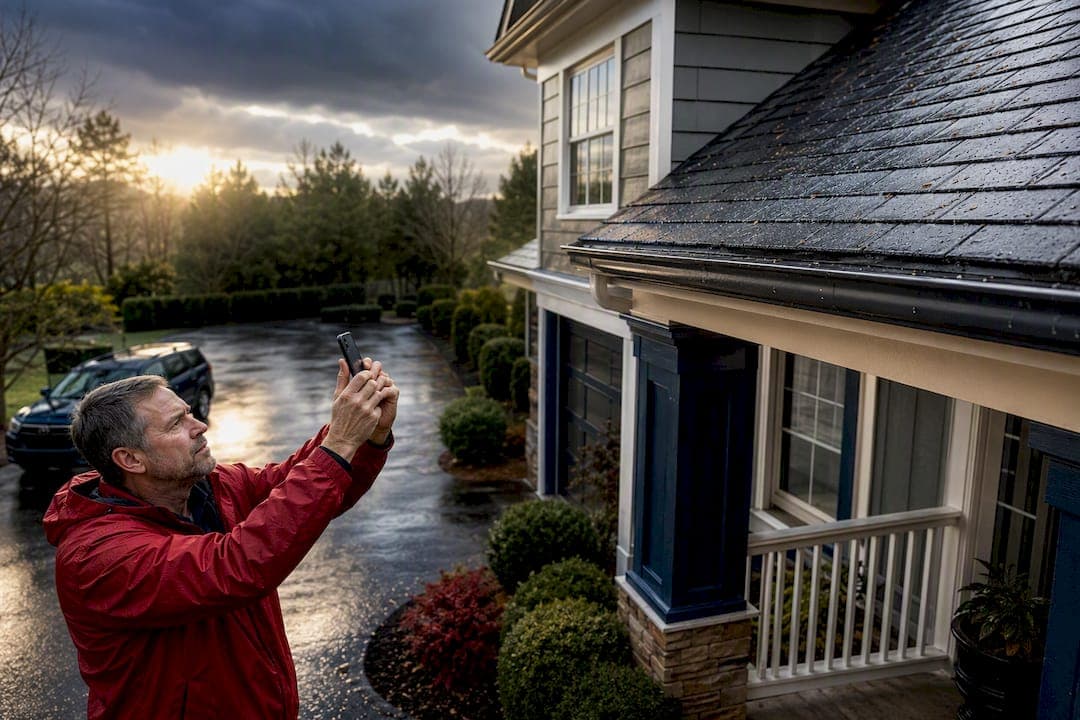
Do a safe ground-level check now, photograph everything you find, and call a licensed roofer for a written inspection within 48 to 72 hours if you spot exposed decking, active leaks, or a sagging roofline. Don't climb onto the roof yourself. Document before you touch anything, and prioritize anything letting water into the house.
TL;DR:
- Ground-level photos should capture all sides of the roof, collateral damage, and debris, to help verify storm severity before any contact with the roof itself.
- Inspection of the attic and ceilings is crucial; look for daylight, water stains, or damp insulation to identify hidden water damage.
- Visible damage thresholds include missing or creased shingles, dented gutters, granular loss, or sagging rooflines, signaling the need for professional evaluation.
- Document damage systematically with wide, pattern, and close-up photos, including scale references and official weather reports, then file claims within 24 to 72 hours.
- Urgent signs like exposed decking or active leaks require immediate professional inspection to prevent damage escalation and accurate claim resolution.
Table of Contents
- What Should You Do Right After a Storm?
- How Do You Inspect a Roof After a Storm?
- What Does Storm Damage Actually Look Like?
- How Do You Document Roof Damage for an Insurance Claim?
- When Should You Call a Professional Roof Inspector?
- How The Original Roof Repair Company Documents Storm Damage
- What Homeowners Get Wrong After a Storm
- Get a Free Storm Damage Inspection in Atlanta and Cherokee County
- Sources
- FAQ
What Should You Do Right After a Storm?
Once the wind dies down and it's safe to go outside, work through these steps in order.
- Wait for clear skies and dry conditions. A wet, wind-loosened roof is not a place to be standing.
- Walk the perimeter of your house with binoculars and your phone camera. Look for missing shingles, dented gutters, and debris on the ground.
- Take photos in three passes: a wide shot of each roof slope, a medium shot of any damage pattern, and a close-up with something for scale.
- Check the attic and ceilings for water stains, daylight coming through the roof deck, or a damp, musty smell.
- If you find an active leak, place a temporary tarp only after you've photographed the damage, and keep every receipt from tarps or buckets.
- Call your insurance company to open a claim, then schedule a licensed roofer for a professional inspection.
Georgia homeowners in Cherokee County and across the Atlanta metro tend to see the same pattern after severe weather: hail damage that's obvious in the yard but invisible from the driveway. Wait until inspection to make repair decisions.
Pro Tip: Save every photo in a dated folder on your phone labeled with the storm date. Adjusters move faster when your evidence is already organized.
How Do You Inspect a Roof After a Storm?
A proper storm damage roof inspection follows a sequence: ground level first, then attic, then the roof surface itself, and that last step belongs to a professional. Industry guides consistently recommend this order because a large share of storm damage never shows from the street, and much of it only becomes visible in the attic or during a direct roof walk, according to WeatherShield's homeowner guide.
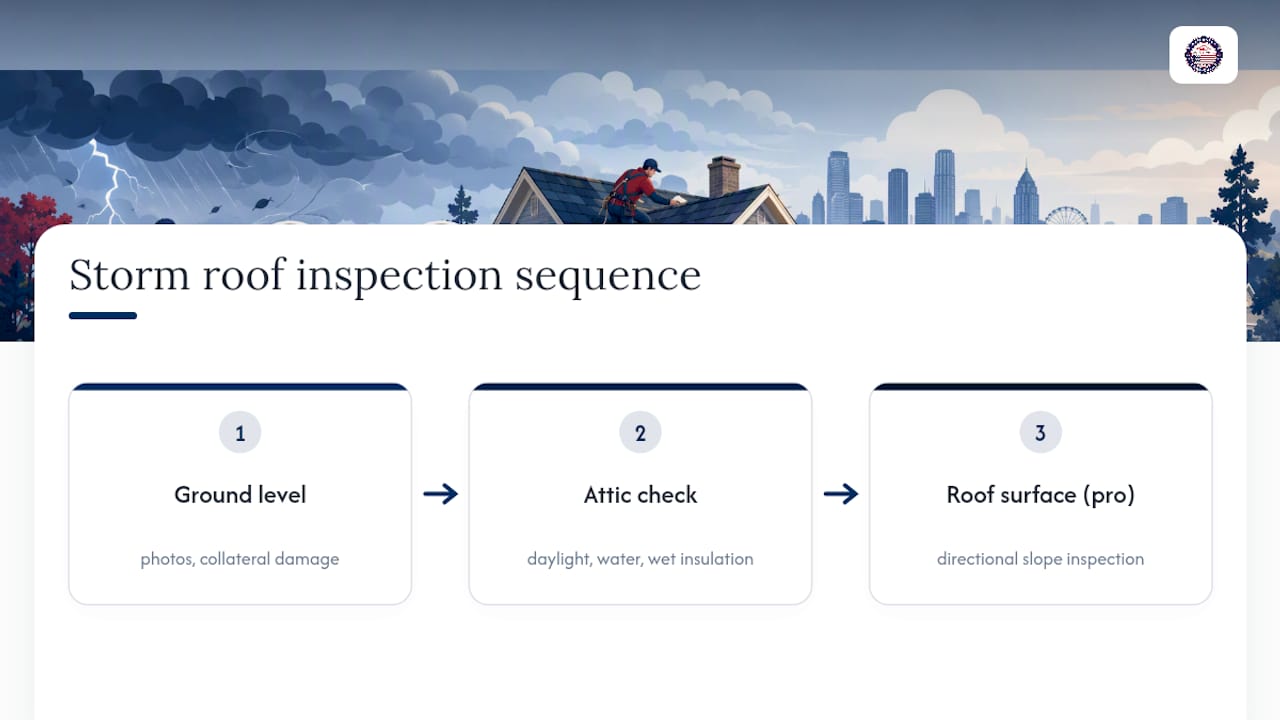
Ground-level walkthrough. Circle the house and photograph each side of the roof from a slight angle, so shadows reveal texture and lifted shingles. Check gutters, downspouts, window screens, siding, the AC unit's fins, and any vehicles left outside. That collateral damage matters almost as much as the roof itself, since it helps corroborate the storm's intensity later.
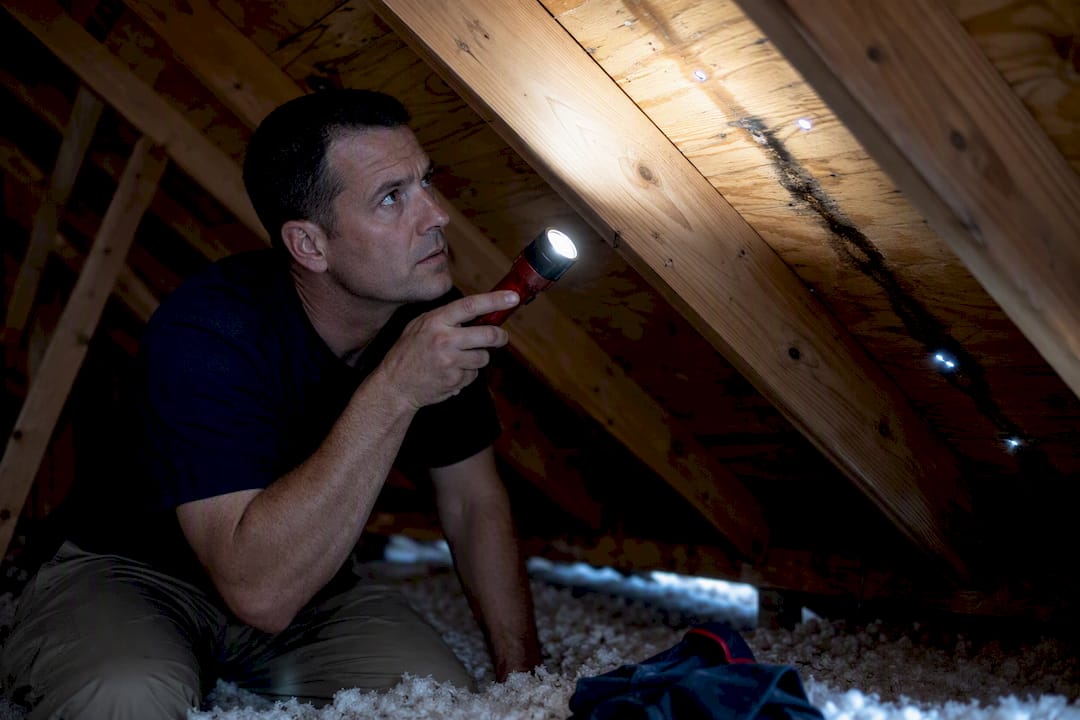
Attic and interior check. Bring a flashlight into the attic and look for pinpricks of daylight through the roof deck, dark water tracks along rafters, wet or matted insulation, and a musty smell that signals moisture has been sitting for a while.
When to stop and call a pro. Nail pops visible from below, soft or spongy spots overhead, creased shingles you can see from ground level, or a roofline that looks uneven all mean it's time for a licensed inspection rather than a closer DIY look. Manufacturer guidance from CertainTeed is blunt about this: ground and attic checks are safe homeowner tasks, but walking the roof itself should be left to someone trained to do it.
Professionals also work each slope separately during a directional walk, because wind and hail rarely hit a roof evenly. One side can show heavy bruising while the opposite slope looks nearly untouched, and that difference often decides whether an insurer approves a full replacement or a partial repair.
What Does Storm Damage Actually Look Like?
Different storms leave different fingerprints, and knowing which one you're looking at helps you describe the damage accurately to your roofer or adjuster.
- Wind damage shows up as lifted, creased, or missing shingles, plus flashing that's come loose around chimneys and vents.
- Hail damage leaves circular bruises on shingles, dented gutters and AC fins, and granule loss you can spot as dark grit collecting in the gutters.
- Water damage appears indoors first, as ceiling stains, sagging drywall, or insulation that's gone wet and heavy, which raises the risk of rot if it sits too long.
- Impact damage from fallen branches or debris tends to be localized, with punctures or cracked decking right at the point of contact.
Granule loss deserves extra attention because homeowners routinely miss it. Those sand-like deposits mean the shingle's protective surface has already worn away, according to FloridaPace's roof damage guide, and photographing a gutter full of grit gives an adjuster hard evidence you'd otherwise have no way to show them.
How Do You Document Roof Damage for an Insurance Claim?
Insurers respond better to organized evidence than to a phone full of random photos. Follow a consistent sequence every time.
- Start with a wide shot of the whole roof slope for context, so the viewer understands where the damage sits.
- Follow with a medium shot that captures the damage pattern, whether that's scattered hail hits or a line of lifted shingles.
- Finish with a close-up that includes something for scale, like a coin or a tape measure, next to the damage.
- Photograph collateral damage too. Dented gutters, damaged screens, and pockmarked AC units help confirm the storm's severity when an adjuster reviews your file.
- Save an official weather report or radar image from NOAA's National Hurricane Center to lock in the date and severity of the storm.
- Get a licensed roofer's written inspection report before the adjuster's visit, and file your claim within 24 to 72 hours for severe storms. Keep every receipt tied to emergency tarping or repairs.
For a more detailed walkthrough of the photo sequence, our guide on how to document roof damage for an insurance claim covers exact angles and framing.
Pro Tip: File your claim before you start any permanent repairs. Insurers want to see the damage as the storm left it, not after you've already started fixing it.
When Should You Call a Professional Roof Inspector?
Book a licensed inspection immediately if you see exposed decking, an active leak, or a roofline that sags anywhere. Those are urgent signs that waiting even a few extra days can turn a repair into a much bigger problem.
- Exposed roof decking or missing sections after high wind.
- Water actively coming through the ceiling.
- A visibly sagging or uneven roofline.
- Hail damage on multiple slopes with visible bruising or dented gutters.
A real professional inspection goes well beyond a walk-around. Contractors typically use a marked 10 foot by 10 foot hail test square on each slope and count individual impacts, since many insurance carriers use a threshold around 8 to 10 hits per square when deciding between repair and full replacement. A contractor-quality report goes further still: per-slope hit counts, timestamped and geotagged photos, measurements in roofing squares, and an explicit repair, replace, or monitor recommendation that accounts for how much service life the roof has left. Having your contractor present when the adjuster visits, rather than relying on the adjuster's assessment alone, tends to produce a far more accurate claim outcome. Our guide on why your storm claim needs a roofing expert walks through what that looks like in practice.
How The Original Roof Repair Company Documents Storm Damage
The Original Roof Repair Company follows the same wide, pattern, close-up photo sequence outlined above on every job, with timestamps and scale references built into the report. Serving Canton, Cherokee County, and the Atlanta metro area, the company offers free roof inspections, insurance claim advocacy, and a repair-first approach that only recommends full replacement when a repair estimate tops $4,000.
What Homeowners Get Wrong After a Storm
Most homeowners either wait too long to document damage or climb onto a roof they shouldn't be standing on. Both mistakes cost money. Remember one sequence: wide, then pattern, then close with scale, and keep every photo organized by date. Move fast, document everything, and let the paper trail do the arguing for you.
— Eric
Get a Free Storm Damage Inspection in Atlanta and Cherokee County
The Original Roof Repair Company gives you something a DIY inspection never can: a written, insurer-ready report backed by a repair-first estimate instead of an automatic push toward replacement. Homeowners across Canton, Cherokee County, and the greater Atlanta metro area get a free inspection that includes a full photo report, hail test square counts where relevant, and a written recommendation to repair, replace, or monitor.

Every inspection comes with straightforward pricing and no pressure to sign anything on the spot. If your roof needs emergency attention right now, whether that's a tarp over an active leak or urgent emergency roof repair, the company responds fast and documents the damage as it finds it. For claims that involve an adjuster, the team also provides insurance claim advocacy, attending the adjuster visit and speaking the same technical language the carrier does. Schedule your free inspection today and get a written report in hand before you talk to your insurance company.
Sources
- 6 signs of roof damage | FloridaPace
- Storm Damage Roof Repair: The Complete Homeowner's Guide (2026) | WeatherShield
- NOAA / National Hurricane Center informational page
FAQ
How Do Home Inspectors Check for Roof Damage?
They typically start with a ground-level walk to spot obvious issues, then move to the attic for signs of moisture, and finish with a direct roof walk that includes per-slope hail test squares and photo documentation of every finding.
What Is the 25% Rule for Roofing?
The 25% rule refers to a building code provision some jurisdictions use, where replacing a significant portion of a roof's surface in a single repair project can trigger a requirement to bring the entire roof up to current code. Rules vary by county and municipality, so check with your local building department or your roofer before assuming it applies to your project.
What Should You Not Say to an Insurance Adjuster About Roof Damage?
Avoid guessing at causes, ages, or costs you're not certain about, and never suggest the damage happened gradually over time rather than during a specific storm. Stick to what you observed and let your roofer's written inspection report supply the technical detail.
Is October Too Late to Get a New Roof?
October is generally still workable for roof replacement in most parts of the country, including Georgia, since temperatures are typically mild enough for proper shingle sealing. Scheduling early in the month is smarter than waiting, since contractor calendars fill up fast once storm season winds down.