
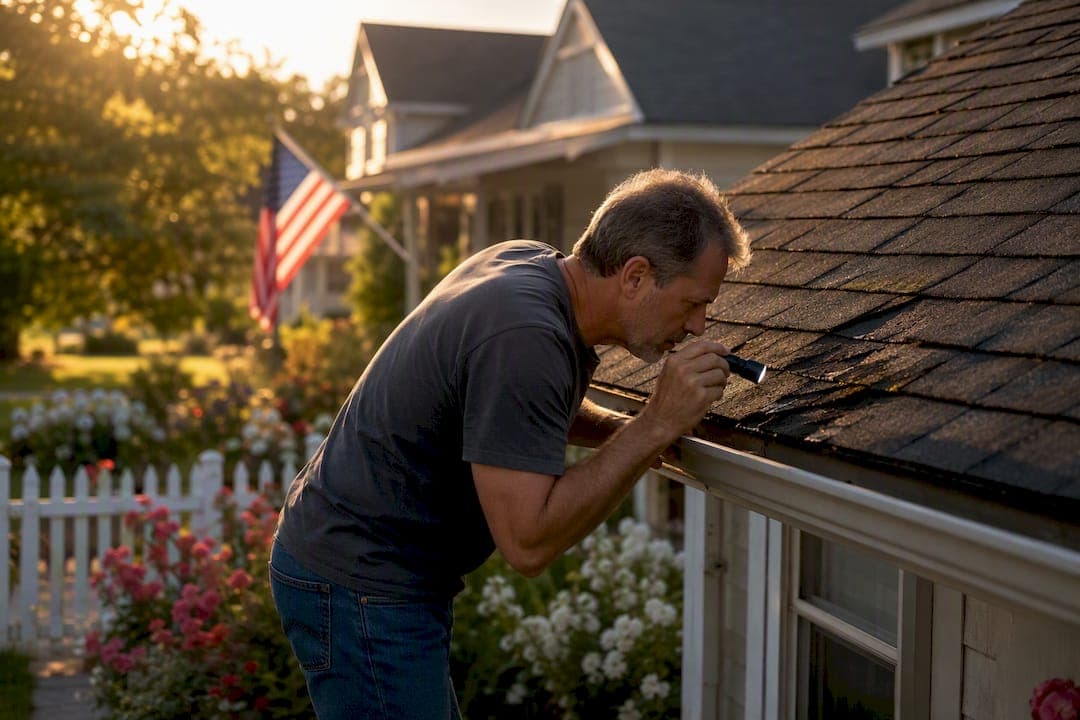
Start planning replacement once your roof reaches roughly 75% to 80% of its expected life. For standard asphalt shingles, that usually occurs sometime in the late teens to mid-20s in years. Metal roofs stretch that window into the 40s and 50s, while tile and slate can outlast the homes they cover.
The number that catches most homeowners off guard isn't the shingle warranty. It's the insurance shift: many carriers move a roof from replacement cost value to actual cash value coverage once it hits 15 to 20 years old, which can leave you covering thousands out of pocket after a claim. If your roof is approaching either threshold, take two steps now:
- Pull your insurance declarations page and check whether your roof coverage is listed as ACV or RCV.
- Schedule a physical inspection if you're seeing granule loss, curling shingles, or any interior leak staining.
Roof age alone doesn't tell the whole story. Condition, material, and your insurer's fine print all factor into the real answer.
Key Takeaways
Roof replacement age depends on material, condition, and insurance coverage together, not on a single fixed number of years.
| Point | Details |
|---|---|
| Watch the 75% to 80% mark | Start planning replacement once your roof nears 75% to 80% of its expected lifespan. |
| Check ACV vs RCV | Many insurers shift roofs to actual cash value coverage around 15 to 20 years old, reducing claim payouts. |
| Run the 50% rule | If a repair estimate exceeds roughly half the cost of replacement, replacement is usually the smarter spend. |
| Document everything | Keep install records, repair invoices, and dated photos to support insurance claims and inspections. |
| Call a repair-first roofer | The Original Roof Repair Company recommends replacement only when repairs exceed $4,000 or aren't cost-effective. |
Table of Contents
- What Roof Replacement Age Actually Means for Your Home
- What Are the Visible Signs a Roof Needs Replacement?
- How Long Does Each Roofing Material Actually Last?
- How Does Roof Age Affect Homeowners Insurance?
- Repair or Replace? The Age-Based Decision Rules
- How Do You Find Out How Old Your Roof Is?
- A Local Roofer's Take on Repair vs. Replacement
- Warranty Considerations Related to Roof Age
- Do Building Codes Change Roof Replacement Timing?
- A Roofer's Honest Take on When to Actually Replace
- Get a Free Roof Inspection From The Original Roof Repair Company
- Sources
- FAQ
What Roof Replacement Age Actually Means for Your Home
"Roof replacement age" isn't one fixed number. It's the point where a roof's remaining service life, its physical condition, and your insurance coverage all start pointing toward the same conclusion: repair spending stops making financial sense. Roofing professionals sometimes call this the roof's "functional lifespan," distinct from the manufacturer's rated lifespan, which assumes ideal installation and climate conditions that rarely exist in the real world.
What Are the Visible Signs a Roof Needs Replacement?
Age gives you a planning window. Visible damage tells you whether that window has already closed. Walk your property and check for these signs before assuming a repair will solve the problem.
- Granules collecting in gutters or downspouts. This means the shingle's protective coating is wearing thin, and UV exposure will accelerate from here.
- Curling, buckling, or cupped shingles. Edges lifting away from the roof deck signal the asphalt has dried out and lost flexibility.
- Missing or cracked shingles, especially after a wind event or hailstorm.
- Broken or rusted flashing around chimneys, vents, and skylights, a common source of hidden leaks.
- Moss or algae streaking, which holds moisture against the shingle surface and speeds up decay.
Inside the house, the signs are just as telling. Repeated leaks in the same spot, brown water stains on ceilings, a sagging roofline, or actual daylight visible through the attic boards all point to a roof that's failing structurally, not just cosmetically.
Once you spot damage, estimate what percentage of the roof is affected. A single damaged section might be a repair. Widespread granule loss or multiple leak points across 30% or more of the surface usually means replacement math starts winning.
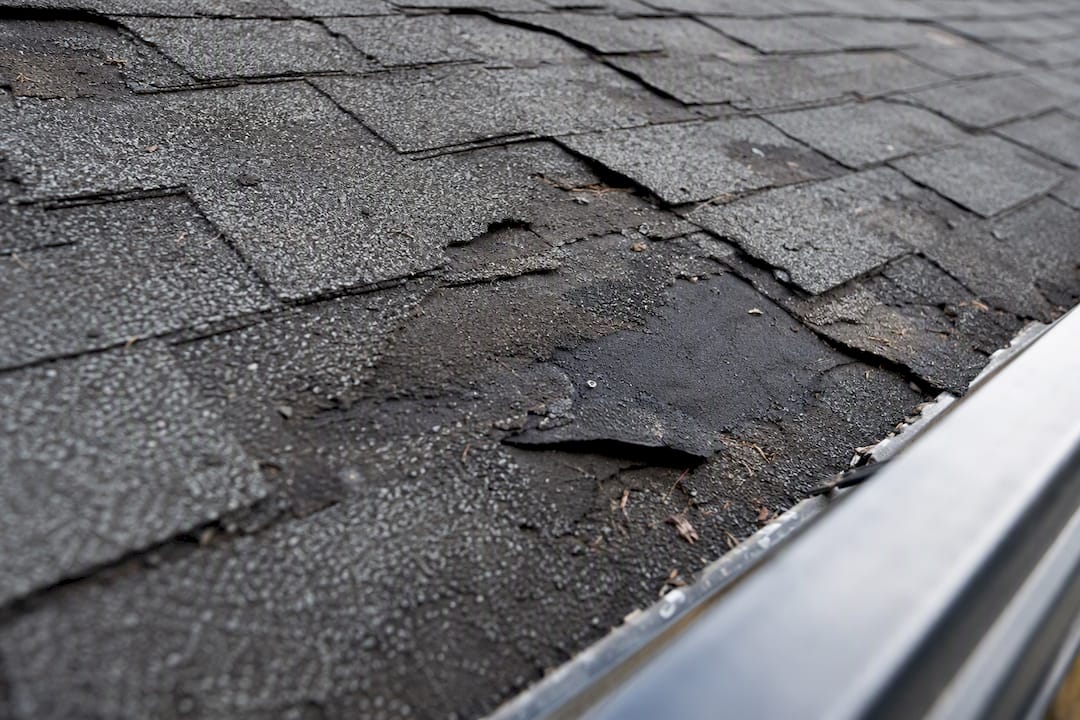
Pro Tip: Take photos from the ground with a zoom lens rather than climbing onto the roof yourself. Adjusters and contractors both want dated images, and you don't need to risk a fall to get them.
How Long Does Each Roofing Material Actually Last?
Manufacturer warranties tend to describe best-case scenarios. Real-world lifespan depends heavily on installation quality, attic ventilation, and climate, and in Georgia's heat and humidity, asphalt roofs often wear out faster than the labels suggest.
| Material | Typical Lifespan |
|---|---|
| 3-tab asphalt shingles | 15 to 20 years |
| Architectural asphalt shingles | 20 to 30 years |
| Premium/designer asphalt | 30 to 50 years |
| Metal roofing | 40 years |
| Tile or slate | 50 years or more |
| Wood shake | 20 to 40 years |
| TPO/EPDM (flat/low-slope) | 15 to 25 years |
A few caveats matter more than the chart itself:
- Tile and slate tiles often outlive the underlayment beneath them, meaning a "tile lift" (removing tiles, replacing underlayment, resetting the same tiles) can become a major expense even though the tiles themselves look fine.
- Poor attic ventilation and rushed installation shrink real-world lifespan more than any brand difference does.
- Intense summer UV exposure and humidity swings, standard for the Atlanta metro area, tend to push asphalt roofs toward the shorter end of their range.
How Does Roof Age Affect Homeowners Insurance?
This is where roof age stops being a maintenance question and becomes a financial one. Insurance policies typically cover roof damage one of two ways: replacement cost value (RCV), which pays what it actually costs to replace the roof today, or actual cash value (ACV), which subtracts depreciation for age and wear before cutting a check.
The math behind ACV is straightforward and often surprising. A roof with a 20-year expected life that's now 15 years old has used 75% of its insurable life. Under straight-line depreciation, an ACV payout would cover roughly the remaining 25%, leaving you responsible for the rest.
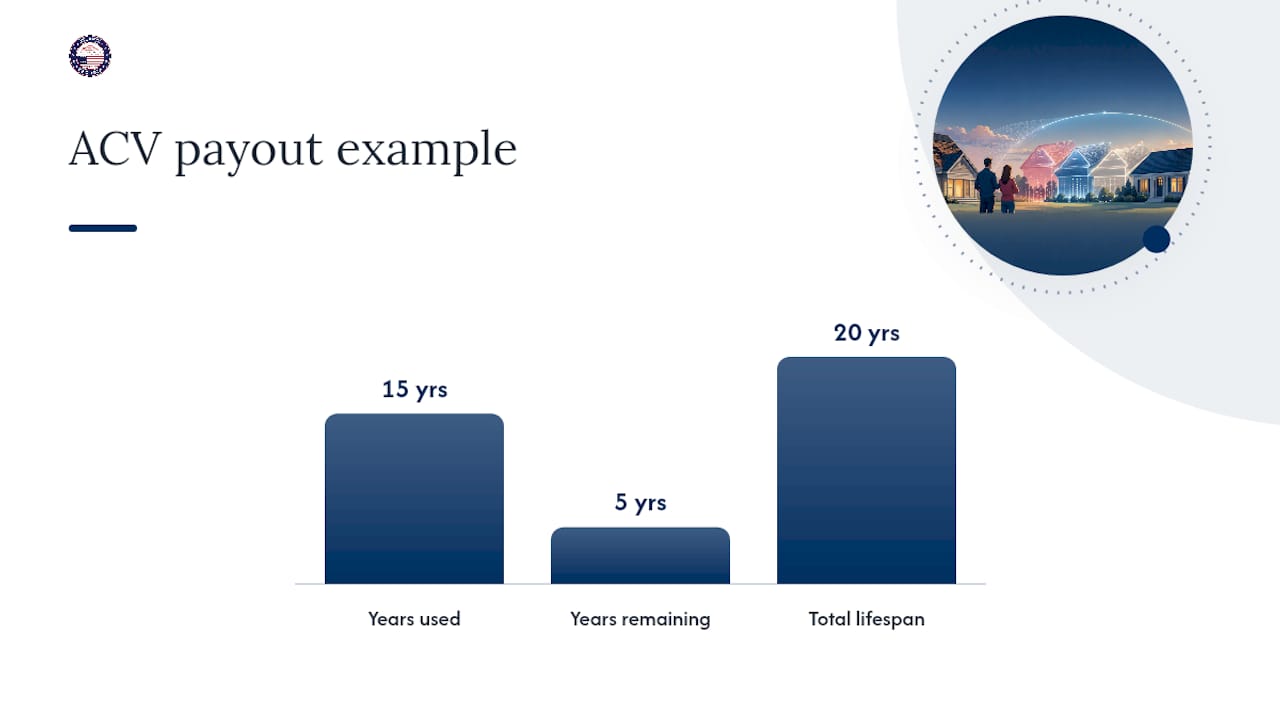
Many insurers apply this shift automatically once a roof crosses 15 to 20 years old, regardless of how the roof actually looks. A well-maintained 18-year-old roof can get the same ACV treatment as a neglected one.
Protect yourself with three quick moves:
- Review your declarations page and confirm whether your roof is covered at ACV or RCV.
- Ask your carrier if an RCV endorsement is available and what it costs to add.
- Document your roof's current condition with dated photos before storm season, so you have a clear before-and-after record if you ever file a claim.
Repair or Replace? The Age-Based Decision Rules
Three simple calculations settle most repair-versus-replace debates faster than any single visible sign.
- If a repair estimate exceeds roughly half the cost of full replacement, replacement is usually the smarter spend. If a repair estimate exceeds roughly half the cost of full replacement, replacement is usually the smarter spend. A $6,000 repair on a roof that would cost $11,000 to replace fails this test immediately.
- The 80% life rule. A roof that's used up 75% to 80% of its expected lifespan and already shows multiple problems (not just one) is a strong replacement candidate, even if a repair is technically possible.
- Cost-per-remaining-year. Divide the repair cost by the roof's likely remaining years. A $3,000 repair on a roof with three years of realistic life left costs $1,000 per year, often worse economics than financing a replacement, especially if you plan to stay in the home long term.
If you plan to sell within a year or two, a targeted repair may still make sense. If you're staying put, the math almost always favors replacement once two of these three rules point the same direction.
How Do You Find Out How Old Your Roof Is?
Start with paperwork. Home closing documents, county permit records, and old contractor invoices usually list the installation date. No luck there? Check the shingle wrapper or a stamped date code on structural components in the attic, or ask a roofer to estimate age from wear patterns during an inspection.
Before that inspection, walk the exterior yourself and photograph any visible damage, granule loss, missing shingles, and gutter debris.
A professional inspection goes deeper than a curb-side look. Expect the roofer to check the decking for soft spots, evaluate attic ventilation, and inspect the underlayment condition, all details insurance adjusters will ask about if you eventually file a claim.
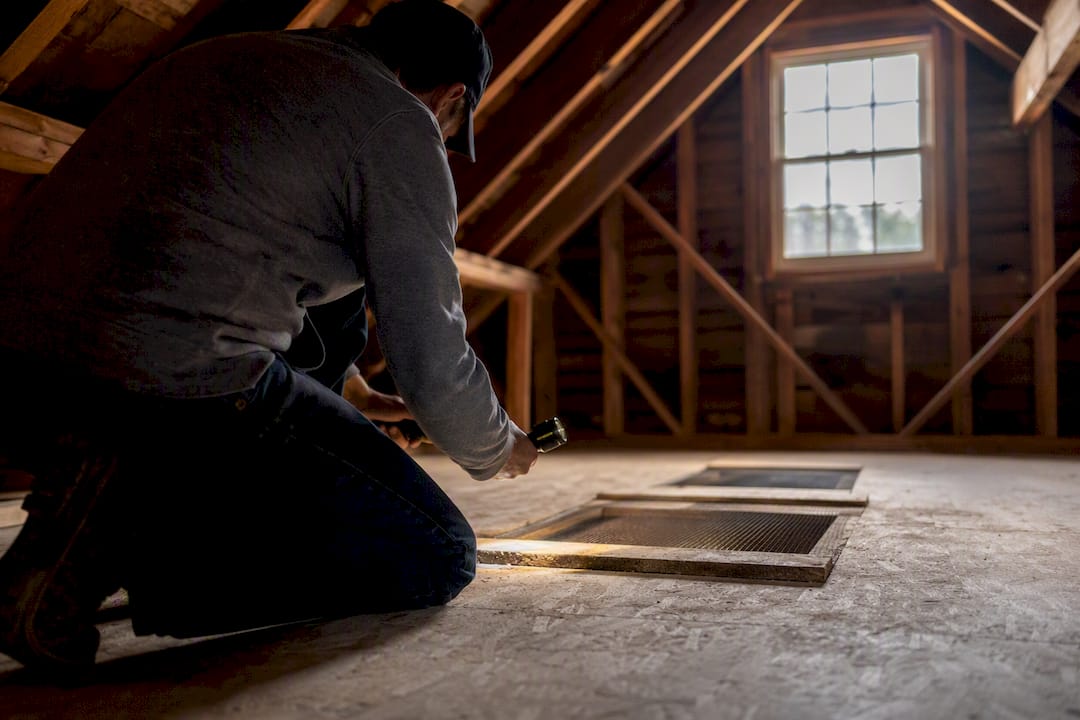
Pro Tip: Keep a dedicated folder, digital or paper, with your roof's install date, past repair invoices, and inspection photos. It turns a stressful adjuster call into a five-minute conversation.
A Local Roofer's Take on Repair vs. Replacement
At The Original Roof Repair Company, we recommend full replacement only when a repair estimate exceeds $4,000 or when replacement is clearly the more cost-effective path. Most roofs we inspect across Canton and the greater Atlanta metro area still qualify for a targeted repair.
Georgia's summer heat and humidity swings put real stress on asphalt shingles, often shortening their functional life compared to cooler climates. That's exactly why we push for inspections before small problems turn into $4,000-plus estimates.
We also document storm and wind damage directly for insurance claims, working the adjuster process on the homeowner's behalf.
Warranty Considerations Related to Roof Age
Manufacturer warranties cover materials against defects, not against normal wear from age, weather, or improper installation. Most asphalt shingle warranties run 25 to 30 years on paper, but nearly all of them are prorated, meaning the payout shrinks the older the roof gets. File a warranty claim on a 20-year-old roof and you might recover a small fraction of the shingle cost, not a replacement.
Workmanship warranties, the ones covering installation quality, are separate from material warranties and typically shorter, often 2 to 10 years depending on the contractor. These matter more than most homeowners realize, since a large share of premature roof failures trace back to installation errors rather than defective shingles.
A few practical points worth knowing before you count on warranty coverage:
- Warranties are frequently voided by prior repairs from a different contractor, so keep records of who worked on your roof and when.
- Transferable warranties (common with premium asphalt and metal roofing) can add resale value, but usually require registration within a set window after installation, often 30 to 60 days.
- Labor coverage typically expires years before material coverage does, leaving homeowners to pay installation costs for a warranty repair even when the shingles themselves are still covered.
Read the fine print before assuming a roof "under warranty" means a free fix. In most cases, by the time a roof is old enough to need serious attention, the warranty has already stepped down to a fraction of its original value.
Do Building Codes Change Roof Replacement Timing?
Building codes don't set a mandatory replacement age, but they do influence when replacement becomes the only legal option rather than a repair.
That matters more than it sounds. A code update adopted after your roof was installed might now require different underlayment, ice-and-water shielding in valleys, or upgraded ventilation. If your repair triggers that percentage threshold, you could be required to meet the new standard for the whole roof, not just the repaired section, which often pushes the total cost past the point where full replacement makes more sense anyway.
Local wind and hail exposure also shape code requirements. Areas with frequent severe weather, including much of the Southeast, often mandate higher wind-rated shingles or fastening patterns than milder climates require. If you're replacing a roof in Cherokee County or elsewhere in the Atlanta metro area, your contractor should confirm current code requirements before quoting a price, since a roof built to 2005 standards may not meet 2026 code as-is.
Always ask your contractor whether your specific repair will trigger a code-compliance threshold before you commit to a smaller fix.
A Roofer's Honest Take on When to Actually Replace
Accurate diagnosis matters more than any age chart. I've seen 12-year-old roofs that needed full replacement after storm damage, and 22-year-old roofs that just needed a $600 flashing repair. Don't let a number alone make the decision. Get a written inspection, check your insurance coverage first, and let the actual condition, not the calendar, guide the call.
Get a Free Roof Inspection From The Original Roof Repair Company
The Original Roof Repair Company takes a repair-first approach that most larger roofing outfits skip entirely. We diagnose the actual problem, and only when a repair estimate crosses $4,000, or replacement is genuinely the better financial move, do we recommend it. That means no upsell pressure on a roof that has a few good years left in it.

Homeowners across Canton, Cherokee County, and the wider Atlanta metro area also get access to our insurance claim advocacy service. We document storm, hail, and wind damage and work directly with your carrier's adjuster, so you're not navigating that process alone. If your roof is approaching the age thresholds covered in this guide, or you've already spotted damage, request a free roof inspection and get a transparent, written estimate before you commit to anything. For roofs that clearly need full replacement, we'll explain exactly why and what it involves, no guesswork required.
Sources
- How Does Roof Depreciation Affect Homeowners Insurance? | Progressive
- How Long Does a Roof Last? Lifespan by Material 2026 | The Roofing Brief
- ACV vs RCV: Understanding the differences | MoneyGeek
FAQ
Is a 10-Year-Old Roof Considered Old?
Not for most materials. A 10-year-old asphalt shingle roof still has plenty of expected life left, though it's worth a visual inspection if you're seeing granule loss or storm damage.
Is $30,000 Too Much for a Roof?
It depends heavily on size, material, and whether the job involves structural repairs or a full tear-off. Premium materials like slate, tile, or metal on a large home can reasonably reach that range, but a standard asphalt replacement on an average home typically costs far less. Get a written, itemized estimate to compare against local pricing.
Should a 20-Year-Old Roof Be Replaced?
A 20-year-old asphalt roof has likely used most or all of its expected lifespan and may already be on ACV coverage with your insurer. If it shows any of the visible signs covered above, replacement is usually the more cost-effective choice over continued repairs.
Does a 12-Year-Old Roof Need to Be Replaced?
Not automatically. A 12-year-old roof is generally still within its useful life, especially for architectural asphalt or metal. Replacement decisions at this age usually come down to storm damage or installation defects rather than age alone, which is why a professional inspection from a repair-first roofer like The Original Roof Repair Company matters before assuming the worst.