
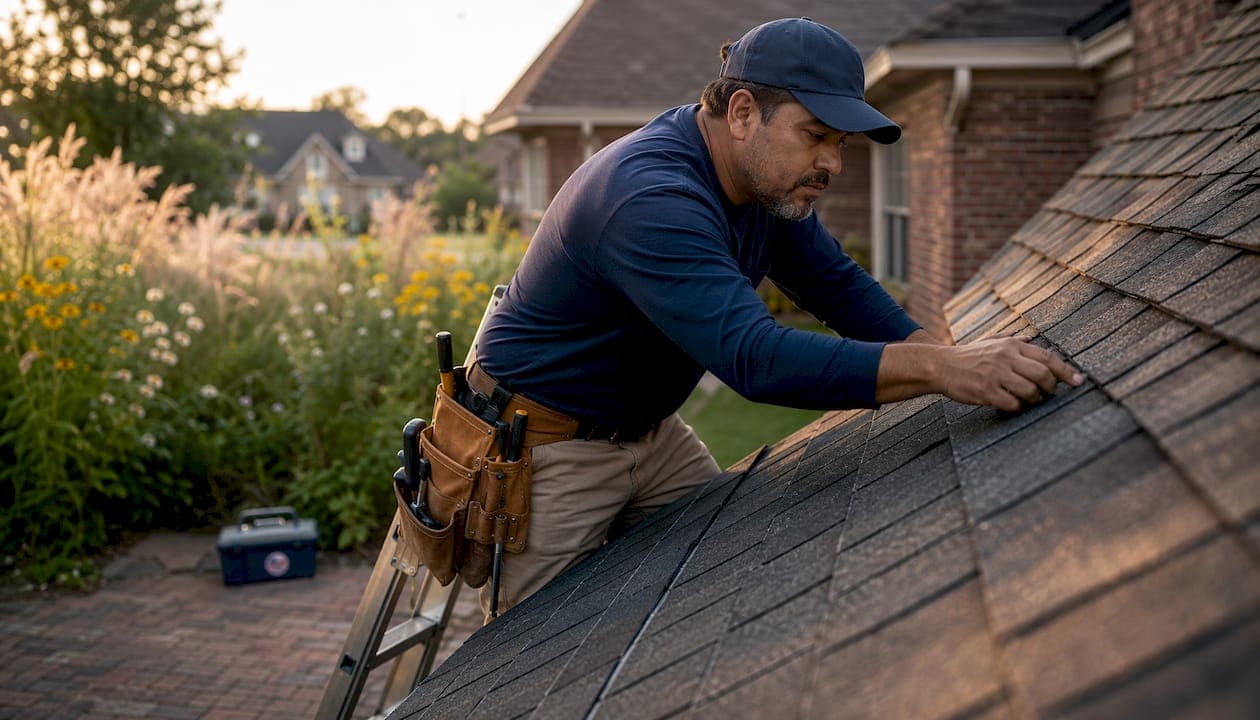
What are the biggest red flags your roof needs replacing?
If your roof shows any of the following signs, repair alone likely will not solve the problem:
- Damage spread across multiple slopes, not isolated to one area
- Visible sagging or dipping along the roofline
- Soft or rotted roof decking detected from the attic
- Repair estimates that exceed 30% of replacement cost
- Curling, cupping, or clawing shingles across most slopes
- Heavy granule loss with bare asphalt patches visible
- Multiple active leaks in different rooms or on different sides of the house
- Daylight visible through roof boards when viewed from the attic
- Recurring leaks that return after previous repairs
- A roof past its rated lifespan showing any of the above signs
Georgia's heat, humidity, and storm exposure accelerate wear on asphalt shingles, so these warning signs often appear sooner than homeowners expect.
How widespread roof damage tells you repair is not enough
Damage confined to one slope or one flashing point is almost always a repair. When deterioration spreads across multiple slopes, both sides of the ridge, or the entire field of the roof, patching one area simply moves the next leak a few feet over. Multiple unrelated leaks in different locations signal that the underlayment and seals have failed system-wide, not at a single point.
Shingle condition confirms the scope. Widespread curling means the asphalt has lost flexibility across the whole roof. Heavy granule loss, with coarse black sand piling up at every downspout and bare patches visible from the ground, typically means the shingles have only a few years of useful life remaining. A basic attic inspection can reveal water stains across multiple rafters or daylight through the boards, both of which confirm system-wide failure.
Why a sagging or rotted roof deck changes everything
A visible dip or wave in the roofline, seen from across the street, is a structural concern that goes beyond surface shingles. Sagging typically means the plywood or OSB decking has rotted from prolonged water intrusion. At that point, a structural inspection comes first, followed by a full tear-off and decking replacement before any new roofing material goes on.
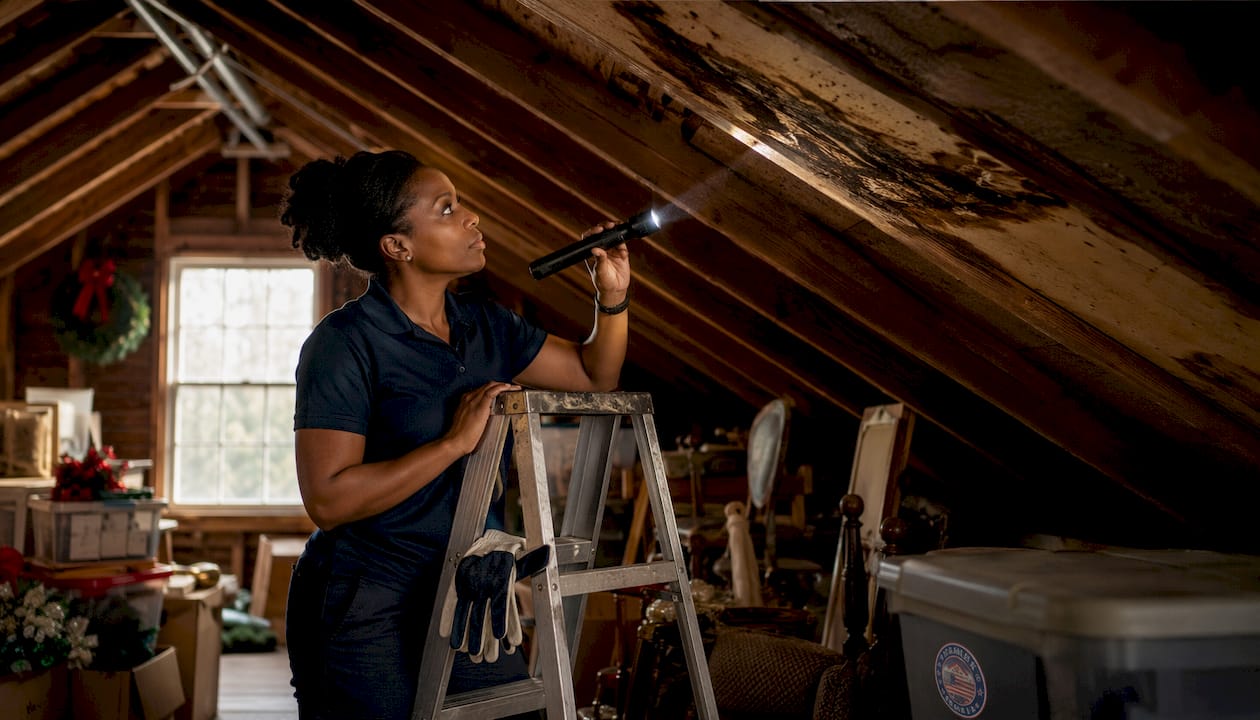
From inside the attic, look for soft or spongy boards, water stains spreading across multiple rafters, or pinholes of daylight on a bright day. A roof can look repairable from the top and still be failing from the deck up.
When repair costs tell you to replace instead
The practical financial test is straightforward: when repair costs are substantial compared to a full replacement, replacing the roof usually saves money over the next decade. The Original Roof Repair Company applies a cost threshold standard, recommending replacement when repair estimates exceed 30% of full replacement cost, as repairs beyond that threshold rarely pay off.
Age alone does not trigger replacement, but age combined with visible deterioration almost always does. Repeated patches on an aging roof cost more over time than a single replacement that restarts the warranty clock and ends the cycle of chasing leaks.
FAQ
What contractor red flags should Georgia homeowners watch for?
Trustworthy contractors provide current certificates for general liability and workers' compensation insurance. Walk away from any contractor who pressures you to sign the same day, offers to cover your deductible, or asks you to sign over your insurance claim, as these are recognized signs of insurance fraud risk.
Does one leak mean I need a full roof replacement?
One leak traced to a single flashing, vent boot, or pipe boot is typically a repair. Replacement becomes the right call when leaks recur after being fixed, or when new leaks appear in different rooms after the same storm.
How do I safely inspect my roof for warning signs?
Check from the ground for curling shingles, sagging rooflines, and granule buildup at downspouts. Inside the attic, look for daylight through the boards, water stains across rafters, or soft decking, all without climbing onto the roof yourself.
When should I call The Original Roof Repair Company?
Contact The Original Roof Repair Company when you spot any combination of the warning signs above, particularly after a Georgia storm. The company serves Cherokee County and surrounding counties, offering honest roof evaluations with transparent pricing and no-pressure recommendations.
Key Takeaways
A Georgia roof needs replacement, not repair, when damage is widespread, the deck is compromised, or repair costs exceed 30% of full replacement value.
| Point | Details |
|---|---|
| The 30% cost rule | Replace when repair estimates exceed 30% of full replacement cost; repairs beyond that threshold rarely pay off. |
| Deck condition is decisive | Sagging, soft, or rotted decking requires full tear-off; surface repairs cannot fix structural failure underneath. |
| Multiple leaks signal system failure | Leaks in different locations after the same storm mean the roof is failing across the whole system, not at one point. |
| Verify contractor credentials | Always request current general liability and workers' compensation certificates before signing any contract. |
| Georgia climate accelerates wear | Heat, humidity, and storm exposure in the Atlanta metro area shorten typical shingle lifespan and amplify damage signs. |