
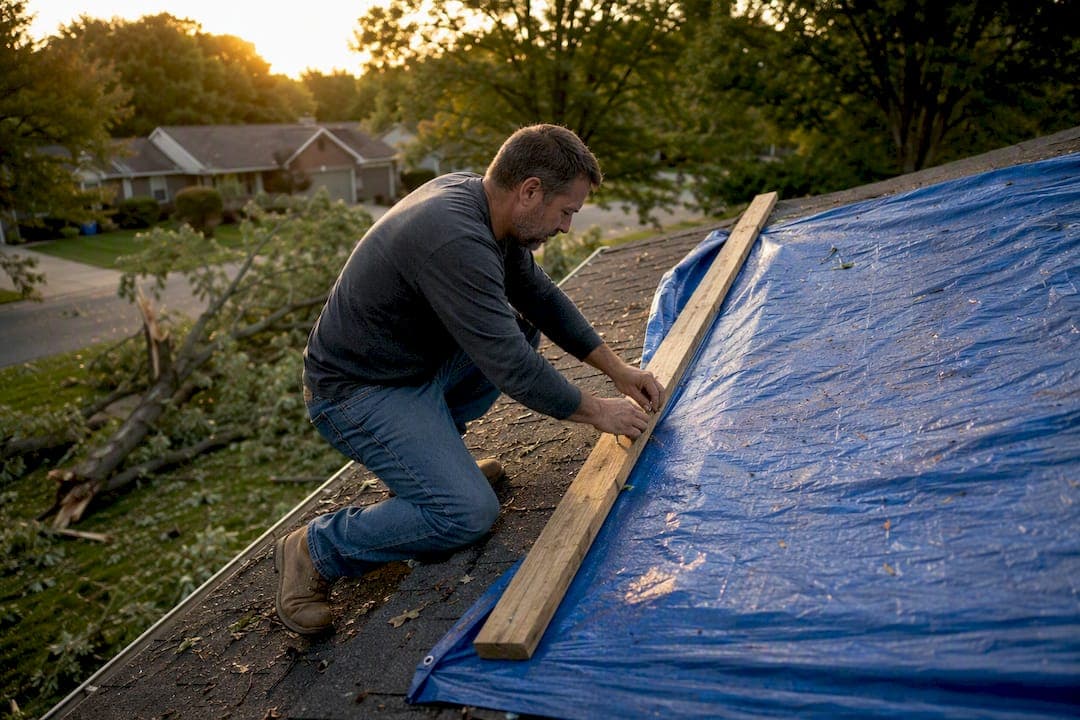
If a branch fell on your roof, stay off it, get a tarp over the damage today, and photograph everything before you touch a thing. Those three actions, in that order, protect your family, your attic, and your insurance claim. Once the roof is covered and documented, your next call is to a licensed roofer for an inspection and estimate.
Before you do anything else, know who to call:
- 911 if anyone is hurt, gas is leaking, or the structure looks unstable
- Your utility company if wires are down or sparking near the tree
- Your roofing contractor or insurer once the scene is safe, to schedule a tarp and document damage
Key Takeaways
Fixing a roof after a fallen branch means securing it with a properly anchored tarp, documenting every angle for insurance, and calling a licensed contractor before assuming you need a full replacement.
| Point | Details |
|---|---|
| Stay off the roof | Hidden decking or rafter damage can collapse under your weight; leave inspection to a professional. |
| Document before cleanup | Capture timestamped photos of exterior, interior stains, and attic damage for your insurance claim. |
| Use furring-strip tarping | Anchor tarp edges between wood strips into solid decking to prevent wind tear-out, and extend past the eave. |
| Know the replacement threshold | Damage past roughly 25 to 30 percent of the roof surface, or any structural decking damage, usually means replacement. |
| Call a repair-first roofer | The Original Roof Repair Company inspects first and only recommends replacement above $4,000 or when it's the smarter option. |
Table of Contents
- Safety First: What to Check Before You Do Anything Else
- How Do You Document Roof Damage for an Insurance Claim?
- How Do You Temporarily Patch a Roof After Branch Damage?
- Is It Better to Repair or Replace a Branch-Damaged Roof?
- What Should You Ask a Roofer Before Hiring Them?
- Why a Repair-First Local Roofer Matters After Storm Damage
- Editorial Perspective: What Homeowners Get Wrong After a Branch Falls
- Get Your Roof Assessed by The Original Roof Repair Company
- Sources
- FAQ
Safety First: What to Check Before You Do Anything Else
Do not climb onto a roof that just took a hit from a falling branch, even a small one. Hidden cracks in the decking or rafters can collapse under your weight without warning, and contractors routinely see homeowners hurt this way because the damage underneath looks worse than the shingles let on.
Walk the property and watch for these warning signs:
- Sagging ceilings or bulging drywall — a sign water or weight is pressing down from above.
- A smell of gas — evacuate immediately and call your utility company from outside.
- Live or downed wires near the tree or touching the house.
- A large hole or visible daylight through the roof into the attic.
- Cracking or shifting sounds from the attic or upper floors.
If you spot any of these, get everyone, including pets, out and call emergency services or your utility provider. Inside, move furniture and valuables away from wet areas and place buckets under active drips. If an engineer or contractor tells you the structure is compromised, temporary relocation is not overkill. Staying in a home with a damaged roof frame during another storm is a real risk, not just an inconvenience.
How Do You Document Roof Damage for an Insurance Claim?
Good documentation is what turns a slow, disputed claim into a fast, approved one. Insurers and adjusters lean heavily on time-stamped photo and video evidence when they process a fallen-branch claim, so capture more than you think you need.
Before any cleanup or repair begins, get these shots:
- A wide exterior photo showing the branch, the roof, and the surrounding area for scale.
- Close-ups of every hole, puncture, or lifted shingle.
- Interior shots of any water stains on ceilings or walls.
- Attic photos showing daylight, wet insulation, or damaged rafters.
- A timestamp on every photo, either from your phone's metadata or a note in a claims folder.
Keep the broken branch, damaged shingles, and any receipts for tarps or emergency repairs. Don't clear debris before your insurer has had a chance to review the scene, unless it's blocking emergency access or creating a hazard. For a large loss, call your insurer the same day and get a written estimate from a contractor for comparison. Coverage typically applies when the damage stems from a covered peril like wind or storm activity, rather than a tree that was already dead or leaning from long-term neglect. Our step-by-step insurance claim checklist walks through what adjusters expect to see.
How Do You Temporarily Patch a Roof After Branch Damage?
A tarp bought at a hardware store and nailed down at the corners fails fast in wind. It flaps, tears at the grommets, and lets water track under the edges within a day or two. That's why professional crews use the furring-strip method instead, and it's worth understanding even if you plan to hire someone to do it.
- Clear loose debris from the damaged area without walking directly over soft or sagging spots.
- Unroll a tarp rated for roofing use, sizing it to overlap the damaged area by at least 4 feet on every side.
- Sandwich each edge of the tarp between two 1x4 or 2x4 furring strips, then fasten through both strips into solid decking or rafters, distributing wind load along the whole edge instead of concentrating it at a few grommets.
- Run the tarp past the eave line so water sheds off the roof edge instead of sliding under the tarp and into the fascia.
- Check the tarp after the first rain or wind event and adjust if you see pooling or lifting.
Small punctures in a shingle field can sometimes hold with roofing mastic and a patch as a short-term fix, but that only works on minor, isolated damage. It's not a substitute for a proper repair. If the branch tore through decking, cracked a rafter, or left a hole larger than a few square feet, tarping is a job for a trained crew working from ladders, harnesses, and roof jacks, not a homeowner on a weekend.
Pro Tip: Most DIY tarp failures happen because the tarp is only nailed at the corners. Wind gets under one loose edge, and the whole cover peels back overnight. The furring-strip method holds because the fasteners share the load across a full board instead of four small points.
Our guide on how emergency roof repair works covers what to expect when a licensed crew handles this step for you.
Is It Better to Repair or Replace a Branch-Damaged Roof?
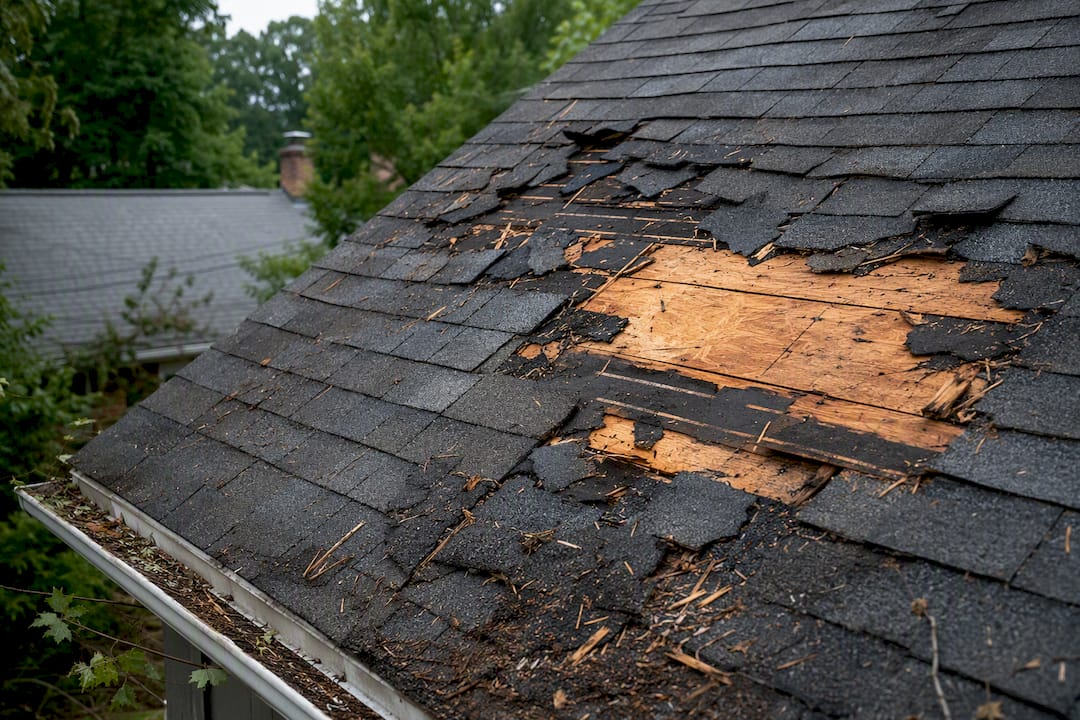
Most fallen-branch damage is repairable. A thorough inspection covers four things: the condition of the decking, whether rafters or trusses took a structural hit, the state of flashing and roof penetrations, and how much water reached the underlayment or attic insulation.
Contractors use a few rules of thumb to sort repair jobs from replacement jobs:
- Repair is typical when the damage is an isolated puncture, the affected area is small, and the roof is under 10 years old.
- Replacement is usual when there's structural decking or truss damage, the roof is older with brittle or mismatched shingles, or the affected area is large.
A widely used industry threshold: once damage exceeds roughly 25 to 30 percent of the total roof surface, replacement is usually the smarter move, both for cost and for avoiding repeated future leaks around the patch.
From an insurance standpoint, a written scope of work matters more than most homeowners realize. Adjusters compare your contractor's estimate against their own assessment, and mismatched roofing materials on a patch job can actually push the math toward replacement, especially on older roofs where the original shingle color or profile is discontinued. Repeated patching on a roof already near the end of its service life often costs more over three or four years than one clean replacement would have. Our decking damage identification guide breaks down what a structural inspection actually looks for underneath the shingles.
What Should You Ask a Roofer Before Hiring Them?
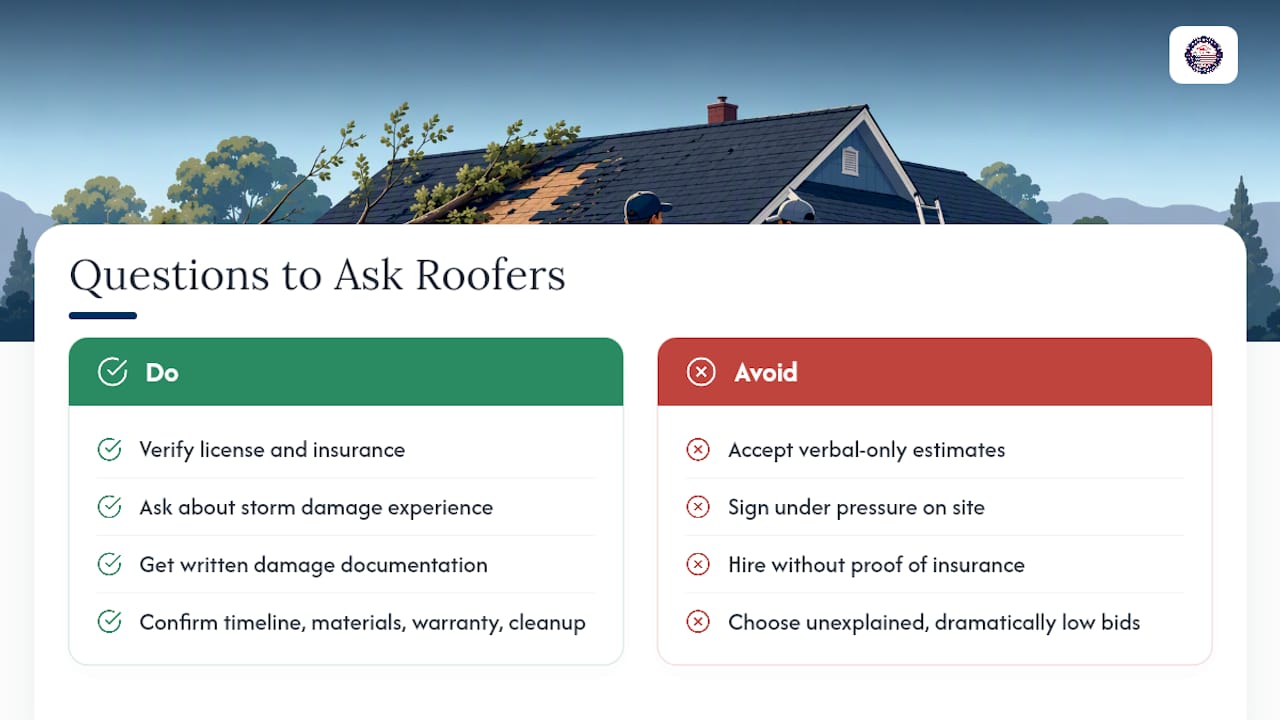
Ask any contractor bidding on branch damage these questions before you sign anything: Are you licensed and insured for general liability and workers' comp? Have you handled storm and branch damage claims before? Will you document the damage in writing to support my insurance claim? What's your timeline, and what exact materials will you use to match my existing roof? Does the work carry a warranty, and is cleanup included in the price?
Watch for red flags: a verbal-only estimate with no written scope, pressure to sign on the spot, no proof of insurance when you ask, or a bid that's dramatically lower than others without explaining why. If the branch caused visible framing damage, ask whether a structural engineer should review the repair plan before work starts, and confirm any emergency tarp or board-up was installed to local code, not just nailed on in a hurry.
Why a Repair-First Local Roofer Matters After Storm Damage
Eric Manly founded The Original Roof Repair Company on a simple idea: not every damaged roof needs a full replacement. The company is family-owned, BBB accredited, and serves homeowners across Cherokee County and eleven surrounding counties in the Atlanta, Georgia metro area.
- Repairs are recommended by default; replacement only comes up when an estimate tops $4,000 or repair genuinely stops making financial sense.
- That repair-first approach can save homeowners thousands compared to a default full-replacement recommendation.
- The team documents storm and branch damage and works directly with adjusters, so homeowners aren't navigating the claims process alone.
Editorial Perspective: What Homeowners Get Wrong After a Branch Falls
The advice most homeowners hear after a branch hits their roof is backwards on one key point: they assume damage this dramatic must mean a new roof. It usually doesn't. A branch through a shingle field is often a decking repair and a bundle of matching shingles, not a five-figure replacement job. The instinct toward "go big" tends to come from insurance adjusters or larger roofing companies whose margins favor bigger jobs, not from what the roof structure actually needs.
Where conventional advice does fall short is on tarping. Too many guides say "tarp it yourself" without mentioning that a poorly secured tarp causes its own water damage within days. The furring-strip method exists because it works, and it's a legitimate reason to call a professional instead of climbing a ladder with a staple gun.
If you take one thing from this guide, prioritize documentation before repair. A homeowner with clear photos and a written contractor scope gets a faster, larger, and less contested insurance payout than one who calls a crew first and worries about paperwork later.
— Eric
Get Your Roof Assessed by The Original Roof Repair Company
You've read what to do after a branch falls. Getting an inspector on your roof within days, not weeks, is what actually protects your home from the next rainstorm. The Original Roof Repair Company answers that call across Cherokee County and the greater Atlanta, Georgia metro area with free inspections and repair-first estimates, so you're not automatically steered toward a full replacement when a targeted fix will hold.

If a branch already tore through your shingles or decking, request emergency roof repair for tarping and stabilization now. For damage that's urgent but not life-threatening, the roof repair team will inspect the decking, flashing, and attic, then hand you a written estimate you can bring straight to your insurer. Call today to schedule an inspection and get a straight answer on whether your roof needs a repair or a replacement.
Sources
- What to Do When a Tree Falls on Your Property | Progressive
- This Is What to Do If a Tree Falls on Your House | BobVila
- How to safely tarp a roof after a tree falls | 1TreeEmergency
- Does homeowners insurance cover tree removal? | GEICO
- Repair or Replace Roof After Storm Damage? Decision Guide | Weathershield
FAQ
What should you do first if a branch falls on your roof?
Stay off the roof, check for safety hazards like gas smells or live wires, then get a tarp installed and photograph the damage before calling your insurer or a contractor.
What is the 25% rule for roofing?
It's a common industry guideline stating that when storm or impact damage affects roughly 25 to 30 percent of the roof surface, full replacement is typically more practical than continued patch repairs.
What happens if tree limbs are touching my roof?
Limbs resting on or scraping the roof can wear through shingles over time and trap moisture, so they should be trimmed back promptly even if no visible damage has occurred yet.
Is a tree falling on your roof covered by insurance?
Usually yes, when the tree fell due to a covered peril like wind, storm, or lightning; coverage can be denied if the tree was already dead or neglected before it fell.