
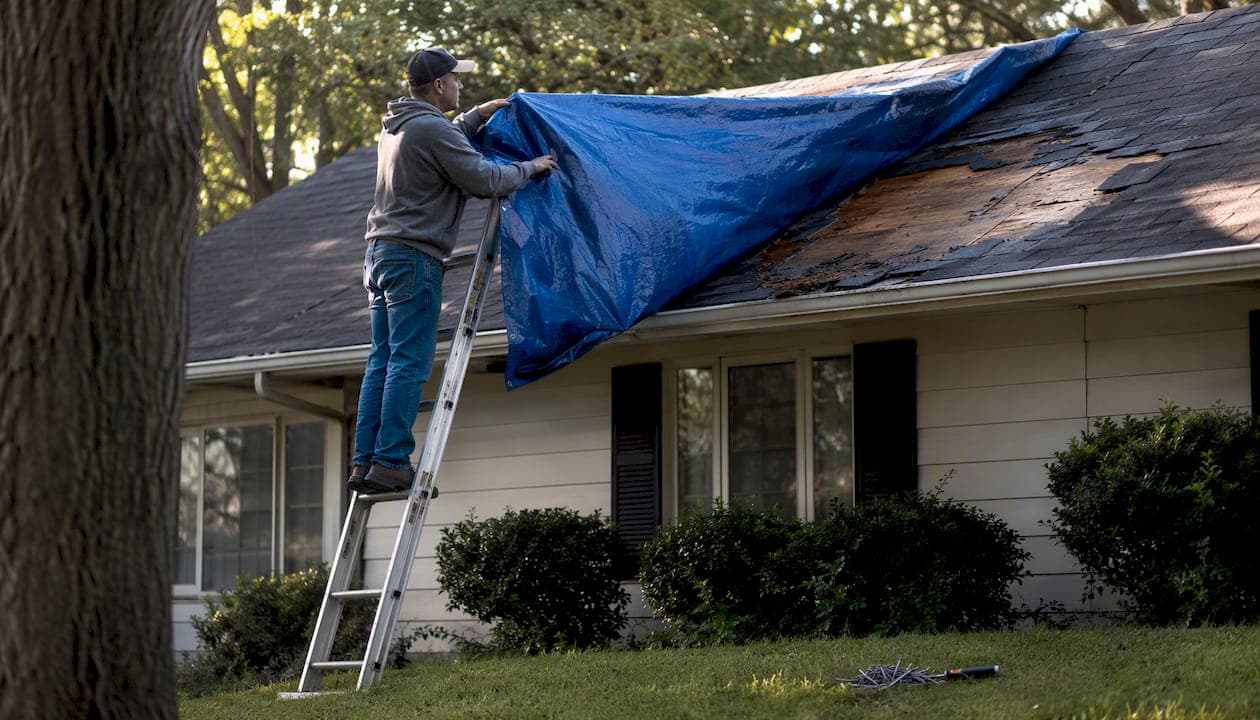
A missing shingle is rarely a five-alarm emergency, but it's never a "wait and see" problem either. Most cases call for a fast, targeted repair rather than a full roof replacement. If water is actively coming through your ceiling, or the damage is spread across a large section, protect the interior first and call a professional immediately. As a general rule, repair makes financial sense until the estimate climbs beyond a few thousand dollars, at which point replacement usually becomes the smarter move.
TL;DR:
- Replacing a few shingles generally costs between $100 and $300, with larger localized repairs reaching up to $600 or more depending on hidden damage.
- In cases of active leaks or widespread damage, immediate interior protection is necessary, with temporary tarping lasting 30 to 90 days to prevent further harm.
- Wind, hail, poor installation, or roof age beyond 15 to 20 years are primary causes of shingles going missing, which influence whether to repair or replace.
- Repair is recommended if damage is isolated and the roof is under 15 years old, but replacement is more cost-effective if over 25% of a slope is affected or if structural damage is found.
- Always verify professional contractors' licenses, insurance, references, and written estimates before authorizing repairs to avoid scams or inadequate work.
Table of Contents
- How to Spot Missing Shingles Safely
- What Causes Shingles to Go Missing?
- Immediate Steps If Shingles Blew Off Your Roof
- Repair Options and Typical Costs
- Repair or Replace? Here's How to Decide
- How to Hire a Roofer for Missing Shingle Repair
- A Repair-First Approach: What to Expect
- Request Emergency Tarping or a Free Inspection
- Sources
- FAQ
How to Spot Missing Shingles Safely
You don't need to climb onto your roof to confirm a problem. Start at ground level with a slow walk around the perimeter, looking for color or texture changes on the roof plane and shingle fragments scattered across the lawn, gutters, or driveway after a windy day.
A pair of binoculars or a zoomed-in phone photo from the ground often reveals more than you'd expect, and a drone photo gives you a full overview without any risk. Inside the house, check the attic and top-floor ceilings for water stains, damp insulation, or discoloration. These are often the first sign that a missing shingle has already let water in.
- Scan the roofline from the ground or a second-story window, not from the roof itself
- Use binoculars or a zoomed photo to check for curling, cracked, or bare patches
- Look in the attic for water stains, wet insulation, or a musty smell
- Skip the climb entirely if the roof is wet, steep, or more than one story. Industry guidance recommends inspecting twice a year and after any major storm, and calling a pro whenever access looks risky.
What Causes Shingles to Go Missing?
Wind is the most common culprit. Gusts get under a shingle's edge and peel it away, especially on roofs where the seal never fully bonded or where fasteners were driven incorrectly during installation. Hail can crack or bruise shingles enough that they lose their grip and blow off in the next storm that follows.
Age plays a role too. Shingles past 15 to 20 years old become brittle and lose adhesive strength, so even modest wind can knock them loose. Flashing and boot failures around chimneys, vents, and skylights create weak points where shingles pull away over time, and foot traffic or animal activity can dislodge them as well.
- Wind uplift during storms, especially on older or poorly sealed shingles
- Hail impact that cracks or loosens the shingle's bond
- Poor installation, insufficient fasteners, or shingles nearing the end of their lifespan
- Flashing and boot failures, plus damage from foot traffic or animals
The cause matters because it tells you whether you're looking at an isolated fix or a sign your roof is aging out. A single wind-blown shingle on an otherwise sound roof is a quick repair. Repeated losses in the same spot usually point to a flashing or fastening problem that needs more than a patch.
Immediate Steps If Shingles Blew Off Your Roof
If water is coming through, deal with the inside first. Move furniture, lay down towels or buckets, and use plastic sheeting to catch drips before you worry about the roof itself. Never go onto a wet, icy, or steep roof to inspect or patch damage yourself.
For temporary protection, a tarp anchored with boards and extending 3 to 4 feet beyond the damaged area typically holds up for 30 to 90 days, long enough to schedule a permanent repair without rushing. DIY tarp materials run $20 to $150, while a professionally installed tarp costs $300 to $800 because it's anchored more securely and less likely to fail in the next windstorm. For small, reachable, isolated spots, butyl roofing tape, flashing sealant, or roofing cement can bridge the gap until a repair crew arrives.
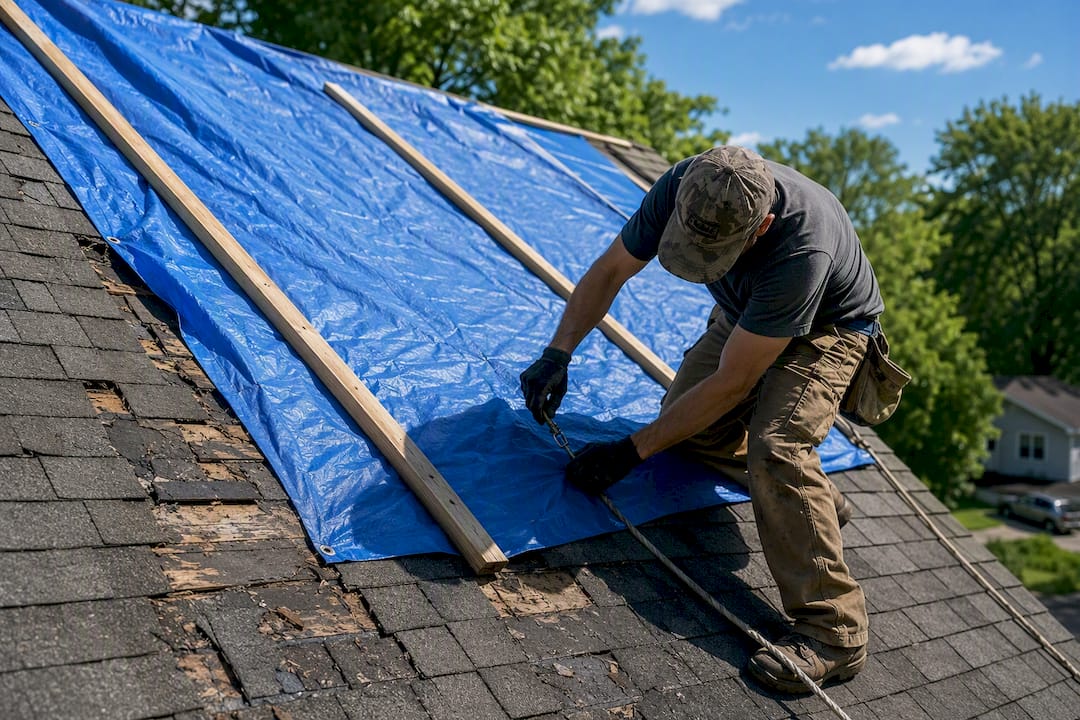
Pro Tip: Photograph the damage from multiple angles, including a wide shot and a close-up, before you tarp or patch anything. Those photos become your evidence for both your contractor's estimate and your insurance claim.
Repair Options and Typical Costs
Most missing-shingle repairs fall into one of two categories: small, isolated fixes or larger localized repairs where damage has spread. Replacing a handful of shingles, generally three to 25, typically costs $100 to $300, depending on shingle type and how easily a crew can access that part of the roof.
Larger localized repairs, covering roughly 100 square feet, run $200 to $600 or more. Costs climb from there if flashing needs replacing or if the tear-back exposes rotted decking, since that's structural work rather than a surface fix. A standard shingle replacement sequence involves breaking the seal on the row above, pulling the damaged shingle's nails, sliding in the new one, and resealing it, a job that looks simple but requires the right technique to avoid loosening neighboring shingles.
| Repair scope | Typical cost |
|---|---|
| 1–5 shingles | $100–$300 |
| ~100 square feet | $200–$600+ |
| Flashing or decking repair added | $600 and up |
Three things drive the final number: how well your existing shingle color matches available stock (discontinued colors cost more to blend), how steep or tall the roof is, and whether the crew finds hidden water damage once they pull the old shingles back.
Repair or Replace? Here's How to Decide
Roof age is the single biggest factor. A roof under 10 years old with a few missing shingles almost always makes sense to repair. A roof past 15 to 20 years, especially one that's already had multiple repairs, is a different conversation, since each additional repair on an aging roof buys less time for the money spent.
- Repair when damage is isolated to one area and the roof is under 15 years old
- Consider replacement when roughly 25% of a single slope shows damage, a common threshold contractors and adjusters use
- Replace when tear-back reveals exposed decking or saturated underlayment
- Replace when the same spot keeps failing despite repeated patches
At The Original Roof Repair Company, we apply a straightforward rule: if a repair estimate exceeds $4,000, replacement is usually the more cost-effective path. Below that threshold, repair almost always wins on value, and delaying even a single missing shingle tends to cost far more later than fixing it now.
How to Hire a Roofer for Missing Shingle Repair
A reliable roofer should make the process easy to verify, not harder. Before you sign anything, confirm the basics and get everything in writing.
- Verify the license and insurance and ask for proof, not just a verbal assurance.
- Request recent references from jobs similar to yours, ideally other missing-shingle repairs nearby.
- Get a written estimate that spells out scope, materials, and timeline, not a vague verbal quote.
- Ask directly whether they offer emergency tarping, photograph damage for insurance purposes, and work directly with carriers and adjusters.
- Confirm warranty terms on both labor and materials before work begins.
Watch for red flags: high-pressure sales tactics, reluctance to document damage with photos, or a scope of work that stays vague even after you ask follow-up questions. A contractor who won't put the job in writing is one you should walk away from.
A Repair-First Approach: What to Expect
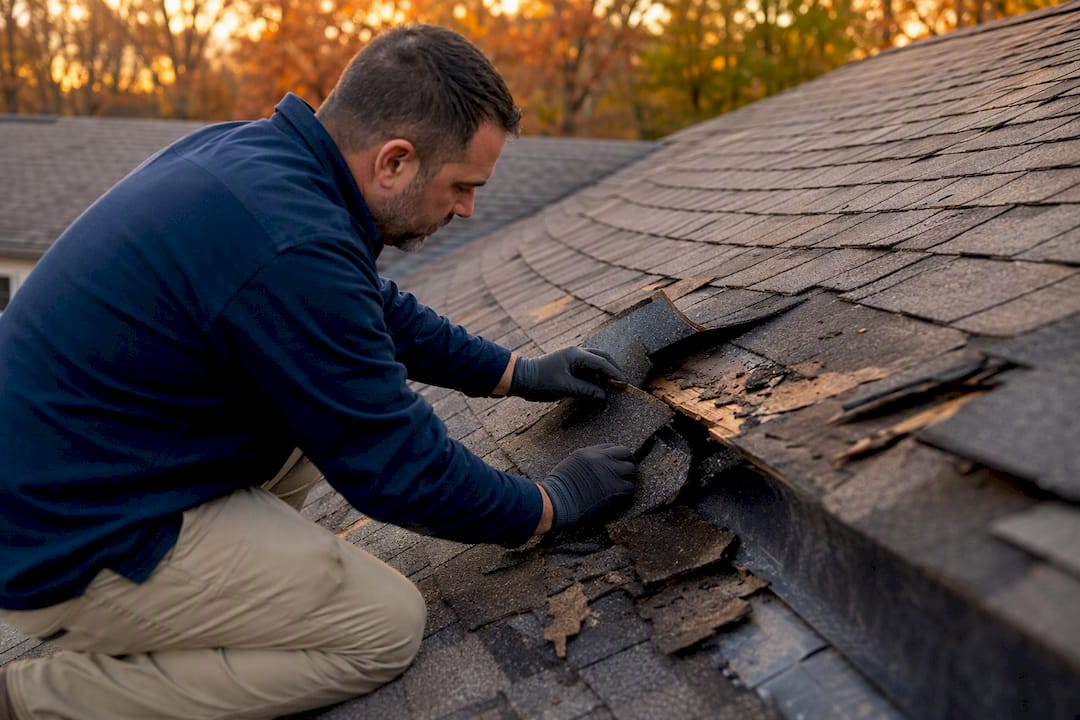
Most missing-shingle calls we get don't need a new roof. They need someone to diagnose the actual problem, fix it, and be honest about what it costs. That's the whole philosophy behind The Original Roof Repair Company: we recommend full replacement only when a repair estimate runs past $4,000 or the roof's condition genuinely calls for it, not as a default upsell.
For homeowners across Canton, Cherokee County, and the surrounding counties in the Atlanta, Georgia metro area, that means free inspections, emergency tarping when a storm has just come through, small-shingle repairs handled without a hard sell toward replacement, and insurance claim advocacy when storm or wind damage needs to be documented for a carrier. Founder Eric Manly built the company on that repair-first standard, and it's backed by BBB accreditation.
— Eric
Request Emergency Tarping or a Free Inspection
If a storm just came through Cherokee County or anywhere in the Atlanta metro, you don't have to guess whether that missing shingle is a quick fix or something bigger. The Original Roof Repair Company sends someone out to look at the actual damage and give you a real number, not a pressure pitch toward a full tear-off you don't need.

Our emergency roof repair service covers tarping for active leaks and exposed decking, so your home stays protected while a permanent fix gets scheduled. For non-emergency damage, our roof repair team handles everything from a single blown-off shingle to a full section replacement, and every visit starts with a free inspection and a written estimate you can actually read. If storm damage is involved, we'll help document it for your insurance carrier as part of the process.
Take photos of the damage now, before the next front rolls through, and schedule your free inspection while the roof is still in a repairable state rather than waiting until a small problem becomes a bigger one.
Sources
- 2026 Roof Shingle Repair Cost | Fix Asphalt Shingles on Roof
- Temporary Roof Repair: Tarp and Leak Fixes
- Missing Shingles on Your Roof? Here's What to Do
FAQ
How long can a roof go with missing shingles?
A roof with a small, isolated gap can often go a few weeks without serious damage if it's tarped or patched, but exposed decking should be covered within days, since rain and UV exposure quickly worsen the damage.
How much does it cost to replace missing shingles on a roof?
Small repairs of a few shingles typically run $100 to $300, while larger localized repairs covering around 100 square feet run $200 to $600 or more depending on access and hidden damage.
How do you temporarily cover missing shingles?
A tarp anchored with boards and extending 3 to 4 feet past the damaged area is the standard fix, offering 30 to 90 days of protection; butyl roofing tape or flashing sealant works for small, reachable spots.
How long can a roof be exposed without shingles before it causes damage?
Exposed decking can start absorbing water within a single rainstorm, so any bare spot should be tarped immediately and repaired within days to avoid rot, mold, or insulation damage.
Should I call a professional for missing shingles, or fix them myself?
Call a professional if the roof is steep, wet, multi-story, or actively leaking; The Original Roof Repair Company offers free inspections across the Atlanta, Georgia metro area to confirm the safest and most cost-effective path forward.