
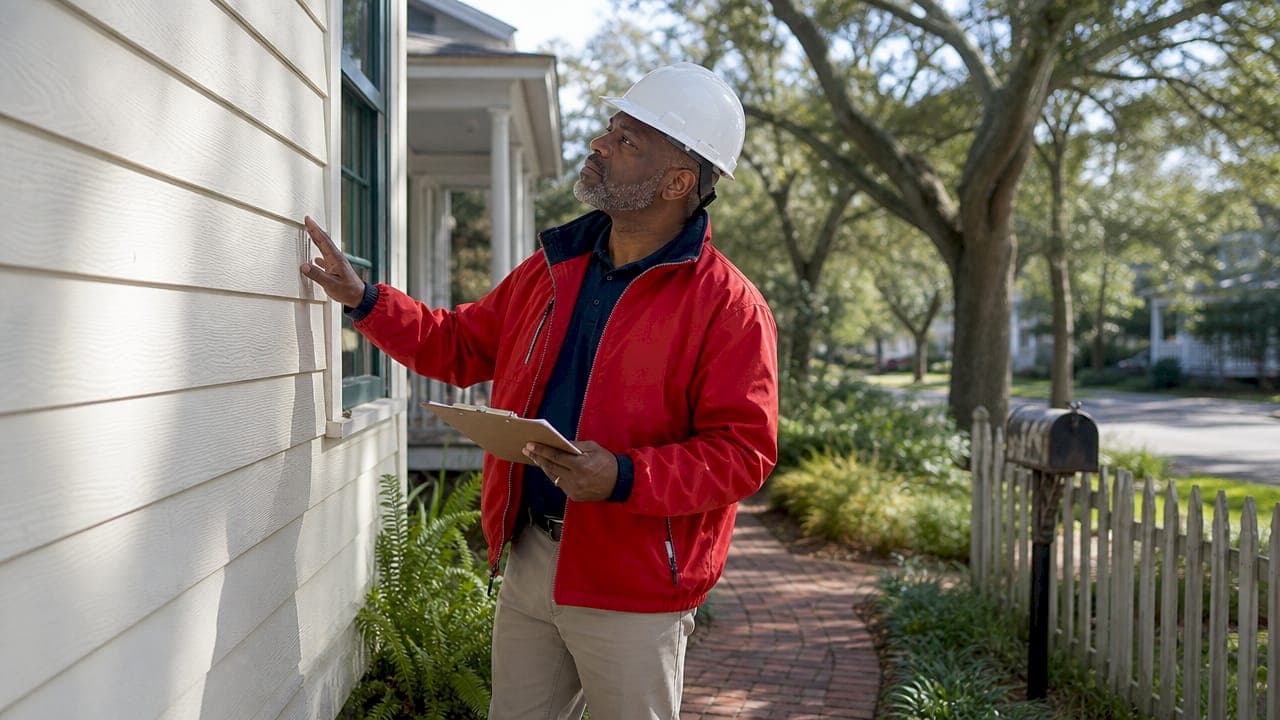
An insurance adjuster inspection is the official property evaluation conducted by a licensed professional to verify storm or hail damage, determine the cause of loss, and establish the insurer's payout amount. For Georgia homeowners filing a roof insurance claim after a hail or wind event, this inspection is the single most consequential step in the entire claims process. What the adjuster documents, measures, and photographs on that one visit becomes the foundation for your settlement. Understanding the insurance adjuster inspection explained in full, before the adjuster arrives, gives you a real advantage.
What does an insurance adjuster inspect during a storm or hail damage claim?
Adjusters evaluate both the exterior and interior of your property during a storm damage inspection. The goal is to confirm that reported damage is consistent with the claimed weather event and not the result of pre-existing wear or deferred maintenance.
Exterior inspection areas
The roof gets the most attention. Adjusters evaluate physical damage for cause and consistency with the reported storm, screening for hail impacts, missing shingles, granule loss, and debris patterns. They also inspect:
- Gutters and downspouts for dents, granule accumulation, and detachment
- Siding and trim for hail strikes or wind-driven impact marks
- Windows, skylights, and screens for cracks or frame damage
- Flashing, ridge caps, and vents for displacement or breach
- Any temporary repairs already made to prevent further damage
Interior inspection areas
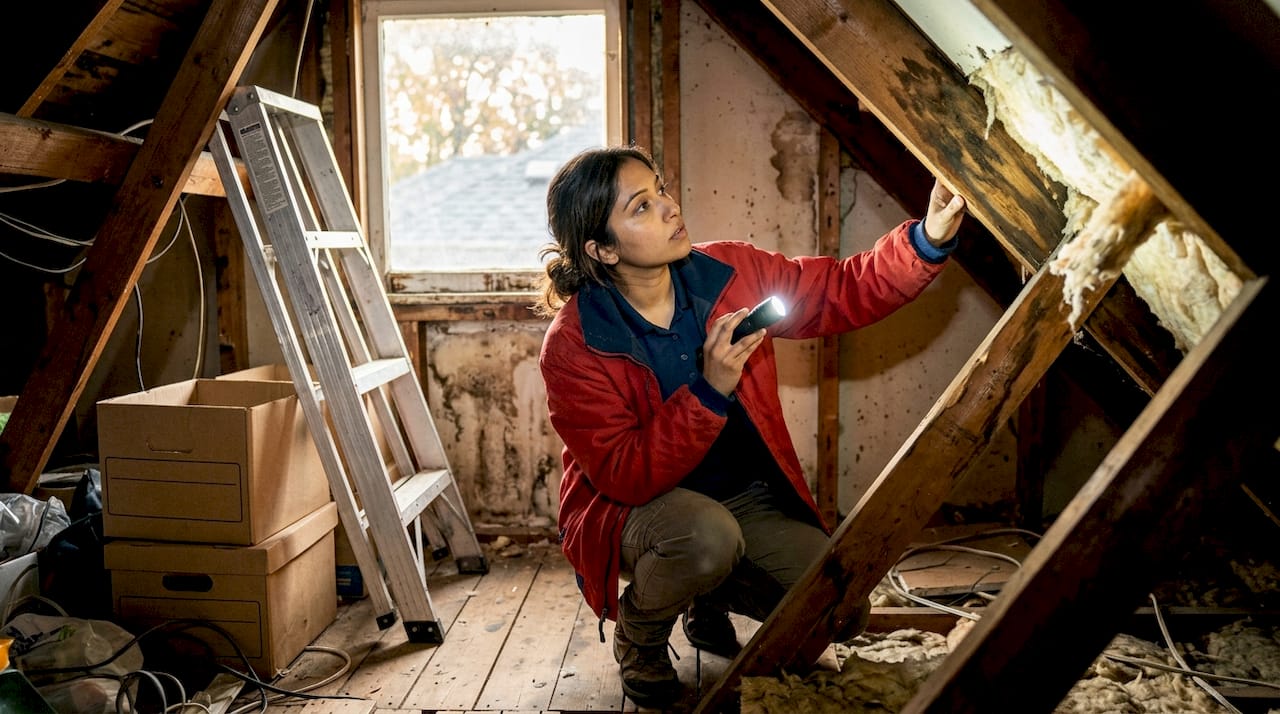
After the roof, adjusters move inside to look for moisture intrusion. They check ceilings, walls, and attic spaces for water stains, mold growth, and insulation damage. Old stains versus fresh stains matter here. An adjuster will note whether a water mark looks recent or has been sitting for months. That distinction directly affects whether the damage gets covered.
Pro Tip: Document any emergency repairs you made immediately after the storm. Keep receipts, photos taken before the repair, and a written description of what you found. Adjusters are required to account for reasonable emergency repairs, but only if you can prove they happened.
How long does the insurance adjuster inspection process take?
The insurance claim inspection process follows a predictable timeline, though storms that affect large areas can stretch every phase.
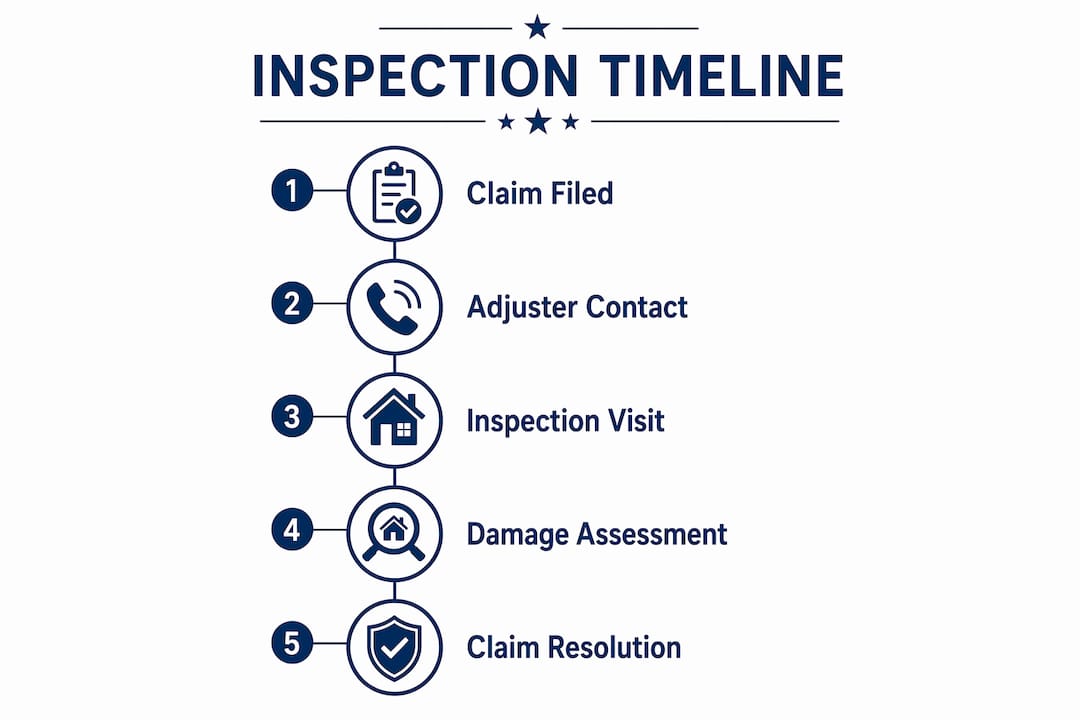
| Phase | Typical Timeframe |
|---|---|
| Adjuster contacts homeowner after claim filed | 3–7 business days |
| Physical inspection scheduled and completed | 1–3 weeks after contact |
| Estimate drafted and coverage determined | 1–2 weeks post-inspection |
| Final payment issued | 1–2 weeks after coverage determination |
Adjusters typically contact policyholders within 3 to 7 business days of a filed claim, with the physical inspection occurring within 1 to 3 weeks. That means a homeowner could wait up to a month before anyone officially looks at the damage.
The physical inspection itself runs 45 to 90 minutes for a standard residential property, with adjusters spending 20 to 40 minutes on the roof alone. Complex claims involving full replacement or multiple damage types can push that to two hours. After the visit, expect another 1 to 2 weeks for the written estimate and coverage decision, followed by a final payment window of similar length.
Pro Tip: Sign up for storm weather alerts so you know exactly when a qualifying event hit your area. Insurers use weather data to cross-reference your claim date, and having that documentation ready speeds up the scheduling phase.
How should Georgia homeowners prepare for the adjuster visit?
Preparation before the adjuster arrives is the most underused advantage homeowners have. Most people wait passively. The ones who get fair settlements show up organized.
-
Be present for the entire inspection. Never let the adjuster walk the property alone. Your presence signals that you are engaged and informed, and it gives you the chance to point out damage the adjuster might otherwise miss or skip.
-
Get a contractor pre-inspection first. Having a roofing professional document the damage before the adjuster arrives gives you an independent scope to compare against the insurer's findings. Theoriginalroofrepaircompany provides pre-inspection documentation for homeowners across Cherokee County and surrounding areas, specifically for this purpose.
-
Present the most obvious damage first. Showing indisputable storm damage first anchors the adjuster's mental scope of the claim. Start with the clearest hail strikes or the most visible missing shingles before moving to subtler damage.
-
Avoid minimizing statements. Homeowners should avoid minimizing damage or accepting fault during the inspection. Comments like "it's probably not that bad" or "this might have been here before" get documented and can reduce your payout.
-
Organize your records. Bring your policy summary, photos taken right after the storm, any contractor estimates, and receipts for emergency repairs. A well-organized homeowner signals credibility.
-
Know your policy before the adjuster arrives. Understand your deductible, whether you have replacement cost value or actual cash value coverage, and any exclusions for specific damage types. This prevents surprises during the settlement phase.
Pro Tip: Ask the adjuster for their name, license number, and contact information at the start of the visit. This is standard practice and creates a clear record if you need to follow up or dispute findings later.
What are common misconceptions about insurance adjuster inspections?
The biggest misconception Georgia homeowners carry into an inspection is that the adjuster works for them. Adjusters aim to resolve claims cost-effectively for insurers, not to maximize homeowner payouts. That is not a criticism of individual adjusters. It is simply the structure of the role.
Understanding that reality changes how you engage with the process. Here are the most common mistakes homeowners make:
- Trusting the bottom-line number without reviewing the details. Claims are won or lost in detailed scope line items rather than the final settlement figure. Errors in quantities, unit prices, or omitted line items cause underpayment. Review the Xactimate estimate carefully, or have a contractor review it with you.
- Assuming the first offer is final. Insurers can and do revise estimates when presented with additional documentation or a contractor's competing scope.
- Not understanding the difference between adjuster types. Staff adjusters work directly for your insurer. Independent adjusters contract for insurers during high-volume storm events to scale the workforce. Both use photos, measurements, and policy language to build their reports. Independent adjusters often carry heavier workloads during storm seasons, which can affect inspection depth.
- Waiting too long to file. Georgia homeowners have a limited window to file storm damage claims under most policies. Delays give insurers grounds to question whether damage is storm-related or the result of neglect.
- Skipping the attic. Many homeowners do not think to show the adjuster the attic. Moisture intrusion visible from inside the attic is strong evidence of a legitimate roof breach and strengthens the claim.
The inspection establishes the foundation for the entire claim. Errors or omissions made on that first visit are difficult to correct after the fact. Treat the inspection as your one clear opportunity to get the full scope documented correctly.
Key Takeaways
The insurance adjuster inspection is the single event that determines your claim's scope, and preparation before the visit is the most effective way to protect your payout.
| Point | Details |
|---|---|
| Adjuster works for the insurer | Adjusters resolve claims cost-effectively for insurers, not to maximize homeowner payouts. |
| Preparation changes outcomes | Being present, organized, and supported by a contractor pre-inspection improves claim accuracy. |
| Timeline is predictable | Expect 3–7 days for contact, 1–3 weeks for inspection, and 2–4 weeks for final payment. |
| Details matter more than totals | Review Xactimate line items carefully; errors in quantities or omissions cause underpayment. |
| Present strong damage first | Starting with indisputable damage anchors the adjuster's scope and strengthens the full claim. |
What I've learned from walking roofs with adjusters in Georgia
After four years of documenting storm damage and working directly with carriers and adjusters across Cherokee County, I've seen the same pattern repeat. Homeowners who understand the process get better outcomes. Not because they argue or push back aggressively, but because they show up prepared and let the evidence do the work.
The most underrated move is the walk-through order. The sequence in which damage is presented directs the adjuster's mental scope of the claim. I always start with the clearest, most undeniable damage. A field of hail strikes on a ridge cap. A section of siding with 40 visible dents. Once the adjuster has mentally confirmed the storm's severity, they approach the rest of the inspection with that frame in place.
I also recommend having a contractor or advocate present during the inspection. Homeowners benefit from having a contractor present to ensure all legitimate damage is documented and properly scoped. Adjusters are professionals doing a job under time pressure. They are not trying to miss damage, but they will not spend extra time hunting for it either. A knowledgeable contractor on site fills that gap.
One thing I tell every homeowner: do not review just the final number on your settlement letter. Pull up the Xactimate line items. Check whether the square footage matches your roof. Check whether the adjuster included all the components that were damaged. A low settlement is almost always a line-item problem, not a coverage problem. That distinction matters because it is fixable.
— Eric
Theoriginalroofrepaircompany is ready to help with your claim
Storm damage does not wait, and neither should your documentation.

Theoriginalroofrepaircompany serves homeowners across Cherokee County and 11 surrounding counties, providing pre-inspection documentation, emergency roof repair after storm events, and direct advocacy with insurance carriers and adjusters. Whether you need a contractor on site during the adjuster visit or a second opinion on a settlement scope, the team at Theoriginalroofrepaircompany brings four years of hands-on claim experience to every job. For homeowners who need repair work after the claim settles, roof repair services are available with transparent pricing and no pressure toward unnecessary replacements.
FAQ
What is an insurance adjuster?
An insurance adjuster is a licensed professional who evaluates property damage on behalf of an insurer to determine the cause of loss and the amount the insurer owes under the policy.
How long does an adjuster inspection take?
A standard residential inspection runs 45 to 90 minutes, with adjusters spending 20 to 40 minutes on the roof. Complex claims involving full replacement can take up to two hours.
Should I be home during the adjuster inspection?
Yes. Being present allows you to point out all documented damage, ask questions, and ensure nothing is missed. Homeowners who attend their inspection consistently receive more thorough claim scopes.
Can I dispute an adjuster's findings?
Yes. You can request a re-inspection, submit a contractor's competing estimate, or hire a public adjuster to advocate on your behalf. Reviewing the Xactimate line items is the first step in identifying where a settlement may be underpaid.
How soon after a storm should I file a claim in Georgia?
File as soon as possible after the storm. Most Georgia homeowner policies require claims to be filed within a reasonable time after the loss, and delays can give insurers grounds to question whether damage is storm-related.