

Roof insurance policy coverage is defined as the set of terms, limits, and conditions in your homeowners policy that determine how your insurer pays for roof damage. Knowing how to read roof insurance policy coverage is the difference between a full payout and leaving thousands of dollars on the table after a storm. Georgia homeowners face real exposure here. The state sits in a hail and wind corridor, and carriers have quietly shifted policy terms in recent years to reduce what they pay out. Two settlement types drive most of that difference: Replacement Cost Value (RCV) and Actual Cash Value (ACV). Understanding both before you file a claim is not optional.
What key terms in your roof insurance policy actually mean
Every homeowners policy uses specific vocabulary that controls how claims are paid. Misreading even one term can cost you significantly.
Replacement Cost Value (RCV) pays what it costs to replace your damaged roof with a comparable new one, without subtracting for age. Actual Cash Value (ACV) subtracts depreciation based on your roof's age and condition before paying out. Older roofs can see over 50% reduction in payout under ACV compared to RCV. That gap is not a rounding error. On a $15,000 roof replacement, ACV could mean you receive $7,000 or less.
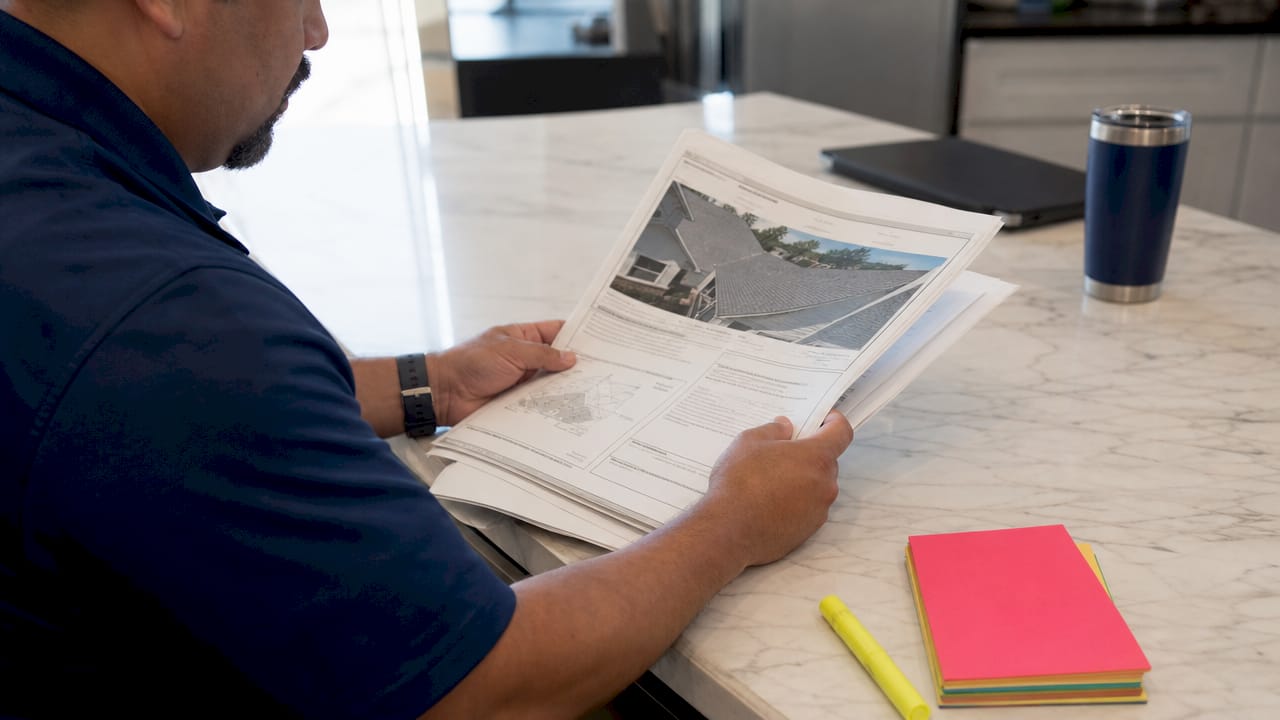
Named-peril coverage is the standard structure for roof claims. It covers specific events listed in your policy: wind, hail, fire, and falling objects. Roof coverage excludes wear and tear, neglect, and flood damage by default. If your roof fails because of age or deferred maintenance, your insurer will deny the claim regardless of the storm that exposed the problem.
Deductibles come in two forms for roof claims. A flat deductible is a fixed dollar amount, such as $1,000 or $2,500. A percentage-based wind/hail deductible is calculated against your dwelling coverage limit. Wind/hail deductibles can range from 1% to 5% of your dwelling coverage. On a $400,000 home with a 5% wind/hail deductible, you owe $20,000 out of pocket before your insurer pays a single dollar. Most homeowners do not realize this until they file a claim.
Pro Tip: Check your declarations page for the words "wind/hail deductible" listed separately from your standard deductible. They are two different numbers, and both apply to storm damage claims.
The declarations page is the one or two page summary at the front of your policy. It lists your coverage limits, deductibles, and settlement basis in plain terms. Endorsements are add-ons or modifications that change your base coverage. An ACV Roof Endorsement, for example, can override your standard RCV coverage and force all roof claims to settle at actual cash value.
| Term | What it means | Impact on your claim |
|---|---|---|
| RCV | Pays full replacement cost | Higher payout, no depreciation deducted |
| ACV | Pays replacement cost minus depreciation | Lower payout, especially on older roofs |
| Named peril | Covers only listed events | Excludes wear, neglect, and flood |
| Wind/hail deductible | Percentage of dwelling value | Can mean thousands more out of pocket |
| ACV Roof Endorsement | Overrides RCV for roof only | Silently reduces roof claim payouts |
How to locate your roof coverage details in your policy documents
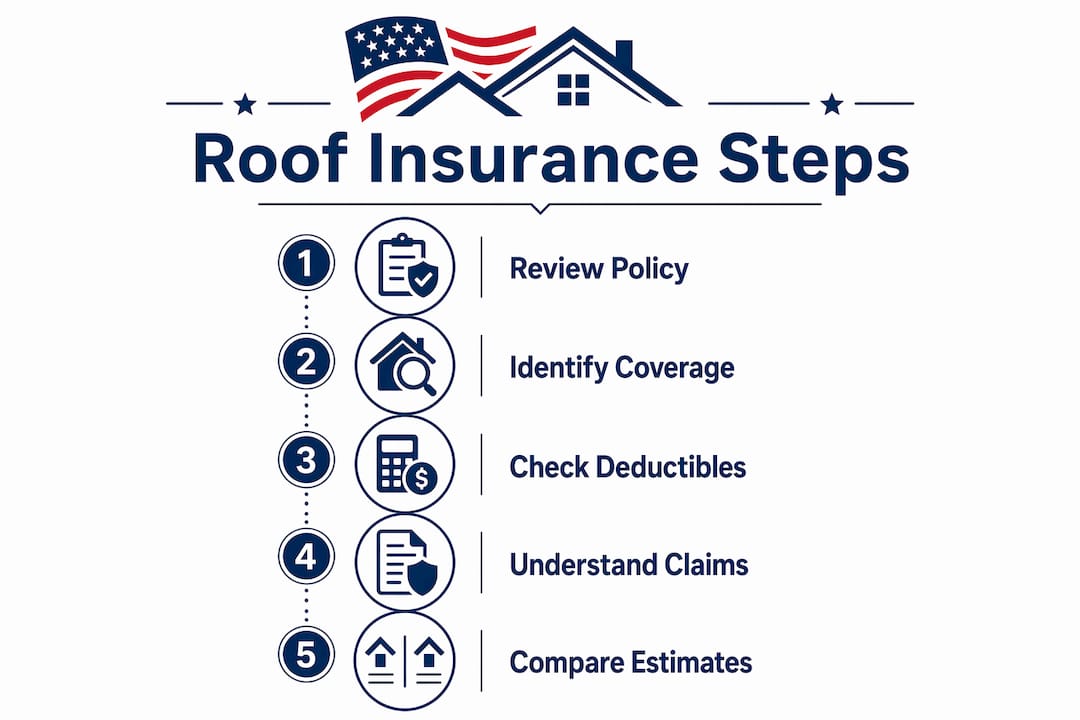
The declarations page is where you start. Insurance experts recommend focusing on five key numbers rather than reading the entire policy document: Coverage A limit, your wind/hail deductible, your roof settlement basis (RCV or ACV), your personal property settlement basis, and your liability limit. These five numbers determine the financial outcome of nearly every roof claim.
Here is how to work through your declarations page systematically:
- Find Coverage A. This is your dwelling coverage limit. It sets the ceiling on what your insurer will pay for your home's structure, including your roof.
- Locate your deductible section. Look for two separate lines: your standard deductible and any wind/hail or named-storm deductible. They are often listed separately.
- Identify your roof settlement basis. Look for "RCV" or "ACV" next to roof or dwelling coverage. If you see "ACV Roof Endorsement" anywhere on the page, your roof claims settle at actual cash value.
- Check for endorsements. Endorsements appear on the last pages of your declarations packet. Read every line. ACV roof endorsements can silently downgrade coverage from replacement cost to actual cash value without a separate notice.
- Review your renewal packet every year. Carriers add endorsements at renewal without sending a separate alert. Silent policy downgrades occur when insurers add ACV endorsements during renewal, and homeowners miss them because they assume nothing changed.
Pro Tip: Pull out last year's declarations page and compare it side by side with this year's. If the roof settlement basis changed from RCV to ACV, call your agent immediately and ask why.
Some policies also include cosmetic damage exclusions. These exclude cosmetic hail damage even when functional damage exists, limiting your payout to structural impairment only. A dented but watertight metal roof may receive nothing under such a policy.
How to read and understand your roof insurance claim estimate
An insurance claim estimate is a line-by-line calculation of what your insurer believes the repair or replacement costs. Reading it correctly tells you whether the payout is fair.
The estimate breaks down into four components:
- Replacement cost: The full cost to repair or replace the damaged roof at current material and labor prices.
- Depreciation: The amount withheld based on your roof's age and expected lifespan. A 15-year-old asphalt shingle roof with a 25-year lifespan has used 60% of its life, so the insurer may depreciate it by 60%.
- Actual cash value: Replacement cost minus depreciation. This is your initial check.
- Deductible: Subtracted from the ACV to produce your first payment.
Here is a practical example. Your roof replacement costs $14,000. Your roof is 12 years old with a 20-year lifespan, so depreciation is 60%, or $8,400. ACV equals $5,600. Subtract a $2,000 deductible, and your first check is $3,600.
Recoverable depreciation is the $8,400 withheld in that example. Insurers withhold recoverable depreciation in initial payments and release it only after you complete repairs and submit invoices. This creates a real cash flow problem. You need to pay your contractor in stages before you receive the full amount your policy entitles you to.
Pro Tip: Ask your contractor if they will work with your insurance timeline before signing any contract. Reputable contractors understand the recoverable depreciation process and can structure payment schedules accordingly.
Watch for two common insurer practices in estimates. First, some estimates use outdated material pricing that undervalues current replacement costs. Second, some estimates apply depreciation to labor costs in addition to materials, which is not standard in all states. If either appears in your estimate, document it and request a written explanation from your adjuster.
Common mistakes homeowners make when reading roof insurance policies
The most expensive mistake is accepting an ACV payout when your policy actually provides RCV coverage. This happens when homeowners do not check their settlement basis before filing. The cause of damage directly affects claim approval, and so does the coverage type listed on your declarations page.
"Roof policy coverage is rapidly evolving in hail-prone regions like Georgia, with carriers increasingly adding ACV endorsements and percentage deductibles. Homeowners who do not review their renewal documents face coverage they did not expect." — Rough Notes, Homeowners Roof Surfacing Coverage Considerations
Five mistakes show up repeatedly in Georgia roof claims:
- Assuming RCV coverage without checking. Many homeowners believe they have full replacement coverage until the claim estimate arrives showing ACV.
- Ignoring percentage-based deductibles. A 2% wind/hail deductible on a $350,000 home is $7,000. Most homeowners expect a flat $1,000 deductible.
- Missing silent renewal changes. Carriers add ACV endorsements at renewal. Homeowners who do not read renewal packets discover the downgrade only after a storm.
- Claiming wear and tear as storm damage. Insurers investigate roof condition before paying. Deferred maintenance gives adjusters grounds to reduce or deny claims.
- Not updating policy records after a roof replacement. Replacing your roof does not automatically update your policy's roof age for depreciation calculations. You must submit proof of replacement to your insurer so future claims use the correct age.
How to prepare for a roof insurance claim after storm damage in Georgia
Georgia's weather creates frequent claim opportunities, and preparation before the storm matters as much as what you do after it.
- Sign up for weather alerts. Track storm activity in your area so you know when to inspect your roof immediately after an event.
- Document damage within 24 hours. Take dated photos and video of every visible impact point, missing shingle, or dented flashing. Delays or poor documentation frequently lead to denied or reduced payments.
- Pull your declarations page before calling your insurer. Know your deductible, settlement basis, and Coverage A limit before you speak with an adjuster.
- Get a contractor estimate before the adjuster visit. An independent estimate gives you a benchmark to compare against the insurer's calculation.
- Submit proof of any prior roof replacement. If you replaced your roof in the last five years, submit the invoice and permit to your insurer so depreciation reflects the actual age.
Documenting damage promptly and maintaining communication with your insurer improves claim outcomes and speeds processing. Adjusters work multiple claims after major storms. Homeowners who provide complete documentation get resolved faster.
Pro Tip: Request your adjuster's estimate in writing before agreeing to any settlement. Compare it line by line against your contractor's estimate. Discrepancies in material pricing or depreciation rates are negotiable.
Georgia carriers have increased their use of ACV endorsements and percentage deductibles in recent years, particularly in Cherokee County and surrounding areas. Homeowners with policies written more than three years ago should review their current declarations page. Coverage terms that applied when you bought the policy may no longer apply today.
Key Takeaways
Reading your roof insurance policy coverage requires knowing your settlement basis, deductible type, and endorsements before a storm hits, not after.
| Point | Details |
|---|---|
| RCV vs. ACV matters most | ACV can reduce your payout by over 50% compared to RCV on older roofs. |
| Declarations page is your priority | Five numbers on that page determine nearly every claim outcome. |
| Percentage deductibles are costly | A 5% wind/hail deductible on a $400,000 home means $20,000 out of pocket. |
| Silent renewals change coverage | Review your renewal packet every year to catch ACV endorsements added without notice. |
| Document and submit proof promptly | Photos, contractor estimates, and replacement invoices all improve claim speed and payout. |
What I have seen working roof claims in Georgia
After four years working roof claims across Cherokee County and the surrounding region, the pattern is consistent. Homeowners who struggle most with claims are not the ones with bad policies. They are the ones who never read their policy before the storm hit.
The most common scenario I see: a homeowner files a claim expecting a full replacement check, then receives an ACV estimate that barely covers half the job. They assumed RCV coverage because that is what they had when they first bought the policy. What they missed was the ACV Roof Endorsement added quietly at renewal two years ago.
My advice is direct. Read your declarations page every year in january or february, before storm season picks up. Compare it to the prior year. If anything changed, call your agent and ask for a written explanation. Do not accept "it's standard" as an answer. If your settlement basis changed from RCV to ACV, ask whether you can buy back RCV coverage. Many carriers offer it.
The second thing I tell every homeowner: get a contractor on your roof before the adjuster arrives. Not to inflate the claim, but to have an independent set of eyes on the damage. Adjusters are professionals, but they work fast and cover a lot of properties after a major storm. A contractor who documents every impact point gives you a complete record to compare against the insurer's estimate.
Georgia's insurance market is tightening. Carriers are adding restrictions, not removing them. The homeowners who get fair settlements are the ones who know their policy, document their damage, and push back when the numbers do not add up.
— Eric
Roof damage after a storm? Theoriginalroofrepaircompany can help
Storm season in Georgia moves fast. So do insurance deadlines.

Theoriginalroofrepaircompany is a BBB-accredited, family-owned roofing business based in Canton, Georgia, serving Cherokee County and 11 surrounding counties. The team specializes in roof insurance claim advocacy, documenting storm and hail damage, and working directly with carriers and adjusters on your behalf. Whether you need emergency roof repair to stop active leaks or a full roof replacement after a major storm, Theoriginalroofrepaircompany provides transparent pricing and honest guidance at every step. Contact the team for a no-pressure evaluation and claims review.
FAQ
What does roof insurance coverage typically pay for?
Roof insurance coverage pays for damage caused by named perils such as wind, hail, fire, and falling objects. It does not cover wear and tear, neglect, or flood damage.
What is the difference between RCV and ACV on a roof claim?
RCV pays the full cost to replace your roof without deducting for age. ACV subtracts depreciation, which can reduce your payout by more than 50% on an older roof.
What is an ACV Roof Endorsement?
An ACV Roof Endorsement is a policy modification that limits all roof claims to actual cash value, overriding standard replacement cost coverage. It is often added at renewal without a separate homeowner notice.
How does a percentage-based wind/hail deductible work?
A percentage-based deductible is calculated as a percentage of your dwelling coverage limit, not a flat dollar amount. On a $400,000 home with a 5% deductible, you owe $20,000 before your insurer pays anything.
What should I do immediately after hail or storm damage in Georgia?
Document all visible damage with dated photos within 24 hours, pull your declarations page to confirm your coverage terms, and contact a licensed roofing contractor for an independent estimate before your adjuster visit.